

Not Just IT Problems Anymore: How AI Cyberattacks Are Shutting Down UK Supply Chains
AI-powered cyberattacks are impacting UK SMEs across manufacturing, retail, healthcare, and logistics. Learn how managed cybersecurity services strengthen cyber resilience.

Why UK SMEs Must Take Cybersecurity Seriously in 2026?
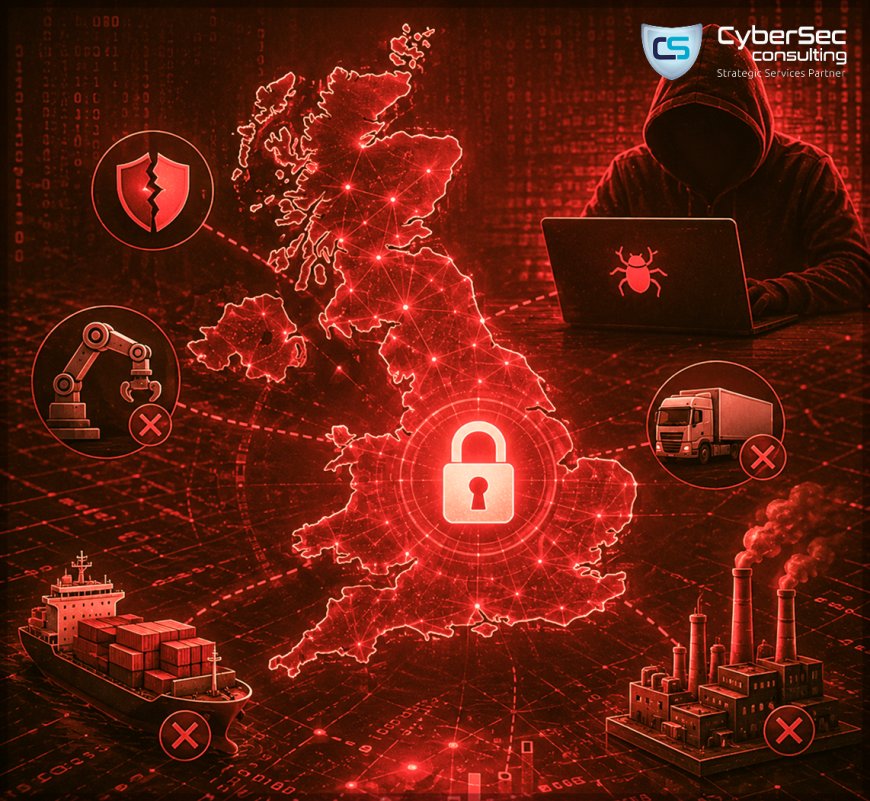
Cybersecurity is no longer just an IT concern. Every business function, every supplier relationship, and every operational process now depends on digital systems. A single cyberattack can disrupt production schedules, delay deliveries, impact customer service, and create significant financial losses.
Small and medium-sized enterprises (SMEs) across the United Kingdom are becoming attractive targets for cybercriminals. Financial services, manufacturing, healthcare, retail, logistics, education, and professional services sectors continue facing increasing cyber threats. AI-powered cyberattacks, ransomware campaigns, phishing attacks, supply chain compromises, and identity-based threats are evolving faster than standard security approaches can manage.
Business leaders can no longer rely on reactive cybersecurity measures. Modern organizations require managed cybersecurity services, continuous monitoring, cyber risk assessments, security posture management, and proactive threat detection to remain resilient against today's threat landscape.
The Rise of AI-Powered Cyberattacks
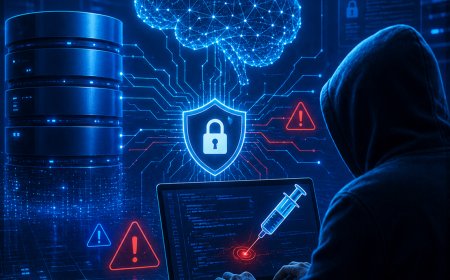
Artificial intelligence is transforming business operations. Unfortunately, cybercriminals are leveraging the same technology to launch more sophisticated attacks. AI-driven cyberattacks enable threat actors to automate reconnaissance, identify vulnerabilities faster, generate convincing phishing emails, bypass traditional security controls, and scale attacks across multiple targets simultaneously.
Standard cyber threats often require significant manual effort. AI has changed that reality. Attackers can now target hundreds of organizations within hours, increasing the speed and impact of cyber incidents. Organizations across London, Manchester, Birmingham, Leeds, Glasgow, Liverpool, Bristol, and Edinburgh are experiencing growing concerns around AI-enhanced cybercrime and digital disruption.
Why Supply Chains Have Become Prime Targets?
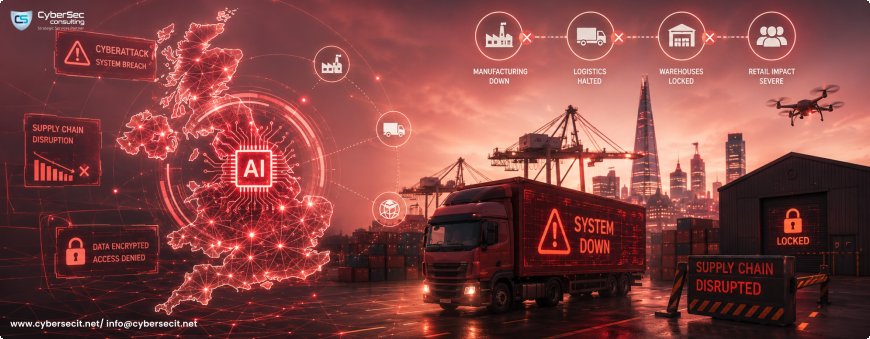
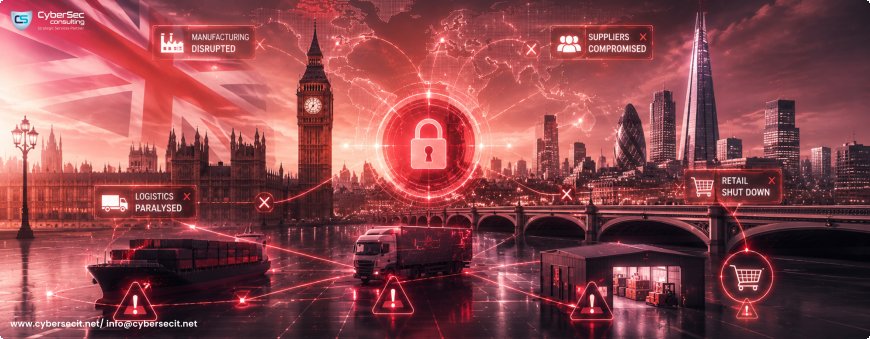
Supply chains have become one of the most targeted areas of modern business operations. A successful attack against a supplier can create a ripple effect across multiple organizations. Cybercriminals understand that disrupting one vendor may impact dozens or even hundreds of connected businesses. Manufacturing companies rely on digital inventory systems and operational technology. Logistics providers depend on real-time tracking platforms.
Retail businesses require uninterrupted access to payment systems and supplier networks. A disruption anywhere within the supply chain can create operational chaos.
Common supply chain cyber risks include:
- Third-party vulnerabilities
- Compromised supplier accounts
- Cloud security weaknesses
- Identity-related attacks
- Business email compromise
- Ransomware infections
- AI-powered phishing campaigns
How AI Cyberattacks Are Disrupting UK Supply Chains
AI-Powered Phishing Attacks
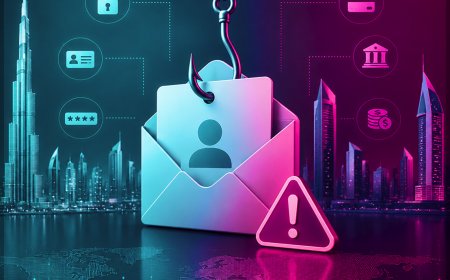
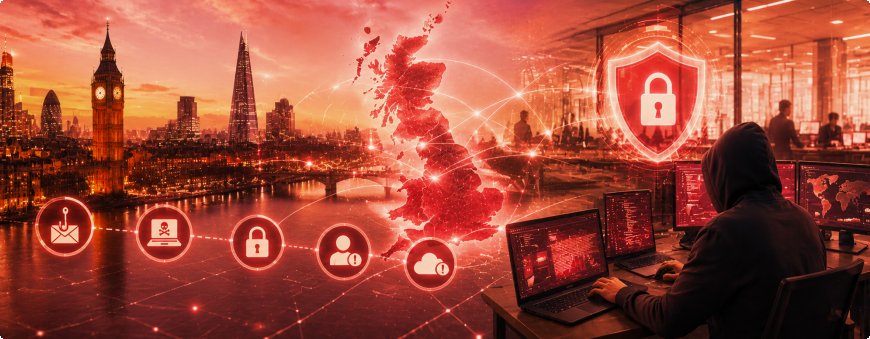
Phishing remains one of the most successful attack methods used by cybercriminals. Artificial intelligence enables attackers to create highly personalized emails that appear legitimate. Employees may receive messages that closely resemble communications from suppliers, customers, or business partners. Successful phishing attacks often lead to credential theft, unauthorized access, and financial fraud.
Identity-Based Attacks
Identity has become the new security perimeter. Cybercriminals increasingly target user credentials rather than traditional infrastructure. Compromised accounts provide direct access to critical applications, cloud environments, supplier portals, and sensitive information. Identity and Access Management (IAM), Multi-Factor Authentication (MFA), and Privileged Access Management (PAM) are essential for reducing identity-related risks.
Ransomware Disruption
Ransomware attacks continue, causing severe operational disruption across the UK. A single ransomware incident can halt manufacturing operations, disrupt logistics networks, and prevent employees from accessing critical business systems. Operational downtime often results in delayed deliveries, lost revenue, and damaged customer relationships.
Cloud Security Risks
Cloud adoption continues to accelerate across UK SMEs. Microsoft 365, Azure, AWS, and hybrid cloud environments offer flexibility and scalability. However, cloud misconfigurations remain a leading cause of cyber incidents. Limited visibility across cloud infrastructure can allow attackers to exploit vulnerabilities before organizations become aware of them.
Industries Most Affected by Supply Chain Cyberattacks
Manufacturing
Connected production systems create opportunities for cybercriminals to disrupt operations and impact product delivery schedules.
Logistics and Transportation
Digital supply chain platforms are essential for tracking shipments, managing inventory, and maintaining operational efficiency.
Retail
Retail businesses depend heavily on supplier relationships, payment systems, and customer data.
Healthcare
Healthcare providers rely on third-party vendors, cloud platforms, and connected medical technologies.
Financial Services
Banks, fintech companies, and insurance providers face growing risks associated with third-party service providers and digital ecosystems.
Professional Services
Legal firms, accounting firms, and consulting organizations manage sensitive business information that remains highly attractive to cybercriminals.
Why Standard Cybersecurity Is No Longer Enough?
Many organizations still depend on periodic assessments and reactive security measures. Modern cyber threats require continuous visibility and ongoing protection. Business leaders need answers to critical questions:
- What are our biggest cyber risks?
- Which suppliers create the highest exposure?
- Are our cloud environments secure?
- How quickly can we respond to a cyber incident?
- Do we have visibility across our digital ecosystem?
The Growing Need for Managed Cybersecurity Services
Cybersecurity talent shortages continue affecting organizations across the UK. Many SMEs lack dedicated security teams capable of managing modern threats. Managed cybersecurity services provide access to experienced security professionals, continuous monitoring, cyber risk management, vulnerability assessments, penetration testing, compliance support, and incident response expertise.
Benefits include:
- Proactive threat detection
- Continuous security monitoring
- Cyber risk assessment services
- Compliance readiness support
- Cloud security assessments
- Security awareness training
- Incident response planning
Building a Resilient Cybersecurity Strategy
Cyber resilience requires more than technology. Successful cybersecurity programs combine governance, visibility, monitoring, training, risk management, and incident preparedness. Key priorities for UK SMEs include:
- Security posture management
- Identity and access management
- Vulnerability management
- Third-party risk assessments
- Cloud security reviews
- Compliance monitoring
- Security awareness programs
- Continuous cybersecurity assessments
Conclusion

AI cyberattacks are no longer theoretical risks. They are actively disrupting supply chains, impacting operations, and creating significant challenges for UK businesses across multiple industries. Manufacturing, logistics, retail, healthcare, financial services, and professional services organizations are increasingly vulnerable to ransomware attacks, phishing campaigns, identity-based threats, and cloud security risks.
Cybersecurity has evolved into a business-critical function that directly influences operational resilience, customer trust, regulatory compliance, and long-term growth. Businesses that invest in managed cybersecurity services, cyber risk management, security posture assessments, continuous monitoring, and proactive threat detection will be better prepared to navigate the evolving cybersecurity landscape in 2026 and beyond.
CyberSec Consulting helps UK SMEs strengthen their cybersecurity posture through CyberSec Pulse and a comprehensive portfolio of managed cybersecurity services, cybersecurity consulting, penetration testing, cloud security assessments, identity and access management, vCISO services, compliance assessments, security awareness training, and incident response planning.
CyberSec Pulse delivers continuous visibility into cyber risk exposure, security posture, compliance readiness, and operational resilience, helping organizations make informed cybersecurity decisions backed by actionable intelligence.
Whether your business operates in London, Manchester, Birmingham, Leeds, Glasgow, Edinburgh, Bristol, Liverpool, or anywhere across the United Kingdom, CyberSec Consulting provides tailored cybersecurity solutions designed specifically for SMEs seeking enterprise-grade protection without enterprise-level complexity.
Why Choose CyberSec Consulting?
- Managed Cybersecurity Services for UK SMEs.
- Continuous Cyber Risk Monitoring and Reporting.
- Cyber Essentials and ISO 27001 Readiness Support.
- Cloud Security and Identity Security Assessments.
- Security Posture Management and Cyber Resilience Planning.
- Expert Cybersecurity Consulting and Strategic Guidance.
FAQs
What are AI-powered cyberattacks, and why should UAE businesses be concerned?
AI-powered cyberattacks use Artificial Intelligence to automate phishing, malware, credential theft, and social engineering attacks. Organizations across the UAE face increasing risks as attackers leverage AI to launch faster and more sophisticated cyber threats.
How can AI cyberattacks impact supply chains in the UAE?
AI-driven attacks can disrupt logistics, manufacturing, retail, and critical infrastructure by targeting suppliers, partners, and connected systems. Strong Supply Chain Cybersecurity and Third-Party Risk Management are essential for business continuity.
What industries in the UAE are most vulnerable to AI-driven cyber threats?
Financial services, healthcare, government, energy, logistics, and retail sectors are frequent targets due to their valuable data and interconnected digital environments. Effective AI Security and Cyber Risk Management help reduce exposure.
How can organizations defend against AI-powered phishing attacks?
Businesses should implement Security Awareness Training, Email Security, Multi-Factor Authentication (MFA), and Threat Detection solutions. Advanced Cybersecurity Services help identify and stop AI-generated phishing campaigns before they cause damage.
Why is supply chain cybersecurity important in the age of AI?
Modern supply chains rely on cloud platforms, connected applications, and third-party vendors that can become attack entry points. Supply Chain Risk Assessments and Continuous Security Monitoring help strengthen resilience against AI cyber threats.
How can CyberSec help UAE organizations mitigate AI cyber risks?
CyberSec provides AI Security Assessments, Threat Detection, Governance Risk and Compliance (GRC), Cloud Security, Network Security, and Vulnerability Management services. These solutions help organizations strengthen their cybersecurity posture and protect critical business operations.
What's Your Reaction?
 Like
0
Like
0
 Dislike
0
Dislike
0
 Love
0
Love
0
 Funny
0
Funny
0
 Angry
0
Angry
0
 Sad
0
Sad
0
 Wow
0
Wow
0