

















AI Revolution in Identity and Access Management (IAM)
Explore how Artificial Intelligence is transforming Identity and Access Management (IAM) with AI-powered identity analytics, behavioral biometrics, deepfake defense, and Zero Trust security. Discover the future of adaptive access control, cybersecurity, identity governance, and secure cloud access.



Introduction
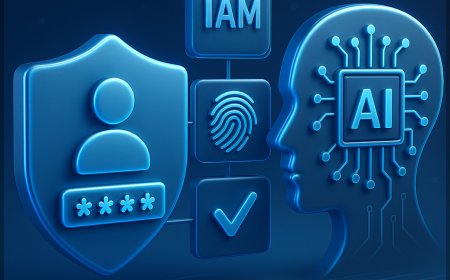
Artificial Intelligence is constantly reshaping Identity and Access Management (IAM), enabling organizations to move beyond traditional rule-based security models toward intelligent, adaptive, and risk-aware access control. AI-driven IAM systems continuously analyze user behavior, access patterns, device posture, and contextual signals to make real-time access decisions. This dynamic approach allows enterprises to proactively detect anomalies, prevent identity-based attacks, and respond to threats before they escalate into breaches.
Unlike old IAM solutions that rely on static policies, AI-powered IAM leverages machine learning and behavioral analytics to identify unusual activity, compromised credentials, and insider threats with greater accuracy. By automating identity verification, access governance, and threat detection, organizations can significantly reduce the risk of unauthorized access, credential theft, privilege misuse, and account takeover attacks. The result is a stronger security posture, improved compliance with regulations, and a seamless user experience across cloud, on-premises, and hybrid environments.
AI Determined Identity Analytics
AI-driven identity analytics is transforming the way organizations monitor, interpret, and secure identity-related activities across their digital environments. By leveraging machine learning, behavioral analytics, and advanced data modeling, modern identity analytics platforms can process massive volumes of authentication logs, access records, user behavior data, and system activity to establish accurate baselines of normal identity usage. This allows organizations to move beyond static, rule-based monitoring and adopt dynamic, intelligent identity security frameworks.
- AI-powered identity analytics continuously learn from user behavior across different devices, locations, applications, and timeframes. These systems build a detailed behavioral profile for each user and system, enabling real-time identity risk assessment and adaptive access control.
- As patterns evolve, AI adjusts automatically, ensuring access decisions remain aligned with current risk levels.
- AI in IAM, identity intelligence, zero trust security, continuous authentication, and identity governance, organizations can strengthen their cybersecurity posture, data protection, regulatory compliance, and threat prevention.
- AI-driven identity analytics plays a critical role in securing cloud environments, remote workforces, hybrid infrastructures, and digital transformation initiatives, helping enterprises achieve proactive identity risk management and resilient access security in an increasingly complex threat landscape.
AI-Powered Behavioral Biometrics

Behavioral Biometrics in Access Control is redefining how modern organizations secure digital identities beyond traditional usernames and passwords. In today’s advanced authentication frameworks, identity verification does not stop at login. Instead, AI-powered behavioral biometrics continuously analyze unique user behavior patterns such as keystroke dynamics, mouse movements, touchscreen gestures, scrolling behavior, navigation habits, and typing speed. These behavioral traits act as a continuous digital signature, enabling organizations to strengthen identity verification, user authentication, and access security.
- By leveraging artificial intelligence, machine learning, and behavioral analytics, systems can build detailed profiles of how each user normally interacts with applications and devices.
- This enables continuous authentication and real-time identity validation, ensuring that access remains secure throughout the entire user session. Unlike static authentication methods, behavioral biometrics adapts over time, learning subtle changes in user behavior while maintaining high accuracy.
- This intelligent monitoring plays a critical role in detecting credential compromise, account takeover attacks, insider threats, and unauthorized access attempts. If a cybercriminal gains access using stolen credentials, their interaction patterns, such as typing rhythm or cursor movement, will likely differ from those of the legitimate user.
- AI-driven identity security systems can instantly detect these anomalies and trigger risk-based authentication, step-up verification, or session termination without disrupting the user experience.
AI-Driven Deepfake Defense
Deepfake Defense in Identity and Access Management (IAM) has become a critical priority as generative AI continues to evolve. One of the most serious emerging threats to digital identity security is the rise of AI-generated deepfakes that can convincingly imitate a person’s face, voice, and mannerisms. Cybercriminals are now using advanced AI tools to create highly realistic audio and video forgeries, enabling identity impersonation, biometric fraud, and social engineering attacks. This means that attackers could potentially bypass facial recognition systems, voice authentication, and remote identity verification processes by using fake videos or cloned voices, thereby putting organizations at significant risk.
- Enterprises are rethinking their approach to biometric authentication, remote access security, and identity proofing. To counter these threats, modern AI-powered identity verification platforms are implementing advanced liveness detection, anti-spoofing technology, and deepfake detection algorithms.
- These intelligent systems analyze micro-expressions, skin texture, eye movement, lighting consistency, voice modulation, and speech patterns to confirm that a real human is present and not a manipulated recording. In voice-based authentication, AI can also prompt users with random phrases, making it extremely difficult for pre-recorded or AI-generated audio to pass verification.
- This has created an AI-versus-AI security landscape, where defensive AI is deployed to detect the subtle flaws in malicious AI-generated content. By integrating AI in IAM, biometric security, identity fraud prevention, zero trust architecture, continuous authentication, and adaptive access control, organizations can protect against account takeover, identity theft, deepfake attacks, and unauthorized access.
- Deepfake defense is now a vital layer of modern identity security, cybersecurity strategy, data protection, and regulatory compliance, helping enterprises maintain trust in digital interactions while enabling secure remote onboarding and access in an increasingly AI-driven world.
Zero Trust in IAM
AI in Zero Trust Security Architecture is transforming how organizations enforce continuous verification and adaptive access control across modern digital environments. The Zero Trust model is built on the principle of “never trust, always verify, meaning every user, device, and application request must be authenticated, authorized, and continuously evaluated—regardless of whether it originates inside or outside the network. This generates massive volumes of access requests, authentication events, and contextual data, making manual decision-making and static security rules ineffective. This is where artificial intelligence and machine learning become essential enablers of scalable Zero Trust implementation.
- By integrating AI-driven risk analytics, behavioral intelligence, and real-time decision engines into Zero Trust frameworks, organizations can instantly analyze identity signals, device posture, network context, location, application sensitivity, and historical behavior patterns.
- AI models calculate a dynamic risk score and trust level for every access attempt, allowing systems to automatically grant access, enforce multi-factor authentication (MFA), trigger step-up verification, or deny access based on real-time risk. For example, if a user attempts to access sensitive data from an unmanaged device or unfamiliar network, AI-enabled Zero Trust systems can immediately identify the risk and respond accordingly.
Conclusion

Artificial Intelligence is no longer an enhancement in Identity and Access Management—it is the foundation of modern identity security, access control, and digital trust. From AI-driven identity analytics and behavioral biometrics to deepfake defense and Zero Trust enforcement, AI is enabling organizations to move from reactive security models to proactive, adaptive, and intelligent identity protection. In an era where cloud adoption, remote work, digital transformation, and sophisticated cyber threats are accelerating, traditional IAM approaches are no longer sufficient.
By integrating AI in IAM, identity governance, privileged access management, zero trust security, continuous authentication, biometric security, and identity fraud prevention, enterprises can significantly strengthen their cybersecurity posture, data protection, regulatory compliance, and risk management. AI-powered IAM ensures that access decisions are context-aware, risk-based, and continuously evaluated, reducing the chances of unauthorized access, credential compromise, insider threats, account takeover attacks, and identity fraud. The result is a more resilient, scalable, and future-ready identity infrastructure that supports both security and business agility.
As the threat landscape continues to evolve, organizations must adopt intelligent identity solutions, AI-enabled access management, and zero-trust architectures to stay ahead of attackers and protect critical digital assets.
Whether you are planning to implement IAM, modernize identity infrastructure, adopt Zero Trust, or enhance identity security with AI, CyberSec is your trusted partner for secure digital transformation.
Connect with CyberSec Consulting today to strengthen your identity security, protect digital access, and build a future-ready cybersecurity framework.
For More Information, Click on - Identity and Access Management
For More Updates on CyberSecurity Insights & Trends: Visit CyberSec Consulting
What's Your Reaction?
 Like
0
Like
0
 Dislike
0
Dislike
0
 Love
0
Love
0
 Funny
0
Funny
0
 Angry
0
Angry
0
 Sad
0
Sad
0
 Wow
0
Wow
0