




















What Is CTEM? A Strategic Approach to Threat Exposure and Cyber Risk Management
Discover how Continuous Threat Exposure Management (CTEM) helps organizations in the UK, UAE, and Saudi Arabia identify, prioritize, and remediate cyber risks using a proactive, risk-based cybersecurity approach.


Introduction
Cybersecurity strategies across the UK, UAE, and Saudi Arabia must continuously evolve to keep pace with an increasingly complex and dynamic threat landscape. Expanding digital transformation, cloud adoption, and hybrid infrastructures have significantly increased the modern attack surface, making traditional security approaches insufficient.
Relying solely on vulnerability management or detection and response tools (EDR/XDR/SIEM) is no longer effective in addressing today’s sophisticated cyber threats. Detection-based solutions operate reactively, identifying threats only after indicators of compromise (IOCs) are triggered. This reactive posture introduces uncertainty, as organizations lack measurable assurance of how these tools will perform during real-world attack scenarios such as ransomware, lateral movement, or zero-day exploits.
Moreover, these tools provide limited visibility into risk impact analysis. Security teams are often unable to quantify how a specific vulnerability or misconfiguration could affect critical assets, business operations, or regulatory compliance if exploited by adversaries.
Standard vulnerability scanning programs generate extensive lists of CVEs without actionable context. Security teams are left to manually prioritize remediation efforts without clear insights into exploitability, business criticality, or threat intelligence correlation.
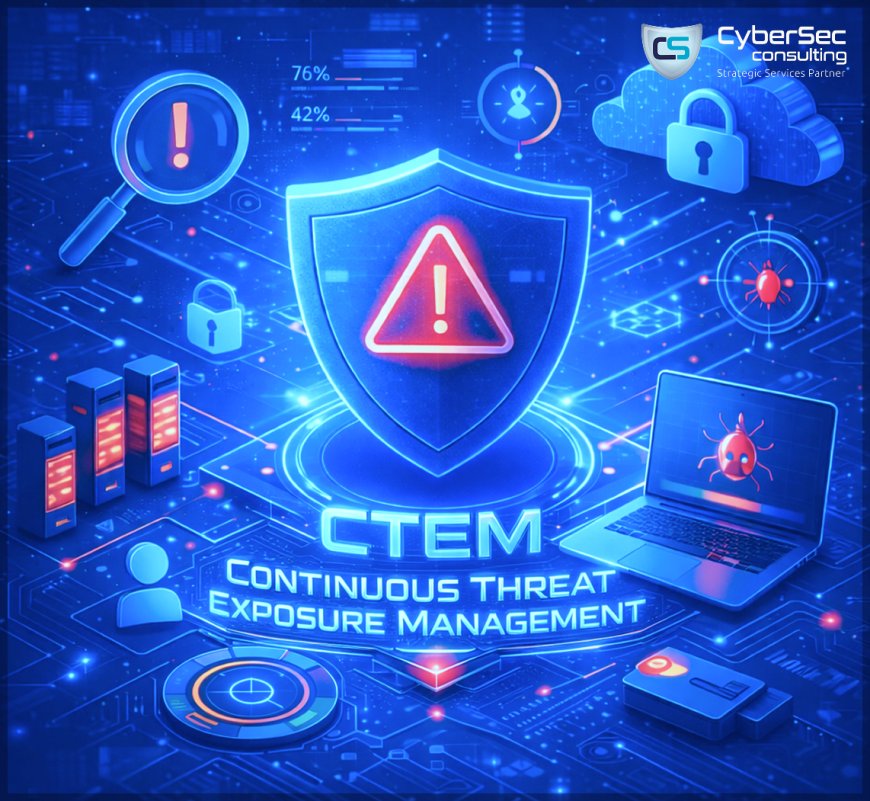
A modern approach requires Threat Exposure Management (CTEM) - a proactive, risk-based cybersecurity strategy that continuously identifies, validates, prioritizes, and remediates exposures. CTEM integrates attack surface management, breach and attack simulation, and risk-based prioritization to deliver measurable security outcomes.
Organizations across the Middle East and UK regions must adopt remediation-driven security models to reduce cyber risk, enhance resilience, and stay ahead of evolving adversaries.
Growing Black Hole of Cybersecurity Risks in Modern Enterprises

Organizations across the UK, UAE, and Saudi Arabia continue to invest in cybersecurity programs, yet many struggle to manage an expanding universe of security risks. Rapid adoption of cloud computing, IoT, OT environments, and hybrid work models has significantly increased the enterprise attack surface, creating a complex and fragmented security landscape.
Limited visibility across IT, OT, IoT, and multi-cloud environments remains a critical challenge. Despite tool consolidation, many organizations still face poor integration between security solutions, a lack of orchestration, and minimal automation through SOAR playbooks, leading to operational inefficiencies.
Business transformations such as remote and hybrid work have introduced new vulnerabilities. Lack of security-by-design approaches during these transitions often results in misconfigurations, identity gaps, and inconsistent access controls, weakening the overall security posture.
Security teams are further burdened by alert fatigue, multiple dashboards, and fragmented telemetry, impacting their ability to respond effectively. While automation improves scalability, critical areas such as secure code review, vulnerability remediation, and DevSecOps processes still require expert intervention and cannot be fully automated.
A unified risk-centric view is often missing, compounded by the ongoing cybersecurity talent shortage across the Middle East and UK regions. As highlighted in industry reports, organizations struggle to keep pace with evolving technologies, regulatory requirements, and budget constraints.
Continuous digital transformation ensures that the attack surface will keep expanding. Absolute vulnerability elimination is unrealistic; however, unmanaged exposure is a significant risk.
Continuous Threat Exposure Management (CTEM) offers a proactive, intelligence-driven approach - enabling organizations to identify, prioritize, validate, and remediate risks based on real-world exploitability and business impact.
Adopting CTEM empowers enterprises to reduce cyber risk while continuing to innovate and scale securely in today’s dynamic threat landscape.
Continuous Threat Exposure Management (CTEM): Building a strong Cybersecurity Posture

Organizations across the UK, UAE, and Saudi Arabia are shifting toward proactive cybersecurity strategies to manage today’s rapidly expanding attack surface. Continuous Threat Exposure Management (CTEM) has emerged as a strategic framework that enables businesses to strengthen their security posture through a continuous, risk-driven approach.
CTEM is designed as a cyclical and intelligence-led program that aligns cybersecurity with business objectives. Rather than applying a one-size-fits-all model, CTEM adapts to an organization’s unique risk profile, threat landscape, and digital infrastructure, making it highly effective for modern enterprises operating in cloud-first and hybrid environments.
A key objective of CTEM is to continuously assess how accessible, exposed, and exploitable an organization’s assets are across IT, OT, IoT, and multi-cloud ecosystems. This approach provides deep visibility into real-world attack paths, helping security teams understand where adversaries are most likely to strike.
By prioritizing vulnerabilities based on exploitability, threat intelligence, and business impact, CTEM enables organizations to focus remediation efforts on high-risk exposures instead of being overwhelmed by large volumes of vulnerabilities.
Industry insights suggest that organizations adopting risk-based cybersecurity frameworks like CTEM can significantly reduce breach likelihood by improving prioritization and response efficiency.
CTEM Framework Operates through five Continuous Processes
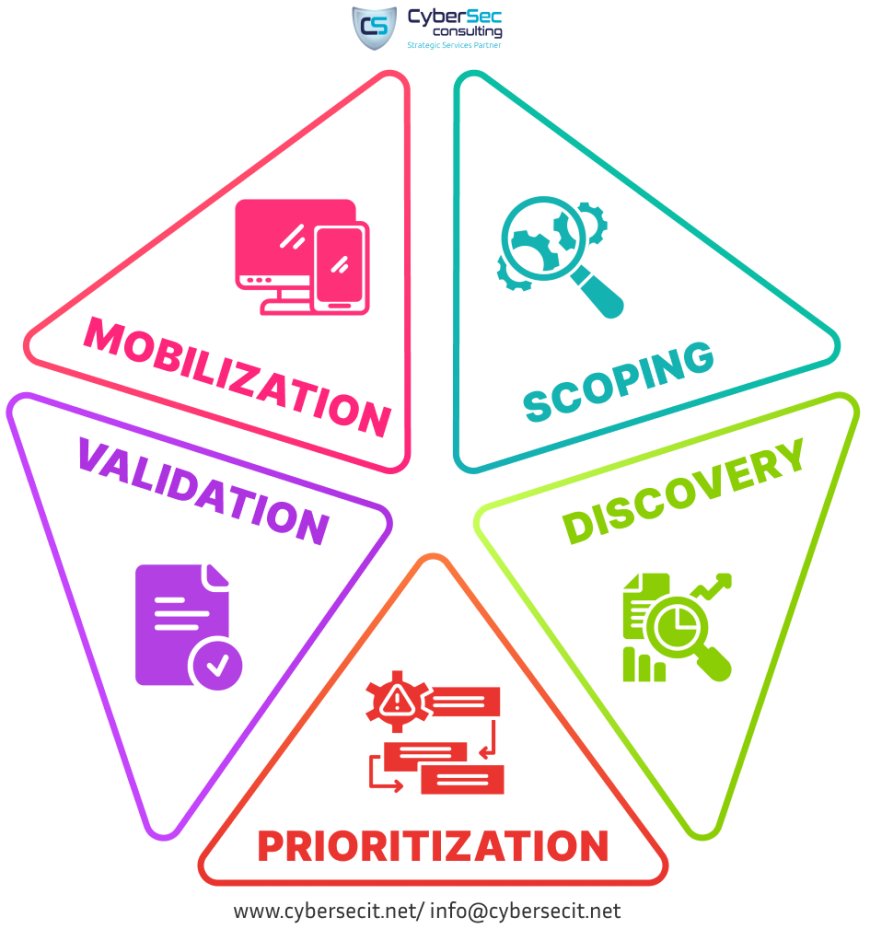
- Scoping, Discovery, Prioritization, Validation, and Mobilization - ensuring that security strategies evolve alongside changes in infrastructure, business operations, and emerging threat vectors.
- Adopting CTEM empowers enterprises to transition from reactive defense models to proactive, measurable, and outcome-driven cybersecurity, ensuring resilience in an increasingly complex digital landscape.
Scoping
Traditional vulnerability management programs often fail to provide complete coverage of exploitable risks, especially in today’s complex environments across the UK, UAE, and Saudi Arabia, where organizations operate across multi-cloud, SaaS, IoT, and hybrid infrastructures. These legacy approaches primarily rely on periodic scanning and lack the contextual intelligence needed to identify real-world attack paths and business-critical exposures.
Continuous Threat Exposure Management (CTEM) addresses this gap by introducing a risk-based scoping strategy that aligns cybersecurity efforts with business priorities. The initial phase focuses on defining a comprehensive attack surface scope, identifying critical assets, crown jewels, and high-impact systems that could disrupt operations if compromised. This includes infrastructure components, identity systems, cloud workloads, and sensitive data repositories.
Unlike traditional models, CTEM incorporates an attacker-centric perspective, leveraging threat intelligence, adversary simulation, and attack path analysis to understand how cybercriminals may exploit vulnerabilities. This approach enhances visibility into real exploitability rather than theoretical risk, enabling more effective prioritization.
A well-defined CTEM scope typically includes External Attack Surface Management (EASM), SaaS Security Posture Management (SSPM), Digital Risk Protection Services (DRPS), and monitoring of Dark Web and Deep Web sources for leaked credentials and emerging threats.
By integrating risk-based vulnerability management, exposure assessment, and continuous monitoring, organizations can strengthen their cyber resilience, reduce attack surface risk, and improve overall security posture in an increasingly evolving threat landscape.
Discovery
After completing the scoping phase, the next step in **Continuous Threat Exposure Management (CTEM)** is to discover and map organizational assets while assessing their real-world risk of exploitation. Enterprises across the UK, UAE, and Saudi Arabia must prioritize visibility into critical assets, cloud workloads, SaaS applications, endpoints, and identity systems that form part of their expanding attack surface. Focus should remain on business-critical systems identified during scoping, as these represent the highest potential impact in the event of a cyberattack.
Asset discovery in a modern risk-based cybersecurity framework goes beyond identifying known vulnerabilities (CVEs). It includes detecting misconfigurations, weak access controls, excessive privileges (IAM risks), exposed APIs, shadow IT, insecure network configurations, and gaps in phishing resilience. Integrating attack surface management (ASM), cloud security posture management (CSPM), and identity threat detection and response (ITDR) provides deeper visibility into these exposures.
Once assets and their associated risks are identified, organizations must move toward risk-based prioritization. This involves analyzing exploitability, threat intelligence, business impact, and attack path likelihood to determine which exposures pose the greatest risk. Security teams can then focus remediation efforts on high-risk vulnerabilities rather than addressing issues based solely on severity scores.
This data-driven, intelligence-led approach enables organizations to enhance cyber resilience, reduce attack surface risk, and improve security operations efficiency, ensuring proactive defense against evolving cyber threats.
Prioritization
Organizations across the UK, UAE, and Saudi Arabia must adopt a risk-based vulnerability prioritization approach to identify exploits that have the highest likelihood of being leveraged by adversaries. Within a Continuous Threat Exposure Management (CTEM) framework, each vulnerability or exploit is evaluated using threat intelligence, exploitability metrics, and business impact analysis rather than relying solely on CVSS scores.
Security teams need to assess how frequently a specific exploit is observed in real-world cyberattacks, ransomware campaigns, and threat actor playbooks. Equal importance must be given to understanding the potential business impact, including operational disruption, data breaches, regulatory non-compliance, and financial loss. Evaluation of compensating controls - such as network segmentation, endpoint protection, identity access controls, and web application firewalls (WAF) is critical to determine whether existing defenses can reduce the risk if primary controls fail.
Another key factor is aligning each risk against the organization’s defined risk tolerance threshold, ensuring that remediation efforts focus on exposures that exceed acceptable risk levels. CTEM further enhances decision-making by providing a context-driven rationale for deferring certain vulnerabilities, based on factors like asset criticality, system topology, configuration dependencies, and attack path analysis.
Additionally, CTEM enables organizations to rapidly respond to zero-day vulnerabilities and emerging threats, ensuring real-time risk prioritization, faster remediation cycles, and improved cyber resilience in a constantly evolving threat landscape.
Validation
The Validation phase in Continuous Threat Exposure Management (CTEM) acts as a controlled cyberattack simulation, where security teams emulate real-world adversary tactics, techniques, and procedures (TTPs) to test identified exposures. Organizations across the UK, UAE, and Saudi Arabia are increasingly adopting this approach to strengthen proactive cybersecurity, threat detection, and incident response capabilities.
This stage leverages techniques such as Breach and Attack Simulation (BAS), penetration testing, red teaming, and adversary emulation to evaluate how effectively attackers can exploit vulnerabilities across networks, endpoints, cloud environments, and identity systems. It also provides deep visibility into how SIEM, EDR, XDR, and SOC operations respond under simulated attack conditions.
The validation process is designed to achieve three critical objectives:
- Assess the likelihood of successful exploitation, helping organizations understand real-world attack feasibility and prioritize high-risk vulnerabilities.
- Analyze the potential business and operational impact, including attack paths, lateral movement, privilege escalation, and access to critical assets or sensitive data.
- Verify the effectiveness of remediation strategies, ensuring that implemented controls, patches, or configuration changes successfully mitigate the identified risks.
By continuously validating exposures, organizations can move beyond theoretical risk assessments and adopt a data-driven, evidence-based security approach. This enables improved threat detection, faster response times, and stronger cyber resilience, ensuring a continuously optimized security posture in an evolving threat landscape.
Mobilization
The Mobilization phase in Continuous Threat Exposure Management (CTEM) focuses on aligning stakeholders, processes, and technologies to execute remediation strategies effectively. Organizations across the UK, UAE, and Saudi Arabia often face challenges with tool-centric security approaches, where recommended actions from security platforms may not align with business objectives, operational priorities, or executive expectations.
Mobilization addresses this gap by fostering cross-functional collaboration between security teams, IT, DevOps, risk management, and leadership. This ensures that remediation efforts are business-aligned, risk-driven, and operationally feasible, reducing friction and accelerating decision-making.
A critical aspect of this phase is understanding that cybersecurity remediation cannot be fully automated. While automation tools such as SOAR (Security Orchestration, Automation, and Response) can handle repetitive tasks like patch deployment or rule updates, complex issues involving application security, secure code review, configuration hardening, and architectural changes require human expertise and strategic oversight
Effective mobilization integrates risk-based remediation planning, governance frameworks, and continuous monitoring, ensuring that all stakeholders contribute to reducing the organization’s attack surface. It also emphasizes prioritized execution based on exploitability, business impact, and compliance requirements.
Implementing a CTEM program may seem complex, but adopting a structured, collaborative, and intelligence-driven approach enables organizations to enhance cyber resilience, improve security posture, and achieve scalable cybersecurity operations in an evolving threat landscape.
Conclusion

As cyber threats continue to evolve across the UK, UAE, and Saudi Arabia, organizations can no longer rely on fragmented, reactive security approaches. Expanding attack surfaces, complex hybrid infrastructures, and increasingly sophisticated adversaries demand a proactive, intelligence-driven cybersecurity strategy.
Continuous Threat Exposure Management (CTEM) provides a structured and scalable framework that enables organizations to move beyond traditional vulnerability management and detection-based models. By integrating scoping, discovery, prioritization, validation, and mobilization, CTEM ensures continuous visibility into real-world exposures, enabling security teams to focus on what truly matters, reducing exploitable risk, and strengthening cyber resilience.
A risk-based, attacker-centric approach empowers organizations to align cybersecurity with business priorities, improve decision-making, and enhance operational efficiency. As digital transformation accelerates, adopting CTEM is no longer optional - it is essential for building a resilient, future-ready security posture.
CyberSec offers top-notch assessment services designed to evaluate your real-world attack surface, identify high-risk exposures, and deliver actionable, risk-based remediation strategies aligned with your business objectives. Connect with us today to secure your organization and build a proactive defense against evolving cyber threats.
What's Your Reaction?
 Like
0
Like
0
 Dislike
0
Dislike
0
 Love
0
Love
0
 Funny
0
Funny
0
 Angry
0
Angry
0
 Sad
0
Sad
0
 Wow
0
Wow
0