
























Agentic AI in (IAM) Identity and Access Management: The Future of Cybersecurity Services
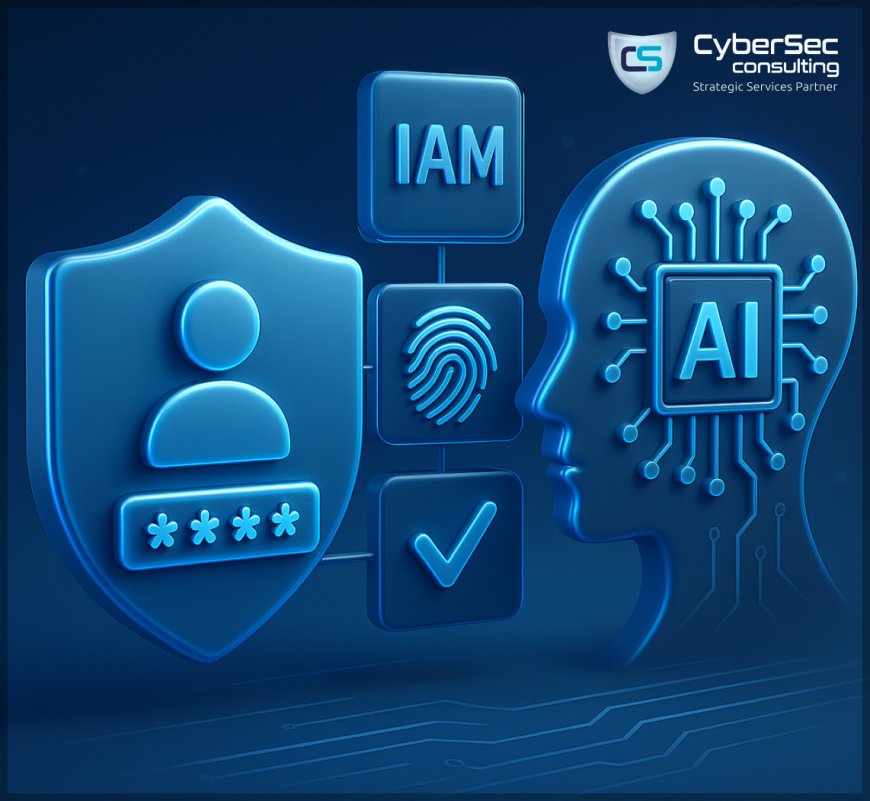
Agentic AI is reshaping Identity and Access Management (IAM) by introducing intelligent automation, real-time decision-making, and stronger identity governance across human and non-human identities. As AI agents operate autonomously across systems, organizations must implement modern IAM best practices—such as agent discovery, secure delegation, least-privilege authorization, out-of-band human authentication, and continuous monitoring.


Introduction
Enterprises face numerous challenges in managing their infrastructure, such as multi-cloud, hybrid systems, and Active Directory. A top-level enterprise firm usually struggles with identity governance, which leads to compliance risks and permissions. By acquiring the Agentic AI in IAM, enterprises can integrate IAM agents to automate risk-aware decision handling and facilitate security. We will explore how AI agents are helping IAM identify security issues, entitling business to replace rigid excess controls with AI-driven IAM. This enhances security, operational efficiency, and compliance.
Traditional IAM architectures work on static policies. Most of the time, traditional IAM strives to handle the increasing number of users and devices and complicated network interactions. To resolve and work on such challenges, enterprises are now adopting agentic AI. Agentic AI helps enterprises to autonomously adapt real-time decision-making to improve system enterprise architecture. This clearly indicates the shift in IAM operations and governance.
Top Agentic AI Identity and Access Management Concepts
Agentic AI in IAM is all about integrating AI's dynamic decision-making power. This approach constantly evaluates risk and automatically modifies the access controls. This ensures that permissions are always aligned with the current requirements. If we elaborate further, it means substituting static credentials with ephemeral, task-specific tokens. These are valid only for the specific tasks.
IAM Agents are software-based entities designed to streamline identity management operations. They can act on behalf of human users such as employees, contractors, and partners. They represent non-human actors, including machines, IoT devices, and autonomous AI systems. These agents handle essential identity-related tasks by managing identity creation, deprovisioning, request validation, and permission oversight. Because these agents serve such a wide range of user types, the IAM framework must remain adaptable and robust to accommodate the distinct security needs of each group.
AI Agent-Specific IAM Challenges

Advent of AI Agents Adds Additional Layers of Complexity:
- Dynamic Context Handling Across Departments: AI agents frequently operate across multiple systems and departments, necessitating a flexible approach to access management that can adjust based on real-time context.
- Just-in-Time (JIT) and Task-Based Access: JIT (Just-in-Time) access and task-based permissions should be the exclusive form of access for AI agents because they differ from human users. The implementation of temporary credentials decreases both unauthorized access attempts and accidental resource excess.
- Authentication Complexities with Traditional Methods: Traditional authentication methods, including MFA and static passwords, create complexities for autonomous systems because they do not work efficiently in these applications. Autonomous systems need temporary access credentials which administrators can generate temporarily before immediately removing access.
- Governance & Accountability for Autonomous AI Actions: It is crucial to ensure that every action performed by an AI agent is fully auditable. This requires continuous monitoring and detailed logging to ensure compliance and accountability.
Traditional authentication mechanisms, such as MFA and static passwords, can create operational challenges for autonomous systems. These systems demand short-lived, automatically generated credentials that administrators can provision and revoke instantly, ensuring secure and efficient machine-level authentication across the cybersecurity infrastructure. Identity governance and accountability for AI agents are essential. Every autonomous action must be fully traceable, supported by continuous monitoring and comprehensive audit logs to meet regulatory requirements, strengthen compliance, and enhance overall security visibility.
Benefits of Agentic AI in IAM - Enhanced Security, Automation & Governance
Agentic AI is transforming Identity and Access Management (IAM) by improving automation, reducing identity risk, strengthening access governance, and ensuring real-time decision-making across complex digital ecosystems. With the rise of autonomous systems, machine identities, and AI-driven workloads, organizations must adopt modern IAM best practices to achieve zero-trust security, identity governance automation, and secure access control.
Dynamic Agentic AI in IAM
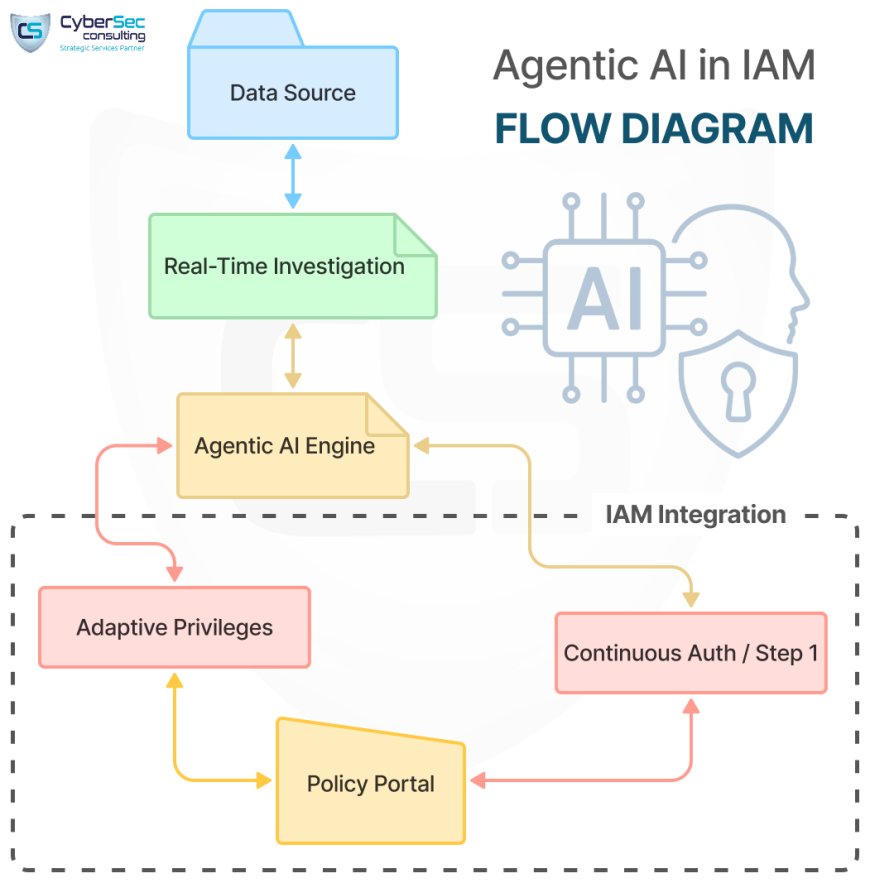
IAM Best Practices for Managing Agentic AI
- Know Your Agents - Organizations must implement discovery, classification, and lifecycle management for every AI agent interacting with their environment. Each agent should be assigned a unique identity linked to a verified human or system owner and de-provisioned when no longer required. Understanding agent types—based on autonomy level, interaction method, and trust boundary—is essential for applying the right IAM security controls. Assigning a responsible sponsor or custodian strengthens identity governance and ensures consistent oversight.
- Detect Agents Proactively - Modern IAM systems should clearly identify when a session or connection originates from an AI agent. Using behavioral analytics, device telemetry, automation patterns, and threat intelligence signals, organizations can distinguish legitimate agents from human users or malicious bots. Tagging AI-driven sessions enhances visibility and allows other security tools to enforce policy-based access control and prevent unauthorized automation.
- Use Delegation, Not Impersonation - When AI agents perform actions on behalf of humans, organizations must use secure delegation protocols rather than giving agents direct user credentials. Human users should grant limited, scoped permissions through delegated access tokens. This approach maintains accountability, traceability, and zero-trust principles, ensuring that every agent action ties back to a verified human identity and remains within predefined limits.
- Authenticate Humans Out-of-Band - For sensitive or high-risk operations initiated by an AI agent, IAM platforms should require human verification through out-of-band authentication methods such as push prompts, QR-based approvals, or secure mobile confirmations. This eliminates the need for users to share credentials with AI systems, ensuring real-time human oversight and protecting critical workflows and confidential data.
- Authorize Agents with Least Privilege - AI agents should operate under a least privilege access model, with only the minimum permissions required for specific tasks. Using time-bound access, short-lived tokens, and policy-based authorization helps minimize privilege misuse and reduce attack surfaces. For high-risk actions, human-in-the-loop verification must be required before the agent proceeds, aligning with modern zero-trust access management.
- Verify Humans for Sensitive AI Actions - Any sensitive activity initiated by an AI agent should include mandatory human approval. Organizations can use robust verification methods, such as biometric matching (e.g., selfie verification), which are harder for AI to spoof compared to traditional OTPs. Properly logged approval checkpoints strengthen auditing, ensure regulatory compliance, and support identity threat detection and response (ITDR).
- Monitor AI Agent Activity Continuously - Implementing strong monitoring, auditing, and anomaly detection is essential for managing Agentic AI. Organizations should log all actions performed by AI agents, track behavioral deviations, and monitor resource usage to detect misuse or suspicious activity. When anomalous behavior is detected, access should be automatically revoked, and the agent should undergo immediate review to maintain compliance and integrity of access governance.
Conclusion

Traditional IAM implementation often requires a lot of manual configurations, complex decisions, approvals, and reviews. Enterprises usually invest their considerable time in managing their access reviews and ensuring compliance. Such manual implementations consume time and are at risk of human error. That’s where implementing IAM with AI adds advancement over traditional methods.
Connect with CyberSec Consulting to upgrade your existing IAM strategies and to learn more about (IAM) Identity and Access Management.
For More Information, Click on - Identity and Access Management
For More Updates on CyberSecurity Insights & Trends: Visit CyberSec Consulting
What's Your Reaction?
 Like
0
Like
0
 Dislike
0
Dislike
0
 Love
0
Love
0
 Funny
0
Funny
0
 Angry
0
Angry
0
 Sad
0
Sad
0
 Wow
1
Wow
1