























Server Hardening: Improve Network Security & Protect Business Infrastructure
Strengthen your business with server hardening best practices. Learn how to improve network security, reduce cyber threats, and protect IT infrastructure with advanced cybersecurity strategies and solutions.



Introduction
Over 60% of small and medium-sized businesses (SMBs) experience cyber attacks each year, and nearly 43% of cyber threats specifically target SMBs due to limited cybersecurity infrastructure. Small and medium-sized businesses often lack the resources to maintain dedicated cybersecurity teams, but this does not reduce the critical need for strong cybersecurity protection.
A robust cybersecurity strategy is essential to safeguard sensitive data, prevent ransomware attacks, and ensure business continuity. Think of cybersecurity for your business the same way you secure your vehicle: leaving it unlocked increases the risk of theft and damage.
Similarly, weak security measures expose your IT infrastructure, networks, and endpoints to cyber threats such as phishing, malware, and data breaches. Implementing best practices like network security, endpoint protection, and proactive threat management helps businesses stay resilient against evolving cyber risks while maintaining trust and operational stability.
Understanding Server Hardening

Server hardening refers to the process of securely configuring servers to strengthen cybersecurity and minimize vulnerabilities across the IT infrastructure. A well-hardened server significantly reduces the risk of cyber attacks, unauthorized access, and system misuse. By implementing server hardening best practices, organizations can reduce the overall attack surface and protect critical assets from threats such as malware, ransomware, and data breaches.
Failure to apply proper server security measures can lead to serious consequences, including data loss, operational downtime, compliance violations, and reputational damage. On the other hand, a securely configured and hardened server environment ensures robust network security, safeguards sensitive business data, and supports uninterrupted business continuity. Effective server hardening plays a crucial role in building a resilient cybersecurity posture for modern enterprises.
Key Server Hardening Best Practices for Strong Cybersecurity

- A comprehensive server hardening strategy requires a multi-layered cybersecurity approach to protect IT infrastructure and reduce cyber risk.
- Securing the server environment begins with physical security, ensuring servers are hosted in controlled data centers with restricted access to authorized personnel only. Implementing strict access control and the principle of least privilege (PoLP) limits user permissions, preventing unauthorized access to critical systems.
- Effective server security also involves disabling or removing unnecessary services, roles, and features to minimize the attack surface.
- Proper configuration management and change control processes ensure system integrity and prevent unauthorized modifications. Strengthening user account security through strong password policies and multi-factor authentication (MFA) is essential to protect against credential-based attacks.
- Regular patch management and software updates are critical to address vulnerabilities and defend against emerging cyber threats.
- Removing unused or outdated applications further reduces exposure to potential exploits. Continuous monitoring and real-time threat detection enable organizations to identify suspicious activities, unauthorized access attempts, and potential breaches early.
- Comprehensive reporting and security auditing ensure stakeholders remain informed, enabling faster incident response and improved compliance. Together, these server hardening best practices enhance network security, strengthen cyber resilience, and ensure business continuity.
Key Roles and Responsibilities in Server Hardening and IT Infrastructure Security
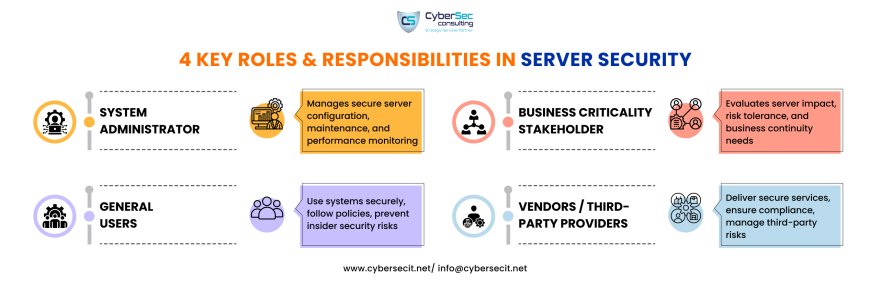
A well-defined structure of roles and responsibilities is essential for maintaining a secure, high-performing, and resilient server environment. Effective server hardening and cybersecurity management rely on collaboration between key stakeholders to ensure system security, performance, and business continuity.
- System Administrator - Responsible for server setup, secure configuration, ongoing maintenance, and performance monitoring. This role ensures implementation of server hardening best practices, patch management, and protection against vulnerabilities across the IT infrastructure.
- Business Criticality Stakeholder - Understands the importance of server infrastructure to core business operations. This role evaluates the impact of server downtime, defines acceptable risk levels, and ensures alignment between cybersecurity strategies and business continuity planning.
- General Users - Employees and teams who rely on secure server access to perform daily operations. Following cybersecurity policies, access controls, and security awareness practices helps reduce insider threats and strengthen overall network security.
- Vendors/ Third-Party Providers - Includes external providers delivering hardware, software, or cloud services. Strong vendor risk management, secure integrations, and compliance with cybersecurity standards are essential to prevent third-party vulnerabilities.
Each role contributes significantly to strengthening server security, improving operational efficiency, and building a robust cybersecurity framework that protects business-critical data and systems.
Key Considerations for Server Hardening and Cybersecurity Best Practices
A strong server hardening strategy requires continuous vigilance, proper documentation, and detailed reporting to ensure robust cybersecurity, network security, and business continuity.

- Continuous Monitoring and Post-Change Security Testing -
- Configuration Management and Change Documentation -
- Server Reporting, Compliance, and Risk Management - Comprehensive server reporting is vital for monitoring performance, ensuring cybersecurity compliance, and enabling proactive infrastructure management. Regular reports provide insights into uptime, resource utilization, and system health, helping organizations optimize performance and prevent potential failures. Detailed logging and auditing are also critical for meeting industry regulations and data protection standards.
Effective reporting supports cybersecurity insurance requirements by providing verifiable evidence of security controls, monitoring, and incident response readiness. This not only strengthens risk management strategies but also ensures smoother insurance claims and improved organizational resilience against cyber threats.
Conclusion

Server hardening is no longer optional; it is a critical component of modern cybersecurity strategy for protecting business infrastructure, sensitive data, and IT environments. As cyber threats such as ransomware, phishing, and advanced persistent attacks continue to evolve, organizations must adopt proactive security measures to reduce vulnerabilities and secure their attack surface. Implementing server hardening best practices, including access control, patch management, continuous monitoring, and configuration management, significantly enhances network security and ensures long-term business continuity.
A well-hardened server environment not only protects against data breaches and unauthorized access but also improves operational efficiency, regulatory compliance, and overall cyber resilience. Businesses that invest in strong cybersecurity frameworks are better positioned to prevent disruptions, maintain customer trust, and safeguard critical digital assets.
CyberSec offers advanced server hardening solutions along with a comprehensive range of cybersecurity services and service-based solutions designed to protect your organization from evolving cyber threats. From risk assessment to implementation and continuous monitoring, CyberSec ensures your IT infrastructure remains secure, compliant, and future-ready.
What's Your Reaction?
 Like
0
Like
0
 Dislike
0
Dislike
0
 Love
0
Love
0
 Funny
0
Funny
0
 Angry
0
Angry
0
 Sad
0
Sad
0
 Wow
0
Wow
0