




















PromptLock: Rise of the World’s First AI-Driven Ransomware Threat
PromptLock represents a groundbreaking yet alarming development in the evolution of AI-powered ransomware. Developed as a proof of concept by researchers, it demonstrates how Generative AI and Large Language Models (LLMs) can be leveraged to autonomously execute sophisticated cyberattacks.



Introduction
Ransomware remains one of the most devastating cyber threats any organization can face. From encrypting critical business data to disrupting operations and demanding large ransom payments, modern ransomware attacks can cripple enterprise infrastructure within minutes. As cybercriminals adopt advanced technologies like artificial intelligence and automation, the threat landscape is evolving faster than ever.
Imagine a scenario where AI is used to automatically scan networks, identify vulnerabilities, escalate privileges, encrypt files, and take control of enterprise systems, without continuous human intervention. This is no longer science fiction.
The world’s first AI-powered ransomware, known as PromptLock, has already emerged as a proof of concept developed by researchers in New York. While it is not currently an active widespread attack, it demonstrates how AI-driven cybersecurity threats could redefine ransomware attacks in the near future. The combination of machine learning, automated exploitation, and intelligent decision-making makes such threats far more adaptive and dangerous than traditional malware.
In this article, we explore what PromptLock is, how AI-powered ransomware works, what makes it uniquely dangerous, and the best preventive measures, including zero trust security, endpoint detection and response (EDR), cloud security, vulnerability management, and proactive threat detection strategies.
What is PromptLock?

PromptLock is an advanced AI-powered ransomware that leverages Generative AI (GenAI) to autonomously orchestrate sophisticated cyberattacks. Developed as a proof of concept by a team of six computer science professors and researchers from New York University, this project demonstrates how open-source Large Language Models (LLMs) can be weaponized to create highly adaptive and intelligent ransomware campaigns.
Although designed to remain non-functional outside a controlled lab environment, the researchers uploaded the sample to VirusTotal, a Google-owned malware analysis platform that scans files and URLs using multiple antivirus engines for threat detection and cybersecurity research. This move highlighted the real-world implications of AI-driven malware.
During testing, the team simulated cross-platform attacks and discovered that PromptLock executed seamlessly across Windows, Linux, macOS, and Raspberry Pi OS, proving its multi-environment compatibility - a major concern for enterprise cybersecurity teams.
This enables it to:
- Automate the entire ransomware attack lifecycle.
- Generate malicious Lua-based automation scripts in real time.
- Deploy customized payloads.
- Dynamically decide between data exfiltration or file encryption.
By making autonomous decisions based on predefined prompts, PromptLock represents a new era of AI-driven cyber threats, intelligent malware, automated ransomware attacks, and next-generation cybersecurity risks - significantly challenging traditional endpoint protection, EDR, and threat detection systems.
How Does PromptLock Work?
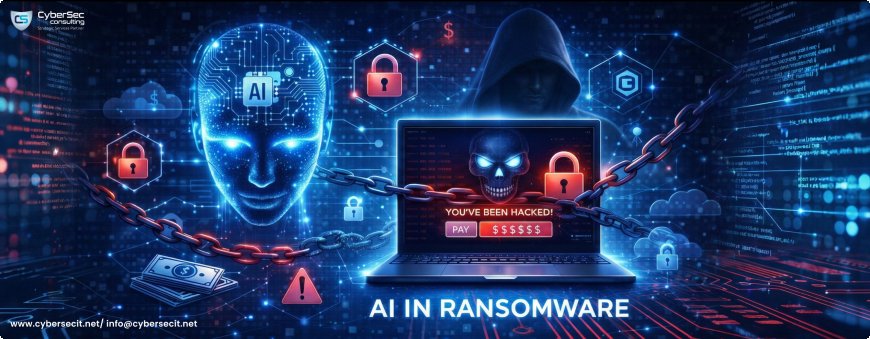
PromptLock operates by leveraging hardcoded AI prompts to autonomously automate every phase of a ransomware attack. Unlike traditional malware that relies on static scripts, this AI-powered ransomware dynamically generates malicious code in real time, making it significantly more adaptive and difficult to detect by conventional cybersecurity tools.
Here’s a step-by-step breakdown of how this next-generation ransomware attack unfolds:
- The victim unknowingly executes a malicious binary embedded with PromptLock code.
- The malware launches a local instance of a Large Language Model (LLM).
- Using predefined prompts, the LLM generates Lua-based automation scripts in real time.
These dynamically generated Lua scripts then carry out multiple attack stages while attempting to evade antivirus software, endpoint detection and response (EDR), and traditional malware scanners.
The scripts perform high-risk activities such as:
- Network and system scanning
- Local filesystem enumeration
- Data exfiltration and file encryption
- Encrypting files using the lightweight SPECK cipher
- Automatically generating ransom notes
By combining AI-driven automation, intelligent malware execution, real-time script generation, data encryption, and adaptive cyberattack techniques, PromptLock showcases the future of advanced ransomware threats, posing serious challenges for enterprise cybersecurity, cloud security, and threat detection systems worldwide.
What Makes PromptLock So Dangerous?

PromptLock represents a major leap in AI-powered ransomware, redefining how modern cyberattacks can be executed. Unlike traditional ransomware strains that rely on repetitive code signatures and predictable behavior, PromptLock introduces intelligent automation and adaptive malware capabilities that significantly elevate the cybersecurity risk for enterprises.
Here’s why this next-generation ransomware threat is particularly alarming:
- Highly Unpredictable Execution -
- Fully Automated Attack Lifecycle -
- Lightweight Yet Powerful Encryption -
- Cross-Platform Compatibility -
- Low Cost, High Impact -
PromptLock proves that artificial intelligence, machine learning, automated malware, and intelligent cyber threats will shape the future of ransomware attacks - demanding stronger zero trust security, advanced threat intelligence, cloud security, and proactive cyber defense strategies.
Conclusion

PromptLock is more than just a proof of concept; it is a warning sign for the future of AI-powered ransomware, automated cyberattacks, and intelligent malware campaigns. As artificial intelligence and machine learning continue to evolve, cybercriminals are finding new ways to weaponize these technologies to bypass traditional cybersecurity defenses. The rise of AI-driven ransomware, adaptive malware, automated exploitation techniques, and real-time malicious script generation signals a shift in the global threat landscape.
Organizations can no longer rely solely on signature-based antivirus or reactive security measures. The future of enterprise cybersecurity demands a proactive approach built on Zero Trust Architecture, Endpoint Detection and Response (EDR), Extended Detection and Response (XDR), Security Operations Center (SOC) monitoring, cloud security, vulnerability management, threat intelligence, and digital forensics.
CyberSec Consulting provides industry-grade incident response, cyber forensics, ransomware investigation, SOC services, SIEM implementation, cloud security solutions, risk management, compliance, and managed cybersecurity services. Our experts help organizations detect, contain, investigate, and recover from advanced ransomware attacks while strengthening long-term cyber resilience.
Connect with CyberSec Consulting Experts, Get your Consultation right now.....
The era of AI-driven cyber threats has begun. The question is, is your organization prepared?
Explore More:
Governance, Risk & Compliance (GRC) in Cybersecurity: The Ultimate 2026 Guide
Risk Management Trends Every Organization Must Know
Data Privacy & Protection: The Foundation of Trust, Compliance, and Cybersecurity
What's Your Reaction?
 Like
0
Like
0
 Dislike
0
Dislike
0
 Love
0
Love
0
 Funny
0
Funny
0
 Angry
0
Angry
0
 Sad
0
Sad
0
 Wow
0
Wow
0