



















The Future of Identity and Access Management: Top IAM Security Trends for 2026
Explore the top Identity and Access Management (IAM) trends for 2026, including Zero Trust security, non-human identities, Agentic AI governance, ITDR integration, and outcome-driven IAM metrics. Learn how modern identity security strategies strengthen cloud security, privileged access management, compliance, and enterprise cyber resilience.



Introduction
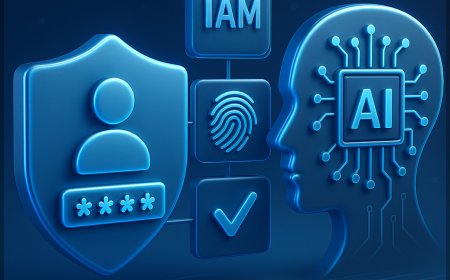
The requirement for robust Identity and Access Management (IAM) has never been greater. As enterprises accelerate digital transformation, adopt cloud-native architectures, and integrate AI-driven operations, identity security has become the foundation of modern cybersecurity strategy. Organizations must now secure human users, privileged accounts, machine identities, APIs, and even autonomous AI agents, making IAM security a critical pillar of enterprise risk management.
In 2026, Identity and Access Management is no longer just a collection of tools such as Multi-Factor Authentication (MFA), Single Sign-On (SSO), or Privileged Access Management (PAM). It is evolving into a structured, governance-driven discipline focused on visibility, access control, identity lifecycle management, and continuous monitoring. Businesses are shifting toward identity-first security models aligned with Zero Trust Architecture, Identity Governance and Administration (IGA), and Identity Threat Detection and Response (ITDR).
The year ahead signals practical transformation rather than tool expansion. Enterprises are prioritizing identity inventory, consolidating fragmented IAM solutions, strengthening cloud identity security, and implementing measurable identity risk metrics. Modern IAM programs now emphasize full-lifecycle governance, provisioning, monitoring behavioral anomalies, managing privileged access, and secure deprovisioning.
Identity is rapidly becoming the control plane of modern cybersecurity, driving how organizations manage risk, compliance, and digital transformation.
Following key IAM trends highlight where enterprise identity security strategy must evolve in 2026 to stay resilient, secure, and audit-ready:
Shifting Identity and Access Management From Tools to Strategic Practice

Enterprise demand for Identity and Access Management (IAM) solutions has surged due to cloud adoption, hybrid work environments, and accelerating digital transformation initiatives. Significant investments in IAM security tools, including Multi-Factor Authentication (MFA), Single Sign-On (SSO), Privileged Access Management (PAM), and Identity Governance and Administration (IGA), have strengthened access control capabilities. However, rapid expansion of disconnected tools often creates complexity, policy gaps, and operational fatigue.
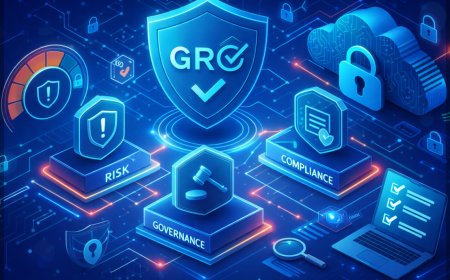
A mature identity security strategy requires moving beyond product accumulation toward a governance-driven IAM framework aligned to enterprise risk management and compliance mandates. Strong IAM programs centralize policy enforcement, integrate Zero Trust security principles, and map identity controls directly to business-critical assets and regulatory obligations such as GDPR, ISO 27001, and NIST standards. Clear structure reduces tool sprawl while improving visibility, access accuracy, and identity lifecycle management.
Three essential considerations can strengthen an IAM practice:
- Begin by evaluating business objectives, regulatory compliance requirements, and risk exposure before selecting controls.
- Establish a unified terminology across teams covering Identity Governance, workload identity, service accounts, and non-human identities to eliminate ambiguity.
- Evaluate effectiveness through measurable metrics such as identity coverage, access hygiene, privileged access reviews, and incident response performance rather than relying solely on feature comparisons.
Strategic IAM transformation enhances cyber resilience, strengthens compliance posture, and reduces identity-driven attack surfaces.
Non-Human Identities Will Dominate Modern IAM Strategy

Enterprise environments now contain significantly more non-human identities (NHIs) than traditional user accounts. Machine identities, service accounts, API keys, workload identities, containers, certificates, and IoT device credentials operate continuously across cloud-native and hybrid infrastructures. Rapid expansion of automation, DevOps pipelines, microservices, and AI-driven workloads has accelerated the growth of these programmatic identities.
Unmanaged machine identities represent a major cybersecurity risk. Orphaned service accounts, exposed API tokens, hardcoded secrets, and expired certificates create attack surfaces frequently targeted in modern breaches. Strong Identity and Access Management (IAM) programs must evolve to address machine identity management, cloud identity security, and privileged access governance beyond human users.
Extending Zero Trust security principles to non-human identities strengthens enterprise resilience and improves operational reliability. Visibility and ownership remain foundational steps in reducing identity-based threats.
Practical actions to strengthen NHI security include:
- Comprehensive discovery and classification of machine identities across on-premises, multi-cloud, and SaaS environments, assigning accountable human owners to every credential.
- Automated identity lifecycle management covering provisioning, credential rotation, monitoring, and secure deprovisioning, combined with secrets management and privileged access vaulting to eliminate hardcoded API keys.
Effective governance of non-human identities enhances compliance readiness, reduces identity sprawl, and protects modern digital ecosystems against identity-driven cyberattacks.
Agentic AI Introduces New Identity Governance Challenges

Enterprise adoption of Agentic AI, autonomous AI agents, and intelligent automation platforms is reshaping Identity and Access Management (IAM) strategies. Task-driven AI agents now execute workflows, trigger API calls, analyze data, and make operational decisions across cloud applications and enterprise systems. Persistent digital identities assigned to these AI agents require structured governance, lifecycle management, and strict access control to prevent misuse or over-privileging.
Rapid expansion of non-human identities, including bots and AI-driven agents, demands a governance-first approach aligned to Zero Trust security, Identity Governance and Administration (IGA), and Identity Threat Detection and Response (ITDR) frameworks. A practical evaluation method can guide prioritization: determine whether an AI agent can access sensitive data, store regulated information, or interact externally through APIs or internet-facing systems. Any affirmative answer requires strong lifecycle controls, least-privilege access policies, and continuous security monitoring.
Human oversight remains critical for high-impact workflows to minimize operational and financial risk when AI behavior deviates from expected patterns. Effective governance of Agentic AI in 2026 includes:
- Implementation of purpose-bound, time-limited credentials that automatically expire after task completion.
- Clear delegation chains linking AI authority to accountable human owners, supported by periodic access reviews.
- Continuous behavioral monitoring and anomaly detection to identify excessive data access or high-velocity multi-system actions.
Strong AI identity governance strengthens enterprise cybersecurity resilience and compliance readiness.
Outcome-Driven Metrics and Continuous IAM Evaluation

Growing enterprise reliance on Identity and Access Management (IAM) demands measurable proof that cybersecurity risk is declining. Boards and executive leaders expect data-backed validation that identity security programs, Zero Trust architecture, and access control frameworks are delivering tangible risk reduction. Outcome-driven metrics now replace feature-based reporting, shifting attention toward performance, resilience, and governance maturity.
Modern IAM strategy emphasizes continuous security monitoring and risk-based measurement aligned to cybersecurity KPIs, compliance frameworks, and enterprise risk management objectives. Exceptions also require structured tracking. Documented control gaps, defined remediation timelines, and assigned accountability strengthen governance transparency and audit readiness.
Practical IAM performance indicators include:
- Coverage metrics measuring privileged account protection through phishing-resistant MFA and strong authentication controls.
- Identity hygiene indicators tracking orphaned service accounts, secret rotation gaps, and certificate lifecycle risks.
- Access correctness measurements evaluating role alignment, privilege creep reduction, and timely access reviews.
- Identity threat detection and response (ITDR) benchmarks monitoring mean time to detect (MTTD) and mean time to respond (MTTR) to identity-related incidents.
Continuous evaluation does not seek perfection. Consistent, data-driven signals demonstrating reduced attack surface, improved governance, and stronger compliance posture define real IAM success in 2026.
Identity Threat Detection and Response Converges with IAM

Escalating cyberattacks targeting identity infrastructure are driving tighter alignment between Identity and Access Management (IAM) and Identity Threat Detection and Response (ITDR). Attackers increasingly exploit compromised credentials, misconfigured service accounts, and excessive privileges to enable lateral movement and data breaches. Stronger integration between IAM, Security Information and Event Management (SIEM), and extended detection and response (XDR) platforms strengthens enterprise cybersecurity posture.
Modern IAM programs now embed real-time identity monitoring, behavioral analytics, and automated remediation into core governance processes. Risk-based authentication, anomaly detection, and privileged access monitoring play central roles in defending against account takeover, insider threats, and credential abuse. Automation accelerates containment, while human oversight safeguards high-impact security decisions.
Growing adoption of cloud security, SaaS applications, and machine identities makes closer collaboration between Identity Governance and Administration (IGA) and security operations essential. Non-human identities (NHIs), including API tokens and service accounts, often introduce hidden attack paths if left unmanaged.
Key operational actions include:
- Blocking creation of high-privilege service accounts lacking verified ownership.
- Triggering alerts on abnormal token activity across multiple systems for rapid investigation.
- Monitoring unauthorized certificate replacements outside approved change management windows.
Stronger convergence between IAM and threat detection enhances Zero Trust security, reduces breach risk, and improves regulatory compliance readiness in 2026.
Conclusion

Identity and Access Management (IAM) is no longer a supporting cybersecurity function; it is the strategic core of modern enterprise security architecture. Rapid expansion of cloud computing, AI-driven automation, non-human identities, and hybrid work environments has permanently reshaped the threat landscape. Sustainable cyber resilience now depends on mature identity governance, strong privileged access management (PAM), secure cloud identity security, and integrated Identity Threat Detection and Response (ITDR) capabilities.
Future-ready organizations will prioritize Zero Trust security models, continuous identity monitoring, measurable IAM metrics, and lifecycle-based access control. Clear visibility across human and machine identities, automated credential management, risk-based authentication, and compliance alignment with frameworks such as GDPR, ISO 27001, and NIST will define a competitive advantage.
Businesses that treat IAM as a governance-driven discipline rather than a fragmented toolset will reduce identity-related breaches, minimize privilege creep, and strengthen their regulatory compliance posture.
For the finest, industry-leading IAM implementation services, advanced identity governance solutions, and strategic cybersecurity consulting, connect with Cybersec Consulting today and build a future-proof identity security framework.
References
What's Your Reaction?
 Like
0
Like
0
 Dislike
0
Dislike
0
 Love
0
Love
0
 Funny
0
Funny
0
 Angry
0
Angry
0
 Sad
0
Sad
0
 Wow
0
Wow
0