

























Can Your AI Application Protect Sensitive Enterprise Data During User Prompts?
Can your AI application protect sensitive enterprise data? Explore AI prompt security, data protection, RAG security, IAM, DLP, and AI security risks for Egyptian organisations.

Introduction
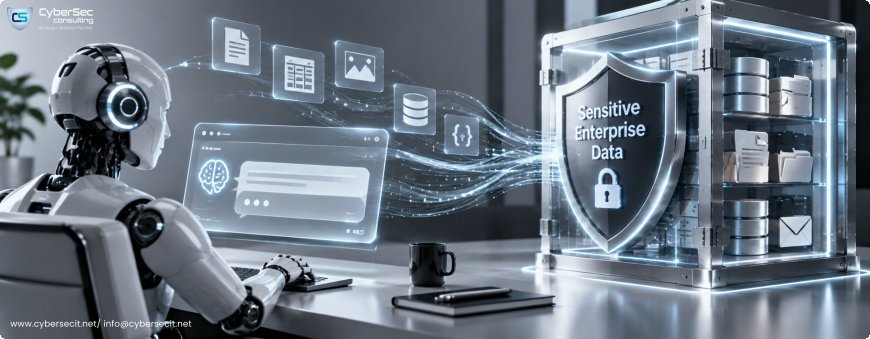
Artificial intelligence is becoming part of everyday enterprise operations across Egypt. Businesses are using AI applications to analyse documents, support customer service, automate workflows, generate code, and access business information. This growth is also creating new AI security and data protection risks.
A simple user prompt can contain highly sensitive enterprise data. Employees may enter customer records, financial information, employee details, credentials, source code, contracts, security information, or confidential business data into an AI application. Such information can create serious data privacy and cybersecurity risks if the application lacks appropriate security controls.
Egypt continues to strengthen its cybersecurity ecosystem and digital security capabilities. The National Telecommunications Regulatory Authority has highlighted the importance of protecting personal data and reducing cybersecurity risks. Egypt also ranked in Tier 1 of the ITU Global Cybersecurity Index for 2023 to 2024.
The key question for organisations is simple: Can an AI application identify, control, and protect sensitive data before it reaches the AI model?
Effective AI data security needs to start at the prompt level. Prompt-level data security can help organisations detect sensitive information, apply access controls, prevent unauthorised data exposure, and support stronger AI security compliance.
Egyptian organisations adopting generative AI should therefore look beyond model security. Enterprise AI security must also consider what users submit, what data the AI application can access, how that information is processed, and what the AI system returns.
For businesses seeking AI security services in Egypt, prompt-level protection can become an important layer of a broader AI security assessment. The goal is not simply to secure the AI model. The goal is to protect enterprise data throughout the AI application lifecycle.
What Sensitive Data Can Enter an AI Prompt?
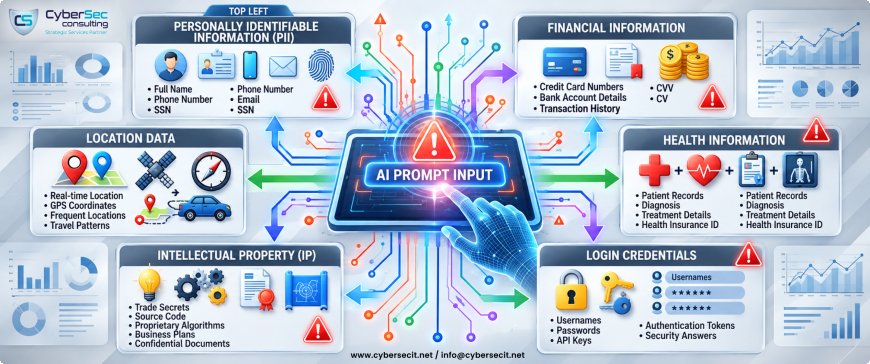
AI applications can process business information within seconds. A simple prompt can also contain sensitive enterprise data. Security teams need visibility into what users enter, where the data goes, and how it is handled. Sensitive information can enter AI prompts through chatbots, AI assistants, coding tools, document analysis platforms, and enterprise AI applications.
- Personally Identifiable Information - Prompts may contain names, email addresses, phone numbers, identification details, addresses, or other personal information. Exposure can create data privacy, AI security, and compliance risks.
- Customer and Employee Records - Customer profiles, employee information, HR records, support tickets, performance data, and internal communications may be submitted to AI tools. Enterprise AI security controls should protect this information throughout its lifecycle.
- Financial and Payment Information - Financial statements, transaction records, bank details, payment information, invoices, and pricing data can enter AI prompts. Data protection and privacy controls can help reduce unauthorized exposure.
- Intellectual Property - Product designs, research, business models, proprietary processes, patents, strategic documents, and confidential intellectual property can become part of AI interactions. AI data security should identify and protect sensitive intellectual property.
- Source Code and Technical Documentation - Developers may submit source code, architecture diagrams, configuration files, technical documentation, or troubleshooting data to AI coding tools. Such activity can create source code security and AI application security concerns.
- Credentials, API Keys, and Secrets - Prompts can accidentally contain passwords, API keys, authentication tokens, encryption keys, certificates, or other secrets. Secrets management and identity security controls should prevent sensitive credentials from entering AI platforms.
- Legal and Contractual Information - Contracts, legal documents, agreements, dispute records, and confidential correspondence may contain sensitive business information. AI governance and information security controls should define how such data can be processed.
- Security Configurations and Incident Data - Security teams may use AI tools to analyse logs, alerts, configurations, vulnerability details, incident reports, or threat intelligence. These inputs can reveal valuable information about the organisation's cybersecurity architecture and security posture.
- Internal Business Strategies - Business plans, acquisition discussions, pricing strategies, market intelligence, product roadmaps, and executive communications can enter AI prompts. Enterprise AI governance should establish clear controls for confidential business information.
- Regulated and Compliance-Sensitive Information - AI prompts may contain information subject to privacy, financial, healthcare, contractual, or industry-specific requirements. AI compliance, data protection, privacy management, and regulatory risk management should be considered before sensitive data is processed through AI applications.
- The Key Security Question - The issue is not only whether an AI application can process sensitive data. Organisations also need to know what data enters the prompt, who can access it, where it is processed, how long it is retained, and whether it can be exposed through the AI workflow.
How Sensitive Data Reaches AI Applications
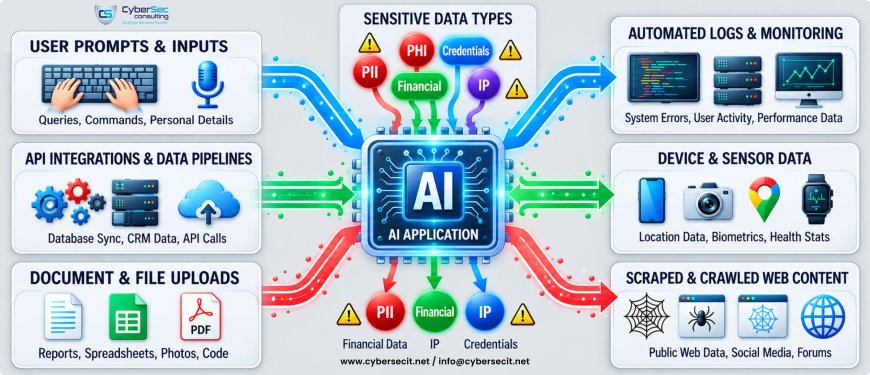
Enterprise AI adoption is creating new data security risks for businesses in Egypt. AI applications can now connect users with business systems, cloud platforms, documents, databases, and internal applications. Each connection can become a potential AI data security risk.
A typical enterprise AI data flow looks like this:
User → Prompt → AI Application → AI Model → Response
Sensitive information can enter this flow through several points. Organisations need strong AI security controls before sensitive data reaches the model. Egypt's cybersecurity framework continues to emphasise information security, data protection, and secure digital infrastructure.
- Directly Entered Sensitive Information - Employees may enter customer information, financial records, credentials, employee data, source code, contracts, or business strategies into an AI prompt. This creates a direct sensitive data exposure risk. A secure AI application should detect sensitive information before processing the request.
- Copy and Paste From Enterprise Systems - Users often copy information from CRM platforms, ERP systems, email, databases, or internal applications. Customer records and financial information can quickly move into an AI tool through this process. AI data protection controls should identify sensitive content and apply the required security policy.
- Uploaded Documents - AI applications can process PDFs, spreadsheets, reports, contracts, presentations, and other business documents. Documents may contain confidential business data, personal information, intellectual property, or regulated information. Document uploads therefore require data classification, access control, encryption, and AI security monitoring.
- Connected SaaS Applications - Modern AI applications can connect with business platforms and cloud services. These integrations may provide access to CRM data, collaboration platforms, cloud storage, HR systems, or financial applications. Weak permissions can increase the risk of unauthorised data access through AI applications.
- AI Agents Accessing Internal Systems - AI agents can perform tasks across enterprise environments. They may search databases, retrieve documents, create records, or interact with internal applications. Strong IAM and access control become essential. AI agents should only access information required for their authorised tasks.
- Retrieval Augmented Generation - Retrieval Augmented Generation (RAG) allows an AI application to retrieve information from enterprise knowledge sources before generating a response. Poorly configured RAG permissions can expose confidential information to unauthorised users. RAG security, AI data protection, access governance, and data privacy should therefore be part of an enterprise AI security assessment.
- Automated Workflows and APIs - AI applications can also receive data through APIs and automated business workflows. Customer data, transaction details, system logs, documents, and application records may reach an AI model without a user manually entering them. API security, authentication, authorisation, monitoring, and AI cybersecurity controls become important at this stage.
Can the AI Application Detect Sensitive Information Before Processing?
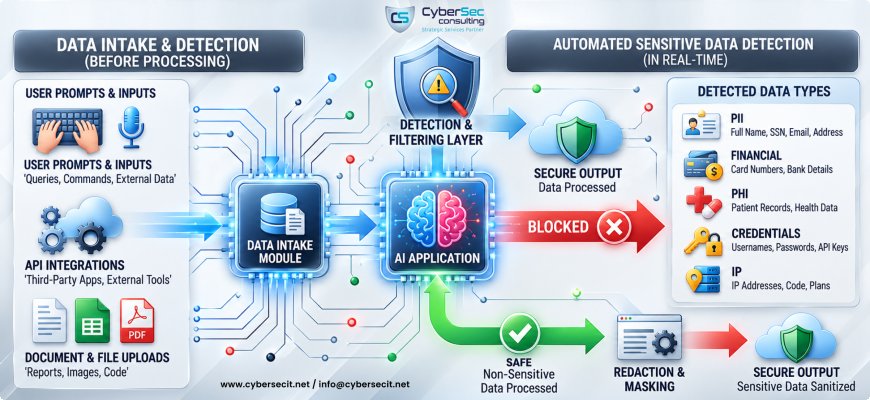
Sensitive data protection should begin before an AI application sends information to the model. Enterprise organisations in Egypt are adopting AI for customer service, business analysis, software development, automation, and knowledge management. These use cases can increase the need for AI security, data protection, and cybersecurity controls.
Egypt continues to strengthen its focus on personal data protection and cybersecurity. NTRA has highlighted the importance of protecting personal data and reducing cybersecurity risks. Egypt was also placed in Tier 1 of the ITU Global Cybersecurity Index for 2023 to 2024.
- A secure AI application security strategy should inspect prompts before sensitive information reaches the model. This process can combine data classification, sensitive data detection, Data Loss Prevention, identity controls, and AI security monitoring.
- PII Detection - Personally identifiable information can appear inside ordinary business prompts. Examples include:
-
- Names
- National identification information
- Phone numbers
- Email addresses
- Customer records
- Employee information
- Addresses
- Account information
- Financial Data Detection - Financial information requires additional protection during AI processing. Prompts may contain:
-
- Bank account information
- Payment information
- Transaction records
- Customer financial data
- Salary information
- Financial reports
- Secrets and Credential Detection - Users may accidentally include passwords, API keys, access tokens, private keys, or other authentication information in AI prompts. AI security controls should detect these secrets before they reach the model. Blocking credential exposure can reduce the risk of account compromise and unauthorised access.
- Source Code Detection - Developers increasingly use AI applications for coding and software development. Source code may contain proprietary logic, database credentials, API keys, security configurations, or intellectual property. Source code detection can identify sensitive development information before it is processed by an external or internal AI model.
- Business Confidential Data Classification - Enterprise prompts can contain information that is not publicly available. Examples include:
-
- Business strategies
- Contracts
- Customer agreements
- Internal reports
- Product plans
- Security assessments
- Intellectual property
- Mergers and acquisition information
- Keyword and Pattern Matching - Basic detection can use predefined keywords, regular expressions, and data patterns. A security policy could identify patterns associated with:
-
- Credit card information
- National identification numbers
- Email addresses
- API keys
- Passwords
- Account numbers
- Confidential documents
- Context-Aware Classification - Sensitive information does not always contain an obvious keyword or fixed pattern. Context-aware classification can examine the meaning and surrounding information within a prompt. A prompt containing an internal project name may not look sensitive by itself. Additional context could reveal that the information relates to a confidential project. Context-aware AI security can therefore provide deeper detection than simple keyword matching.
- Data Loss Prevention - Data Loss Prevention (DLP) can help organisations control how sensitive information enters AI applications. AI-focused DLP policies can:
-
- Detect sensitive information
- Block restricted prompts
- Mask sensitive values
- Redact confidential information
- Alert security teams
- Record security events
- Apply organisation-specific policies
- AI-Based Sensitive Data Detection - AI-based detection can help identify sensitive information that may be difficult to detect through predefined patterns. Machine learning and language models can analyse context, intent, and relationships between different pieces of information. This can support more advanced AI data security and cybersecurity solutions in Egypt.
- Key Question for Egyptian Organisations - The objective is not simply to detect sensitive data. The AI application should know what the data is, who is submitting it, whether the user is authorised to process it, and what action the security policy requires.
Prompt Security vs Data Security - What Is the Difference?
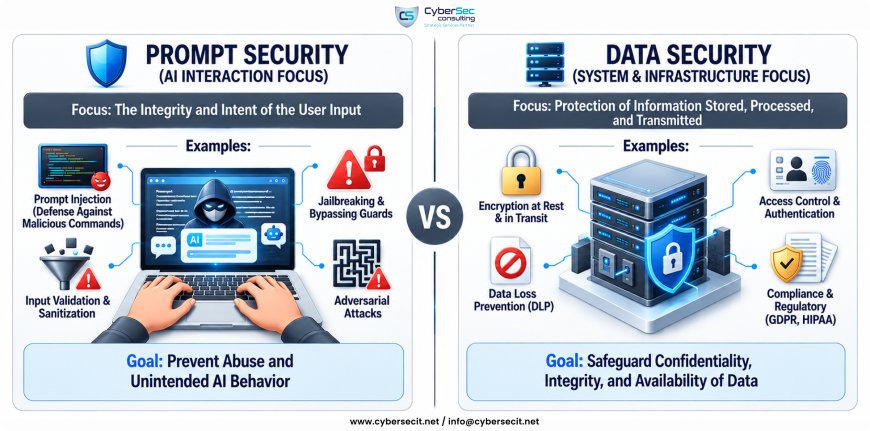
AI adoption is creating new cybersecurity risks for organisations in Egypt. Businesses are using AI applications for customer service, software development, data analysis, automation, and business operations. These applications can introduce risks related to both AI security and data protection.
Egypt has continued to strengthen its cybersecurity and personal data protection environment. NTRA highlights the importance of protecting personal data and reducing cybersecurity risks. Egypt was also placed in Tier 1 of the ITU Global Cybersecurity Index for 2023 to 2024.
- Two security areas require particular attention:
-
- Prompt security protects the AI application from malicious or manipulated instructions.
- Data security protects sensitive information processed, retrieved, stored, or shared by the AI application.
- Both areas should form part of an effective AI security assessment in Egypt.
- What Is Prompt Security? - Prompt security focuses on the instructions sent to an AI model. Attackers or users may manipulate prompts to bypass controls, change the model's behaviour, or access information that should remain restricted.
- Prompt Injection - Prompt injection occurs when malicious instructions influence an AI application to ignore its intended rules or perform unauthorised actions. An attacker may attempt to manipulate the AI system through carefully crafted instructions. Prompt injection testing should be part of AI security testing and AI application security assessments.
- Jailbreaking - AI jailbreaking involves attempts to bypass the safety controls or restrictions applied to an AI model. Successful attacks can make an AI application provide information or perform actions outside its intended security boundaries.
- Malicious Instructions - Malicious instructions can attempt to make an AI application reveal confidential information, execute unauthorised tasks, or interact with connected systems. Strong AI cybersecurity controls should identify suspicious instructions and apply appropriate security policies.
- Context Manipulation - AI applications often process information from multiple sources. Attackers can manipulate this context to influence how the model interprets a request. This risk becomes more important when AI applications connect to enterprise databases, documents, APIs, or internal systems.
What Is Data Security?
Data security focuses on protecting information throughout the AI application lifecycle. Sensitive information can be exposed even when there is no successful prompt injection attack.
- Sensitive Data Exposure - AI prompts may contain customer records, employee information, financial information, source code, credentials, contracts, or confidential business data. AI data protection should identify sensitive information before it reaches the model.
- Data Leakage - Data leakage can occur when sensitive information appears in prompts, model responses, logs, databases, or connected applications. Data Loss Prevention, encryption, monitoring, and access controls can help reduce the risk of AI data leakage.
- Excessive Data Access - An AI application may have access to more enterprise information than it actually needs. Excessive permissions can increase the potential impact of a security incident. IAM, least privilege, privileged access management, and identity governance can help control AI access to enterprise data.
- Unauthorised Retrieval - RAG-based AI applications can retrieve information from enterprise repositories. Incorrect permissions can allow users or AI agents to retrieve information they are not authorised to access. RAG security and AI access control should therefore be included in an AI security assessment.
- Data Retention - AI applications may retain prompts, uploaded documents, conversation history, logs, or generated responses. Organisations should understand what information is retained, why it is retained, where it is stored, and who can access it. AI data privacy and data retention controls are important considerations for Egyptian organisations handling sensitive information.
- Data Sharing - AI applications may interact with external AI providers, SaaS platforms, cloud environments, APIs, and enterprise applications. Each integration can create another data sharing point.
Prompt Security and Data Security Risks

Prompt security and data security address different risks.
- Prompt Security - Protects the AI application against:
-
- Prompt injection
- Jailbreaking
- Malicious instructions
- Context manipulation
- Data Security - Protects enterprise information against:
-
- Sensitive data exposure
- Data leakage
- Excessive data access
- Unauthorised retrieval
- Data retention risks
- Uncontrolled data sharing
AI Security Strategy in Egypt Needs Both Layers
The distinction becomes especially important when AI applications connect to enterprise systems. NTRA's cybersecurity framework recognises the need for technical and organisational controls for cybersecurity service providers and information infrastructure in Egypt.
-
- Prompt Security Asks - Can someone manipulate the AI application?
- Data Security Asks - Can sensitive enterprise information be accessed, exposed, retained, or shared without proper control?
- Effective - AI security services should evaluate both questions. A comprehensive AI security assessment can examine prompt handling, data access, RAG permissions, identity controls, DLP, data retention, and third-party integrations.
Prompt Security and Data Security Work Together
Prompt security and data security address different risks.
| Prompt Security | Data Security |
| Protects the AI application against | Protects enterprise information against: |
| Prompt injection | Sensitive data exposure |
| Jailbreaking | Data leakage |
| Malicious instructions | Excessive data access |
| Context manipulation | Unauthorised retrieval |
-
- The distinction becomes especially important when AI applications connect to enterprise systems. NTRA's cybersecurity framework recognises the need for technical and organisational controls for cybersecurity service providers and information infrastructure in Egypt.
- Prompt Security Asks - Can someone manipulate the AI application?
- Data Security Asks - Can sensitive enterprise information be accessed, exposed, retained, or shared without proper control?
- Effective AI Security Services - It should evaluate both questions. A comprehensive AI security assessment can examine prompt handling, data access, RAG permissions, identity controls, DLP, data retention, and third-party integrations.
- What Happens After Sensitive Data Enters the AI Application? - Sensitive data does not stop being a security concern after a user submits a prompt. The information can move through several layers of an AI application before the final response reaches the user.
- Application Logs - AI applications may record prompts, responses, user activity, errors, and system events in application logs. Sensitive information can therefore remain in logs even after the original AI session ends. AI security monitoring and log management should identify sensitive information and restrict access to security logs.
- Conversation History - Many AI applications retain previous conversations to support user experience and continuity. Conversation history may contain customer information, financial data, credentials, source code, or confidential business information. AI data protection policies should define what conversation data can be stored and who can access it.
- Model Context - AI models process information supplied through prompts, retrieved documents, system instructions, and application context. Sensitive information can become part of the model context during an AI interaction. Prompt security, data classification, access control, and sensitive data detection can help limit unnecessary information entering the model context.
- Vector Databases - RAG-based AI applications often use vector databases to store representations of enterprise information. Sensitive business documents can therefore become part of an AI retrieval environment.
- RAG Repositories - Retrieval Augmented Generation security requires careful control of the repositories connected to the AI application. Enterprise documents may include customer records, contracts, financial information, technical documentation, or internal policies. AI applications should retrieve only information that the requesting user or authorised AI agent can access.
- Analytics Platforms - AI applications may send usage information to analytics platforms. Data can include user identifiers, prompts, response information, application events, and usage patterns. Unnecessary sensitive information should not enter analytics environments.
- Third-Party AI Providers - Enterprise AI applications may rely on external AI models, cloud platforms, APIs, or SaaS providers. Sensitive information can therefore move beyond the organisation's direct environment.
- Debugging Systems - Development teams may capture prompts, responses, errors, and application states during troubleshooting. Sensitive information can unintentionally enter debugging tools or development environments. Secure software development and AI application security should prevent production data from being unnecessarily exposed through debugging systems.
- Backup and Retention Systems - AI data can also remain in backups, archives, snapshots, and retention systems. Deleting information from the primary application may not immediately remove every stored copy. Organisations should define AI data retention policies, backup controls, deletion procedures, and access permissions.
- AI Data Lifecycle Needs Continuous Protection - Sensitive enterprise data can move through many systems before and after an AI model processes it.
-
- Input - Sensitive information enters the AI application.
- Processing - The application prepares the information for AI processing.
- Model Context - Relevant information is supplied to the AI model.
- Output - The model generates a response.
- Storage - Prompts, documents, responses, or metadata may be retained.
- Logging - Application and security events may capture AI activity.
- Monitoring - Security teams monitor activity for suspicious behaviour and data exposure.
Key question for Egyptian organisations is simple:
Do you know where sensitive data goes after it enters your AI application?
Can Access Controls Prevent Sensitive Data Exposure?
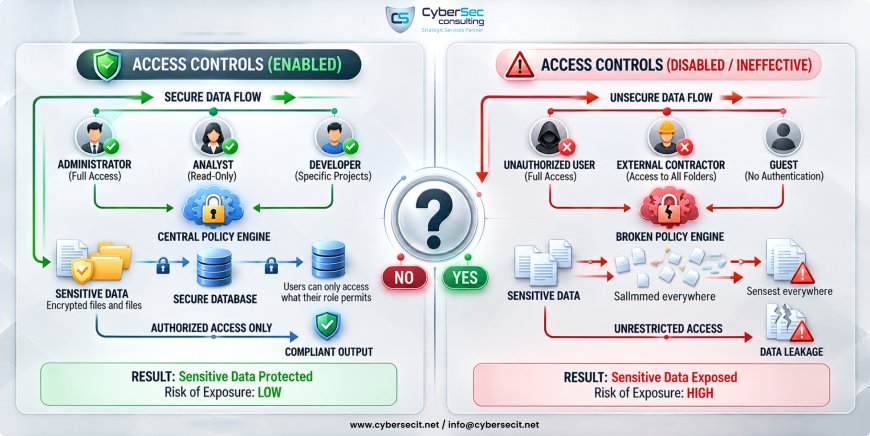
Access control is a critical part of AI security and enterprise data protection. AI applications can access customer records, internal documents, databases, SaaS platforms, APIs, and other business resources. Weak permissions can therefore increase the risk of sensitive data exposure in AI applications.
Egypt is strengthening its digital identity and cybersecurity capabilities. NTRA recently highlighted secure digital identity verification, personal data protection, and information security as part of Egypt's digital transformation.
A secure AI security strategy in Egypt should connect Identity and Access Management (IAM) with AI application security. Access decisions should apply to users, applications, APIs, service accounts, and AI agents.
- User Identity - Every AI interaction should be associated with a verified user identity. User identity helps organisations determine:
- Who is accessing the AI application?
- Which data the user can access?
- Which actions the user can perform?
- Which AI tools the user can use?
- Role-Based Access - Role-Based Access Control (RBAC) assigns permissions according to a user's business role. A finance employee may require access to financial information. A customer service employee may need customer records. AI applications should respect these existing access boundaries.
- Attribute-Based Access - Attribute-Based Access Control (ABAC) can make access decisions using additional attributes. These may include:
- User department
- Job function
- Location
- Data classification
- Device status
- Application
- Time
- Security context
- Least Privilege - Least privilege means giving users and AI applications only the access required for an authorised task. An AI assistant does not necessarily need access to every enterprise database. Limiting permissions can reduce the potential impact of AI data leakage and unauthorised access.
- Privileged Access - AI applications may interact with systems containing highly sensitive information. Privileged access controls can restrict access to critical systems and administrative functions. Privileged Access Management (PAM) can help organisations control elevated permissions and monitor sensitive activities.
- Application Permissions - AI applications should have clearly defined permissions. A business AI assistant may need access to a CRM system. It may not need access to HR records or security administration systems. Application permissions should therefore follow business requirements, data classification, and least privilege principles.
- API Authorisation - APIs allow AI applications to communicate with enterprise systems. Poor API authorisation can expose sensitive information to unauthorised users or applications. Strong authentication, authorisation, access tokens, API policies, and monitoring can support secure AI integration.
- Service Accounts - AI applications may use service accounts to communicate with databases, cloud platforms, APIs, and internal systems. Service accounts should have limited permissions and controlled credentials. Identity governance and privileged access management can help organisations monitor service account activity.
- Agent Permissions - AI agents can perform actions across multiple enterprise systems. An agent may retrieve documents, query databases, send messages, update records, or initiate workflows. Each action should be tied to appropriate permissions. AI agent security should verify whether the agent is authorised to access the requested resource before acting.
IAM Becomes an AI Security Control
IAM should not stop at human users.
Modern enterprise AI security needs to consider the identities of:
Users → AI Applications → APIs → Service Accounts → AI Agents → Enterprise Resources
Egypt's cybersecurity environment places increasing emphasis on information security and protection of digital systems. NTRA's cybersecurity service framework also establishes technical and organisational controls for cybersecurity service providers operating in Egypt.
A strong AI security assessment in Egypt can examine:
-
- User identity
- RBAC and ABAC
- Least privilege
- PAM
- Application permissions
- API authorisation
- Service accounts
- AI agent permissions
- RAG access controls
- Identity governance
RAG Creates a New Enterprise Data Exposure Layer
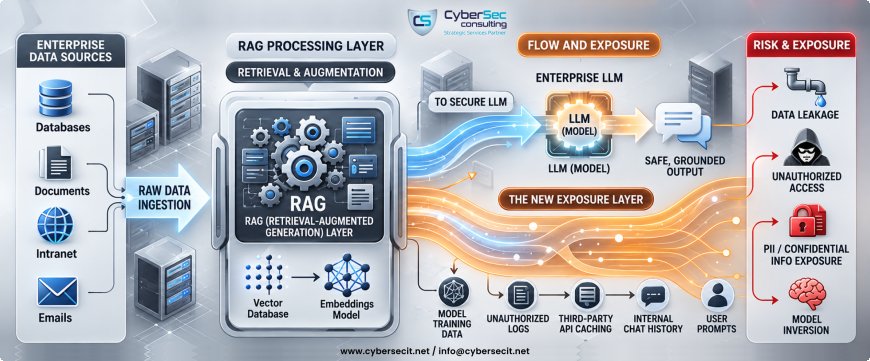
Retrieval Augmented Generation (RAG) is becoming an important architecture for enterprise AI applications. RAG allows an AI application to retrieve information from internal documents, databases, knowledge bases, cloud storage, and business systems before generating a response.
This approach can improve the relevance of AI responses. It can also introduce new AI data security and cybersecurity risks.
Egyptian organisations using generative AI, cloud platforms, and enterprise data systems should treat RAG security as part of their broader AI security strategy. RAG can connect an AI model to sensitive business information that was never part of the model itself.
A typical RAG architecture can look like this:
Enterprise Data → Data Processing → Vector Database → Retrieval → Prompt Context → AI Model → Response
How RAG Connects AI Applications to Enterprise Data
RAG allows an AI application to search enterprise information and retrieve relevant content for a specific user request. Enterprise sources can include:
-
- Customer databases
- Internal documents
- Contracts
- Financial records
- HR information
- Technical documentation
- Security policies
- Knowledge bases
- Cloud storage
- Business applications
Overly Broad Retrieval
RAG systems may retrieve more information than the user actually needs. A simple question could trigger retrieval from multiple documents or repositories.
Excessive retrieval can increase the amount of sensitive information exposed to the AI model. RAG security controls should limit retrieval based on user identity, data classification, business role, and request context.
Incorrect Access Controls
RAG does not automatically guarantee that retrieved information is authorised for the requesting user. Weak IAM and access control can allow an AI application to retrieve information that a user should not see. Security policies should be applied before information enters the model context.
Sensitive Documents Indexed Into Vector Databases
Enterprise documents are often converted into embeddings and stored in vector databases. These documents may contain:
-
- Customer information
- Financial data
- Source code
- Credentials
- Contracts
- Confidential business information
- Security documentation
Cross-User Data Exposure
Multiple users may interact with the same AI application and knowledge base. Incorrect retrieval logic can cause information belonging to one user, department, or business function to appear in another user's response.
Cross-user data exposure is a significant concern for enterprise AI security. User identity and repository permissions should remain connected throughout the retrieval process.
Permission Inheritance Failures
Enterprise repositories often have their own permission structures. RAG systems may fail to correctly inherit those permissions when documents are indexed or retrieved.
A user may therefore receive information through an AI assistant that they cannot access directly. Permission-aware retrieval can help maintain the original security boundaries.
Retrieval of Outdated or Restricted Information
Enterprise repositories may contain outdated policies, expired documents, old customer records, or restricted information. RAG systems can retrieve this information if content lifecycle controls are weak. Data classification, document lifecycle management, access governance, and content validation can help improve retrieval accuracy and security.
Excessive Context Sent to the Model
RAG systems may provide more context to the AI model than necessary. Excessive context can increase sensitive data exposure. It can also make it harder to control which information reaches the model.
Context minimisation should therefore become part of an effective AI data protection strategy.
RAG Security Requires Identity and Data Controls
RAG security is not only a model security issue. It involves several enterprise security disciplines:
IAM → Data Classification → Repository Security → Vector Database Security → Retrieval Controls → DLP → AI Monitoring
Egyptian organisations adopting enterprise AI should evaluate these controls before connecting sensitive business repositories to AI applications. Egypt's cybersecurity environment places increasing emphasis on protecting information systems and sensitive data.
NTRA has also established cybersecurity frameworks covering technical and organisational controls for relevant digital environments in Egypt. A focused AI security assessment in Egypt can evaluate whether RAG implementations preserve existing enterprise permissions and prevent sensitive information from reaching unauthorised users.
Critical RAG Security Question
Can your AI application retrieve only the information that the requesting user is authorised to access?
Effective RAG security, IAM, DLP, data classification, and AI security monitoring can help organisations reduce the risk of sensitive enterprise data exposure while adopting AI applications.
Can AI Responses Leak Data Even When the Prompt Is Secure?
Securing the prompt does not guarantee secure AI output. An AI application can generate a response that exposes sensitive enterprise information even when the original prompt contains no obvious security issue.
This creates an important concern for AI security in Egypt. Organisations using generative AI need to protect both input data and AI-generated responses. NTRA continues to emphasise personal data protection and cybersecurity as Egypt expands its digital ecosystem.
A secure AI application security strategy should therefore examine the complete flow:
User Input → Data Retrieval → Model Processing → AI Response → User
Sensitive Information Reproduced in Responses
AI applications can reproduce sensitive information that was previously provided through prompts, documents, databases, or connected applications. Responses may contain:
-
- Customer information
- Employee records
- Financial information
- Confidential business data
- Source code
- Security information
- Internal documentation
Data From Unauthorised Sources
An AI application may retrieve information from enterprise systems that the requesting user should not access. Weak IAM, access control, or application permissions can create this exposure. The AI response may appear legitimate even though the underlying information was not authorised for that user.
Confidential Information Retrieved Through RAG
Retrieval Augmented Generation security becomes especially important when AI applications connect to internal knowledge bases. A RAG system can retrieve confidential documents and include their content in the model context.
Incorrect permissions can result in confidential enterprise information appearing in an AI response.RAG security, identity governance, and permission-aware retrieval can help reduce this risk.
Cross-Context Leakage
AI applications may process multiple conversations, documents, users, and enterprise data sources. Weak context isolation can cause information from one session or source to influence another response.
Cross-context leakage can expose customer information, internal documents, or confidential business data. Strong session management and context isolation should form part of AI security testing.
Excessive Model Responses
AI models can sometimes provide more information than the user needs. A simple request may produce additional customer information, internal details, or confidential business context.
Output filtering and response security controls can help reduce unnecessary information disclosure. Data minimisation should apply to AI responses as well as AI prompts.
Secrets Appearing in Generated Code
Developers may use AI applications to generate or review software code. AI responses can accidentally reproduce:
-
- API keys
- Passwords
- Access tokens
- Private keys
- Database credentials
- Internal system details
Internal System Information Exposed Through Conversational Interfaces
AI assistants can provide access to enterprise information through natural language. Users may ask questions about databases, applications, infrastructure, policies, or internal processes.
A poorly secured conversational interface can reveal system architecture, internal endpoints, security configurations, or restricted business information. Conversational AI security should therefore include identity verification, access control, response filtering, logging, and continuous monitoring.
Conclusion

Enterprise AI adoption is creating new opportunities for organisations across Egypt. AI applications now support customer service, software development, business analysis, automation, document processing, and enterprise knowledge management.
These use cases also create new AI security, data protection, and cybersecurity risks.
Enterprise AI security should not begin after sensitive data reaches the AI model. It should begin before the prompt is processed.
A secure AI application should identify the type of data being submitted. It should verify who is submitting the information. It should understand what the user is authorised to access. It should control what data reaches the model.
The application should also monitor where information is processed, stored, retrieved, and shared. IAM, Data Loss Prevention, data classification, encryption, RAG security, access control, and AI security monitoring can help protect sensitive enterprise information.
Egyptian organisations handling customer data, financial information, employee records, source code, contracts, and confidential business information need stronger AI data security controls. Personal data protection and cybersecurity remain important areas within Egypt's digital transformation landscape.
A comprehensive AI security assessment in Egypt can evaluate prompt security, sensitive data detection, IAM, RAG permissions, AI application access, output security, data retention, and third-party integrations.
The goal is not simply to make an AI application respond correctly. The goal is to make it respond securely.
The question is not only whether your AI can answer the prompt. It is whether it can answer without exposing the data behind it.
Strong AI security services can help organisations build greater control over AI applications while protecting sensitive enterprise data throughout the AI data lifecycle.
Protect sensitive enterprise data before it reaches your AI application. Partner with CyberSec Consulting for expert AI security assessment and AI data protection.
FAQs
How can businesses in Egypt protect sensitive data entered into AI applications?
Businesses can use AI data security controls to identify and protect sensitive information before it reaches an AI model. Controls can include data classification, DLP, encryption, access control, IAM, prompt inspection, and activity monitoring. An AI security assessment in Egypt can identify where customer data, financial information, credentials, source code, and confidential business data may be exposed.
What are the main AI security risks for organisations in Egypt?
Common AI security risks in Egypt include sensitive data leakage, prompt injection, excessive data access, weak IAM, insecure APIs, RAG data exposure, poor data retention controls, and unauthorised AI application access. AI cybersecurity assessments can help organisations identify these risks across applications, models, users, data, and connected systems.
How does RAG security help protect enterprise data?
RAG security helps control how AI applications retrieve information from enterprise data sources. Permission-based retrieval can prevent users from accessing restricted documents. Strong IAM, data classification, vector database security, and retrieval controls can further strengthen enterprise AI security in Egypt.
Can IAM prevent sensitive data exposure in AI applications?
IAM can help control who can access AI applications, enterprise data, APIs, and connected resources. IAM for AI security can apply least privilege, role-based access, privileged access controls, and service account controls. These measures can reduce unauthorised data access and support stronger AI application security in Egypt.
What should an AI security assessment in Egypt test?
An AI security assessment in Egypt should examine prompts, sensitive data handling, AI application security, user access, APIs, RAG systems, model interactions, output security, logging, data retention, and third-party AI services. Testing should also identify potential AI data leakage, unauthorised retrieval, prompt injection, and excessive permissions.
How can CyberSec Consulting help organisations improve AI data security in Egypt?
CyberSec Consulting can help organisations strengthen AI security in Egypt through AI security services and security assessments. The approach can cover AI application security, data protection, IAM, RAG security, governance, risk assessment, sensitive data protection, and security testing. These controls help organisations identify potential exposure points before sensitive enterprise data is compromised.
What's Your Reaction?
 Like
0
 Dislike
0
 Love
0
 Funny
0
 Angry
0
 Sad
0
 Wow
0