




















How AI-Driven Cyber Threats Are Impacting Organizations Across the Globe?
Learn how AI-driven cyber threats, deepfake fraud, AI-powered malware, phishing attacks, and LLM vulnerabilities impact businesses and how AI Security Services help reduce risk.

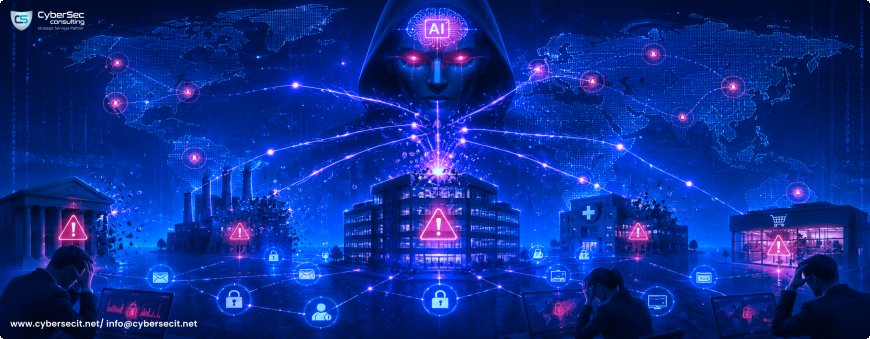
AI-Driven Cyber Threats: The New Reality for Modern Organizations
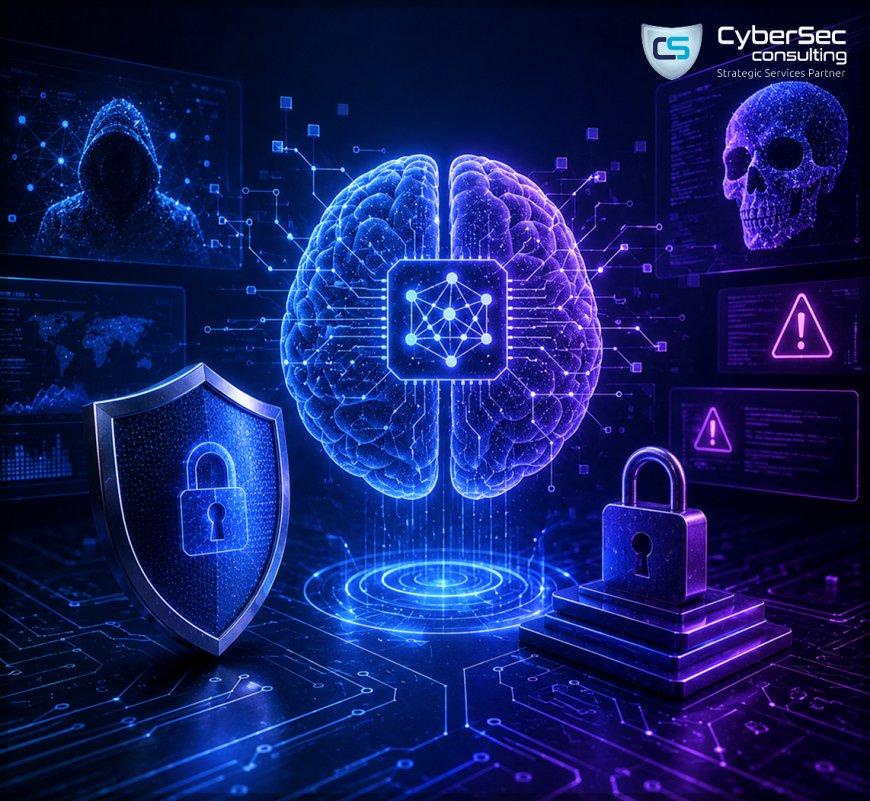
Artificial Intelligence is reshaping the cybersecurity landscape at an unprecedented pace. While organizations are leveraging AI to improve operational efficiency, automate processes, and accelerate innovation, cybercriminals are using the same technology to launch more sophisticated, scalable, and difficult-to-detect attacks.
AI-driven cyber threats have emerged as one of the most significant cybersecurity challenges facing businesses today, impacting sectors ranging from banking and financial services to healthcare, government, real estate, energy, telecommunications, and critical infrastructure.
Unlike standard cyberattacks, AI-driven cyberattacks can automate reconnaissance, identify vulnerabilities in seconds, generate highly personalized phishing campaigns, create convincing deepfakes, and adapt their tactics to evade detection.
This shift is enabling threat actors to increase the speed, scale, and success rate of attacks while reducing the effort required to execute them. As a result, organizations face greater risks of data breaches, ransomware incidents, financial fraud, operational disruptions, and regulatory non-compliance.
Cybersecurity experts have long warned about the growing impact of AI on cybercrime. As cybersecurity veteran and IEEE Senior Member Kayne McGladrey noted, AI is a powerful force in cybersecurity, but human creativity remains central to both attack and defense strategies.
This highlights a critical reality: AI is not replacing attackers; it is amplifying their capabilities and enabling them to operate more efficiently at scale.
Recent warnings from international intelligence and cybersecurity leaders suggest that advanced AI systems are accelerating the development of offensive cyber capabilities, shortening the time between vulnerability discovery and exploitation, and increasing the potential impact on governments, enterprises, and critical industries.
Organizations that fail to address AI-related risks may find themselves vulnerable to a new generation of cyber threats that evolve faster than traditional security controls can respond.
As AI adoption continues to grow, organizations must strengthen their AI Security posture through comprehensive AI Security Assessments, AI Risk Management, AI Governance frameworks, and continuous monitoring to ensure resilience against emerging AI-driven cyber threats.
Why AI-driven Cyberattacks Are More Dangerous Than Traditional Threats
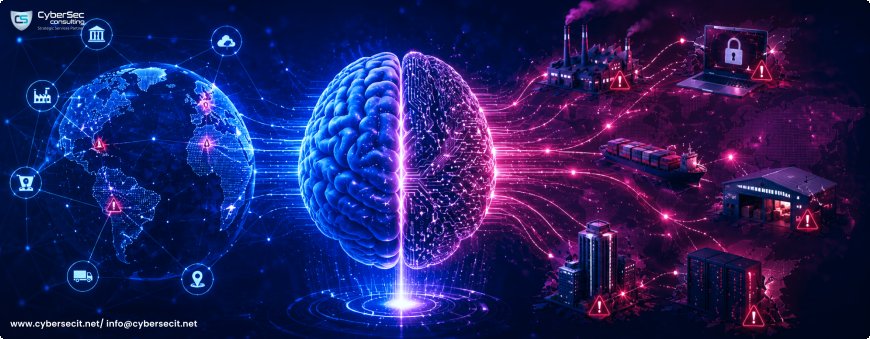
For decades, organizations have battled traditional cyber threats such as phishing attacks, ransomware, malware infections, credential theft, and insider threats. These attacks have cost businesses billions of dollars annually, disrupted critical operations, and exposed sensitive customer and corporate data.
Industries including banking, healthcare, government, real estate, telecommunications, manufacturing, and energy have consistently remained prime targets for cybercriminals seeking financial gain or strategic advantage.
Traditional cyberattacks often required significant manual effort. Attackers had to identify targets, research vulnerabilities, craft phishing campaigns, and execute attacks using time-consuming processes.
While these threats continue to evolve, security teams have developed mature cybersecurity frameworks, threat intelligence capabilities, and incident response strategies to help mitigate many conventional attack methods.
Rapid Adoption of Artificial Intelligence

As organizations increasingly deploy Generative AI, Large Language Models (LLMs), AI-driven applications, and intelligent automation platforms, cybercriminals are leveraging the same technologies to launch more sophisticated and scalable attacks.
AI-driven cyberattacks can automate reconnaissance, generate highly convincing phishing emails, create realistic deepfakes, identify vulnerabilities at machine speed, and continuously adapt attack techniques to evade detection. This shift has created new AI Security risks that traditional cybersecurity controls were not designed to address.
- Financial institutions and digital banking platforms are particularly exposed to AI-driven cyber threats. Attackers can use AI to automate fraud campaigns, impersonate executives through deepfake technology, and conduct highly targeted social engineering attacks.
- As digital transformation accelerates across the UK financial sector, AI Security, AI Risk Management, and AI Governance have become critical priorities for organizations seeking to protect sensitive customer information and maintain regulatory compliance.
- The energy sector, including oil refineries and critical infrastructure operators in the UAE and across the Middle East, faces a growing challenge from AI-enhanced cyber threats.
- Operational Technology (OT) environments, Industrial Control Systems (ICS), and connected infrastructure present attractive targets for threat actors capable of using Artificial Intelligence to identify weaknesses and exploit vulnerabilities more efficiently than ever before. A successful attack on critical infrastructure can result in operational disruption, financial losses, and broader economic consequences.
- In the UK, healthcare providers are also experiencing increased exposure to AI-driven cyberattacks. Hospitals, healthcare networks, and medical research institutions store vast amounts of sensitive patient data, making them highly valuable targets.
- In Saudi Arabia and other rapidly digitizing healthcare markets, AI-driven phishing campaigns and credential theft attacks are becoming increasingly sophisticated, requiring stronger AI Security Assessments and continuous monitoring strategies.
- Government agencies and public sector organizations face a different set of challenges. AI-generated misinformation campaigns, deepfake content, and advanced social engineering attacks can undermine trust, disrupt operations, and expose sensitive information.
- Across Egypt and neighboring regions, digital transformation initiatives have increased the attack surface available to cybercriminals, making AI Governance and Cyber Threat Intelligence essential components of modern cybersecurity programs.
- Organizations throughout Africa are also experiencing the impact of AI-driven cyber threats as digital adoption accelerates across banking, telecommunications, fintech, and public services. As businesses embrace cloud computing, Artificial Intelligence, and digital platforms, attackers gain new opportunities to exploit security gaps.
- This has increased demand for AI Security Services, AI Risk Assessments, and proactive cybersecurity strategies capable of addressing emerging AI-related threats.
What makes AI-driven cyberattacks particularly dangerous?
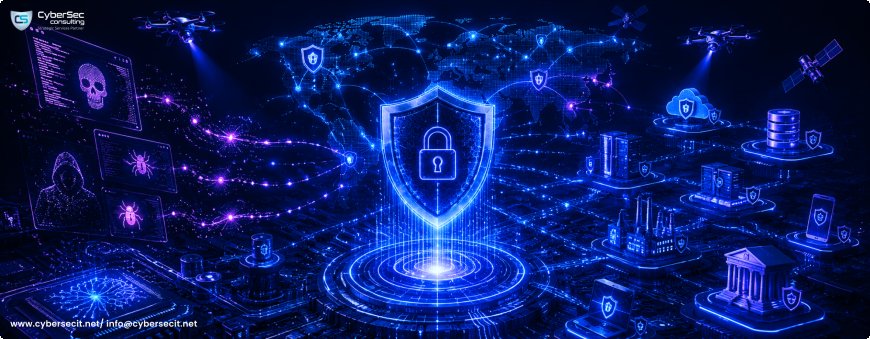
AI is their ability to combine speed, scale, automation, and adaptability. A single attacker equipped with AI tools can execute campaigns that previously required an entire team of cybercriminals. As Artificial Intelligence continues to evolve, organizations must move beyond traditional cybersecurity approaches and adopt comprehensive AI Security frameworks, AI Governance programs, AI Compliance controls, and AI Security Assessments to defend against the next generation of cyber threats.
AI-Generated Phishing and Social Engineering Attacks
AI-generated phishing attacks have become one of the most common and effective forms of cybercrime. Unlike traditional phishing campaigns that often contain grammatical errors or generic messaging, Artificial Intelligence can create highly personalized emails, messages, and fake websites that closely mimic legitimate communications.
By analyzing publicly available information, social media profiles, corporate websites, and business relationships, attackers can craft convincing messages designed to steal credentials, financial information, or sensitive corporate data.
The banking and financial services sector in the UK has become a frequent target of AI-driven phishing campaigns due to the high value of financial data and customer information. Cybercriminals can use Generative AI to impersonate trusted institutions, executives, or business partners, increasing the likelihood of successful Business Email Compromise (BEC) attacks. As organizations continue to embrace digital banking and AI-driven customer services, AI Security,
AI Risk Management and Cyber Threat Intelligence have become essential components of modern cybersecurity strategies.
Deepfake Fraud and Executive Impersonation
Deepfake technology uses Artificial Intelligence to generate realistic audio, video, and images that can impersonate individuals with alarming accuracy. Cybercriminals are increasingly using deepfakes to conduct executive impersonation attacks, trick employees into transferring funds, sharing sensitive information, or granting unauthorized access to critical systems.
Organizations operating in the UAE's energy, oil refinery, and critical infrastructure sectors face significant risks from deepfake-enabled fraud. A convincing deepfake video or voice recording appearing to originate from a senior executive or operational leader can lead to financial losses, operational disruption, and reputational damage. As digital transformation accelerates across industrial environments, AI Governance, Identity Security, and AI Security Assessments play a crucial role in mitigating emerging deepfake threats.
AI-driven Malware and Ransomware
Traditional malware relies on predefined instructions and attack methods. AI-driven malware, however, can adapt its behavior based on the environment it encounters. Artificial Intelligence enables malware to identify security controls, avoid detection, automate lateral movement, and optimize attack paths in real time. Similarly, AI-enhanced ransomware can identify the most valuable data assets within an organization, increasing the impact of an attack.
Healthcare organizations in Saudi Arabia and across the broader healthcare sector are particularly vulnerable to AI-driven ransomware attacks due to their reliance on sensitive patient records, connected medical devices, and critical operational systems. A successful attack can disrupt patient care, compromise confidential information, and lead to significant financial and regulatory consequences. Strengthening AI Security Posture Management, Endpoint Security, Threat Detection, and Incident Response capabilities is critical for protecting healthcare environments against evolving ransomware threats.
Prompt Injection Attacks Against LLMs
As organizations increasingly adopt Large Language Models (LLMs), Generative AI platforms, and AI-driven business applications, prompt injection attacks have emerged as a major AI Security concern. Prompt injection occurs when attackers manipulate user inputs or system instructions to influence the behavior of an AI model, causing it to reveal sensitive information, bypass security controls, or perform unintended actions.
Government agencies and public sector organizations in Egypt are increasingly exploring Artificial Intelligence to improve citizen services, automate administrative processes, and enhance operational efficiency. However, without proper AI Governance and AI Security controls, LLM-based applications can become vulnerable to prompt injection attacks. Threat actors may exploit these weaknesses to access confidential data, manipulate AI outputs, or compromise critical services. Regular AI Security Assessments, AI Compliance Reviews, and Secure AI Development practices are essential for reducing these risks.
Why Organizations Across South Africa Must Prepare for AI-Driven Threats
Organizations throughout Africa are rapidly adopting cloud technologies, digital banking platforms, Artificial Intelligence solutions, and smart infrastructure initiatives. While these innovations create new business opportunities, they also expand the attack surface available to cybercriminals. AI-generated phishing, deepfake fraud, AI-driven malware, and LLM security vulnerabilities are increasingly becoming concerns for financial institutions, telecommunications providers, government agencies, and emerging technology companies.
As AI adoption accelerates, organizations must move beyond traditional cybersecurity approaches and implement comprehensive AI Security frameworks. Investing in AI Risk Assessments, AI Governance programs, AI Compliance initiatives, and continuous security monitoring can help businesses identify vulnerabilities, strengthen resilience, and defend against the next generation of AI-driven cyberattacks.
Conclusion

Artificial Intelligence is rapidly transforming the cyber threat landscape, enabling attackers to execute phishing campaigns, deepfake fraud, AI-driven malware, ransomware, and prompt injection attacks with unprecedented speed and precision. Organizations across banking, financial services, healthcare, government, real estate, telecommunications, manufacturing, and critical infrastructure must recognize that traditional cybersecurity strategies alone are no longer sufficient.
As digital transformation accelerates in the UK, businesses are increasingly facing sophisticated AI-driven cyber threats that target sensitive data, customer trust, and operational resilience. Meanwhile, critical sectors in the UAE, including energy, oil refineries, and industrial operations, must address emerging AI Security risks that could impact both IT and operational technology environments.
Healthcare providers and public sector organizations in Saudi Arabia and Egypt are adopting Artificial Intelligence to improve services and efficiency, but this innovation also introduces new attack surfaces that cybercriminals are eager to exploit. Similarly, organizations across Africa are embracing AI, cloud technologies, and digital platforms, creating greater demand for AI Security, AI Risk Management, AI Governance, LLM Security, and AI Compliance programs.
The organizations that thrive in this new era will be those that proactively assess AI-related risks, secure AI systems throughout their lifecycle, and implement robust controls to defend against evolving cyber threats before they become business-critical incidents.
Secure Your AI Environment with CyberSec Consulting
Whether your organization is concerned about AI-generated phishing attacks, executive deepfake fraud, AI-driven ransomware, prompt injection vulnerabilities, or broader AI Governance challenges, CyberSec Consulting's AI Security Services can help.
Our experts provide comprehensive AI Security Assessments, AI Risk Assessments, AI Governance & Compliance Reviews, Generative AI Security Testing, LLM Security Assessments, and AI Security Consulting services designed to identify vulnerabilities, strengthen security controls, and protect your organization from emerging AI-driven cyber threats. Connect with CyberSec Consulting today to build a secure, resilient, and future-ready AI ecosystem.
FAQs
What are AI-driven cyber threats?
AI-driven cyber threats are cyberattacks that leverage Artificial Intelligence to automate, enhance, or scale malicious activities. These attacks include AI-generated phishing, deepfake fraud, AI-powered malware, ransomware, and prompt injection attacks targeting AI systems and Large Language Models (LLMs).
Why are AI-powered cyberattacks more dangerous than traditional cyberattacks?
AI-powered cyberattacks can automate reconnaissance, generate highly personalized phishing campaigns, adapt to security controls, and execute attacks at scale. This makes them faster, more sophisticated, and harder to detect than traditional cyber threats.
Which industries are most vulnerable to AI-driven cyber threats?
Banking, financial services, healthcare, government, real estate, telecommunications, manufacturing, energy, oil refineries, and critical infrastructure are among the industries most targeted by AI-powered cyberattacks due to their valuable data and operational importance.
How can organizations protect themselves from AI-powered cyberattacks?
Organizations can reduce risk through AI Security Assessments, AI Risk Management programs, AI Governance frameworks, employee awareness training, continuous monitoring, threat intelligence, and secure AI development practices.
What is a prompt injection attack in AI systems?
A prompt injection attack occurs when an attacker manipulates the input provided to a Large Language Model or AI application to bypass security controls, expose sensitive information, alter outputs, or perform unintended actions.
Why is AI Security important for organizations adopting Generative AI?
Generative AI introduces new risks such as data leakage, prompt injection, model manipulation, unauthorized access, and compliance challenges. AI Security helps organizations identify vulnerabilities and implement controls to protect AI systems and sensitive data.
What's Your Reaction?
 Like
0
Like
0
 Dislike
0
Dislike
0
 Love
0
Love
0
 Funny
0
Funny
0
 Angry
0
Angry
0
 Sad
0
Sad
0
 Wow
0
Wow
0