























Why Identity-Based Attacks Are the Biggest Cybersecurity Threat Facing Modern Businesses
Discover why identity-based attacks are rising in the UAE and how Identity Security, IAM, PAM, Zero Trust, and CyberSec Consulting help businesses prevent cyber threats.


Introduction
Identity-based attacks have rapidly become one of the most significant cybersecurity challenges facing organizations in the UAE. As businesses accelerate digital transformation, cloud adoption, hybrid work, and identity-centric technologies, cybercriminals are increasingly targeting user identities instead of traditional network defenses. According to recent industry reports, more than 80% of cyberattacks now involve compromised identities or stolen credentials, while phishing and credential theft remain among the leading attack methods affecting organizations across the region.
From banking and healthcare to government, retail, manufacturing, and energy, attackers are exploiting weak passwords, excessive user privileges, poor identity governance, and compromised accounts to gain unauthorized access to critical business systems. As a result, searches for Identity Security in the UAE, Identity and Access Management (IAM), Privileged Access Management (PAM), Zero Trust Security, and Identity Governance continue to grow as organizations prioritize stronger cyber resilience.
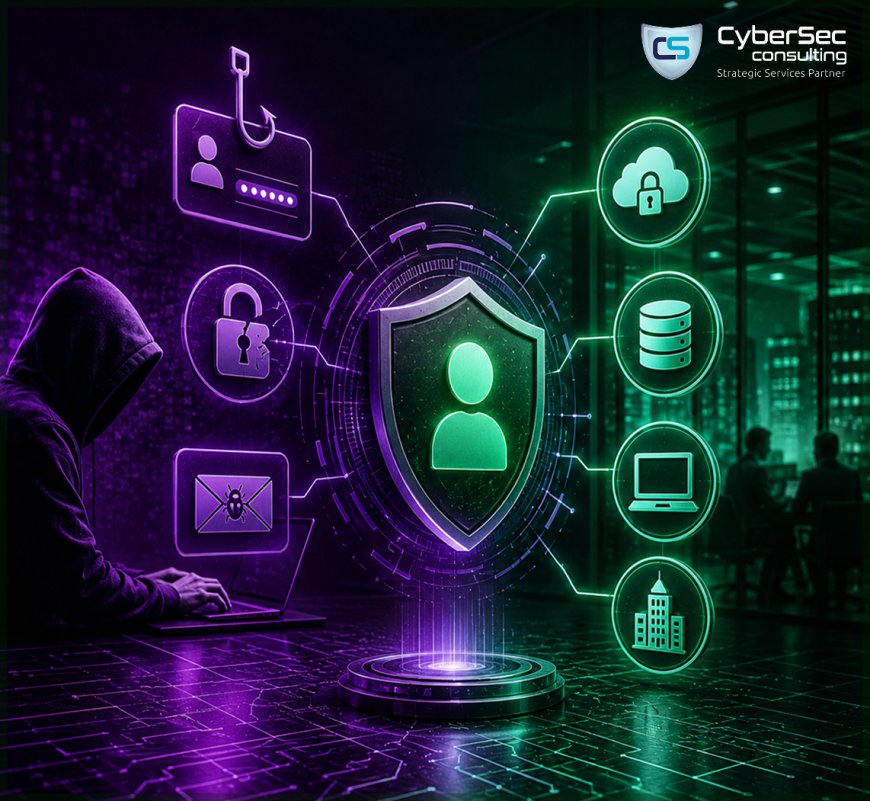
For business leaders in the UAE, identity has become the new security perimeter. A single compromised user account can enable attackers to move laterally across enterprise networks, escalate privileges, access sensitive data, deploy ransomware, and disrupt critical business operations - all while appearing as legitimate users. Identity-based attacks exploit trust within an organization, making them significantly harder to detect and contain.
This article explores why identity-based attacks have become the biggest cybersecurity threat facing modern businesses in the UAE, their impact on operational resilience and regulatory compliance, and how adopting an identity-first cybersecurity strategy can help organizations strengthen security, reduce cyber risk, and protect their digital future.
Employee Identity Created: The First Step in an Organization's Identity Security Journey

Every employee, contractor, and third-party user requires a digital identity to access business applications, cloud platforms, and corporate resources. If these identities are not properly governed from the beginning, they can become one of the most exploited entry points for cybercriminals.
New Employee
- New employees are granted access to email, business applications, cloud services, and internal systems to perform their daily responsibilities. Without proper Identity and Access Management (IAM), they may receive excessive permissions, increasing the organization's attack surface.
- A structured onboarding process with role-based access controls (RBAC), Multi-Factor Authentication (MFA), and the principle of least privilege ensures employees receive only the access necessary for their job functions while reducing the risk of unauthorized access.
Contractor
- Contractors often require temporary access to sensitive systems, development environments, or business applications to complete specific projects. These accounts frequently become security risks when access remains active after the engagement ends.
- Organizations should implement time-bound access, continuous monitoring, privileged access controls, and automated de-provisioning to ensure contractor identities cannot be exploited after project completion.
Third-Party User
- Vendors, consultants, managed service providers, and technology partners frequently access enterprise systems to support business operations, making third-party identities an attractive target for attackers seeking indirect access.
- Third-party users should be governed through Zero Trust Security principles, identity verification, continuous authentication, least-privilege access, and regular access reviews to minimize supply chain and identity-based cyber risks.
Weak Identity Controls: The Gateway to Identity-Based Attacks
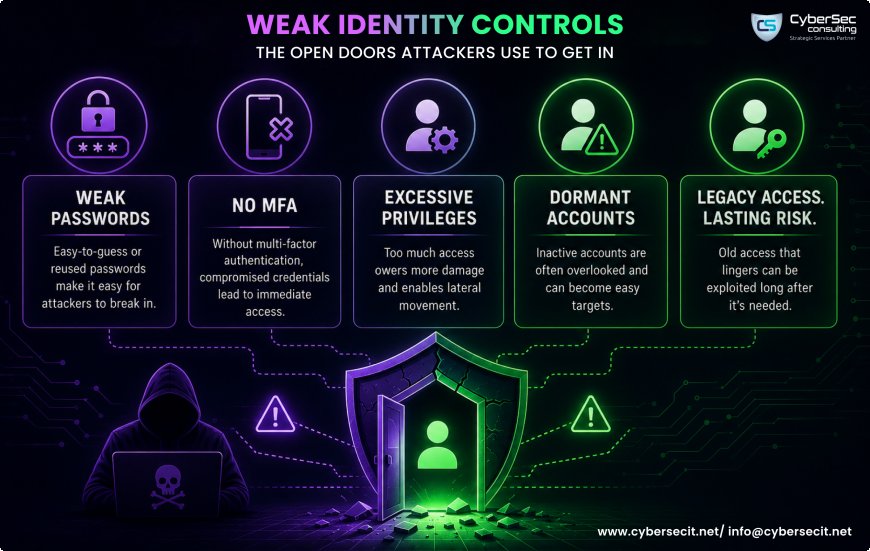
Weak identity controls remain a leading cause of identity-based cyberattacks in the UAE, enabling attackers to exploit user accounts, bypass security controls, and gain unauthorized access to critical business systems, cloud environments, and sensitive corporate data.
- Weak Passwords - Using weak, predictable, or reused passwords makes it easier for cybercriminals to compromise user accounts through credential stuffing, brute-force attacks, and phishing campaigns, increasing the risk of data breaches across organizations in the UAE.
- No Multi-Factor Authentication (MFA) - Organizations that do not implement Multi-Factor Authentication (MFA) leave business-critical applications and cloud platforms vulnerable, allowing attackers to access enterprise systems with stolen credentials and significantly increasing identity-related cyber risks.
- Excessive Privileges - Granting users more access than required creates unnecessary security exposure, enabling attackers to escalate privileges, move laterally across enterprise networks, and compromise high-value assets if a single identity is breached.
- Dormant Accounts - Inactive employee, contractor, or third-party accounts that remain enabled after users leave the organization provide hidden entry points for attackers, making regular identity lifecycle management and account de-provisioning essential for organizations operating in the UAE.
Identity Compromise: When Trusted Digital Identities Become the Attack Vector
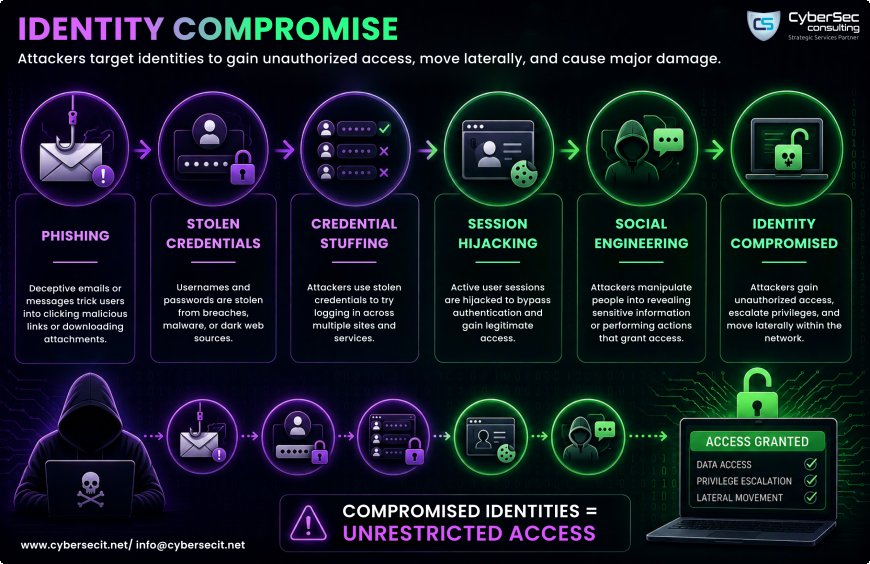
Identity compromise occurs when cybercriminals successfully gain control of legitimate user accounts, allowing them to bypass traditional security defenses and access business-critical systems. As organizations across the UAE continue to adopt cloud technologies and digital services, compromised identities have become one of the most common causes of data breaches, ransomware incidents, and unauthorized access.
- Phishing - Attackers use sophisticated phishing emails, fake login portals, and AI-driven social engineering campaigns to deceive employees into revealing their credentials, making phishing one of the leading causes of identity-based cyberattacks targeting organizations in the UAE.
- Stolen Credentials - Compromised usernames and passwords obtained through malware, phishing, or dark web marketplaces enable attackers to impersonate legitimate users and gain unauthorized access to enterprise applications, cloud environments, and sensitive business data.
- Credential Stuffing - Cybercriminals exploit previously leaked usernames and passwords by automatically testing them across multiple business applications, taking advantage of password reuse to compromise employee accounts within UAE organizations.
- Session Hijacking - Attackers steal authenticated user sessions or session tokens to bypass login controls and access enterprise systems without needing passwords, increasing the risk of unauthorized transactions and data compromise.
- Social Engineering - By manipulating trust through phone calls, emails, messaging platforms, or executive impersonation, attackers convince employees to disclose confidential information or approve malicious requests, making social engineering one of the most effective techniques used against businesses in the UAE.
Unauthorized Access: The Point Where Attackers Enter as Trusted Users
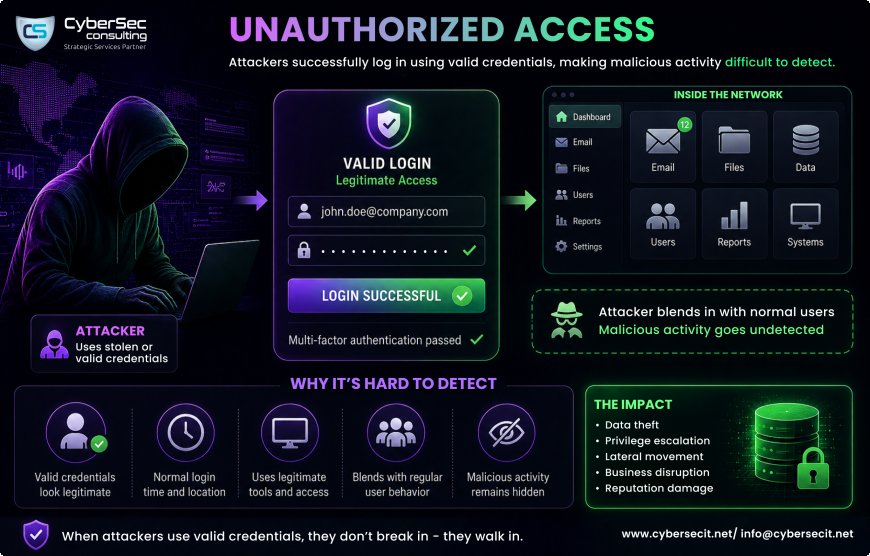
Once an identity is compromised, attackers use legitimate credentials to gain unauthorized access to enterprise systems, making identity-based attacks one of the most difficult cyber threats for organizations in the UAE to identify and contain.
- Attackers Successfully Log In Using Valid Credentials - By using stolen usernames, passwords, or compromised authentication tokens, attackers can bypass traditional perimeter security controls and access business applications, cloud platforms, and sensitive corporate resources as if they were legitimate employees.
- Making Malicious Activity Difficult to Detect - Because attackers operate under authenticated user identities, their activities often blend with normal business operations, allowing them to evade detection while stealing data, escalating privileges, or preparing ransomware attacks against organizations in the UAE.
Privilege Escalation: Expanding Control Over Critical Business Systems
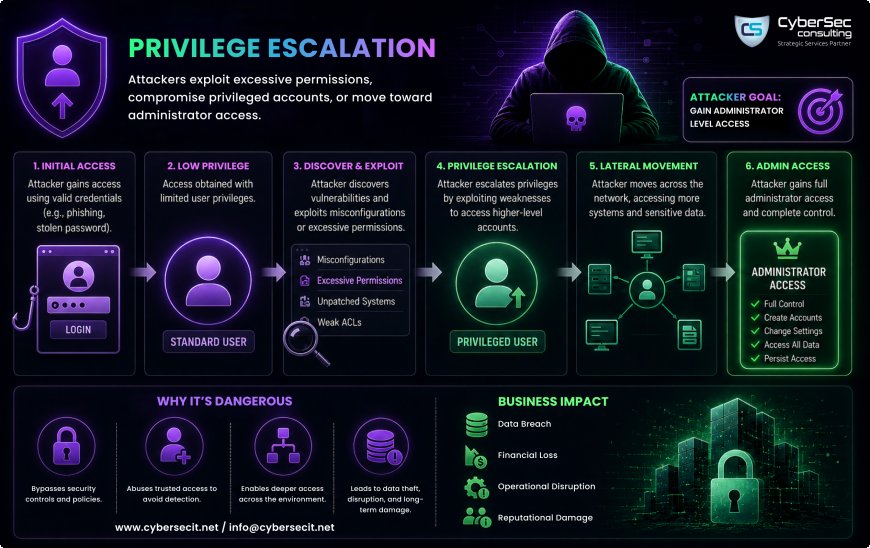
After gaining initial access, attackers attempt to increase their permissions to control high-value systems, privileged accounts, and security infrastructure, significantly increasing the impact of an identity-based cyberattack.
- Attackers Exploit Excessive Permissions - Poor access governance and overprivileged user accounts allow attackers to misuse existing permissions to reach sensitive business applications, confidential data, and mission-critical infrastructure.
- Compromise Privileged Accounts - Cybercriminals actively target administrator, service, and privileged accounts because they provide unrestricted access to enterprise environments, enabling large-scale data theft and operational disruption.
- Move Toward Administrator Access - By exploiting identity vulnerabilities and weak privilege management, attackers work toward obtaining domain administrator or cloud administrator privileges, giving them full control over business systems and increasing cyber risk for organizations across the UAE.
Lateral Movement: Expanding the Attack Across the Enterprise

Once elevated privileges are obtained, attackers move laterally across connected systems to identify valuable assets, maintain persistence, and maximize the impact of the cyberattack before detection.
- Attackers Move Across the Network - Compromised identities enable attackers to navigate internal networks, access connected devices, and compromise additional user accounts, expanding their control throughout the organization.
- Access Cloud Environments - Attackers exploit trusted identities to infiltrate cloud platforms, Software-as-a-Service (SaaS) applications, and hybrid environments, exposing sensitive business data and cloud workloads used by organizations in the UAE.
- Critical Applications - Business-critical applications such as ERP, CRM, HR, finance, and collaboration platforms become high-value targets, allowing attackers to disrupt operations and access confidential corporate information.
- Databases and Active Directory - By compromising databases and Active Directory, attackers can harvest additional credentials, manipulate identity services, establish long-term persistence, and gain centralized control over enterprise identities, significantly increasing the severity of identity-based cyberattacks.
Business Impact: How Identity-Based Attacks Affect Organizations in the UAE
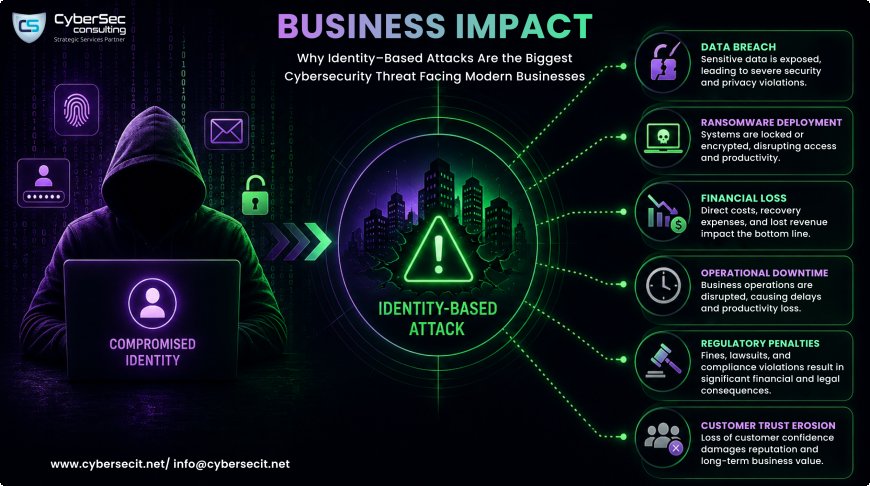
Identity-based attacks extend far beyond unauthorized access. They can disrupt operations, expose sensitive information, trigger regulatory actions, and create long-term financial and reputational consequences for organizations across the UAE.
- Data Breach - Compromised identities enable attackers to access confidential customer information, financial records, intellectual property, and business-critical data, increasing the risk of large-scale data breaches and non-compliance with UAE data protection and cybersecurity regulations.
- Ransomware Deployment - After gaining access through stolen identities, attackers often deploy ransomware across enterprise networks, encrypting critical systems, disrupting operations, and demanding substantial ransom payments while causing significant business interruption.
- Financial Loss - Identity-based cyberattacks can result in direct financial losses through fraud, incident response, system recovery, legal expenses, business disruption, and lost revenue, placing considerable pressure on organizations operating in the UAE.
- Operational Downtime - Unauthorized access to critical systems and business applications can halt day-to-day operations, interrupt customer services, delay strategic projects, and reduce overall organizational productivity during incident containment and recovery.
- Regulatory Penalties - Organizations that fail to adequately protect digital identities and sensitive information may face regulatory investigations, compliance violations, financial penalties, and increased scrutiny under applicable UAE cybersecurity and data protection requirements.
- Customer Trust Erosion - A single identity-related security incident can significantly damage customer confidence, weaken business relationships, affect brand reputation, and reduce long-term market competitiveness, making cybersecurity resilience a strategic priority for organizations throughout the UAE.
Build an Identity-First Cybersecurity Strategy Before Attackers Strike
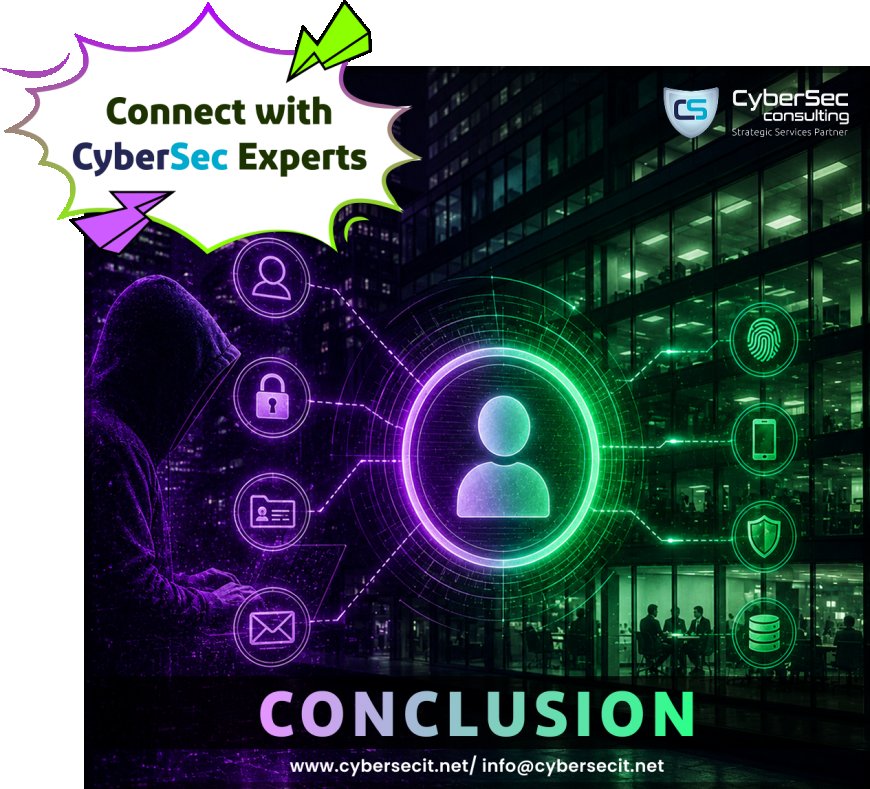
As organizations across the UAE continue to embrace digital transformation, cloud adoption, artificial intelligence, and hybrid work environments, digital identities have become the primary gateway to business-critical systems. Cybercriminals are no longer focused solely on exploiting network vulnerabilities.
They are targeting employees, contractors, privileged users, and third-party identities to gain legitimate access, move undetected across enterprise environments, and execute high-impact cyberattacks. Without robust Identity and Access Management (IAM), Privileged Access Management (PAM), Identity Governance and Administration (IGA), and Zero Trust Security, even a single compromised credential can lead to data breaches, ransomware, operational disruption, regulatory challenges, and long-term reputational damage.
Protecting digital identities is no longer just an IT initiative. It is a strategic business priority that directly impacts operational resilience, regulatory compliance, customer trust, and sustainable growth. Organizations that proactively assess identity risks, enforce least-privilege access, continuously monitor user activities, and strengthen identity governance are significantly better positioned to defend against evolving identity-based cyber threats while reducing their overall cyber risk.
Secure Your Organization with CyberSec Consulting
CyberSec Consulting helps organizations across the UAE strengthen their cybersecurity posture with comprehensive Identity Security Services and service-based cybersecurity solutions tailored to modern business environments. Our expertise includes Identity & Access Management (IAM), Privileged Access Management (PAM), Identity Governance & Administration (IGA), Multi-Factor Authentication (MFA), Single Sign-On (SSO), Zero Trust Security, Identity Threat Detection & Response (ITDR), Cloud Identity Security, Cybersecurity Risk Assessments, Vulnerability Assessments, Penetration Testing, Governance, Risk & Compliance (GRC), Managed Identity Service, and Security Assessments.
Whether your organization is planning a new identity security strategy, modernizing legacy access controls, or strengthening cyber resilience against evolving threats, our cybersecurity experts deliver end-to-end consulting, implementation, managed services, and ongoing support to help you stay secure, compliant, and future-ready.
Connect with CyberSec Consulting to build an identity-first security strategy that protects your people, your data, and your business, before attackers can exploit your digital identities.
What's Your Reaction?
 Like
0
Like
0
 Dislike
0
Dislike
0
 Love
0
Love
0
 Funny
0
Funny
0
 Angry
0
Angry
0
 Sad
0
Sad
0
 Wow
0
Wow
0