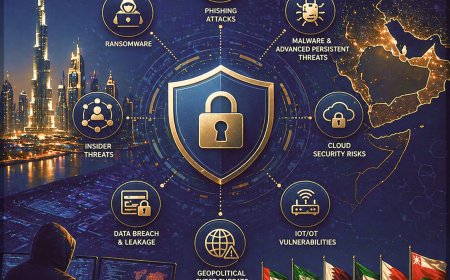














Cybersecurity Challenges Facing South African Banks in 2026
Discover the biggest cybersecurity challenges facing South African banks in 2026. Learn about ransomware, phishing, identity threats, cloud security, POPIA compliance, and proven strategies to strengthen cyber resilience.


Introduction
South Africa's banking sector is rapidly embracing digital transformation, making cybersecurity a top priority as financial institutions face increasingly sophisticated cyber threats. As online banking, mobile payments, and cloud-based financial services continue to grow, South African banks must strengthen their cyber resilience to protect customer data, maintain regulatory compliance, and safeguard business operations.
The rapid growth of digital banking in South Africa has transformed how customers access financial services, enabling faster, more convenient, and always-on banking experiences. However, this digital evolution has also expanded the attack surface, creating new opportunities for cybercriminals to exploit vulnerabilities across banking networks and digital platforms.
At the same time, the increase in online transactions through internet banking, digital wallets, instant payment systems, and e-commerce has significantly increased the volume of sensitive financial data processed every day. This surge in digital transactions makes South African financial institutions attractive targets for phishing attacks, payment fraud, ransomware, and account takeover attempts.
As banking services become more digital, growing customer expectations are driving financial institutions to deliver seamless, secure, and personalized banking experiences across multiple channels. Customers expect uninterrupted access to their accounts while trusting banks to protect their personal and financial information against evolving cyber threats.
Supporting this transformation is the expansion of mobile banking, with millions of South Africans relying on smartphones for payments, fund transfers, loan applications, and investment management. While mobile banking improves accessibility and convenience, it also introduces new cybersecurity challenges such as mobile malware, SIM swap fraud, credential theft, and malicious applications.
These technological advancements have made it clear why cybercriminals are targeting banks more aggressively than ever before. Financial institutions store valuable customer data, process high-value transactions, and operate interconnected digital ecosystems, making them prime targets for ransomware groups, identity-based attacks, insider threats, and sophisticated fraud campaigns.
The business impact of cyber attacks extends far beyond financial losses, affecting customer trust, operational continuity, regulatory compliance, and brand reputation. A single successful cyber incident can lead to prolonged service disruptions, regulatory penalties under POPIA, legal consequences, and significant recovery costs for South African banks.
This is why the importance of proactive cybersecurity cannot be overstated. By investing in continuous security assessments, Identity and Access Management (IAM), Privileged Access Management (PAM), Zero Trust Architecture, cloud security, penetration testing, threat intelligence, and employee security awareness, South African banks can strengthen their cyber resilience, reduce business risk, and stay ahead of emerging cyber threats.
Why South African Banks Have Become Prime Cyber Targets?

South African banks are at the forefront of digital innovation, offering advanced online banking, mobile financial services, and cloud-powered platforms that improve customer experiences. However, this rapid digital transformation has also made financial institutions one of the most targeted sectors for cybercriminals, increasing the need for robust cybersecurity, continuous risk assessments, and proactive threat protection.
As cyber threats across South Africa continue to evolve, attackers are exploiting expanding digital ecosystems, interconnected financial services, and valuable customer information to launch ransomware attacks, phishing campaigns, identity theft, and financial fraud. To remain resilient, South African banks must strengthen their cybersecurity posture while ensuring compliance with POPIA and other financial security regulations.
Digital Transformation
South African banks are accelerating digital transformation by modernizing legacy systems, adopting fintech innovations, and expanding digital banking services to improve operational efficiency and customer experience. While this transformation drives business growth, it also increases the cyber attack surface, making cybersecurity in South Africa a critical investment for financial institutions.
Large Financial Transactions
Banks process millions of high-value financial transactions every day, making them attractive targets for cybercriminals seeking financial gain through fraud, ransomware, and payment manipulation. A successful cyber attack can disrupt banking operations, cause significant financial losses, and impact customer confidence across South Africa's financial sector.
Customer Data
South African banks store vast amounts of sensitive customer information, including personal identities, financial records, payment details, and confidential business data. This valuable information is highly sought after by cybercriminals for identity theft, account takeover attacks, data breaches, and illegal trading on dark web marketplaces.
Mobile Banking
The rapid adoption of mobile banking across South Africa has made financial services more accessible, allowing customers to perform transactions, manage investments, and make payments from anywhere. However, the growing use of banking applications has also increased exposure to mobile malware, SIM swap fraud, phishing attacks, credential theft, and device compromise.
Open Banking
As South African financial institutions continue to embrace open banking and API-driven services, customers benefit from greater innovation and seamless financial experiences. At the same time, poorly secured APIs, weak authentication mechanisms, and unauthorized access can expose banks to data breaches, fraud, and sophisticated cyber attacks.
Third-Party Integrations
Modern banks depend on third-party vendors, fintech companies, payment processors, cloud providers, and technology partners to deliver digital financial services. While these partnerships accelerate innovation, they also introduce third-party cyber risks that can compromise banking systems if external security controls are not regularly assessed and monitored.
Cloud Adoption
Cloud adoption has become a key component of digital banking strategies in South Africa, enabling banks to improve scalability, operational resilience, and service availability. Without proper cloud security, Identity and Access Management (IAM), continuous monitoring, and cloud configuration reviews, financial institutions remain vulnerable to data breaches, ransomware, and unauthorized access.
Valuable Financial Assets
South African banks manage billions of rand in financial assets while supporting critical payment infrastructure and economic stability, making them prime targets for organized cybercrime groups and advanced persistent threats. Protecting these valuable financial assets requires a comprehensive cybersecurity strategy that includes penetration testing, Privileged Access Management (PAM), Zero Trust Security, threat intelligence, continuous security monitoring, and regulatory compliance.
Biggest Cybersecurity Challenges Facing South African Banks
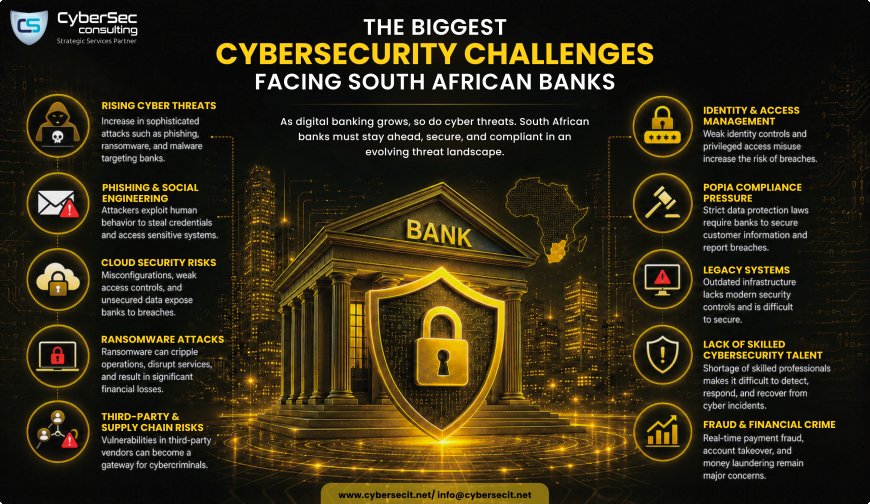
South African banks are facing an increasingly sophisticated cyber threat landscape driven by digital transformation, cloud adoption, mobile banking, and evolving financial fraud techniques. As cybercriminals leverage AI-powered attacks, ransomware, identity theft, and supply chain compromises, financial institutions across South Africa must adopt proactive cybersecurity strategies to protect customer data, maintain POPIA compliance, and ensure uninterrupted banking operations.
The following cybersecurity challenges represent the most critical threats impacting South African banks in 2026. Understanding these risks and implementing modern security controls can help financial institutions improve cyber resilience, reduce operational risk, and strengthen customer trust.
AI-Powered Phishing and Social Engineering
Artificial Intelligence has made phishing campaigns more convincing and scalable, allowing cybercriminals to target South African banks with highly personalized attacks that bypass traditional security controls.
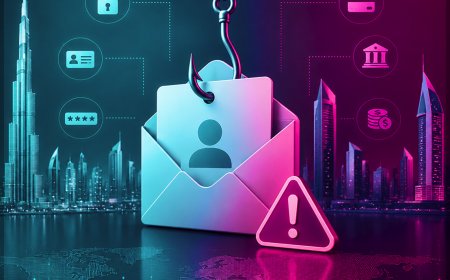
- Email Phishing - AI-generated phishing emails imitate trusted banking communications to steal customer credentials and sensitive financial information.
- SMS Phishing (Smishing) - Fraudulent SMS messages trick banking customers into clicking malicious links or revealing confidential account details.
- Voice Phishing (Vishing) - Attackers impersonate bank representatives over the phone to manipulate customers and employees into sharing sensitive information.
- AI-Generated Scams - Cybercriminals use AI to create realistic emails, websites, and conversations that significantly increase the success rate of financial fraud.
- Deepfake Voice Attacks - Deepfake technology enables attackers to mimic executives or banking officials, authorizing fraudulent transactions or gaining unauthorized access.
- Employee Awareness - Well-trained employees are the first line of defense against phishing, social engineering, and AI-driven cyber attacks targeting financial institutions.
Recommended Security Controls
- Security Awareness Training - Regular cybersecurity training helps employees recognize phishing attempts and emerging cyber threats.
- Email Security - Advanced email security solutions detect malicious attachments, suspicious links, and business email compromise attacks.
- Multi-Factor Authentication (MFA) - MFA adds a layer of identity verification, reducing the risk of credential-based attacks.
Ransomware Attacks on Financial Institutions
Ransomware remains one of the most damaging cybersecurity threats facing South African banks, disrupting critical financial services and exposing sensitive customer data.
- Double Extortion - Attackers encrypt banking systems and steal confidential data to pressure organizations into paying ransoms.
- Triple Extortion - Cybercriminals increase pressure by targeting customers, suppliers, or business partners after stealing financial information.
- Operational Disruption - Ransomware attacks can interrupt payment processing, digital banking platforms, and essential financial operations.
- Customer Trust - Extended service outages and data breaches can significantly damage customer confidence and long-term brand reputation.
- Business Continuity - Banks without resilient recovery strategies may experience prolonged downtime and financial losses following ransomware incidents.
Recommended Security Controls
- Backup Strategy - Secure, offline backups enable rapid recovery without relying on ransom payments.
- Network Segmentation - Separating critical systems limits ransomware movement across banking infrastructure.
- Endpoint Detection and Response (EDR) - EDR continuously monitors endpoints to detect and stop ransomware activity.
- Incident Response - A well-tested incident response plan helps banks quickly contain, investigate, and recover from cyber incidents.
Insider Threats and Privileged Access Abuse
Insider threats remain a significant cybersecurity challenge as employees, contractors, and privileged users often have direct access to critical banking systems.
- Employees - Negligent or malicious employees can unintentionally expose confidential banking data or abuse system privileges.
- Contractors - Third-party contractors with temporary access may introduce cybersecurity risks if access is poorly managed.
- Third-Party Vendors - External service providers may become entry points for attackers if vendor security controls are inadequate.
- Excessive Privileges - Overprivileged accounts increase the likelihood of unauthorized access and privilege abuse.
- Dormant Accounts - Unused accounts create unnecessary security risks and are frequently exploited by cybercriminals.
Recommended Security Controls
- Privileged Access Management (PAM) - Controls and monitors privileged accounts to reduce insider risks.
- Identity and Access Management (IAM) - Centralizes user identity management and enforces secure access policies.
- Least Privilege - Users receive only the minimum permissions necessary to perform their job functions.
- Zero Trust Security - Every access request is continuously verified regardless of user location or device.
Identity-Based Cyber Attacks
Identity has become the primary attack vector for cybercriminals targeting South African financial institutions.
- Credential Theft - Stolen usernames and passwords enable attackers to gain unauthorized access to banking systems.
- Password Spraying - Attackers attempt commonly used passwords across multiple accounts to compromise user identities.
- MFA Fatigue - Repeated authentication requests pressure users into approving fraudulent login attempts.
- Session Hijacking - Cybercriminals steal active user sessions to bypass authentication and access banking applications.
- Identity Attacks - Modern attackers increasingly focus on compromising digital identities rather than exploiting software vulnerabilities.
Recommended Security Controls
- Identity Governance - Automates identity lifecycle management and access reviews.
- Conditional Access - Restricts access based on user behavior, location, device, and risk level.
- Identity Threat Detection - Identifies suspicious authentication behavior in real time.
- Continuous Monitoring - Continuously analyzes identity activities to detect unauthorized access attempts.
Cloud Security Challenges
Cloud adoption continues to accelerate across South African banks, creating new cybersecurity challenges that require continuous visibility and governance.
- Hybrid Cloud - Managing security consistently across on-premises and cloud environments increases operational complexity.
- Microsoft Azure - Misconfigured Azure resources can expose sensitive banking applications and customer information.
- Amazon Web Services (AWS) - Improperly secured AWS environments may create opportunities for unauthorized access and data leakage.
- Software as a Service (SaaS) - Cloud applications handling financial information require strong identity controls and secure configurations.
- Misconfigurations - Incorrect cloud settings remain one of the leading causes of cloud-related data breaches.
- Shadow IT - Unauthorized cloud applications reduce visibility and increase organizational cybersecurity risk.
Recommended Security Controls
- Cloud Security Posture Management (CSPM) - Continuously identifies and remediates cloud security misconfigurations.
- Cloud Security Assessment - Regular assessments evaluate cloud environments against security best practices.
- Continuous Monitoring - Real-time monitoring helps detect cloud threats before they impact banking operations.
Third-Party Vendor Risks
South African banks increasingly rely on external technology partners, making third-party cyber risk management a business priority.
- Payment Gateways - Compromised payment platforms can disrupt financial transactions and expose sensitive customer data.
- FinTech Partners - FinTech integrations improve innovation but also expand the attack surface across banking ecosystems.
- Managed Services - External IT providers require strong security governance to prevent unauthorized system access.
- API Providers - Poorly secured API providers may introduce vulnerabilities into banking applications.
- Cloud Vendors - Banks should continuously assess cloud providers to ensure compliance with security and regulatory requirements.
Recommended Security Controls
- Vendor Risk Assessment - Evaluates cybersecurity risks before onboarding external partners.
- Third-Party Audits - Regular audits verify vendor compliance with security standards.
- Security Questionnaires - Standardized assessments help identify weaknesses within supplier security programs.
API Security Risks
APIs are fundamental to digital banking and open banking services, but have become attractive targets for cybercriminals.
- Open Banking - Secure API implementations are essential for protecting customer data within open banking ecosystems.
- APIs - Unsecured APIs may expose confidential financial information to unauthorized users.
- Authentication - Strong authentication verifies the identity of users and connected applications.
- Authorization - Proper authorization ensures users access only the banking resources they are permitted to use.
- API Abuse - Attackers exploit insecure APIs to steal data, manipulate transactions, or launch denial-of-service attacks.
Recommended Security Controls
- API Security Testing - Identifies vulnerabilities before APIs are deployed into production.
- Penetration Testing - Simulates real-world attacks to validate API security controls.
- Secure API Gateway - Centralizes authentication, authorization, monitoring, and threat protection.
Regulatory and Compliance Challenges
Compliance with cybersecurity regulations remains essential for protecting customer information and maintaining trust in South Africa's banking industry.
- POPIA - The Protection of Personal Information Act (POPIA) requires banks to safeguard personal data through appropriate security measures.
- PCI DSS - PCI DSS helps financial institutions secure payment card data and reduce payment-related cyber risks.
- ISO 27001 - ISO 27001 provides an internationally recognized framework for establishing an effective Information Security Management System (ISMS).
- Governance - Strong cybersecurity governance ensures security initiatives align with business objectives and regulatory obligations.
- Data Protection - Comprehensive data protection strategies reduce the likelihood of data breaches and unauthorized information disclosure.
Business Impact
- Financial Penalties - Non-compliance can result in regulatory fines, remediation costs, and operational expenses.
- Legal Consequences - Security failures may expose banks to legal actions and regulatory investigations.
- Customer Trust - Maintaining compliance strengthens customer confidence and protects long-term business reputation.
Mobile Banking Security
The rapid adoption of mobile banking across South Africa has increased both customer convenience and cybersecurity risks.
- Banking Apps - Banking applications must be continuously tested to protect against emerging cyber threats.
- Mobile Malware - Malicious software can steal banking credentials and compromise mobile devices.
- SIM Swap Attacks - Attackers exploit SIM swap fraud to intercept one-time passwords and access customer accounts.
- Device Compromise - Compromised smartphones create opportunities for unauthorized banking transactions.
- Banking Trojans - Advanced banking malware is specifically designed to steal financial information and credentials.
Recommended Security Controls
- Mobile App Security Testing - Identifies vulnerabilities before attackers can exploit them.
- Secure Authentication - Strong authentication mechanisms reduce unauthorized account access.
- Fraud Monitoring - Continuous monitoring helps detect suspicious mobile banking activities in real time.
Advanced Persistent Threats (APTs)
Advanced Persistent Threats represent highly sophisticated attacks targeting South African financial institutions for long-term financial gain and intelligence gathering.
- Nation-State Attacks - Well-funded threat actors target financial institutions to disrupt critical infrastructure and steal strategic information.
- Financial Espionage - Cybercriminal groups conduct prolonged campaigns to access confidential financial intelligence and customer data.
- Long-Term Persistence - APTs remain hidden within banking environments for extended periods while collecting valuable information.
- Supply Chain Compromise - Attackers infiltrate trusted software vendors or suppliers to gain indirect access to banking systems.
Recommended Security Controls
- Threat Hunting - Proactively searches banking environments for hidden threats before they escalate.
- Security Information and Event Management (SIEM) - Correlates security events to rapidly detect suspicious activity.
- Security Operations Center (SOC) - Provides continuous monitoring and rapid incident response for financial institutions.
- Threat Intelligence - Actionable cyber threat intelligence helps banks anticipate and defend against emerging attack techniques.
How CyberSec Consulting Helps South African Banks Stay Secure?

As cyber threats continue to evolve across South Africa's financial sector, banks require more than standalone security solutions. They need a strategic cybersecurity partner capable of protecting identities, securing cloud environments, strengthening compliance, and building long-term cyber resilience. CyberSec Consulting delivers comprehensive cybersecurity consulting and managed security services tailored to the unique operational, regulatory, and digital transformation needs of South African banks, helping financial institutions reduce cyber risk, achieve POPIA compliance, and protect critical banking infrastructure.
Our cybersecurity experts combine industry best practices, internationally recognized frameworks, and advanced security technologies to help banks proactively identify vulnerabilities, strengthen security controls, maintain regulatory compliance, and defend against sophisticated cyber attacks across their digital ecosystem.
- Identity Security - Identity has become the new security perimeter, making Identity Security essential for preventing unauthorized access, insider threats, and identity-based cyber attacks targeting South African banks.
- Identity and Access Management (IAM) - Our Identity and Access Management (IAM) solutions enable South African banks to securely manage user identities, automate access provisioning, enforce least privilege, and improve regulatory compliance across enterprise environments.
- Privileged Access Management (PAM) - CyberSec Consulting implements Privileged Access Management (PAM) solutions that secure privileged accounts, monitor administrative activities, and reduce the risk of insider threats and credential abuse.
- Multi-Factor Authentication (MFA) - We strengthen banking security by deploying Multi-Factor Authentication (MFA), ensuring users verify their identities through multiple authentication factors before accessing critical financial systems.
- Single Sign-On (SSO) - Our Single Sign-On (SSO) solutions simplify secure access to banking applications while reducing password fatigue and improving user productivity without compromising security.
- Identity Governance - CyberSec Consulting helps financial institutions establish Identity Governance frameworks that automate user lifecycle management, access certifications, segregation of duties, and continuous identity compliance.
- Security Assessment - Proactive cybersecurity assessments help South African banks identify security weaknesses before cybercriminals exploit them.
- Vulnerability Assessment - Our Vulnerability Assessment services identify security weaknesses across banking networks, servers, applications, and cloud environments, enabling organizations to prioritize remediation efforts.
- Penetration Testing - CyberSec Consulting performs comprehensive Penetration Testing to simulate real-world cyber attacks and validate the effectiveness of existing security controls protecting financial institutions.
- Red Teaming - Our Red Teaming engagements replicate advanced attacker tactics to evaluate an organization's ability to detect, respond to, and recover from sophisticated cyber threats.
- Configuration Review - We conduct detailed Configuration Reviews to identify insecure settings, misconfigurations, and compliance gaps across critical banking infrastructure and security platforms.
- Cloud Security - As South African banks continue their cloud transformation journey, securing cloud infrastructure has become essential for maintaining business resilience and regulatory compliance.
- Microsoft Azure Security - CyberSec Consulting secures Microsoft Azure environments by implementing security best practices, identity protection, continuous monitoring, and cloud governance controls.
- Amazon Web Services (AWS) Security - Our AWS security services help financial institutions strengthen cloud workloads through secure architecture, configuration assessments, and continuous compliance monitoring.
- Microsoft 365 Security - We secure Microsoft 365 environments by protecting email, collaboration platforms, user identities, and sensitive banking data against phishing, ransomware, and insider threats.
- Cloud Security Posture Management (CSPM) - Our CSPM services continuously monitor cloud environments, detect security misconfigurations, enforce compliance, and reduce cloud-related cyber risks.
- Governance, Risk and Compliance (GRC) - CyberSec Consulting enables South African banks to build effective governance frameworks while meeting local and international cybersecurity compliance requirements.
- ISO 27001 Implementation - We assist banks in implementing ISO 27001 Information Security Management Systems (ISMS) to improve governance, manage cyber risks, and demonstrate security maturity.
- Risk Assessment - CyberSec Consulting conducts comprehensive Cybersecurity Risk Assessments to identify business risks, evaluate security controls, and prioritize remediation based on organizational impact.
- Internal Audit - Our Internal Audit services evaluate security governance, regulatory compliance, and operational effectiveness while supporting continuous improvement initiatives.
- Managed Security Services - Continuous cybersecurity monitoring is essential for detecting and responding to emerging cyber threats targeting South African financial institutions.
- SOC Consulting - CyberSec Consulting provides SOC Consulting services to help banks establish, optimize, or modernize Security Operations Centers capable of detecting sophisticated cyber threats.
- Security Monitoring - Our continuous Security Monitoring services provide real-time visibility into security events, enabling faster threat detection and incident response.
- Incident Response - We help financial institutions develop and execute Incident Response strategies that minimize operational disruption and accelerate recovery following cyber incidents.
- Threat Intelligence - CyberSec Consulting delivers actionable Threat Intelligence that enables South African banks to anticipate emerging attack techniques and strengthen proactive cyber defense.
- Security Consulting - Strategic cybersecurity consulting enables banks to align security investments with business growth, regulatory compliance, and digital transformation objectives.
- Cybersecurity Roadmap - We develop customized Cybersecurity Roadmaps that provide South African banks with a structured strategy for improving cyber resilience, compliance, and long-term security maturity.
- Architecture Review - Our Security Architecture Review services evaluate existing IT and cloud environments to identify design weaknesses and recommend secure, scalable banking architectures.
- Digital Transformation Security - CyberSec Consulting integrates cybersecurity into every stage of digital transformation, helping South African banks securely adopt cloud technologies, fintech integrations, artificial intelligence, and modern digital banking platforms without increasing cyber risk.
Why South African Banks Should Invest in Proactive Cybersecurity Rather Than Reactive Recovery?
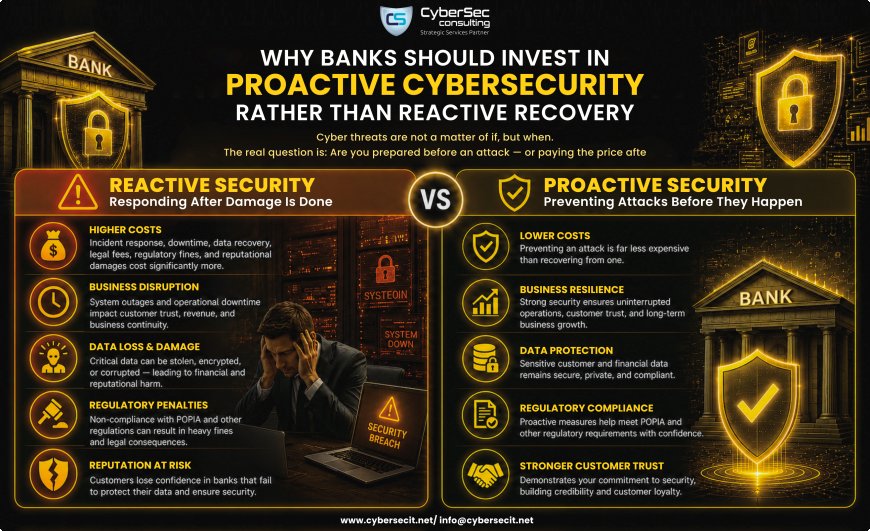
As cyber threats targeting South African banks continue to increase in sophistication, relying solely on reactive security measures is no longer sufficient. Modern financial institutions require a proactive cybersecurity strategy that identifies vulnerabilities, strengthens security controls, and prevents cyber attacks before they disrupt banking operations, compromise customer data, or result in costly regulatory penalties. Investing in proactive cybersecurity enables banks across Johannesburg, Cape Town, Durban, Pretoria, and throughout South Africa to improve cyber resilience, maintain POPIA compliance, and support secure digital transformation.
Unlike reactive recovery, which focuses on responding after a cyber incident has occurred, proactive cybersecurity emphasizes continuous monitoring, vulnerability assessments, penetration testing, Identity and Access Management (IAM), cloud security, threat intelligence, and Security Operations Center (SOC) capabilities to minimize cyber risks before they impact the business.
Proactive cybersecurity reduces operational risk by continuously identifying vulnerabilities, monitoring critical banking systems, and preventing cyber attacks before they disrupt financial services.
- Regulatory Compliance - Regular cybersecurity assessments, governance frameworks, and security controls help South African banks maintain compliance with POPIA, ISO 27001, PCI DSS, and other financial cybersecurity regulations.
- Customer Trust - Protecting customer data through robust cybersecurity practices strengthens confidence in digital banking services and reinforces long-term trust in South African financial institutions.
- Reduced Downtime - Continuous security monitoring, penetration testing, incident response planning, and resilient infrastructure significantly reduce operational downtime caused by ransomware, phishing, and other cyber attacks.
- Better Return on Investment (ROI) - Investing in proactive cybersecurity lowers the long-term costs associated with data breaches, regulatory penalties, legal disputes, business interruption, and emergency incident recovery.
- Competitive Advantage - Banks that prioritize cybersecurity demonstrate stronger governance, regulatory compliance, and digital resilience, making them more attractive to customers, investors, and business partners in South Africa's competitive financial sector.
Building a Future-Ready Banking Security Strategy

The future of banking cybersecurity in South Africa depends on prevention rather than recovery. By adopting a proactive security approach that includes Identity and Access Management (IAM), Privileged Access Management (PAM), Vulnerability Assessments, Penetration Testing, Cloud Security, Threat Intelligence, SOC Monitoring, and Zero Trust Architecture, financial institutions can reduce cyber risk while supporting innovation and secure digital banking.
CyberSec Consulting helps South African banks build resilient cybersecurity programs that protect critical financial infrastructure, secure customer information, strengthen regulatory compliance, and defend against evolving cyber threats. Whether your organization is modernizing its banking platform, migrating to the cloud, or improving cyber resilience, our cybersecurity experts provide end-to-end security consulting, managed security services, and risk assessments tailored to the South African banking sector.
Conclusion
The cybersecurity landscape for South African banks continues to evolve as cybercriminals leverage artificial intelligence, ransomware, identity-based attacks, phishing campaigns, and sophisticated financial fraud to target digital banking ecosystems. As financial institutions accelerate digital transformation, cloud adoption, mobile banking, and open banking initiatives, strengthening cybersecurity is no longer optional - it is a strategic business imperative for protecting customer data, ensuring operational resilience, and maintaining compliance with POPIA, PCI DSS, and ISO 27001.
To stay ahead of emerging cyber threats, South African banks must prioritize Identity and Access Management (IAM), Privileged Access Management (PAM), Cloud Security, Vulnerability Assessments, Penetration Testing, Security Operations Center (SOC) Monitoring, Threat Intelligence, Governance, Risk and Compliance (GRC), and continuous security monitoring. By implementing these proactive cybersecurity measures, financial institutions can significantly reduce cyber risk, strengthen regulatory compliance, safeguard sensitive financial information, and build greater resilience against today's rapidly changing threat landscape.
A proactive cybersecurity strategy delivers long-term value by minimizing financial losses, reducing operational downtime, protecting customer trust, and enabling secure digital transformation across the banking sector. Rather than reacting to cyber incidents after they occur, leading financial institutions across Johannesburg, Cape Town, Durban, Pretoria, and throughout South Africa are investing in preventative cybersecurity solutions that help identify vulnerabilities before attackers can exploit them.
CyberSec Consulting helps South African banks strengthen their cybersecurity posture through comprehensive Cybersecurity Assessments, Vulnerability Assessments, Penetration Testing, Identity Security, Cloud Security, POPIA Compliance, ISO 27001 Consulting, Managed Security Services, and Cybersecurity Consulting tailored to the financial sector. Whether your organization is modernizing legacy infrastructure, securing cloud environments, implementing Zero Trust Architecture, or improving regulatory compliance, our cybersecurity experts deliver practical, scalable, and business-focused security solutions.
Ready to Strengthen Your Bank's Cybersecurity?

Don't wait for a cyber attack to expose critical vulnerabilities in your banking environment. Connect with CyberSec Consulting, a trusted cybersecurity consulting company serving South Africa, to proactively identify security gaps, strengthen cyber resilience, and protect your customers, critical financial assets, and digital banking platforms.
Schedule a Cybersecurity Assessment or consultation with CyberSec Consulting today and discover how our experts can help your financial institution build a secure, compliant, and future-ready banking environment that is prepared for the evolving cyber threats of 2026 and beyond.
FAQs
Why are South African banks increasingly targeted by cybercriminals?
South African banks are prime targets because they manage high-value financial transactions, sensitive customer data, and rapidly expanding digital banking platforms. Cybercriminals exploit phishing, ransomware, identity theft, and cloud vulnerabilities, making proactive cybersecurity essential for financial institutions across South Africa.
What are the biggest cybersecurity challenges facing South African banks in 2026?
The biggest cybersecurity challenges include AI-powered phishing, ransomware, identity-based attacks, cloud security risks, third-party vendor threats, API vulnerabilities, and POPIA compliance. Implementing continuous security monitoring, penetration testing, and Identity and Access Management (IAM) helps banks reduce these evolving cyber risks.
How can South African banks improve their cybersecurity posture?
Banks can strengthen their cybersecurity by conducting regular Vulnerability Assessments, Penetration Testing, Cyber Risk Assessments, implementing Zero Trust Architecture, Multi-Factor Authentication (MFA), Privileged Access Management (PAM), and continuous Security Operations Center (SOC) monitoring. These measures improve cyber resilience while protecting customer data and financial services.
Why is POPIA compliance important for banks in South Africa?
POPIA requires South African banks to protect personal information through appropriate technical and organizational security measures. Achieving POPIA compliance helps reduce regulatory risk, safeguard customer privacy, avoid potential penalties, and strengthen trust in digital banking services.
What cybersecurity services should South African banks invest in?
Financial institutions should invest in Identity and Access Management (IAM), Cloud Security, Vulnerability Assessments, Penetration Testing, Managed Security Services, Threat Intelligence, Incident Response, and ISO 27001 consulting. These cybersecurity services help South African banks proactively defend against modern cyber threats and maintain regulatory compliance.
Why should South African banks choose CyberSec Consulting for cybersecurity consulting?
CyberSec Consulting provides end-to-end cybersecurity consulting for South African banks, including IAM, PAM, Cloud Security, GRC, POPIA Compliance, Penetration Testing, Managed Security Services, and Cybersecurity Risk Assessments. Our tailored security solutions help financial institutions strengthen cyber resilience, secure digital transformation, and stay ahead of evolving cyber threats.
What's Your Reaction?
 Like
0
Like
0
 Dislike
0
Dislike
0
 Love
0
Love
0
 Funny
0
Funny
0
 Angry
0
Angry
0
 Sad
0
Sad
0
 Wow
0
Wow
0