














Stay Ahead of AI-Driven Ransomware in Saudi Arabia
Discover how AI-powered ransomware is targeting Saudi businesses and critical infrastructure, and learn how CyberSec's AI-driven cybersecurity services help prevent attacks.

How AI-Powered Ransomware Is Targeting Saudi Businesses and Critical Infrastructure?
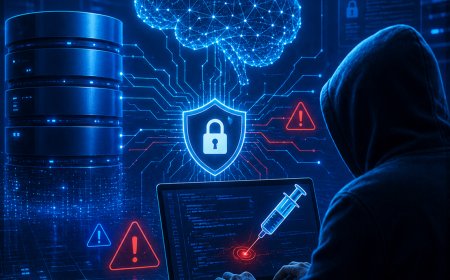
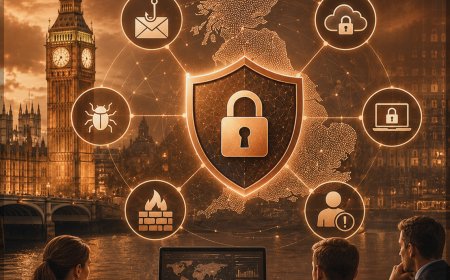
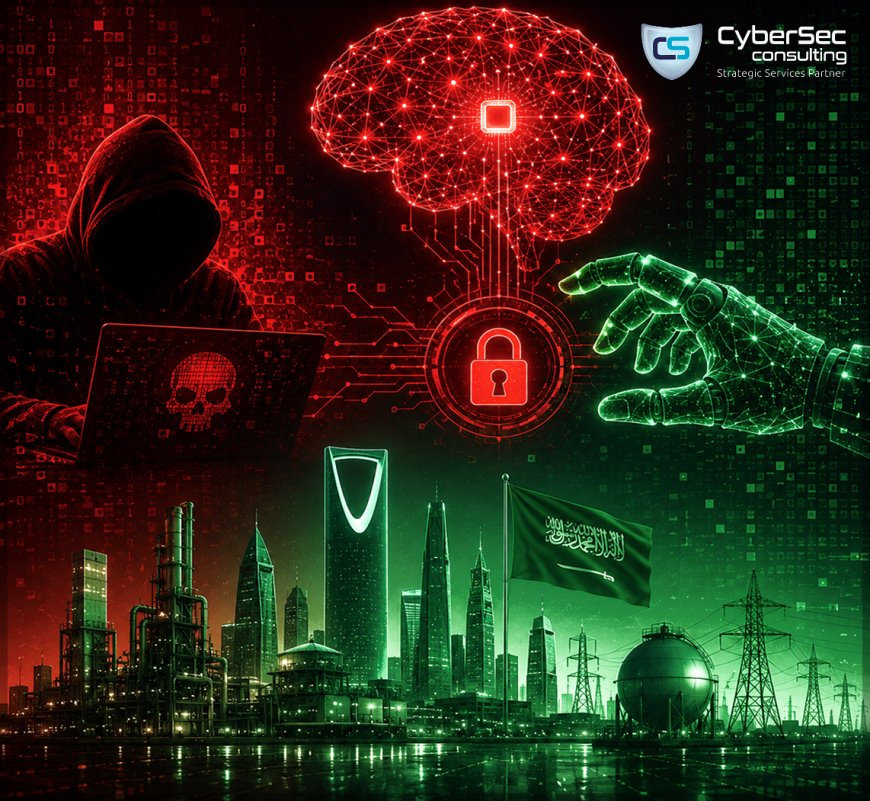
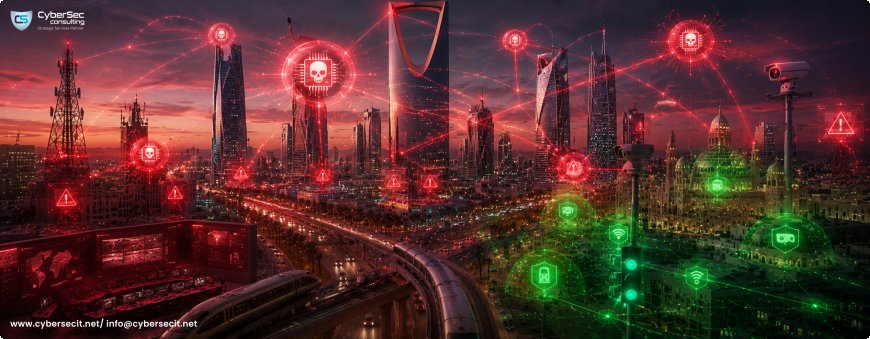
Artificial intelligence (AI) is transforming cybersecurity, but it is also empowering cybercriminals to launch faster, smarter, and more sophisticated ransomware attacks. Unlike traditional ransomware, AI-powered ransomware can automate reconnaissance, generate convincing phishing emails, identify vulnerable systems, evade security controls, and adapt its behavior in real time.
As organizations across Saudi Arabia accelerate digital transformation through Saudi Vision 2030, adopt cloud technologies, and modernize critical infrastructure, attackers are increasingly targeting industries such as oil and gas, banking, healthcare, government, manufacturing, telecommunications, and logistics.
Today, businesses require more than conventional antivirus solutions to defend against evolving cyber threats. AI-driven ransomware campaigns are capable of bypassing legacy security tools, compromising enterprise networks, and encrypting critical business data within minutes.
To strengthen cyber resilience in Saudi Arabia, organizations are investing in AI-powered cybersecurity solutions, Managed Detection and Response (MDR), Security Operations Center (SOC) services, Threat Intelligence, and Cloud Security to detect threats earlier, respond faster, and protect mission-critical infrastructure from advanced ransomware attacks.
How AI Is Powering Modern Ransomware Attacks?
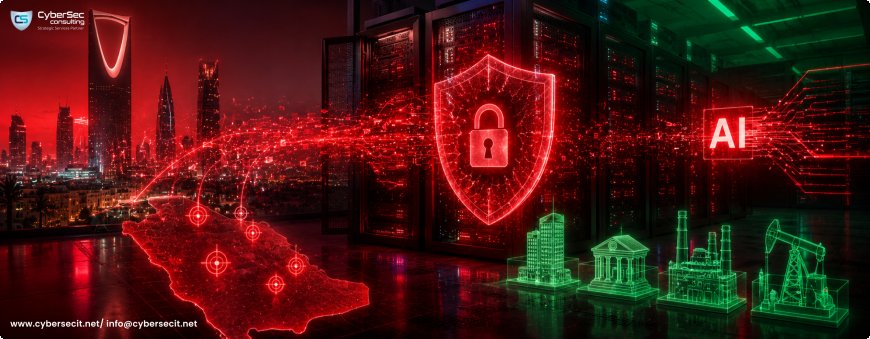
- What AI-Powered Ransomware Is: AI-powered ransomware uses artificial intelligence and machine learning to automate attacks, evade detection, and maximize damage against Saudi businesses and critical infrastructure.
- How Attackers Use AI to Automate Attacks: Cybercriminals use AI to scan networks, identify weak points, prioritize high-value assets, and launch large-scale ransomware attacks with minimal manual effort.
- AI-Generated Phishing Emails in Arabic and English: AI creates highly personalized phishing emails in both Arabic and English, making it easier to deceive employees and steal credentials from organizations in Saudi Arabia.
- AI Voice Cloning for Business Email Compromise (BEC): Attackers use AI-generated voice clones to impersonate executives, convincing employees to transfer funds or execute malicious ransomware payloads.
- AI-Assisted Vulnerability Discovery: AI rapidly identifies software vulnerabilities, exposed cloud services, and misconfigured systems, allowing attackers to exploit weaknesses before they are patched.
- Automated Malware Mutation Using AI: AI continuously modifies ransomware code to evade antivirus software, endpoint security, and signature-based detection used by many enterprises.
- AI-Powered Ransomware Negotiations: Some ransomware groups use AI-driven chatbots to automate ransom negotiations, pressure victims, and accelerate cryptocurrency payments after an attack.
AI-Powered Ransomware Attack Lifecycle
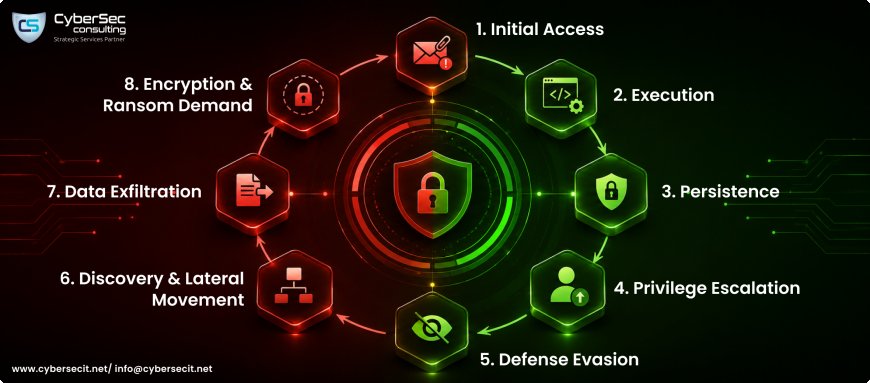
The infographic illustrates the complete AI-powered ransomware attack lifecycle, showing how cybercriminals progress from gaining initial access to encrypting critical business data and demanding a ransom.
AI-Powered Ransomware Attack Lifecycle
- Initial Access: Attackers gain entry through AI-generated phishing emails, stolen credentials, or exploited vulnerabilities, making strong email security and multi-factor authentication (MFA) essential for Saudi businesses.
- Execution: Once inside, malicious code executes to establish the ransomware payload, often bypassing traditional defenses through AI-driven evasion techniques targeting enterprise environments.
- Persistence: The ransomware establishes persistent access within the network, ensuring attackers maintain long-term control even after system reboots or initial security remediation.
- Privilege Escalation: Attackers use AI to obtain higher-level permissions, allowing them to access sensitive systems, critical infrastructure, and business-critical data across Saudi enterprise networks.
- Defense Evasion: AI continuously modifies malware behavior to evade antivirus software, endpoint protection, and traditional detection methods, making advanced AI-powered threat detection increasingly important.
- Discovery & Lateral Movement: Attackers map the internal network and move laterally between devices, identifying high-value assets, cloud workloads, and servers before launching the ransomware attack.
- Data Exfiltration: Before encrypting files, cybercriminals steal confidential business information to enable double-extortion attacks, increasing financial and reputational risks for organizations in Saudi Arabia.
- Encryption & Ransom Demand: The ransomware encrypts critical files and systems before demanding payment, often disrupting operations across sectors such as oil and gas, banking, healthcare, government, manufacturing, aviation, and logistics.
AI vs. Traditional Security Comparison
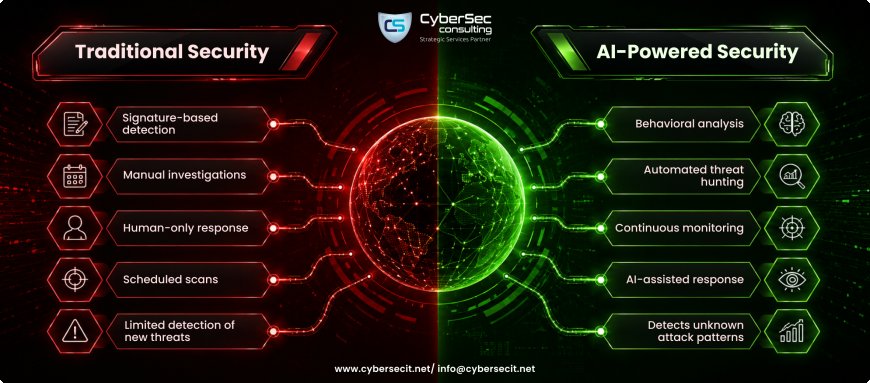
How AI Is Helping Saudi Organizations Stop Ransomware Before It Spreads?
As ransomware attacks become more sophisticated, traditional security solutions alone are no longer enough to protect businesses. Cybercriminals are increasingly using artificial intelligence (AI) to automate phishing campaigns, evade detection, identify vulnerabilities, and accelerate the spread of ransomware across enterprise networks.
To counter these evolving threats, organizations across Saudi Arabia are adopting AI-powered cybersecurity solutions that can detect suspicious activity in real time, predict emerging threats, and respond to attacks before they cause operational disruption.
By combining AI, machine learning, and human expertise, modern cybersecurity platforms enable organizations to identify ransomware indicators early, minimize response times, and strengthen cyber resilience against advanced attacks targeting industries such as oil and gas, banking, healthcare, government, manufacturing, and logistics.
How AI Strengthens Ransomware Defense?
- AI-Based Anomaly Detection: AI continuously analyzes network activity to identify unusual behavior, helping Saudi businesses detect ransomware before it encrypts critical systems.
- Real-Time Endpoint Monitoring: AI monitors laptops, servers, and endpoints 24/7 to detect malicious activity instantly and stop ransomware from spreading across enterprise networks.
- Predictive Threat Intelligence: AI analyzes global threat data to predict emerging ransomware campaigns targeting Saudi Arabia, enabling organizations to strengthen defenses proactively.
- AI-Powered Security Operations Center (SOC): An AI-powered SOC automates threat detection, prioritizes security alerts, and accelerates incident response for continuous protection.
- Automated Incident Response: AI automatically isolates infected devices, blocks malicious processes, and reduces ransomware dwell time, minimizing business disruption.
- User Behavior Analytics (UBA): AI establishes normal user behavior patterns and quickly detects insider threats, compromised accounts, and credential misuse before attackers escalate privileges.
- Machine Learning for Zero-Day Attack Detection: Machine learning identifies previously unknown ransomware variants by analyzing behavioral patterns rather than relying solely on known malware signatures.
Why Saudi Arabia Is a Prime Target for Ransomware Attacks?

Saudi Arabia has become one of the Middle East's fastest-growing digital economies, driven by ambitious national initiatives such as Saudi Vision 2030. As businesses and government organizations accelerate cloud migration, smart city development, digital government services, and industrial modernization, the country's digital footprint continues to expand. While these advancements are strengthening economic growth and innovation, they are also increasing the cyberattack surface for ransomware operators targeting high-value assets.
Cybercriminals are actively focusing on organizations that manage critical infrastructure, sensitive customer data, financial transactions, and industrial control systems. Industries including oil and gas, banking, healthcare, telecommunications, manufacturing, logistics, utilities, and government have become attractive targets because operational disruption can result in significant financial losses and business downtime.
To keep pace with the evolving threat landscape, organizations across Saudi Arabia must adopt AI-powered cybersecurity solutions, Managed SOC, Threat Intelligence, Cloud Security, and Managed Detection and Response (MDR) to strengthen cyber resilience against sophisticated ransomware attacks.
Why Saudi Arabia Is Increasingly Targeted by Ransomware Groups?
- Rapid Digital Transformation Under Saudi Vision 2030: The accelerated adoption of digital technologies under Saudi Vision 2030 has expanded the attack surface, making Saudi businesses more attractive targets for ransomware and advanced cyberattacks.
- Expansion of Cloud Adoption: As organizations across Riyadh, Jeddah, Dammam, and NEOM migrate critical workloads to the cloud, cybercriminals increasingly target cloud misconfigurations and exposed environments with ransomware campaigns.
- Growth of Smart Cities: Smart city projects powered by connected technologies and digital infrastructure create new entry points for ransomware attackers seeking to disrupt essential public services and urban operations.
- Increased Use of IoT: The rapid deployment of IoT devices across healthcare, manufacturing, logistics, and energy sectors increases the number of connected endpoints that ransomware groups can exploit if left unsecured.
- Large-Scale Digital Government Initiatives: Saudi Arabia's expanding e-government ecosystem processes vast amounts of sensitive data, making government agencies attractive targets for ransomware, data theft, and extortion attacks.
- Critical Infrastructure Modernization: Modernizing power grids, transportation systems, utilities, and industrial facilities improves operational efficiency but also exposes critical infrastructure to increasingly sophisticated ransomware threats.
- Oil and Gas Sector Digitization: As the Saudi oil and gas industry embraces AI, cloud platforms, Industrial IoT (IIoT), and Operational Technology (OT), ransomware actors continue targeting this high-value sector to maximize financial and operational impact.
How AI Identifies High-Risk Assets Before Attackers Do?
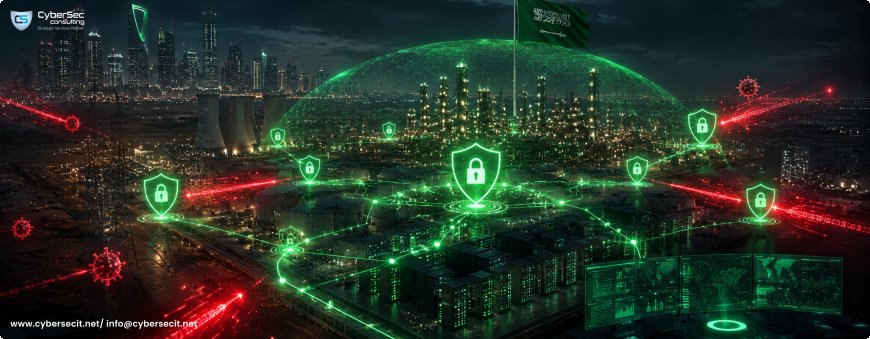
Modern cyberattacks move far too quickly for traditional security tools that rely on manual analysis and static rules. Artificial intelligence (AI) enables organizations to proactively identify high-risk assets by continuously analyzing networks, cloud environments, endpoints, applications, and user activity in real time. Instead of waiting for a ransomware attack to occur, AI helps security teams uncover vulnerabilities, detect abnormal behavior, and prioritize the systems most likely to be targeted by cybercriminals.
For organizations across Saudi Arabia, where digital transformation is accelerating under Saudi Vision 2030, AI-powered risk assessment plays a critical role in strengthening cyber resilience. Industries such as oil and gas, banking, healthcare, government, manufacturing, telecommunications, and logistics depend on continuous operations, making early risk identification essential. By leveraging AI-powered cybersecurity,
Threat Intelligence, Managed Detection and Response (MDR), Security Operations Center (SOC), and Cloud Security, businesses can reduce their attack surface, prevent ransomware infections, and protect critical infrastructure before attackers gain access.
How AI Identifies High-Risk Assets?
- Prioritize Vulnerabilities: AI analyzes vulnerability severity, exploit availability, business impact, and asset criticality to help Saudi organizations remediate the highest-risk security gaps before ransomware attackers can exploit them.
- Predict Likely Attack Paths: Using machine learning and attack path analysis, AI predicts how cybercriminals could move through enterprise networks, enabling Saudi businesses to block ransomware before lateral movement occurs.
- Identify Exposed Assets: AI continuously discovers internet-facing servers, cloud workloads, IoT devices, remote access services, and misconfigured systems that increase the attack surface across Saudi enterprises.
- Detect Suspicious User Behavior: AI-powered User and Entity Behavior Analytics (UEBA) identifies unusual login attempts, privilege misuse, and abnormal user activity that may indicate compromised accounts or ransomware preparation.
- Highlight Critical Systems Needing Immediate Attention: AI ranks high-value assets such as financial systems, healthcare records, industrial control systems, and cloud infrastructure, allowing security teams to prioritize protection for mission-critical operations.
Industry-Specific AI-Driven Ransomware Threats Across Saudi Arabia?
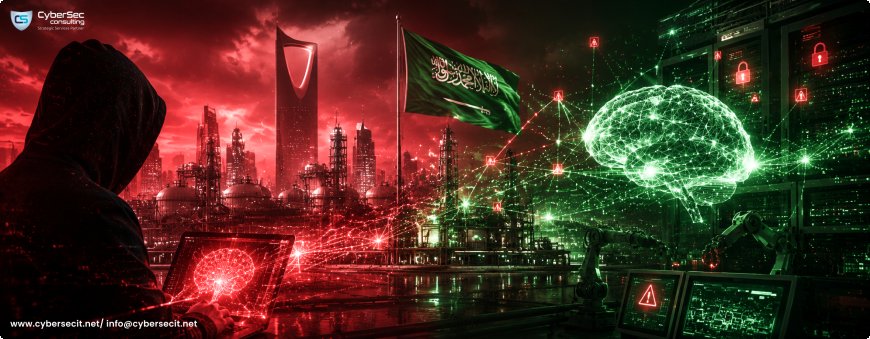
As Saudi Arabia accelerates digital transformation under Saudi Vision 2030, cybercriminals are tailoring AI-powered ransomware attacks to target the unique technologies, operations, and vulnerabilities of different industries. Rather than using a one-size-fits-all approach, attackers leverage artificial intelligence to identify sector-specific weaknesses, making ransomware campaigns more precise, scalable, and difficult to detect.
How AI-Driven Ransomware Differs Across Key Saudi Industries?
- Oil & Gas: AI targets Operational Technology (OT), Industrial Control Systems (ICS), and IIoT devices to disrupt production, making oil and gas cybersecurity in Saudi Arabia a top priority.
- Energy: Attackers use AI to identify vulnerabilities in smart grids, power distribution systems, and connected infrastructure, increasing the risk of large-scale operational disruptions.
- Government: AI-powered phishing campaigns and credential theft target government employees to gain access to sensitive citizen data, digital services, and national infrastructure across Saudi Arabia.
- Healthcare: AI-generated phishing emails and ransomware focus on hospital networks, medical devices, and electronic health records, where service disruption can directly impact patient care.
- Banking: AI analyzes financial transactions and employee behavior to launch sophisticated Business Email Compromise (BEC) attacks, credential theft, and ransomware targeting high-value banking systems.
- Manufacturing: AI identifies vulnerable industrial networks, production systems, and IoT-connected machinery to maximize downtime and pressure manufacturers into paying ransoms quickly.
- Aviation: AI targets airport systems, airline operations, passenger databases, and connected aviation infrastructure to disrupt travel services and exploit critical operational dependencies.
- Logistics: AI-driven ransomware attacks exploit supply chain platforms, warehouse management systems, and fleet operations, causing delivery delays and significant business disruption across the logistics sector.
Conclusion - Secure Saudi Businesses

As AI continues to reshape the cybersecurity landscape, ransomware attacks are becoming more intelligent, automated, and difficult to detect. For organizations across Saudi Arabia, protecting digital assets requires a proactive security strategy that combines advanced technology with expert cybersecurity professionals. Whether operating in oil and gas, banking, healthcare, government, manufacturing, aviation, logistics, or energy, businesses must adopt AI-driven security measures to safeguard critical infrastructure, sensitive data, and cloud environments against evolving cyber threats.
CyberSec helps organizations across Saudi Arabia strengthen their cyber resilience through AI-powered Security Operations Center (SOC) services, Managed Security Services, Assessment Services, Threat Intelligence, Cloud Security, Incident Response, Vulnerability Management, and AI-driven Security Assessments. By combining human expertise with advanced AI technologies, CyberSec enables businesses to detect threats earlier, respond faster, minimize ransomware risks, and maintain business continuity against sophisticated cyberattacks.
As a trusted provider of cybersecurity services in Saudi Arabia, CyberSec delivers tailored security solutions that align with the country's digital transformation goals under Saudi Vision 2030. From Managed SOC, Managed Detection and Response (MDR), Cloud Security, and Zero Trust Security to Threat Intelligence, Network Security, and Critical Infrastructure Protection, CyberSec empowers organizations to stay ahead of emerging ransomware threats while ensuring compliance, operational resilience, and long-term cyber protection.
Strengthen your cybersecurity posture today with CyberSec's AI-powered cybersecurity solutions and protect your business from the next generation of ransomware attacks across Saudi Arabia.
FAQs
Why are AI-powered ransomware attacks increasing in Saudi Arabia?
Saudi Arabia's rapid digital transformation under Saudi Vision 2030, increased cloud adoption, and expanding critical infrastructure have made businesses attractive targets. AI-powered cybersecurity helps organizations detect and stop ransomware before it spreads.
Which industries in Saudi Arabia are most vulnerable to AI-powered ransomware?
The oil and gas, banking, healthcare, government, energy, manufacturing, aviation, and logistics sectors are frequently targeted due to their critical operations. These industries require advanced **cybersecurity services in Saudi Arabia to reduce ransomware risks.
How can AI-powered cybersecurity protect Saudi businesses from ransomware?
AI cybersecurity solutions in Saudi Arabia use behavioral analytics, real-time threat detection, automated incident response, and predictive threat intelligence to identify ransomware early and prevent business disruption.
What is the role of a Managed SOC in preventing ransomware attacks?
A Managed Security Operations Center (SOC) in Saudi Arabia provides 24/7 monitoring, AI-driven threat detection, and rapid incident response to detect, contain, and mitigate ransomware attacks before they impact critical systems.
Why is ransomware a major threat to Saudi Arabia's critical infrastructure?
As Saudi Arabia modernizes its critical infrastructure, smart cities, cloud platforms, and industrial systems, ransomware groups increasingly target these environments to disrupt essential services and demand large ransoms.
How can CyberSec help organizations defend against AI-powered ransomware in Saudi Arabia?
CyberSec delivers AI-powered cybersecurity services in Saudi Arabia, including Managed SOC, Managed Security Services, Threat Intelligence, Cloud Security, Assessment Services, and Incident Response to strengthen cyber resilience and protect businesses from evolving ransomware threats.
What's Your Reaction?
 Like
0
Like
0
 Dislike
0
Dislike
0
 Love
0
Love
0
 Funny
0
Funny
0
 Angry
0
Angry
0
 Sad
0
Sad
0
 Wow
0
Wow
0