

























The Hidden Risks of Excessive User Privileges in Enterprise Environments
Identify the common causes of excessive user privileges and learn how UAE organizations can reduce access risks with IAM, PAM, IGA, least privilege, and Zero Trust security.



Introduction
Excessive user privileges are becoming a major enterprise cybersecurity risk as organizations expand digital operations. A compromised account with unnecessary access can expose sensitive data, critical applications, and cloud resources.
The principle of least privilege limits access to only what users need to perform their roles. Strong IAM, PAM, and identity security controls help organizations reduce credential abuse, privilege escalation, and unauthorized access across modern enterprise environments.
Cloud adoption, remote work, SaaS platforms, hybrid cloud, and multi-cloud infrastructure have made identity protection more complex. Attackers increasingly target privileged accounts to move laterally and reach critical systems.
Zero Trust security adds continuous verification, while IAM and PAM provide stronger access governance and privileged account protection. For enterprises strengthening cloud security and cybersecurity resilience in the UAE, controlling excessive access is essential to protecting digital assets and supporting secure business growth.
What Are Excessive User Privileges?
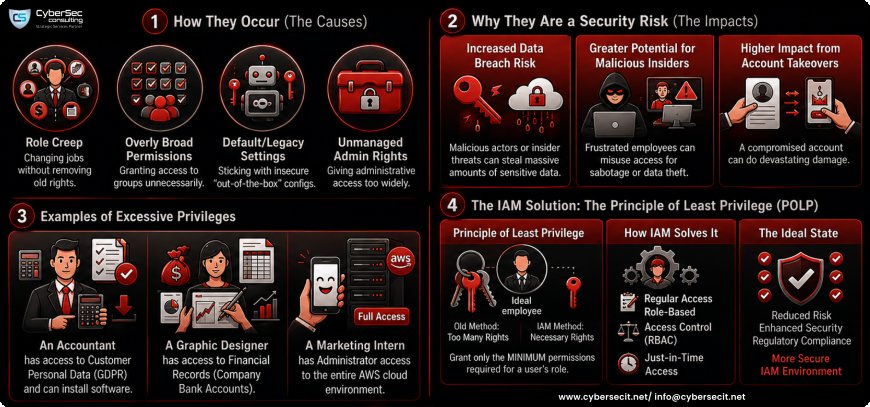
Excessive user privileges occur when employees, contractors, or service accounts have more access than required for their roles. This creates a larger identity security and cybersecurity risk, especially across cloud, SaaS, and hybrid IT environments. A strong least privilege access strategy helps UAE enterprises reduce unauthorized access, credential abuse, and privilege escalation risks.
- Necessary Access - Permissions required to perform a specific job function.
- Excessive Access - Permissions beyond the user's actual business requirements.
- Privileged Access - Elevated permissions that allow users to manage systems, applications, security controls, or sensitive data.
- Dormant or Unused Access - Existing permissions that are no longer needed but remain active.
- Permanent Access vs. Temporary Access - Permanent access remains available continuously, while temporary access is granted only for a defined task or period.
Why Are Excessive Privileges Dangerous?
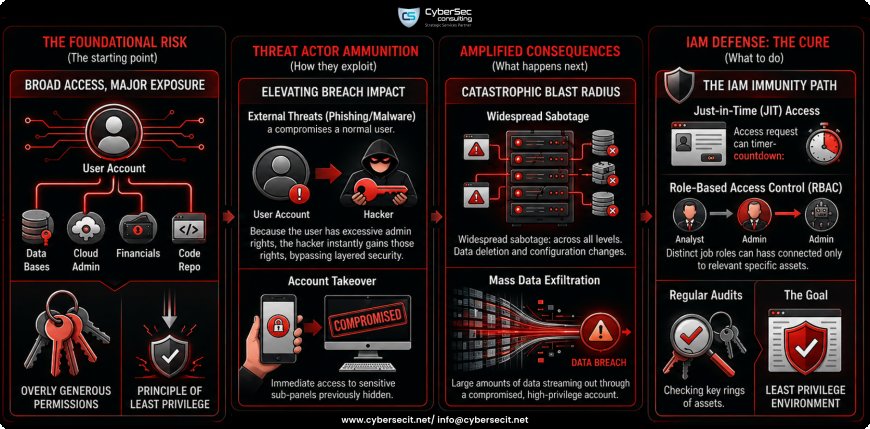
Larger attack surface: Excessive permissions give attackers more opportunities to access systems, applications, and cloud resources. Least privilege security helps reduce this exposure.
- Account compromise - A compromised employee account with broad permissions can expose multiple business systems and sensitive data.
- Privilege escalation - Unnecessary permissions can help attackers gain higher-level access and reach critical enterprise resources.
- Insider threats - Excessive access increases the risk of accidental data exposure or intentional misuse by employees and contractors.
- Lateral movement - Attackers can use compromised credentials to move across connected systems and cloud environments.
- Data exposure - Broad access can expose customer information, financial records, intellectual property, and other sensitive business data.
- Compliance failures - Weak access controls can create IAM compliance gaps and increase regulatory risks for enterprises operating under frameworks such as UAE PDPL, ISO 27001, and NIST.
How Attackers Exploit Excessive Privileges?
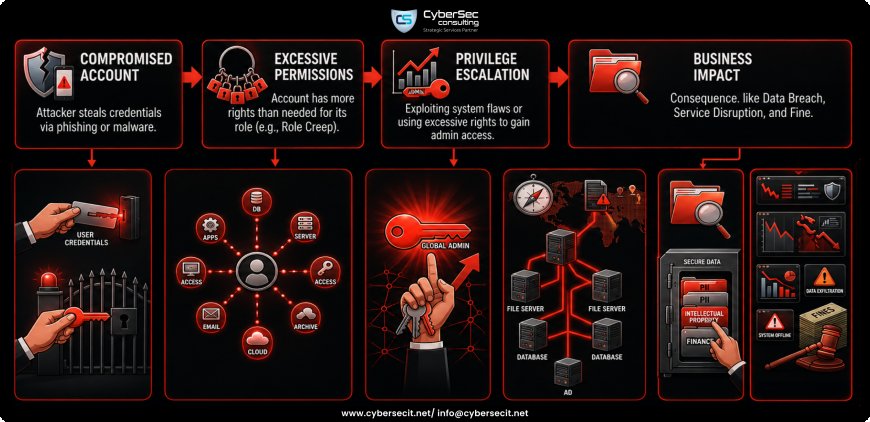
A typical identity-based attack can follow a simple chain -
Compromised account → Excessive permissions → Privilege escalation → Lateral movement → Sensitive data access → Business impact
An attacker first compromises a legitimate account through stolen credentials or phishing. Excessive permissions then provide access to additional systems. Privilege escalation can expose critical resources, while lateral movement allows the attacker to reach databases, cloud workloads, and business applications.
Strong IAM, PAM, Zero Trust, and least privilege security can help UAE enterprises disrupt this attack path. Cloud administrator accounts: Compromised administrator credentials can give attackers broad control over cloud infrastructure, users, workloads, and security settings.
- Database Access - Unnecessary database permissions can expose customer records, financial information, and other sensitive enterprise data.
- SaaS Platforms - Excessive SaaS permissions can allow attackers to access business applications, files, customer data, and collaboration systems.
- Service Accounts - Over-privileged service accounts can provide attackers with persistent access to applications and connected infrastructure.
- API Credentials - Stolen API keys with excessive permissions can enable unauthorized access to cloud services, applications, and sensitive resources.
- Remote Access - Compromised VPN, remote desktop, or remote access accounts can become entry points for lateral movement across enterprise networks.
- Third-Party Users - Uncontrolled vendor and partner access can create additional identity risks and expose critical systems to external compromise.
Common Causes of Excessive User Privileges
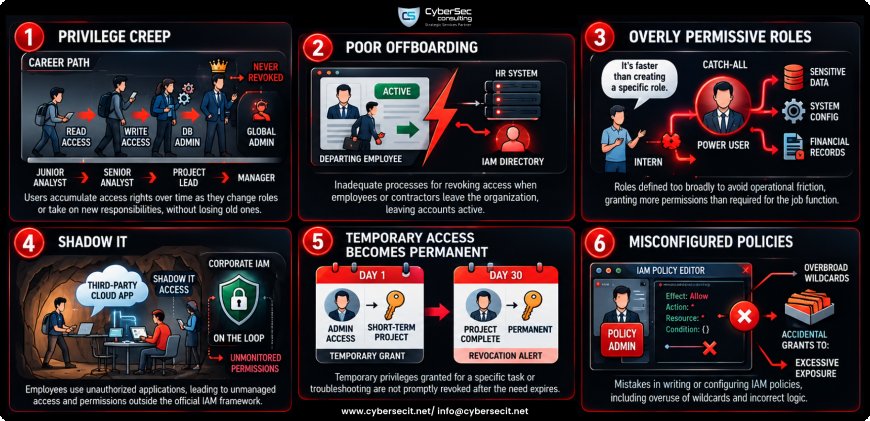
Excessive user privileges often develop through weak access controls, outdated permissions, and poor identity governance. UAE organizations can reduce these risks through strong IAM, PAM, Identity Governance and Administration (IGA), least privilege, and automated access management.
- Poor Access Governance - Weak access governance makes it difficult to control who can access systems and why. Clear policies and centralized identity governance help UAE enterprises reduce unnecessary permissions and privilege sprawl.
- Manual Provisioning - Manual access provisioning can create inconsistent permissions and human errors. Automated provisioning helps ensure users receive the right access based on their roles and business requirements.
- Lack of Regular Access Reviews - Access can remain active long after business requirements change. Regular IAM access reviews help identify unused, outdated, and excessive permissions before they become security risks.
- Employees Changing Roles - Employees often retain permissions from previous positions after changing departments or responsibilities. Effective identity lifecycle management should update access when roles change.
- Orphaned Accounts - Orphaned accounts belong to former employees, inactive users, or identities without an active owner. These accounts can become entry points for unauthorized access and identity-based attacks.
- Shared Accounts - Shared accounts make it difficult to identify who performed a specific action. They also weaken accountability and increase the risk of credential misuse. Individual identities with MFA and privileged access controls provide stronger security.
- Over-Permissioned Service Accounts - Service accounts often receive broad permissions to support applications and automated workloads. Excessive service account privileges can enable attackers to move laterally across cloud and hybrid environments.
- Long-Term Administrator Access - Permanent administrator access creates significant privileged access risks. Just-in-time access and PAM can provide administrative permissions only when required.
- Inconsistent IAM Policies - Different departments, applications, and cloud platforms may follow different access policies. Inconsistent IAM policies can create security gaps and excessive permissions across enterprise environments.
- Lack of Centralized Identity Visibility - Limited visibility makes it difficult to understand which users, applications, service accounts, and third parties have access to critical resources. Centralized IAM and identity governance provide better visibility across cloud, SaaS, hybrid, and multi-cloud environments.
- Reducing Excessive Privileges - UAE enterprises can reduce excessive access by combining least privilege security, IAM, PAM, IGA, MFA, Zero Trust, access reviews, and automation. These controls help organizations strengthen cybersecurity in the UAE while protecting critical data, cloud resources, and business applications.
Excessive Privileges in Cloud Environments
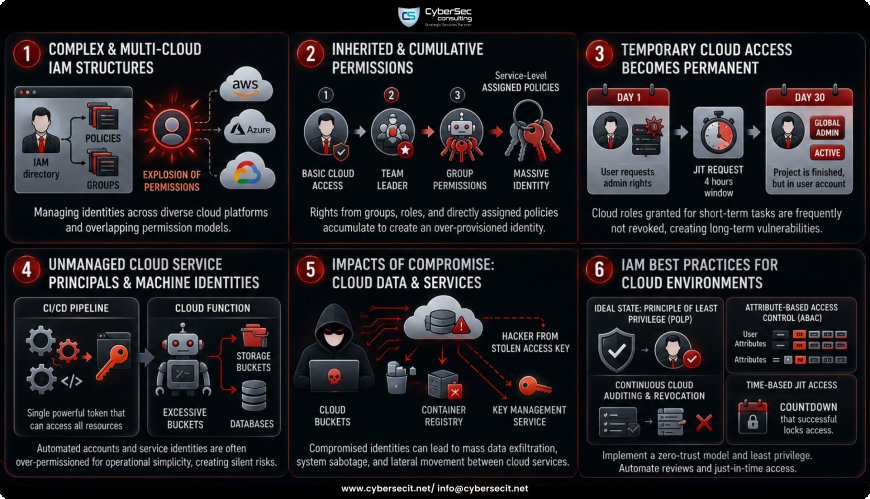
Excessive privileges are a major cloud security risk for businesses in the UAE. Users, administrators, applications, and service identities often receive more access than required. A single compromised identity can expose cloud workloads, sensitive data, and business-critical systems. Strong Cloud IAM, least privilege, privileged access management (PAM), and identity governance are essential for reducing this risk.
- SaaS - SaaS platforms can expose sensitive business data when users receive excessive roles or administrative permissions. Uncontrolled access across Microsoft 365, Salesforce, ServiceNow, and other cloud applications can increase the risk of account takeover, data leakage, and unauthorized changes.
- IaaS - IaaS environments can create serious risks when users have excessive access to virtual machines, storage, networks, databases, or security controls. Compromised cloud credentials can allow attackers to modify infrastructure, access sensitive workloads, or move laterally across the environment.
- PaaS - PaaS platforms often combine application, database, API, and deployment permissions. Excessive privileges can allow compromised developers, applications, or identities to access production resources, alter configurations, or expose application data.
- Hybrid Cloud - Hybrid cloud environments connect on-premises infrastructure with public cloud platforms. Different IAM models, security policies, and access controls can create privilege gaps. Attackers can exploit these gaps to move between cloud and on-premises environments.
- Multi-Cloud - Multi-cloud environments increase complexity because organizations manage different IAM frameworks across AWS, Microsoft Azure, Google Cloud, and other platforms. Inconsistent roles and permissions can create privilege sprawl, orphaned accounts, and excessive access.
- Cloud Administrator Accounts - Cloud administrator accounts have broad control over infrastructure, identities, security policies, and data. A compromised administrator account can result in rapid privilege escalation, configuration changes, data exposure, and major business disruption. Privileged access management and MFA should protect these accounts.
- Cloud IAM Roles - Poorly designed IAM roles can give users access to resources they do not need. Role inheritance, unused permissions, and broad policies can create excessive cloud privileges. Regular IAM reviews and least-privilege policies help reduce unnecessary access.
- API Permissions - Cloud APIs can provide direct access to applications, databases, infrastructure, and security controls. Excessive API permissions can allow stolen credentials or API keys to perform unauthorized actions. API security, credential rotation, and granular permissions are critical for protecting cloud environments.
- Service Identities - Service accounts, workloads, applications, and machine identities often operate without direct human oversight. Excessive permissions can enable attackers to abuse compromised service identities for lateral movement, privilege escalation, and access to sensitive data.
Relationship Between IAM and Excessive Privileges

Identity and Access Management (IAM) helps organizations control who can access cloud resources, what they can access, and what actions they can perform. Effective IAM reduces excessive privileges, privilege sprawl, unauthorized access, and identity-based cyber risks across UAE enterprises.
- Identity Lifecycle Management - Controls user access throughout the employee journey. Access is created during onboarding, updated when roles change, and removed during offboarding. This reduces orphaned accounts and excessive access.
- Role-Based Access Control - Role-Based Access Control (RBAC) assigns permissions based on job responsibilities. Users receive only the access required for their roles. This supports least privilege security and reduces unnecessary cloud permissions.
- Access Provisioning - Access provisioning ensures users receive the right permissions at the right time. Automated provisioning can prevent excessive access and improve IAM security, cloud access management, and compliance.
- Access Reviews - Regular access reviews identify unused, outdated, or excessive permissions. Security teams can remove unnecessary privileges and reduce the risk of privilege escalation and unauthorized access.
- Authentication - Authentication verifies the identity of users, administrators, applications, and service accounts. Multi-factor authentication (MFA) adds another security layer and helps protect UAE organizations against compromised credentials.
- Authorization - Authorization determines what an authenticated identity can access and which actions it can perform. Granular authorization policies help enforce least privilege access across cloud applications, infrastructure, APIs, and data.
- Identity Governance - Identity governance provides centralized visibility and control over identities, permissions, policies, and access decisions. Strong Identity Governance and Administration (IGA) helps UAE organizations maintain compliance, reduce privilege risks, and improve overall cybersecurity posture.
How Does PAM Reduce Privileged Access Risks?

Privileged Access Management (PAM) is a key security control for protecting administrator accounts, privileged credentials, and high-risk systems. PAM helps UAE organizations enforce least privilege, Zero Trust security, identity security, and privileged access controls. It limits unnecessary administrative access and reduces the impact of compromised privileged accounts.
- Just-in-Time Privileged Access - Just-in-time (JIT) access provides privileged permissions only when they are required. Access expires after the approved task is completed. This reduces standing privileges and privilege escalation risks.
- Just-Enough Administration - Just-enough administration (JEA) gives administrators only the permissions needed for a specific task. Excessive permissions are removed by design. This supports least privilege security across UAE enterprise environments.
- Privileged Account Monitoring - PAM continuously monitors privileged accounts and administrative activity. Security teams can detect unusual access, suspicious behavior, and potential privileged account compromise.
- Session Recording - Session recording captures privileged user activity during administrative sessions. Security teams can review actions for security monitoring, incident investigation, audit trails, and compliance.
- Credential Vaulting - Credential vaulting stores privileged passwords, keys, and secrets in a secure central vault. Automated credential rotation reduces the risk of credential theft, password reuse, and unauthorized privileged access.
- Temporary Administrative Privileges - Temporary privileges provide administrative access only for an approved business or technical requirement. Users do not retain permanent administrator rights. This reduces the attack surface and risk of privileged account abuse.
- Automated Privilege Removal - Automated privilege removal revokes elevated access when the approved task, session, or access period ends. This prevents unused permissions from remaining active and helps maintain continuous privileged access control.
- PAM for UAE Organizations - PAM strengthens cybersecurity in the UAE by controlling privileged identities across cloud, hybrid, on-premises, and multi-cloud environments. Combining PAM with IAM, MFA, Zero Trust, identity governance, and continuous monitoring helps organizations reduce excessive privileges and protect critical business systems.
How Organizations Can Identify Excessive Privileges?
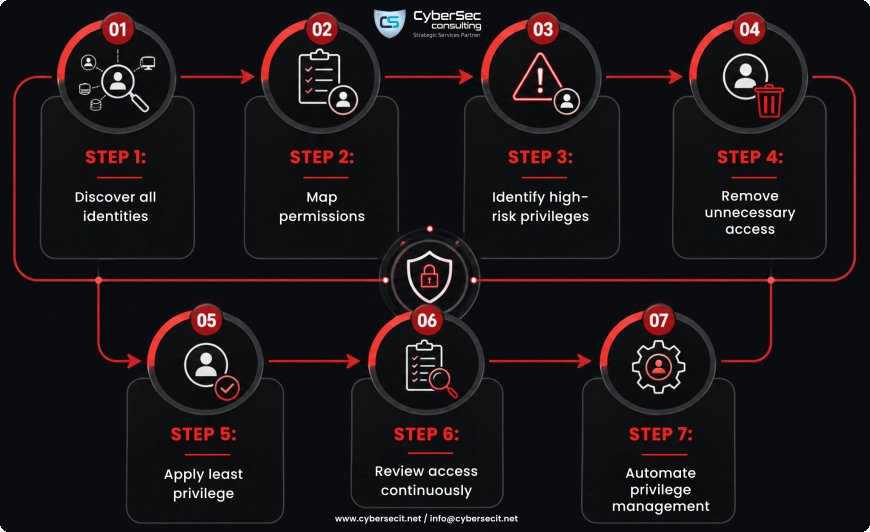
Organizations can identify excessive privileges by continuously reviewing user identities, permissions, roles, and access activity. Cloud security teams in the UAE should compare assigned access with actual business requirements. Regular IAM assessments, access reviews, privilege audits, and identity governance can reveal unnecessary permissions before attackers exploit them.
- Review User Access - Review employee, contractor, and third-party access regularly. Remove permissions that are no longer required for current job responsibilities.
- Analyze Privilege Usage - Compare assigned permissions with actual usage. Unused administrator rights, inactive permissions, and rarely used privileges can indicate privilege sprawl.
- Identify Dormant Accounts - Find inactive, orphaned, and former employee accounts. Disable or remove accounts that no longer require access to cloud applications and enterprise systems.
- Review IAM Roles - Assess IAM roles for broad permissions and unnecessary administrative rights. Least privilege access should remain the standard for UAE cloud environments.
- Monitor Privileged Accounts - Monitor administrator and high-privilege accounts for unusual access patterns. Unexpected login locations, abnormal activity, and unauthorized privilege changes can indicate identity-based cyber threats.
- Audit Service Accounts and APIs - Review service identities, API keys, application accounts, and machine identities. Excessive permissions on non-human identities can create significant cloud security risks.
- Conduct Regular Access Reviews - Schedule periodic access certifications for critical applications, cloud platforms, databases, and sensitive data. Automated identity governance can help security teams identify and remove excessive access faster.
- Use IAM and PAM Together - IAM controls identity and access across the organization, while PAM protects privileged accounts and administrative access. Combining both controls helps UAE organizations reduce excessive permissions, privilege escalation, insider threats, and unauthorized cloud access.
Conclusion
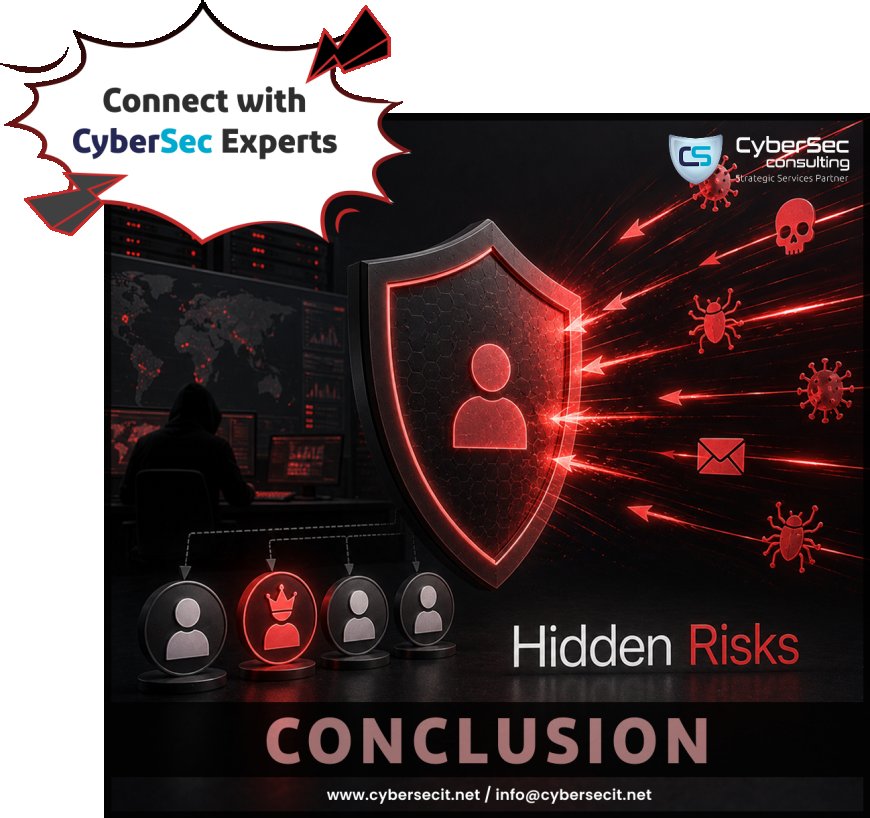
Every unnecessary permission creates another potential attack path for cybercriminals. Excessive access can turn a compromised employee account, administrator account, service identity, or API credential into a gateway to critical business systems.
UAE organizations can reduce this risk through a least privilege security strategy. Strong IAM, PAM, Identity Governance and Administration (IGA), Zero Trust security, continuous monitoring, and security automation help control who can access resources and what actions they can perform. Regular access reviews can remove unused permissions. Just-in-time access can reduce permanent privileges. Automated provisioning and deprovisioning can improve identity security across cloud and hybrid environments.
A mature identity security strategy in the UAE should protect human and machine identities across SaaS, IaaS, PaaS, multi-cloud, and on-premises environments. Continuous privilege assessment also helps organizations strengthen cloud security, compliance, and cyber resilience.
CyberSec Consulting helps enterprises strengthen IAM, PAM, identity governance, and privileged access security. Our cybersecurity specialists help organizations identify excessive privileges, reduce identity risks, and build a practical least-privilege security framework.
Is Excessive Access Creating Hidden Security Risks?

Your organization may have more privileged access than it realizes. Identify excessive permissions before attackers can exploit them.
CyberSec Consulting can help you:
- Assess your identity and access environment.
- Identify excessive and unused privileges.
- Strengthen IAM and PAM controls.
- Implement least privilege access.
- Secure privileged and service identities.
- Improve cloud and hybrid access governance.
- Support UAE cybersecurity and compliance requirements.
FAQs
What are excessive user privileges?
Excessive user privileges occur when employees, administrators, contractors, or service accounts have more access than required. Such permissions increase identity security risks, privilege escalation, data exposure, and unauthorized access.
Why are excessive privileges a cybersecurity risk for UAE organizations?
Excessive privileges can increase the impact of compromised accounts and insider threats. UAE organizations can reduce these risks through least privilege, IAM, PAM, Zero Trust, identity governance, and continuous access monitoring.
How does IAM help prevent excessive privileges?
Identity and Access Management (IAM) controls user identities, authentication, authorization, roles, and permissions. Strong IAM helps organizations provide appropriate access, review permissions, and remove unnecessary privileges.
How does PAM reduce privileged access risks?
Privileged Access Management (PAM) protects administrator accounts and other high-risk identities. JIT access, credential vaulting, session monitoring, session recording, and automated privilege removal help reduce privileged access risks.
How can organizations identify excessive cloud permissions?
Organizations can review cloud IAM roles, administrator accounts, service identities, API permissions, and access activity. Regular access reviews and identity governance can identify unused, outdated, and excessive permissions across SaaS, IaaS, PaaS, and multi-cloud environments.
What is the role of least privilege in UAE cybersecurity?
The principle of least privilege ensures users receive only the permissions required for their business responsibilities. It helps UAE organizations reduce attack surface, privilege escalation, unauthorized access, and identity-based cyber threats while supporting stronger cloud security and compliance.
What's Your Reaction?
 Like
0
Like
0
 Dislike
0
Dislike
0
 Love
0
Love
0
 Funny
0
Funny
0
 Angry
0
Angry
0
 Sad
0
Sad
0
 Wow
0
Wow
0