



















How AI is Transforming SQL Injection Attacks: Critical Security Risks Every Enterprise Must Address?
Learn how organizations can strengthen cyber resilience, secure web applications, prevent data breaches, and enhance regulatory compliance through proactive cybersecurity strategies and expert-led security assessments.

Introduction: The Evolution of SQL Injection in the AI Era
SQL Injection (SQLi) remains one of the most dangerous web application security vulnerabilities affecting organizations worldwide. This cyberattack occurs when malicious SQL queries are inserted into application inputs, allowing attackers to manipulate databases, bypass authentication controls, access sensitive information, and compromise critical business systems.
Rapid digital transformation, cloud adoption, and API-driven applications have significantly expanded the attack surface for modern enterprises. Financial institutions, government entities, healthcare providers, retail organizations, and enterprise businesses increasingly rely on web applications, making application security a critical component of cybersecurity risk management.
Why SQL Injection Remains a Critical Cybersecurity Threat
Widespread Presence in Legacy and Modern Applications
Many organizations continue to operate legacy applications that lack secure coding practices and modern security controls. Vulnerabilities within web applications, APIs, and customer portals create opportunities for cybercriminals to exploit SQL Injection weaknesses and gain unauthorized access to business-critical systems.
Direct Access to Sensitive Business Data
Successful SQL Injection attacks can expose customer records, financial information, intellectual property, and confidential corporate data. Unauthorized database access often results in data breaches, regulatory violations, and significant reputational damage.
Gateway to Advanced Cyber Attacks
SQL Injection vulnerabilities are frequently used as an entry point for privilege escalation, lateral movement, ransomware deployment, and broader network compromise. Attackers often leverage compromised databases to launch more sophisticated cyber campaigns.
Significant Financial and Compliance Risks
Organizations affected by SQL Injection attacks may face operational disruptions, financial losses, legal penalties, and compliance violations related to data protection regulations, cybersecurity frameworks, and industry standards.
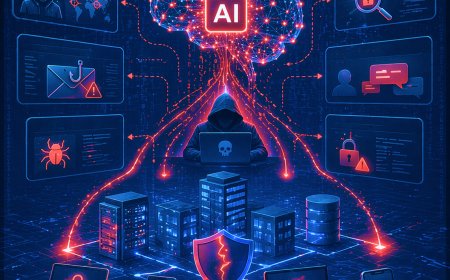
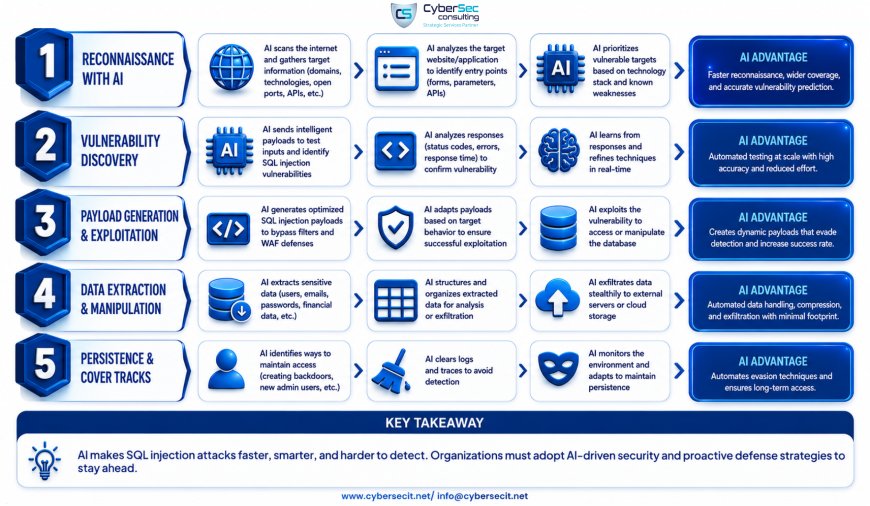
AI-Powered SQL Injection Flow
Growing Influence of Artificial Intelligence in Cyber Attacks
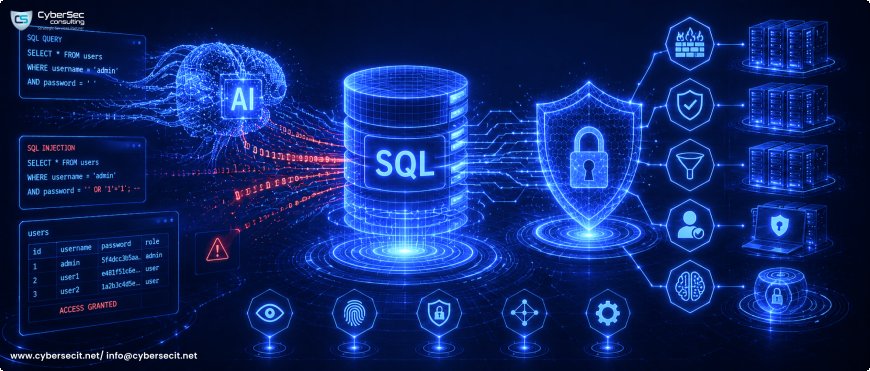
Automated Vulnerability Discovery
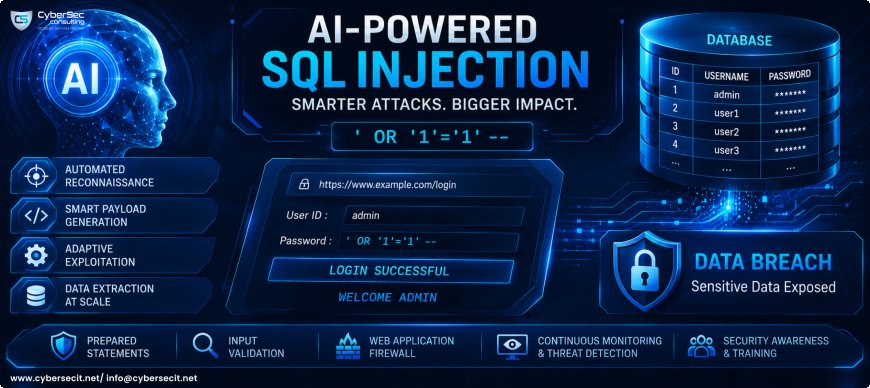
Artificial Intelligence enables attackers to rapidly analyze websites, applications, and APIs to identify potential vulnerabilities. AI-driven reconnaissance significantly reduces the time required to locate exploitable weaknesses in enterprise environments.
Faster Attack Execution
Traditional attack methods often require extensive manual effort. AI-powered tools can automate multiple stages of an attack lifecycle, allowing cybercriminals to identify and target vulnerable systems more efficiently.
Enhanced Payload Optimization
Machine learning algorithms can assist in generating and refining attack payloads, helping threat actors identify weaknesses within applications and security controls more quickly than conventional methods.
Large-Scale Target Identification
Organizations operating across financial hubs, digital economies, and rapidly growing technology sectors face increased exposure as AI enables attackers to scan and assess large numbers of internet-facing assets simultaneously.
Adaptive Attack Techniques
AI-assisted attacks can analyze application responses and adjust tactics dynamically, making detection and prevention more challenging for organizations relying solely on traditional security controls.
Statistics on Application Security Threats and Data Breaches
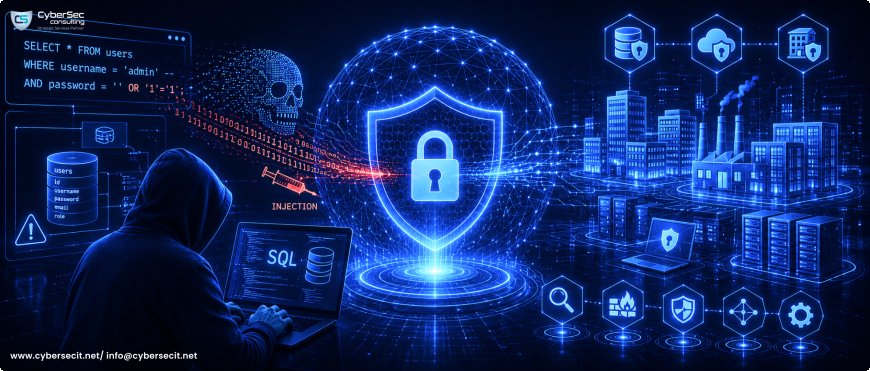
Web Applications Remain a Prime Attack Target
Web applications continue to rank among the most frequently targeted assets due to their direct connection to sensitive databases, customer information, and business operations. Application security vulnerabilities remain a leading cause of cybersecurity incidents globally.
Data Breaches Continue to Increase
Growing adoption of cloud services, remote work environments, and interconnected business ecosystems has contributed to an increase in data breach incidents affecting enterprises, financial organizations, and public-sector institutions.
Credential and Database Attacks Are Rising
Cybercriminals increasingly target authentication systems, APIs, and databases to obtain sensitive information. Identity-based attacks and application-layer attacks remain among the most common cybersecurity risks facing modern organizations.
Cost of Cyber Incidents Continues to Grow
Data breaches, ransomware attacks, and application security failures can result in significant financial losses, operational downtime, regulatory fines, and long-term reputational damage.
AI-Powered Threats Are Accelerating Cyber Risks
Security experts are observing a growing trend of AI-assisted cyber attacks that improve reconnaissance, vulnerability identification, and attack automation, making proactive application security testing and threat detection more important than ever.
Why SQL Injection Still Threatens Modern Enterprises

Legacy Applications and Outdated Code
Many organizations continue to rely on legacy applications built without modern secure coding practices, creating exploitable SQL Injection vulnerabilities that threaten enterprise cybersecurity, data protection, and regulatory compliance.
Insecure APIs and Web Applications
Poorly secured APIs and web applications often expose sensitive databases to SQL Injection attacks, increasing cyber risk across cloud environments, digital platforms, and business-critical systems.
Weak Input Validation Practices
Insufficient input validation allows malicious SQL queries to enter applications, making weak application security controls a major cause of data breaches and unauthorized database access.
Rapid Cloud and Digital Transformation Challenges
Accelerated cloud migration and digital transformation initiatives can introduce security gaps if application security testing, vulnerability management, and secure development practices are not implemented effectively.
Third-Party Software Vulnerabilities
Organizations increasingly depend on third-party applications, plugins, and software integrations that may contain unpatched vulnerabilities, creating additional attack vectors for SQL Injection and other cyber threats.
Industries Most Vulnerable to AI-Enhanced SQL Injection
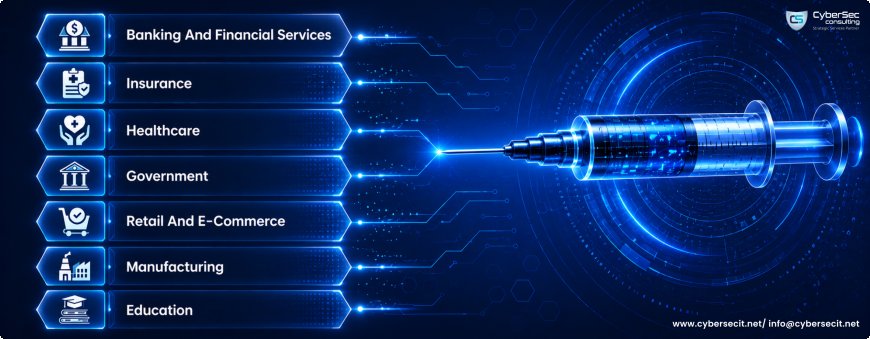
- Banking & Financial Services - Financial institutions remain prime targets, with 44% of finance and insurance organizations reporting cyber breaches, making SQL Injection a significant risk to digital banking platforms, payment systems, and customer databases.
- Insurance - Insurance providers process large volumes of sensitive customer and financial data, making vulnerable web applications attractive targets for AI-powered SQL Injection attacks seeking policyholder information and claims data.
- Healthcare - Healthcare organizations experienced breaches impacting approximately 275 million healthcare records in 2024, highlighting the growing risk of database-focused attacks against patient and medical information systems.
- Government - Public administration organizations recorded approximately 150 data breaches linked to basic web application attacks, demonstrating the importance of securing citizen services and government portals against SQL Injection threats.
- Retail & E-Commerce - Retail organizations continue to face increasing cyberattacks targeting customer accounts, payment information, and online shopping platforms, creating significant risks of fraud and business disruption.
- Manufacturing - Manufacturing remains one of the most targeted sectors globally, recording 1,032 system intrusion-related breaches and accounting for 27.7% of reported cyber incidents, making secure web applications and databases critical for operational resilience.
- Education - Educational institutions recorded 79 basic web application attack-related breaches and continue to be targeted due to large volumes of student, staff, and research data stored within web-based systems.
Future of Application Security in the AI Age
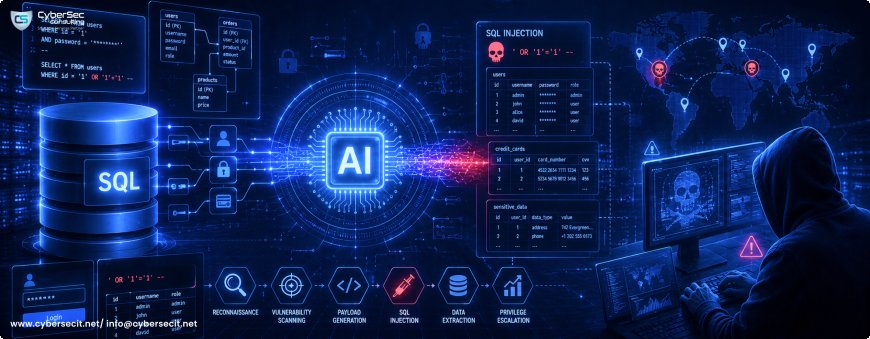
Emerging AI-Driven Cyber Threats
Artificial Intelligence is transforming the cyber threat landscape by enabling attackers to automate vulnerability discovery, generate sophisticated phishing campaigns, develop advanced malware variants, and execute large-scale application attacks faster than ever before.
Modern enterprises operating across financial hubs, digital economies, and rapidly growing technology markets must strengthen AI cybersecurity, application security, threat intelligence, vulnerability management, and cyber resilience programs to defend against increasingly intelligent threats.
Security Challenges for APIs and Cloud Environments
As organizations accelerate cloud adoption and digital transformation, APIs and cloud-native applications have become primary attack targets. Misconfigured cloud resources, insecure APIs, exposed credentials, and weak access controls can create opportunities for AI-assisted attacks, data breaches, and unauthorized access.
Strong API security, cloud security, identity and access management (IAM), Zero Trust Security, DevSecOps, and cloud compliance frameworks are essential for protecting modern digital infrastructures.
Importance of Proactive Cybersecurity Strategies
Traditional reactive security approaches are no longer sufficient against evolving AI-powered cyber threats. Organizations must adopt proactive cybersecurity measures, including continuous security monitoring, threat hunting, penetration testing, vulnerability assessments, security automation, and real-time incident response.
A proactive approach strengthens enterprise cybersecurity, cyber risk management, regulatory compliance, data protection, and business continuity, helping organizations reduce their overall attack surface.
Future Trends in Application Security
The future of application security will be driven by AI-powered threat detection, automated security testing, Zero Trust architectures, secure software development practices, runtime application self-protection (RASP), and advanced behavioral analytics.
Businesses investing in application security testing, cloud security solutions, DevSecOps, AI-driven cybersecurity, API protection, and digital risk management will be better positioned to secure critical applications, protect sensitive data, and maintain compliance in an increasingly complex threat environment.
Conclusion

SQL Injection remains one of the most dangerous and persistent application security threats, and the rise of Artificial Intelligence has significantly increased its potential impact. AI-powered attack techniques enable cybercriminals to automate vulnerability discovery, generate sophisticated attack payloads, bypass traditional security controls, and exploit web applications at unprecedented speed and scale.
As organizations continue to expand their digital ecosystems, cloud platforms, APIs, and customer-facing applications, the risk of AI-enhanced SQL Injection attacks continues to grow.
Organizations must adopt proactive application security programs that focus on reducing attack surfaces, strengthening secure software development practices, and continuously identifying vulnerabilities before attackers can exploit them.
Continuous monitoring, secure coding, vulnerability management, API security, cloud security, penetration testing, and real-time threat detection are essential components of a modern cybersecurity strategy that supports long-term cyber resilience and regulatory compliance.
How CyberSec Consulting Helps Defend Against AI-Based SQL Injection Attacks
CyberSec Consulting delivers comprehensive Application Security Services, DevSecOps Security, Web Application Security Testing, API Security Assessments, Cloud Security Solutions, Vulnerability Assessment and Penetration Testing (VAPT), Secure Code Review, Managed Security Services, Security Operations Center (SOC) Services, Threat Intelligence, and Zero Trust Security Implementations to help organizations stay ahead of evolving AI-driven threats.
Our cybersecurity experts help organizations:
- Identify and eliminate SQL Injection vulnerabilities through advanced Application Security Testing (AST) and secure code reviews.
- Protect cloud-native applications and APIs using industry-leading Cloud Security, API Security, and DevSecOps Frameworks.
- Implement continuous security monitoring, threat detection, and incident response capabilities to detect AI-powered attack attempts in real time.
- Strengthen Identity and Access Management (IAM), Privileged Access Management (PAM), and Zero Trust Architecture to reduce unauthorized access risks.
- Achieve compliance with industry regulations through robust Cyber Risk Management, Data Protection, Governance, Risk & Compliance (GRC), and Security Assurance Programs.
- Enhance cyber resilience through proactive Threat Hunting, Security Automation, Red Team Assessments, and Advanced Threat Protection Solutions.
Looking to strengthen your application security posture against AI-powered cyber threats? Connect with CyberSec Consulting to discover how our expert-led cybersecurity services and security solutions can help protect your applications, APIs, databases, and cloud environments from next-generation SQL Injection attacks and other advanced cyber risks.
FAQs
What is an AI-powered SQL Injection attack, and why is it a growing cybersecurity risk?
AI-powered SQL Injection attacks use Artificial Intelligence and automation to identify application vulnerabilities, generate advanced SQL payloads, and bypass traditional security controls faster than manual attacks. Organizations across major financial centers and digital economies are strengthening Application Security, Web Application Security Testing, API Security, Vulnerability Management, and Cyber Risk Management programs to defend against these evolving threats.
How can businesses protect web applications from AI-enhanced SQL Injection attacks?
Businesses can reduce risk by implementing Secure Software Development (SSDLC), DevSecOps, Secure Code Review, Vulnerability Assessment and Penetration Testing (VAPT), Web Application Firewall (WAF), API Security, and Continuous Security Monitoring. These cybersecurity best practices help identify vulnerabilities early and prevent unauthorized access to databases.
Which industries are most vulnerable to AI-driven SQL Injection attacks?
Industries such as Banking, Financial Services, Insurance, Healthcare, Government, Retail, E-commerce, Manufacturing, and Education are highly targeted due to their large volumes of sensitive customer and business data. Strong Data Protection, Threat Detection, Cloud Security, and Regulatory Compliance frameworks are critical for minimizing cyber risks.
Why are cloud applications and APIs frequent targets for AI-based SQL Injection attacks?
Cloud-native applications and APIs often process large amounts of sensitive data and integrate multiple business systems. Misconfigurations, insecure coding practices, and weak authentication controls can create exploitable vulnerabilities. Organizations should prioritize API Security Testing, Cloud Security Assessments, Identity and Access Management (IAM), and Zero Trust Security to strengthen their security posture.
How does Artificial Intelligence make SQL Injection attacks more dangerous?
Artificial Intelligence enables attackers to automate reconnaissance, identify vulnerabilities at scale, generate adaptive attack payloads, and evade traditional security controls. Advanced cyber threats require organizations to invest in Threat Intelligence, Security Operations Center (SOC) Services, Real-Time Threat Detection, Security Automation, and Cyber Resilience Programs to stay protected.
How can CyberSec Consulting help organizations defend against AI-powered SQL Injection attacks?
CyberSec Consulting provides comprehensive Application Security Services, DevSecOps Security, Vulnerability Assessment and Penetration Testing (VAPT), Secure Code Review, API Security Assessments, Cloud Security Solutions, Managed Security Services, Threat Hunting, and Security Monitoring. Our cybersecurity experts help organizations strengthen security posture, improve compliance, reduce cyber risk, and protect critical business applications against modern AI-driven cyber threats across global business and financial markets.
What's Your Reaction?
 Like
0
Like
0
 Dislike
0
Dislike
0
 Love
0
Love
0
 Funny
0
Funny
0
 Angry
0
Angry
0
 Sad
0
Sad
0
 Wow
0
Wow
0