





























Your Privileged Accounts Are Controlled. Are They Still Exposed?
Discover how privileged access security assessments identify exposed accounts, excessive permissions, credential risks, and hidden attack paths with IAM and PAM.


Introduction
Your organisation may have MFA, Privileged Access Management, access approvals, and privileged account monitoring in place. But can attackers still reach or abuse those accounts?
Privileged accounts remain a prime target for cyber attackers. These identities often hold elevated permissions across critical business systems. A compromised privileged account can give attackers access to critical infrastructure, cloud environments, identity platforms, databases, security tools, business applications, and administrative consoles.
Strong privileged access management reduces risk. It does not remove every exposure.
A secure identity environment needs more than controlled access. Security teams need visibility into how privileged identities are created, used, monitored, and reviewed. They also need to identify excessive permissions, dormant privileged accounts, exposed credentials, risky sessions, and hidden privilege escalation paths.
The security journey can be viewed through four stages:
Account Control → Access Control → Exposure Control → Continuous Assurance
Account control establishes ownership and accountability. Access control determines who can reach sensitive resources. Exposure control identifies weaknesses that attackers could exploit. Continuous assurance validates that privileged identities remain secure as users, applications, cloud environments, and business requirements change.
Strong IAM and PAM security requires continuous assessment. Privileged account security assessments can help organisations identify access gaps, reduce excessive privileges, strengthen identity governance, and improve privileged access monitoring.
The goal is simple: control privileged access, reduce identity exposure, and maintain continuous security assurance.
What Makes a Privileged Account High Risk?
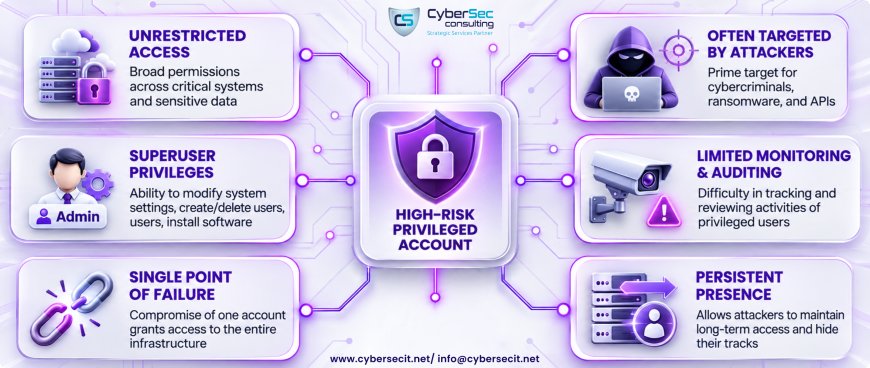
Privileged accounts can access systems, data, applications, and security controls that ordinary users cannot. A compromised privileged identity can therefore create a wider security impact. Modern enterprises rely on many types of privileged identities. Each account needs clear ownership, appropriate permissions, strong authentication, and continuous monitoring.
- Domain Administrators - Domain administrators can control users, systems, policies, and security settings across an enterprise directory. Compromise of one account can expose a large part of the IT environment.
- Cloud Administrators - Cloud administrators can manage infrastructure, identities, storage, workloads, and security configurations. Excessive cloud privileges can create significant exposure across critical cloud environments.
- Database Administrators - Database administrators can access sensitive business information and critical databases. Weak privileged access controls can increase the risk of data theft, manipulation, or unauthorised changes.
- Application Administrators - Application administrators can modify configurations, users, roles, integrations, and business processes. Excessive permissions can expose sensitive applications and business data.
- Security Administrators - Security administrators often control IAM, PAM, SIEM, EDR, firewalls, and other cybersecurity platforms. Compromise can give attackers opportunities to weaken security controls and avoid detection.
- Service Accounts - Service accounts support applications, integrations, automation, and scheduled processes. Long lived credentials, excessive permissions, and poor ownership can make these identities difficult to secure.
- Emergency or Break Glass Accounts - Emergency accounts provide access during critical incidents or identity failures. These accounts require strict controls, secure credential storage, strong monitoring, and regular testing.
- Third-Party Privileged Accounts - External vendors and support teams may require administrative access to business systems. Time-limited access, MFA, approval workflows, session monitoring, and regular access reviews can reduce third-party privileged access risk.
- Machine and Workload Identities - Cloud workloads, applications, APIs, containers, and automated processes can also hold elevated permissions. Poor identity governance can allow these identities to access resources beyond their operational requirements.
Why Does Privilege Increase Risk?

Risk increases when an identity combines four conditions:
High Privilege + Broad Access + Persistent Access + Weak Monitoring
High privilege provides greater control. Broad access increases the number of systems that can be reached. Persistent access creates more opportunities for misuse. Weak monitoring makes suspicious activity harder to detect.
Effective Privileged Access Management, IAM security, identity governance, and privileged account monitoring should address all four areas. Security teams should regularly assess who has privileged access, why that access exists, how long it remains active, what resources it can reach, and whether every privileged activity can be traced.
A strong PAM security assessment can help identify excessive permissions, dormant privileged accounts, exposed credentials, risky privileged sessions, and gaps in access governance. The key question is not only who has administrative access. It is how much access that identity has, how long it remains active, and how closely that access is monitored.
Controlled Privileged Accounts Can Still Be Exposed
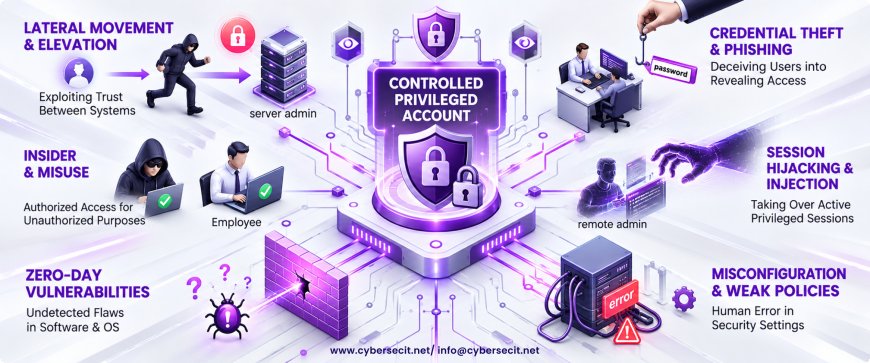
Privileged access can remain exposed even when a PAM solution is deployed. Access controls need continuous validation. Security teams must also examine how privileged identities are used across cloud infrastructure, enterprise applications, databases, endpoints, and critical systems.
Standing Privileges
Standing privileges give users administrative access even when elevated permissions are not required. Permanent access increases the impact of a compromised identity.
- Permanent admin rights can create unnecessary exposure across critical systems. Users may retain permissions after their responsibilities change.
- Privilege accumulation occurs when additional permissions are added without removing older access. This can create excessive privileged access over time.
- Role creep can occur when employees move between teams or responsibilities. Previous administrative permissions may remain active.
- Unused privileges can also create hidden security gaps. Unused access may remain available until an attacker discovers and exploits it.
- Implementing least privilege, just-in-time access, privileged identity management, and regular access reviews can reduce unnecessary administrative access.
Privileged Credentials
PAM solutions can secure privileged credentials, but credential exposure can still occur outside the primary control layer.
- Endpoint compromise can expose credentials through infected administrator devices or compromised sessions.
- Credential theft can allow attackers to obtain passwords or authentication secrets used by privileged identities.
- Token theft can provide access to authenticated sessions without requiring the original password.
- Browser sessions can expose active authentication tokens when administrator endpoints are compromised.
- Secrets stored in scripts can create serious risks for automated processes. Hardcoded credentials can remain accessible to users or attackers.
- Misconfigured vaults can weaken credential protection. Excessive access to privileged password vaults can create another attack path.
- Strong privileged credential management, PAM implementation, MFA, secrets management, and identity security controls can reduce these risks.
Privileged Sessions
Approved access does not automatically make a privileged session secure. Security teams need visibility into what happens after authentication.
- Session hijacking can allow attackers to take control of an active privileged session.
- Unmonitored sessions make suspicious administrative activity harder to detect.
- Shared sessions can weaken accountability. Security teams may struggle to identify the person behind an administrative action.
- Weak session controls can allow excessive access or extended administrative activity.
- Lack of session recording can reduce forensic visibility during a security incident.
- Limited behavioural monitoring can also delay detection of unusual privileged activity.
- Effective privileged session monitoring should provide visibility into user activity, commands, access duration, target systems, and unusual behaviour.
Service Accounts
Service accounts often receive less attention than human administrator accounts. Their access can still create significant privileged identity risk.
- Long-lived credentials can remain active for extended periods. Attackers can exploit these credentials when they are exposed.
- Non-expiring passwords increase the window for credential misuse.
- Excessive permissions can allow applications to access resources beyond their operational requirements.
- Unknown ownership creates accountability gaps. Security teams may not know which application or business process requires the account.
- Poor credential rotation can leave compromised secrets active for too long.
- Legacy applications can also depend on outdated authentication methods or privileged service accounts that are difficult to replace.
- Strong service account management, privileged identity governance, credential rotation, least privilege, and PAM security controls can help reduce this exposure.
Exposure Problem
Privileged access becomes harder to secure when excessive permissions, exposed credentials, risky sessions, and unmanaged service accounts exist together.
- A mature IAM and PAM security strategy should therefore move beyond access control. Organisations need continuous privileged account monitoring, identity threat detection, access reviews, and regular privileged access assessments.
- Controlled access is only one part of privileged identity security. Continuous visibility determines whether that control remains effective.
Hidden Privileged Access Attack Paths

Attackers do not always target administrator accounts directly. Many privileged access attacks begin with an ordinary user, compromised endpoint, exposed credential, or misconfigured application.
A single identity weakness can become a pathway toward administrative access. Security teams need to understand these privileged access attack paths to identify identity security gaps before they become serious incidents.
Lateral Movement
- Compromised user accounts can provide attackers with an entry point into the enterprise environment. Attackers may move between endpoints, servers, applications, and cloud resources while searching for higher levels of access.
- Strong IAM security, endpoint security, network segmentation, and privileged access monitoring can help detect suspicious movement.
Privilege Escalation
- Attackers may exploit excessive permissions or configuration weaknesses to increase their level of access.
- A standard user account can become a powerful identity when permissions are poorly governed. Privilege escalation detection should therefore form part of an effective identity security strategy.
Credential Reuse
- Reused credentials can create multiple access opportunities for attackers. A compromised password may provide access to several applications or infrastructure resources.
- Privileged credential management, MFA, password security, and PAM solutions can reduce the impact of credential compromise.
Identity Compromise
- Identity compromise can occur through phishing, stolen credentials, token theft, malware, or compromised endpoints.
- Attackers may then use the compromised identity to access applications and resources that trust the identity.
- Identity threat detection and response helps security teams identify abnormal authentication and privileged activity.
Misconfigured Roles
- Incorrect role assignments can provide users with permissions they do not require.
- Excessive administrative permissions can increase the potential impact of an account compromise.
- Regular identity governance and access reviews can help identify inappropriate roles and remove unnecessary privileges.
Nested Groups
- Nested groups can make privileged access difficult to understand.
- A user may inherit administrative permissions through multiple group memberships. Security teams may therefore miss indirect privileged access during manual reviews.
- Privileged access assessment and IAM governance can help uncover these hidden permission paths.
Excessive Permissions
- Excessive permissions increase the number of resources an identity can access.
- Users, applications, service accounts, and administrators may accumulate permissions over time.
- Applying least privilege access can reduce unnecessary access and limit potential attack paths.
Cloud IAM Misconfigurations
- Cloud environments introduce additional identity risks. Incorrect roles, excessive permissions, exposed credentials, and weak trust relationships can create pathways to sensitive cloud resources.
- Cloud IAM security, cloud security assessment, privileged access management, and identity governance should be reviewed regularly.
Hybrid Identity Attack Paths
- Hybrid environments connect on-premises directories, cloud platforms, SaaS applications, endpoints, and identity services.
- A weakness in one environment can create access opportunities in another.
- Security teams should map identity relationships across the entire environment. Hybrid identity security requires visibility across users, privileged accounts, applications, service accounts, cloud workloads, and authentication systems.
Privileged Access Path Matters
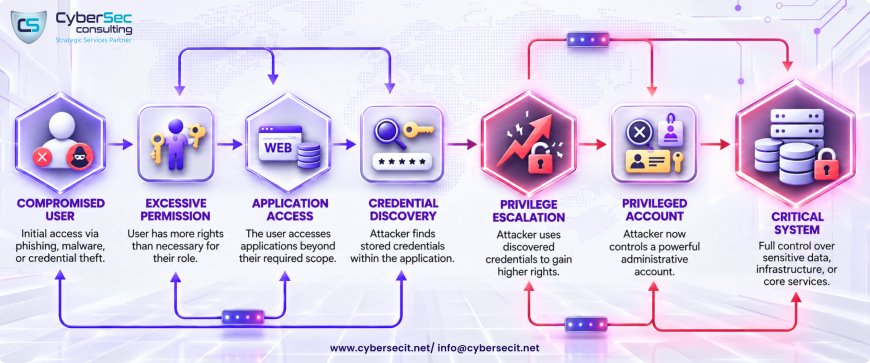
The administrator account may have strong controls. The route leading to that account may remain exposed.
A useful attack path can look like:
Compromised User → Excessive Permission → Application Access → Credential Exposure → Privilege Escalation → Privileged Account → Critical System
Security teams should assess every stage of this pathway.
Privileged Access Management, IAM security assessment, identity governance, privileged account monitoring, and cloud identity security can help organisations identify hidden access relationships and reduce privileged identity exposure.
The objective is not only to protect privileged accounts. The objective is to identify and secure every pathway that can lead to privileged access.
7 Questions to Determine Whether Privileged Accounts Are Still Exposed

Make this the article's practical assessment section.
Question 1 - Does every privileged account have a clearly defined business owner?
Question 2 - Are privileged permissions permanent or granted only when required?
Question 3 - Can administrators access critical systems without additional verification?
Question 4 - Are privileged sessions monitored and recorded?
Question 5 - Can security teams detect unusual privileged behaviour?
Question 6 - Are dormant, orphaned, and emergency accounts regularly reviewed?
Question 7 - Can you trace who accessed what, when, why, and through which system?
What a Privileged Account Security Review Should Measure
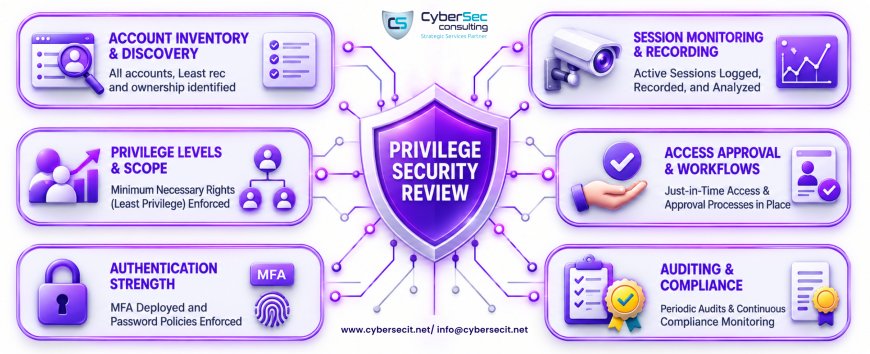
A privileged account security review should measure more than the number of administrator accounts in an organisation. Effective Privileged Access Management, IAM security, and PAM security assessments should examine how privileged identities are created, assigned, authenticated, used, monitored, and governed.
Measurable controls help security teams identify excessive access, privilege exposure, weak authentication, and gaps in privileged identity governance.
Identity
Identity controls establish who owns each privileged account and why the account exists.
- Account ownership should be clearly assigned to a responsible person, team, or business function.
- Account classification should distinguish domain administrators, cloud administrators, database administrators, service accounts, emergency accounts, and other privileged identities.
- Privilege level should show the exact level of administrative access assigned to each identity.
- Role assignments should be reviewed to identify unnecessary roles, inherited permissions, and excessive privileges.
- Strong identity governance helps organisations maintain better visibility across complex enterprise environments.
Access
Access controls determine when privileged identities can reach sensitive systems.
- Standing privileges should be identified and reviewed. Permanent administrative access can increase identity security risk.
- Just-in-time access can provide elevated permissions only when they are required.
- MFA should protect privileged authentication and sensitive administrative activities.
- Approval workflows should ensure that elevated access has a valid business reason and appropriate authorisation.
- Access duration should be measured to identify unnecessarily long privileged sessions or permissions.
- These controls support least privilege access, privileged access management, and IAM governance.
Credentials
Privileged credentials require strong protection throughout their lifecycle.
- Password rotation should reduce the risk associated with exposed or compromised credentials.
- Secrets management should protect passwords, API keys, tokens, and other sensitive authentication information.
- Credential vaulting can centralise privileged credentials and strengthen access control.
- Credential exposure should be assessed across endpoints, scripts, applications, cloud environments, and administrative tools.
- Effective privileged credential management reduces opportunities for attackers to reuse compromised authentication data.
Sessions
Privileged sessions require visibility after access has been approved.
- Session monitoring helps security teams identify suspicious administrative activity.
- Session recording provides an audit trail for sensitive privileged operations.
- Command monitoring can help identify risky or unauthorised administrative actions.
- Session termination should allow security teams to quickly stop suspicious privileged activity.
- Strong privileged session monitoring can improve detection, investigation, and incident response.
Detection
Privileged identity security requires continuous detection capabilities.
- Anomalous behaviour may indicate account compromise or misuse.
- Impossible travel can highlight suspicious authentication activity across geographically distant locations.
- Unusual administrative activity can reveal actions that do not match normal user behaviour.
- Privilege escalation should be monitored for attempts to gain higher access.
- Abnormal access patterns can identify unusual systems, applications, locations, or times associated with privileged identities.
- Identity threat detection can add an important detection layer to IAM and PAM security.
Governance
Governance controls provide accountability around privileged access.
- Access reviews should confirm that privileged permissions remain necessary.
- Segregation of duties should prevent excessive concentration of sensitive permissions.
- Approval traceability should show who requested, approved, granted, and used privileged access.
- Audit evidence should provide clear records for security reviews, compliance assessments, and investigations.
- Policy enforcement should ensure privileged access follows defined security requirements.
- Strong identity governance and administration helps align privileged access with business requirements, security policies, and regulatory expectations.
Measure Exposure, Not Just Control

A mature privileged access security assessment should connect these controls to measurable exposure.
Security teams should know:
Who has privileged access → What they can access → Why they have access → How long access remains active → What they do with that access → Whether the activity is monitored
This approach provides deeper visibility into privileged account security, PAM implementation, IAM security, identity governance, and cybersecurity risk. The objective is clear: reduce unnecessary privilege, strengthen privileged access controls, improve monitoring, and continuously validate identity security.
How to Reduce Privileged Account Exposure
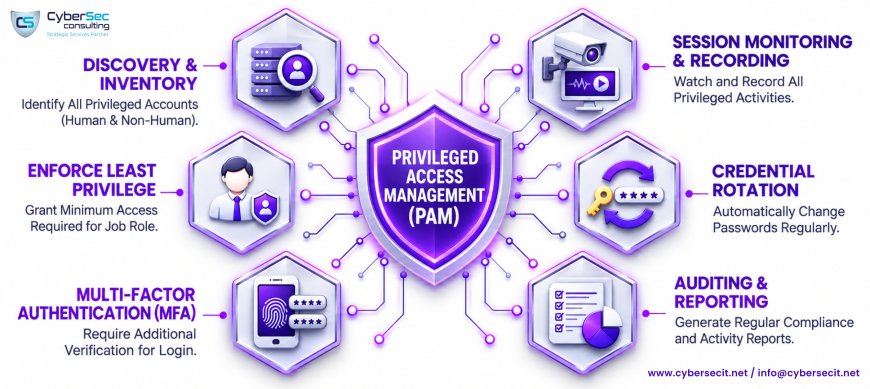
Actionable recommendations.
- Step 1: Discover - Identify every privileged identity.
- Step 2: Classify - Separate human, service, application, cloud, and emergency accounts.
- Step 3: Remove - Eliminate unnecessary privileges and dormant accounts.
- Step 4: Reduce - Apply least privilege.
- Step 5: Control - Implement PAM, MFA, and approval workflows.
- Step 6: Monitor - Track privileged sessions and identity behaviour.
- Step 7: Review - Perform continuous access reviews.
- Step 8: Validate - Regularly test whether privileged attack paths remain exploitable.
When Should You Perform a Privileged Access Security Assessment?

Privileged identities sit at the centre of enterprise identity security. A single excessive permission or compromised administrator account can create access to critical infrastructure, cloud environments, sensitive applications, and business data.
A Privileged Access Security Assessment helps organisations identify excessive privileges, exposed credentials, weak access controls, unmanaged accounts, and gaps in privileged activity monitoring. An assessment becomes particularly valuable when the identity environment is changing rapidly.
- Privileged Accounts Have Increased Rapidly - Rapid growth in privileged accounts can make access governance difficult. New administrators, applications, cloud resources, and service accounts can create excessive access. A PAM security assessment can identify unnecessary administrative permissions and accounts that require stronger controls.
- PAM Was Recently Implemented - PAM implementation is only the beginning of privileged access security. A security assessment can validate whether privileged accounts are correctly onboarded, credentials are protected, access policies are enforced, and privileged sessions are monitored.
- Organisations Are Migrating to the Cloud - Cloud migration introduces new privileged identities, roles, permissions, workloads, and administrative interfaces. A cloud IAM security assessment can identify excessive cloud permissions, risky roles, exposed credentials, and weak identity configurations.
- There Are Frequent Administrator Changes - Employee transfers, promotions, new responsibilities, and departures can change privileged access requirements. Regular identity access reviews can help remove outdated permissions and reduce privilege accumulation.
- Third Parties Require Privileged Access - Vendors and external support teams may need administrative access to critical systems. A third-party privileged access assessment can review MFA, approval workflows, access duration, session monitoring, and access removal.
- Service Accounts Are Difficult to Track - Service accounts can remain active for long periods without clear ownership. A privileged account security review can identify unknown owners, excessive permissions, weak credential rotation, and unnecessary administrative access.
- Audit Findings Identify Access Control Weaknesses - Audit findings can reveal gaps across privileged access, authentication, access reviews, monitoring, and governance. A focused PAM assessment can help security teams validate existing controls and address identified access risks.
- A Security Incident Involving Compromised Credentials - Compromised credentials can expose privileged systems and sensitive resources. A privileged credential security assessment can examine credential storage, password rotation, MFA, vaulting, session controls, and potential privilege escalation paths.
- Identity Infrastructure Has Become Hybrid - Hybrid environments connect enterprise directories, cloud platforms, SaaS applications, endpoints, and business applications. Complex identity relationships can make privileged access difficult to map. A hybrid identity security assessment can help identify hidden access paths and excessive permissions across connected environments.
- Security Teams Lack Visibility Into Privileged Activity - Limited visibility can make it difficult to determine who accessed a critical system, what actions were performed, and whether the activity was authorised. Privileged session monitoring, identity threat detection, and PAM security controls can provide stronger visibility into administrative activity.
- Do Not Wait for a Privileged Access Incident - A privileged access security assessment should not only happen after a security incident. Regular assessments can help organisations identify identity security gaps before they become exploitable weaknesses. The review should examine privileged accounts, access permissions, credentials, sessions, service accounts, cloud identities, third-party access, and governance controls.
Conclusion
Privileged access security cannot stop at controlling who receives administrative access. Organisations need to understand how privileged identities can be reached, abused, escalated, and monitored.
Strong IAM security and Privileged Access Management controls can reduce unnecessary access. Continuous assessment can reveal risks that access controls alone may not identify. Privileged account security requires visibility across users, administrators, service accounts, cloud identities, applications, endpoints, and critical infrastructure.
Security teams should regularly review excessive privileges, exposed credentials, risky privileged sessions, dormant accounts, third-party access, and hidden identity attack paths. Effective PAM security assessment also helps validate MFA, least privilege, just-in-time access, credential vaulting, session monitoring, access reviews, and identity governance.
The objective is continuous assurance. Every privileged identity should have a clear owner, a defined business purpose, appropriate permissions, strong authentication, and measurable security controls. The real question is not whether your privileged accounts are controlled. It is whether attackers can still find a way to reach them.
Assess Your Privileged Access Exposure
CyberSec Consulting helps organisations strengthen IAM and PAM security through privileged access security assessments, identity governance, access reviews, privileged account monitoring, and cybersecurity consulting.
Our experts can help identify excessive privileges, exposed credentials, risky privileged accounts, access control gaps, and hidden identity attack paths.
Talk to Our IAM & PAM Experts
FAQs
What is a Privileged Access Security Assessment?
A Privileged Access Security Assessment reviews how privileged accounts are created, assigned, authenticated, monitored, and governed. The assessment can identify excessive permissions, dormant accounts, exposed credentials, risky sessions, weak access controls, and hidden privileged access paths.
Why Are Privileged Accounts a Cybersecurity Risk?
Privileged accounts can access critical infrastructure, cloud environments, databases, security platforms, applications, and sensitive business data. A compromised privileged identity can therefore provide attackers with extensive access. Strong Privileged Access Management, IAM security, MFA, and privileged account monitoring can help reduce this risk.
How Can Organisations Identify Exposed Privileged Accounts?
Organisations can review privileged permissions, account activity, authentication events, credentials, access paths, and session activity. IAM security assessments and PAM assessments can help identify excessive privileges, dormant accounts, credential exposure, unusual administrative activity, and indirect access through roles or nested groups.
Does PAM Completely Protect Privileged Accounts?
PAM can strengthen privileged credential management, access control, session monitoring, and administrative access. It does not eliminate every identity security risk. Endpoint compromise, token theft, excessive permissions, cloud IAM misconfigurations, service accounts, and hidden attack paths can still create exposure. Continuous PAM security assessment and identity monitoring can help validate existing controls.
How Can Organisations Reduce Privileged Account Exposure?
Organisations can apply least privilege, MFA, just-in-time access, credential vaulting, regular access reviews, session monitoring, and strong service account management. Security teams should also review cloud identities, third-party access, dormant accounts, and privilege escalation paths. Regular privileged access security assessments can help maintain continuous identity security.
When Should an Organisation Conduct a Privileged Access Assessment?
An assessment can be valuable after PAM implementation, during cloud migration, following major administrator changes, or when third parties require privileged access. It can also help when service accounts are difficult to track, audit findings identify access weaknesses, or security teams lack visibility into privileged activity. Regular assessments support stronger IAM governance, PAM security, privileged account monitoring, and cybersecurity risk management.
What's Your Reaction?
 Like
0
 Dislike
0
 Love
0
 Funny
0
 Angry
0
 Sad
0
 Wow
0