

























How Privileged Session Monitoring Detects Suspicious Activity?
Learn how privileged session monitoring helps UAE organisations detect suspicious activity, strengthen privileged account security, improve PAM security, and protect critical systems.


Introduction
Privileged accounts provide access to critical systems, sensitive data, cloud environments, and security controls. These accounts are valuable targets for attackers seeking to gain control over enterprise infrastructure. Strong privileged account security is therefore essential for organisations operating across the UAE’s growing digital ecosystem.
Legitimate administrative access can also create security exposure. An approved user may access sensitive systems, execute powerful commands, or change critical configurations. A compromised administrator account can create similar risks. UAE Information Assurance guidance requires organisations to restrict privileged access and ensure administrative activity is logged and audited.
Privileged Session Monitoring helps security teams gain visibility into these activities. It observes privileged sessions, analyses user behaviour, records critical actions, and supports investigation when suspicious activity appears. Privileged access monitoring can help identify unusual commands, unexpected access patterns, privilege misuse, and other risk indicators.
Effective PAM security also supports stronger accountability. Session monitoring can connect privileged activity with authorised users and access permissions. This supports privileged session management, security auditing, and incident investigation.
Organisations seeking stronger cybersecurity in the UAE can use privileged session monitoring as part of a broader IAM and PAM security strategy. Continuous visibility can help security teams detect risky privileged activity before it develops into a wider security incident. Dubai’s Information Security Regulation also covers security controls for government entities and includes assurance requirements for implemented controls.
For enterprises, government entities, financial institutions, healthcare organisations, and critical infrastructure operators, privileged access security requires more than controlling who can access sensitive systems. It also requires visibility into what happens during every high-risk privileged session.
What Is Privileged Session Monitoring?
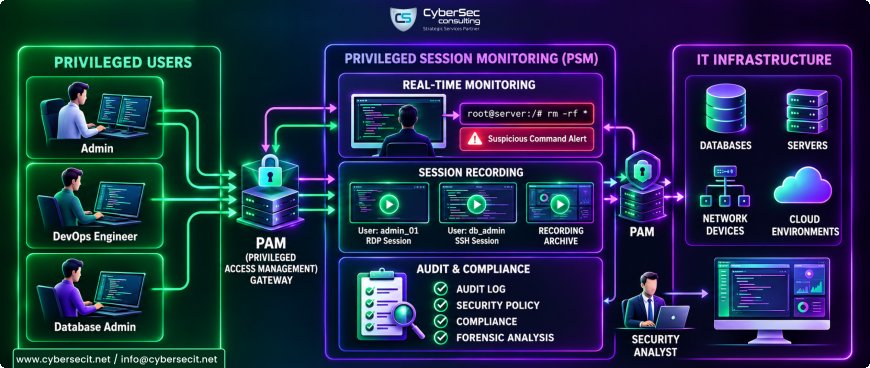
Privileged Session Monitoring (PSM) is a cybersecurity capability that tracks and analyses activities performed during privileged user sessions. Privileged users can access servers, databases, cloud platforms, network devices, applications, and sensitive enterprise systems. Their activities therefore require strong privileged access security and continuous visibility.
A privileged session starts when an authorised administrator or privileged user accesses a protected system. Privileged session monitoring observes activity during that session. Security teams can monitor login details, commands, system actions, accessed resources, configuration changes, and other high-risk activities. UAE Information Assurance guidance also highlights monitoring of privileged operations, user activity, key events, accessed files, and system actions.
What Does PSM Monitor?

A privileged session monitoring solution can provide visibility into:
- Privileged User Logins
- Administrator Commands
- Server and Database Access
- Cloud Administrative Activity
- Configuration Changes
- Privilege Escalation Attempts
- Sensitive File Access
- Unusual Administrative Behaviour
- Failed or Rejected Actions
- High-risk System Operations
Session Monitoring vs Session Recording vs Session Auditing

These capabilities support different parts of privileged session management.
- Session Monitoring provides visibility into an active privileged session. Security teams can identify suspicious behaviour while the session is taking place.
- Session Recording captures privileged user activity for later review. Recorded sessions can support incident investigation, security analysis, and compliance evidence.
- Session Auditing reviews privileged activity against access policies and security requirements. Audit records can help establish who accessed a system, when access occurred, and what actions were performed.
- Effective privileged access monitoring can combine all three capabilities. This approach gives security teams better visibility across privileged identities and critical systems.
Role of PSM in PAM Security

Privileged Access Management (PAM) controls and protects access to high-risk accounts. Privileged Session Monitoring adds visibility into what happens after privileged access is granted.
A strong PAM security strategy can therefore connect:
Identity → Access Control → Privileged Session → Monitoring → Recording → Auditing → Investigation
This model supports stronger IAM security, PAM security, and cybersecurity risk management for organisations operating in the UAE. Dubai’s Information Security Regulation focuses on reducing information security risks and protecting the confidentiality, integrity, and availability of information.
CyberSec Consulting can help organisations strengthen privileged account security, PAM security, privileged access monitoring, and identity security through structured assessment and security services.
Why Do Privileged Sessions Need Continuous Monitoring?
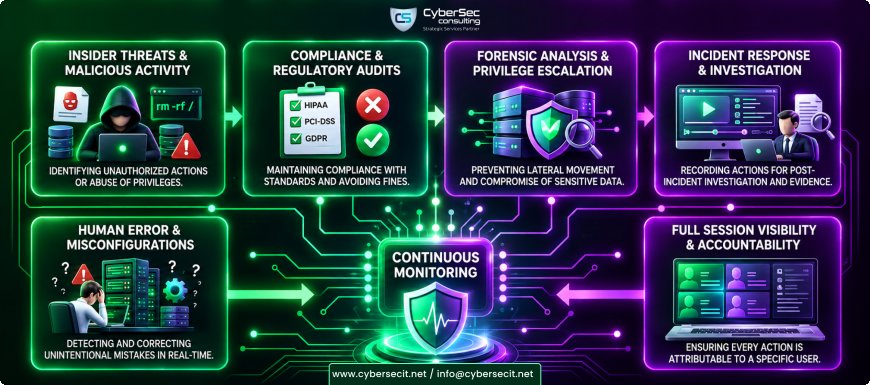
Privileged accounts can access critical servers, databases, cloud platforms, security tools, and sensitive business data. A compromised privileged account can therefore create serious cybersecurity risks for an organisation. Strong privileged account security needs visibility into what privileged users do after access is granted.
UAE cybersecurity requirements place importance on audit logging, access monitoring, privileged activity, and regular access reviews. UAE Information Assurance guidance calls for logging user activity, information security events, use of privileges, system changes, and access attempts.
Stolen Privileged Credentials
Stolen administrator credentials can provide attackers with direct access to critical infrastructure. PAM monitoring can help identify unusual login patterns, unexpected access locations, and suspicious privileged activity. Continuous monitoring can give security teams greater visibility into compromised privileged accounts.
Insider Misuse
Authorised users can still misuse their access. Excessive data access, unusual commands, or unexpected system changes can indicate potential misuse. Privileged access monitoring helps security teams investigate activities that fall outside expected behaviour.
Excessive Privileged Access
Users with unnecessary administrative permissions create additional security exposure. Regular access reviews help organisations identify excessive privileges and validate special access. UAE Information Assurance guidance specifically calls for periodic review of privileged access rights.
Unusual Administrative Activity
Administrative behaviour can change when an account is compromised. Unexpected server access, unusual commands, rapid system changes, or access to unfamiliar resources can create important risk signals. Continuous PAM monitoring helps security teams identify these patterns earlier.
Shared Administrator Accounts
Shared administrator accounts reduce individual accountability. Security teams may struggle to determine who performed a specific action. Privileged session monitoring can provide stronger visibility into administrative sessions and support investigation of suspicious activity.
Unauthorised Command Execution
Powerful commands can modify configurations, create accounts, change permissions, or affect critical services. Monitoring command activity helps security teams identify actions that violate security policies or fall outside approved administrative tasks.
Access Outside Approved Business Hours
Privileged access outside expected working periods can require additional investigation. A late-night administrative session does not automatically indicate an attack. Context matters. Privileged access security controls can combine access time, user identity, system sensitivity, location, and activity patterns to identify higher-risk sessions.
Continuous privileged session monitoring supports stronger PAM security across enterprise environments. The approach also aligns with the UAE focus on ongoing information assurance, security monitoring, and protection of critical information assets.
What Activity Does Privileged Session Monitoring Detect?
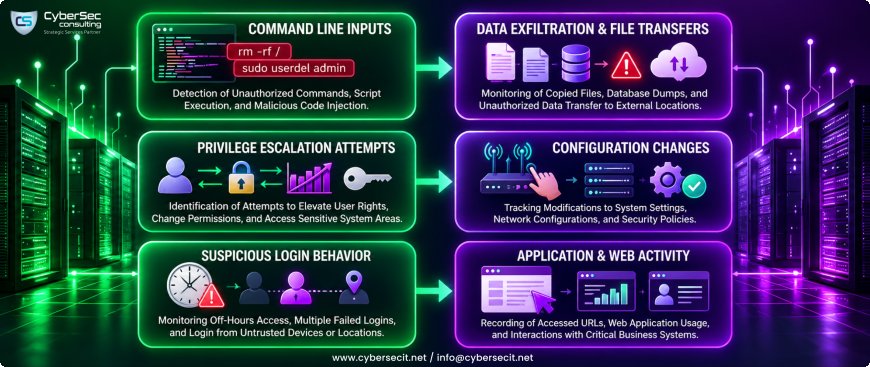
| Activity | What It Can Indicate |
|---|---|
| Unusual login time | Potential credential misuse |
| Access from an unexpected location | Suspicious access |
| Abnormal command execution | Possible attack activity |
| Privilege escalation | Attempt to gain additional access |
| Bulk data access | Possible data exposure |
| Unusual file changes | Potential system compromise |
| Repeated failed actions | Possible attack attempt |
| Access to sensitive systems | High-risk administrative activity |
How Privileged Session Monitoring Detects Suspicious Activity?
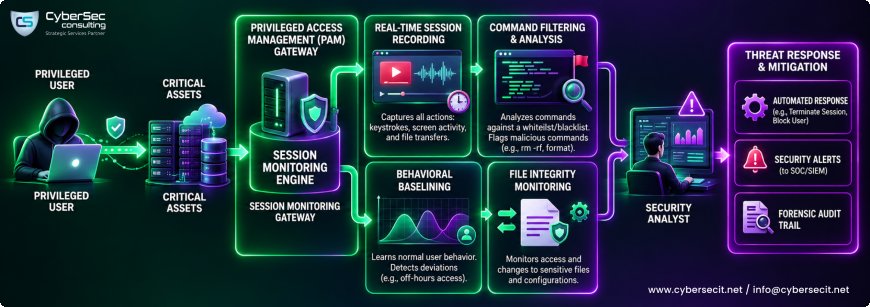
Privileged Session Monitoring helps security teams identify unusual activity during privileged access. The process combines identity verification, session visibility, activity analysis, security policies, and risk signals. UAE security guidance calls for monitoring system use, privileged operations, access events, and relevant user activity.
User Authentication
- The process begins by verifying the privileged user's identity. Strong authentication helps confirm that the person requesting access is authorised. Privileged access security becomes stronger when authentication is combined with least privilege and controlled administrative access.
Session Establishment
- An approved user starts a privileged session with a server, database, cloud platform, network device, or business application. Privileged session management establishes visibility into the session and connects activity to the authenticated identity.
Activity Monitoring
- PAM monitoring tracks actions performed during the active session. Monitoring can include commands, accessed systems, configuration changes, files, applications, and other administrative activities.
- UAE Information Assurance guidance specifically identifies privileged operations, use of administrator accounts, access attempts, system changes, and database activity as areas that may require monitoring.
Behaviour Analysis
- User and Entity Behaviour Analytics can compare current activity against expected behaviour. Security teams can identify unusual login patterns, unexpected resource access, abnormal commands, or changes in administrative behaviour.
- Behaviour analysis can support privileged account security by identifying activity that requires further investigation.
Baseline Activity
- A security team can establish a baseline for normal privileged activity. The baseline may consider the user's usual systems, access times, locations, commands, and administrative tasks.
- Unexpected deviations can become useful risk signals. A deviation does not automatically mean malicious activity.
Rules and Policies
- Security policies define which privileged activities are permitted. Rules can identify restricted commands, sensitive systems, unusual access patterns, or activities that require additional approval.
- Dubai's Information Security Regulation requires controls for continuous monitoring of privileged access and independent monitoring of special or high-privileged IDs.
Contextual Risk Signals
- Effective privileged access monitoring considers multiple signals together. User identity, access time, location, device, target system, command activity, and previous behaviour can provide additional context.
- Multiple unusual signals within one session can create a stronger reason for investigation.
Risk Detection and Real-Time Alerts
- Risk detection evaluates monitored activity against configured policies and behavioural indicators. Real-time PAM monitoring can generate alerts when suspicious privileged activity is identified.
- Security teams can then investigate the session before the activity creates a larger security impact.
Session Recording
- Privileged session recording captures important activities performed during a privileged session. Recorded sessions can support security investigations, incident response, compliance reviews, and forensic analysis.
- UAE Information Assurance guidance also requires audit logs covering user activity, information security events, use of privileges, system changes, and access attempts.
Command Level Monitoring
- Command-level monitoring provides deeper visibility into administrative actions. Security teams can review commands executed against critical servers, databases, cloud infrastructure, and network devices.
- Suspicious commands can trigger alerts based on defined security policies. Command visibility also helps investigators understand what happened during a potentially compromised privileged session.
Investigation and Response
- The final stage connects monitoring with incident response. Security teams can review alerts, session recordings, authentication data, commands, and access history.
- Approved response actions may include additional authentication, session termination, access restriction, credential rotation, or incident escalation.
Key Indicators of Suspicious Privileged Activity

Privileged accounts can provide direct access to critical servers, databases, cloud platforms, applications, and sensitive business information. Monitoring privileged activity helps security teams identify behaviour that falls outside an approved access pattern.
UAE Information Assurance guidance recommends monitoring privileged operations, access events, user activity, system changes, and database activity. Dubai’s Information Security Regulation also requires continuous monitoring of access privileges and independent monitoring of special or high-privileged IDs.
- Privileged Access at Unusual Times - Administrative access outside normal working hours can create a useful risk signal. An unexpected login does not automatically indicate malicious activity. Privileged session monitoring can combine access time with user identity, location, device, and session behaviour.
- Access Outside the User’s Normal Role - A user may normally manage specific applications or servers. Access to unrelated systems can indicate excessive permissions or possible credential misuse. Privileged access monitoring helps security teams identify activity that doesn't match the user's approved responsibilities.
- Sudden Command Execution Changes - Changes in command behaviour can reveal suspicious activity. An administrator who normally performs routine maintenance may suddenly execute sensitive commands. PAM monitoring can identify unusual command patterns and trigger alerts for further investigation.
- Multiple Systems Accessed Rapidly - Rapid access across multiple servers, databases, or cloud environments can indicate abnormal privileged activity. Privileged access security controls can correlate these actions and provide additional context for security teams.
- Attempts to Disable Security Controls - Attempts to stop security services, modify monitoring settings, disable logging, or change protective configurations require careful investigation. Privileged session monitoring can provide visibility into these actions and preserve activity records for review.
- Unusual Database Queries - Unexpected database queries can expose sensitive information or indicate possible misuse of privileged credentials. Privileged account security should include monitoring of administrative database activity, especially when sensitive records are involved. UAE Information Assurance guidance specifically identifies database activities and privileged account use as monitoring considerations.
- Unexpected Configuration Changes - Unexpected changes to firewall rules, server configurations, access permissions, security policies, or cloud settings can create significant risk. PAM security can help security teams monitor privileged changes and connect them to the responsible user.
- Repeated Privilege Escalation Attempts - Repeated attempts to obtain higher permissions can indicate a potential security concern. Privileged session management can track these attempts and provide context around the user, target system, access time, and commands involved.
- Why Behaviour Matters - Individual events may have legitimate explanations. A stronger privileged session monitoring strategy evaluates multiple indicators together. User identity, access history, system sensitivity, command activity, timing, and previous behaviour can create a clearer risk picture.
Session Recording and Forensic Investigation
Privileged session recording gives security teams a detailed record of activities performed during sensitive administrative sessions. The capability supports privileged session monitoring, PAM security, privileged access security, and cybersecurity incident response.
UAE Information Assurance guidance requires organisations to maintain audit logs covering user activity, security events, privilege use, system changes, access attempts, and other relevant activities. The guidance also recommends defined monitoring procedures that connect monitoring activities with incident response.
How Session Recording Supports Incident Investigation
- A recorded privileged session can help security teams understand what happened during a suspected security incident. Investigators can review the user's identity, accessed systems, commands, configuration changes, and other recorded actions.
- Privileged session monitoring provides visibility while the activity is happening. Session recording provides evidence that can be reviewed after the event.
Root Cause Analysis
- Security teams need to understand how an incident started and how it progressed. Session recordings can help trace the sequence of privileged actions.
- Investigators can identify the first suspicious action, affected systems, and subsequent administrative changes. This information can support root cause analysis and remediation planning.
Insider Threat Investigations
- Privileged users can access sensitive systems and information. Recorded sessions can help organisations investigate suspected misuse of authorised access.
- Session evidence can show which account accessed a resource and what actions were performed. Additional identity and access records can provide further context.
Compliance Audits
- Privileged session recording can support audit activities by providing historical records of administrative actions. Audit teams can review access activity, system changes, and privileged operations against applicable policies.
- Dubai's Information Security Regulation requires information processing systems to maintain audit logs, establish monitoring requirements based on system criticality, and log system administrator and operator activities for periodic review.
Evidence Collection
- Session recordings can preserve valuable information for cybersecurity investigations. Evidence may include:
- User identity
- Session date and time
- Target system
- Commands executed
- Files or resources accessed
- Configuration changes
- Privilege usage
- Security alerts
- Access attempts
Post-Incident Review
- Security teams can review recorded sessions after an incident to understand the full sequence of events. Findings can support control improvements, access reviews, security policy updates, and incident response improvements.
- UAE Information Assurance guidance recommends reviewing audit logs and defining appropriate retention periods for recorded security information.
Real-Time Monitoring vs Session Recording
- Real-time monitoring focuses on what is happening during an active privileged session. Security teams can identify suspicious behaviour and respond when defined risk conditions are detected.
- Session recording focuses on preserving activity for later investigation. Security teams can review the recorded session after an alert, security incident, compliance review, or suspected misuse.
How PSM Works With PAM and IAM?
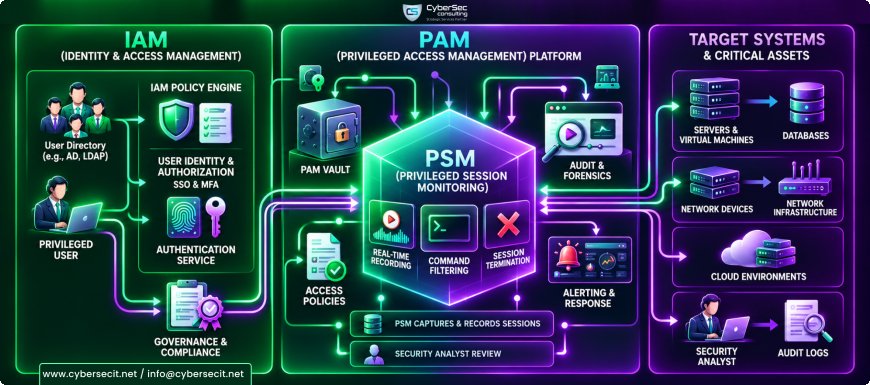
Identity and Access Management (IAM), Privileged Access Management (PAM), and Privileged Session Monitoring (PSM) address different stages of the identity security lifecycle. Integrating these tools gives security teams better visibility into who receives access, which privileges are granted, and what happens during privileged activity.
UAE security guidance places importance on controlling privileges, maintaining records of access rights, monitoring privileged activity, and reviewing access periodically. Dubai's Information Security Regulation also calls for continuous monitoring of access privileges and independent monitoring of special or high-privileged IDs.
IAM Establishes Identity
- IAM security starts by establishing and managing digital identities. IAM helps organisations authenticate users and determine which resources they are authorised to access.
- Identity lifecycle processes can cover user onboarding, authentication, access requests, role changes, and access removal. Strong identity security helps ensure that access is connected to an identifiable user.
PAM Controls Privileged Access
- Privileged Access Management adds stronger controls around high-risk accounts. PAM can control administrator access to servers, databases, cloud platforms, network devices, and critical applications.
- PAM security can support least privilege, privileged credential protection, access approval, temporary access, and privileged account reviews. UAE Information Assurance guidance requires organisations to restrict and control the allocation and use of privileges and ensure administrative access is logged and audited.
PSM Monitors Privileged Activity
- Privileged Session Monitoring focuses on activity after privileged access is granted. PSM can monitor active sessions, commands, system changes, accessed resources, and other administrative actions.
- Privileged access monitoring helps security teams identify unusual behaviour during high-risk sessions. Session recording can also provide information for investigation and audit activities.
How IAM, PAM and PSM Work Together
- The relationship can be viewed as a continuous security lifecycle:
- IAM → Establishes identity
- PAM → Controls privileged access
- PSM → Monitors privileged activity
| IAM Answers | Who is the user? |
| PAM Answers | What privileged access should the user receive? |
| PSM Answers | What is the user doing during the privileged session? |
Why Integration Matters for UAE Organisations
- Integrated IAM and PAM security can help organisations manage privileged access across complex enterprise environments. PSM adds another layer of visibility by monitoring activity after access has been approved.
- UAE Information Assurance guidance identifies privileged account use, privilege changes, access attempts, and other system activities as areas for security monitoring.
- Dubai's Information Security Regulation also requires organisations to maintain records of access privileges and continuously monitor them. The regulation calls for security and independent monitoring controls over special or high-privileged IDs.
- A connected IAM, PAM, and PSM strategy can therefore support stronger privileged account security, privileged access security, PAM monitoring, identity security, and cybersecurity risk management.
Common Challenges in Privileged Session Monitoring

Privileged Session Monitoring can provide deeper visibility into administrative activity, but effective PAM monitoring requires more than deploying a monitoring tool. Organisations need accurate identity data, reliable session visibility, useful behavioural context, and well-defined security policies.
UAE security frameworks place importance on monitoring, audit logging, administrator activity, and appropriate log retention. Dubai’s Information Security Regulation requires audit logs for information systems and applications, periodic review, monitoring based on system criticality, and logging of system administrator and operator activities.
Too Many Alerts
- High volumes of alerts can make privileged access monitoring difficult to manage. Security teams may receive alerts for normal administrative actions and genuine security risks at the same time.
- Risk-based alerting can help prioritise unusual privileged activity. User identity, system sensitivity, access time, command behaviour, and previous activity can provide useful context.
Incomplete Session Visibility
- Some privileged activities may remain outside the monitoring scope. Gaps can occur across servers, databases, cloud platforms, network devices, or remote administrative connections.
- Incomplete visibility can weaken privileged account security. UAE guidance supports logging successful and unsuccessful access attempts and raising security events when potential breaches are detected.
Shared Privileged Credentials
- Shared administrator credentials can make accountability difficult. Security teams may know which account performed an action but not which individual used it.
- PAM security can reduce this challenge through controlled privileged access, individual authentication, credential management, and session monitoring.
Unmanaged Service Accounts
- Service accounts can hold elevated permissions and operate without direct human interaction. Poorly managed accounts may become difficult to monitor and review.
- Privileged access security should include visibility into service accounts, their permissions, usage patterns, and associated systems.
Encrypted Sessions
- Encrypted connections protect data during transmission, but they can also create visibility challenges for security monitoring. Security teams need appropriate controls to maintain visibility while respecting security, privacy, and compliance requirements.
- Effective privileged session management should define which sessions require monitoring and how sensitive session information is protected.
Lack of Behavioural Baselines
- Security teams need a clear understanding of normal privileged activity to identify meaningful deviations. Missing baselines can make unusual commands, access times, or system activity harder to assess.
- User behaviour analysis can help establish expected patterns for privileged users and identify activity that requires investigation.
Poor Integration Between PAM, SIEM, and IAM
- Disconnected security platforms can create gaps between identity information, privileged access, and security events.
-
- IAM provides identity context.
- PAM controls privileged access.
- PSM monitors privileged activity.
- SIEM can correlate security events across the environment.
Excessive Retention of Session Recordings
- Session recordings can contain sensitive administrative information. Keeping recordings for longer than necessary can increase storage requirements and create additional data protection risks.
- Dubai’s Information Security Regulation requires organisations to apply adequate retention measures to audit logs.
- Organisations should define retention periods based on business requirements, security risk, regulatory obligations, and the sensitivity of recorded information.
Building a Stronger PSM Strategy
- Effective privileged session monitoring requires more than recording administrative sessions. UAE organisations need a connected approach covering PAM security, privileged account security, IAM security, SIEM integration, behavioural analysis, session recording, and incident response.
- A well-designed privileged access monitoring strategy can reduce visibility gaps and help security teams identify suspicious activity across critical enterprise environments.
Conclusion
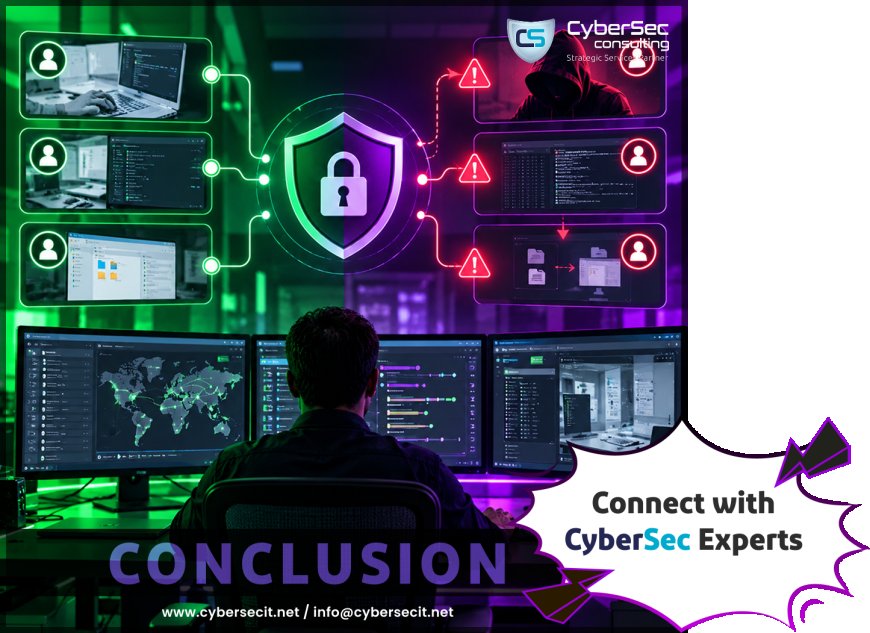
Privileged accounts remain a critical part of modern enterprise infrastructure. Their access to servers, databases, cloud platforms, applications, and sensitive data makes privileged account security a key cybersecurity priority.
Privileged Session Monitoring gives security teams greater visibility into privileged activity. Continuous PAM monitoring can help identify unusual access, suspicious commands, privilege escalation, unexpected configuration changes, and other risk indicators.
Effective privileged access security connects identity verification, access control, session monitoring, session recording, behavioural analysis, and incident response. IAM establishes the user's identity. PAM controls privileged access. PSM provides visibility into activity during the privileged session.
UAE organisations can strengthen their cybersecurity posture by integrating IAM security, PAM security, privileged session management, and identity security across critical environments. Better visibility can also support security investigations, compliance activities, and ongoing access reviews.
Are Your Privileged Sessions Fully Visible?
Privileged access should not end with authentication. Security teams need visibility into what happens after access is approved.
CyberSec Consulting helps organisations identify gaps in privileged access controls and strengthen PAM security, privileged account security, IAM security, and privileged session monitoring.
Our cybersecurity experts can support PAM assessment, privileged access management, identity security, session monitoring, access governance, and security consulting for enterprise environments.
Secure privileged access. Monitor every critical session. Strengthen your identity security posture.
Talk to CyberSec Consulting today to assess your privileged access security.
FAQs
What is Privileged Session Monitoring?
Privileged Session Monitoring is a cybersecurity capability that observes and records activities performed during privileged user sessions. It helps UAE organisations monitor administrator access to servers, databases, cloud platforms, applications, and sensitive systems.
How does Privileged Session Monitoring detect suspicious activity?
Privileged Session Monitoring analyses user behaviour, commands, access patterns, session timing, target systems, and other risk signals. PAM monitoring can generate alerts when activity deviates from approved policies or expected behaviour.
Why is Privileged Session Monitoring important for privileged account security?
Privileged accounts have extensive access to critical enterprise systems. Continuous privileged access monitoring can help identify credential misuse, unusual administrative activity, excessive access, privilege escalation, and unauthorised commands.
What is the difference between PAM and Privileged Session Monitoring?
Privileged Access Management controls and protects privileged access. Privileged Session Monitoring provides visibility into activities performed after access is granted. Both capabilities support stronger PAM security and privileged account security.
Can Privileged Session Monitoring support cybersecurity compliance in the UAE?
Yes. Session monitoring and recording can provide audit information about privileged access and administrative activity. Organisations can use these records to support security reviews, investigations, and applicable compliance requirements.
How does session recording help during a cybersecurity investigation?
Session recording preserves information about privileged activities. Security teams can review commands, accessed systems, configuration changes, and other actions to support incident investigation, root cause analysis, evidence collection, and post-incident review.
What's Your Reaction?
 Like
0
 Dislike
0
 Love
0
 Funny
0
 Angry
0
 Sad
0
 Wow
0