





























How Can IoMT Security Assessments Protect Connected Medical Devices and Clinical Networks?
Strengthen healthcare IoMT security with medical device assessments, network security, vulnerability testing and cybersecurity solutions for hospitals.

Introduction
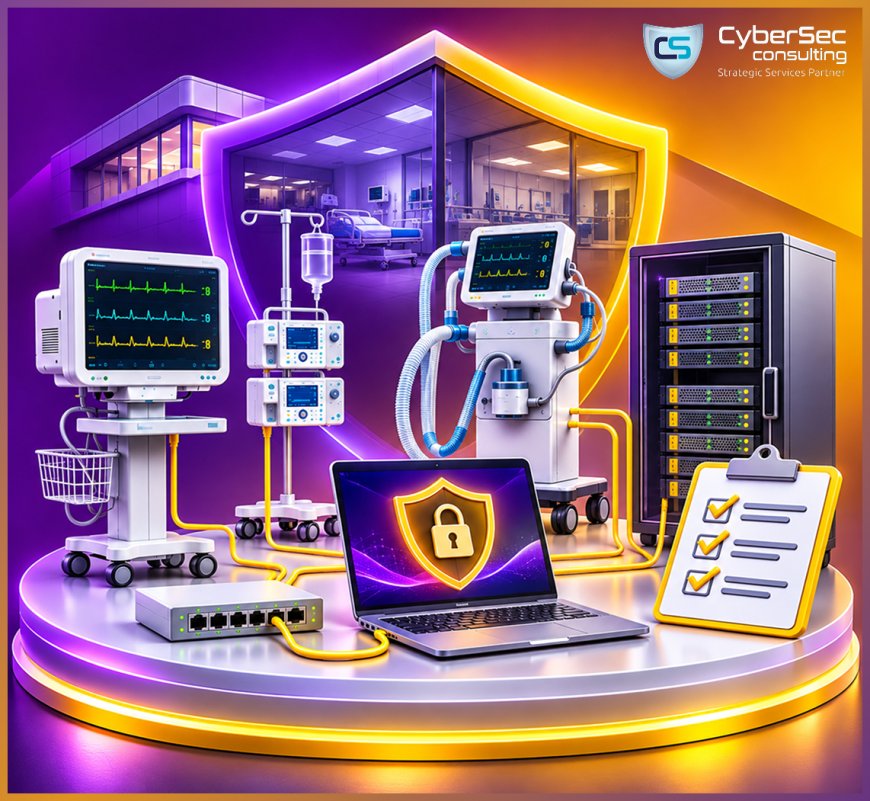
Hospitals are becoming increasingly dependent on connected medical devices, digital healthcare platforms and intelligent clinical infrastructure. Patient monitoring systems, MRI scanners, CT equipment, infusion pumps, laboratory systems, and connected diagnostic devices play a critical role in modern healthcare delivery. These technologies help healthcare providers improve patient care, streamline clinical operations, and support real-time medical decision-making.
The growing adoption of the Internet of Medical Things (IoMT) is also creating new cybersecurity challenges. Connected medical devices continuously exchange information across hospital networks, clinical applications, and healthcare management systems. Remote patient monitoring, wireless medical equipment, and cloud-connected healthcare platforms further expand this digital ecosystem.
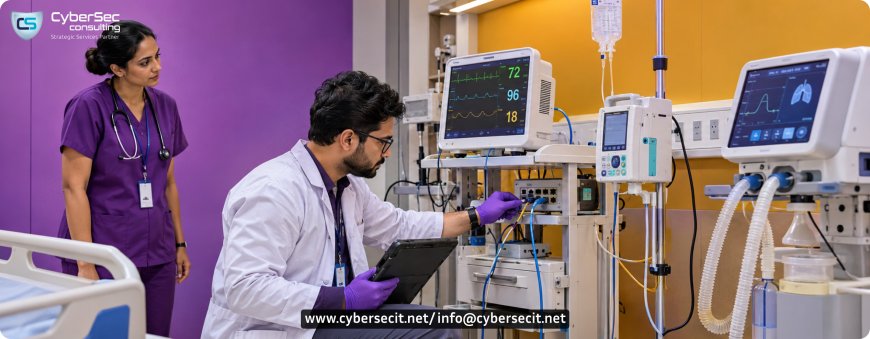
However, every connected device introduces potential security risks. Weak device configurations, outdated firmware, unsupported operating systems, and unsecured network connections can expose sensitive healthcare infrastructure to cyberattacks. A compromised medical device may provide an entry point for attackers to access clinical systems, expose electronic health records, or disrupt essential hospital operations.
Healthcare providers operating across major medical hubs such as Riyadh, Jeddah, London, and Manchester must pay closer attention to medical device cybersecurity, healthcare IoT security, and hospital network protection. Increasing digital healthcare adoption makes connected device security an important part of healthcare risk management and regulatory compliance.
Poor network segmentation can create additional exposure. Medical devices sharing network environments with administrative systems, patient databases,s and clinical applications may allow attackers to move between connected infrastructure. Weak access controls and insecure third-party connections can further increase these risks.
A comprehensive Healthcare IoMT Security Assessment helps identify vulnerabilities across connected medical devices, clinical networks, and supporting IT infrastructure. Healthcare organizations need to evaluate device security, network exposure, user access permissions, and communication pathways to understand where weaknesses exist.
What Is IoMT Security and Why Does It Matter for Hospitals?
The Internet of Medical Things (IoMT) refers to a network of connected medical devices, healthcare equipment,t and digital technologies that collect, process, store, and exchange medical information. These devices support patient monitoring, medical diagnostics, clinical decision-making, and remote healthcare services.
Modern hospitals depend on IoMT devices to improve treatment efficiency and deliver better patient care. Connected medical equipment communicates with hospital information systems, electronic health records (EHR), clinical applications, and healthcare networks. This connectivity helps medical professionals access patient information, monitor health conditions,s and manage clinical activities more efficiently.
However, increased connectivity also creates new cybersecurity challenges. Medical devices can become targets for cyberattacks when they operate with outdated software, weak authentication, insecure communication protocols, ls or poor network configurations.
IoMT security focuses on protecting connected medical devices, the information they process, and the networks they communicate across. It involves identifying vulnerabilities, controlling device access, securing communication channels, and reducing exposure across clinical infrastructure.
Healthcare providers across Riyadh, Jeddah, London and Manchester must consider medical device cybersecurity as part of their wider healthcare IT security strategy. Protecting connected medical equipment is essential for maintaining patient data confidentiality, clinical system availability and operational continuity.
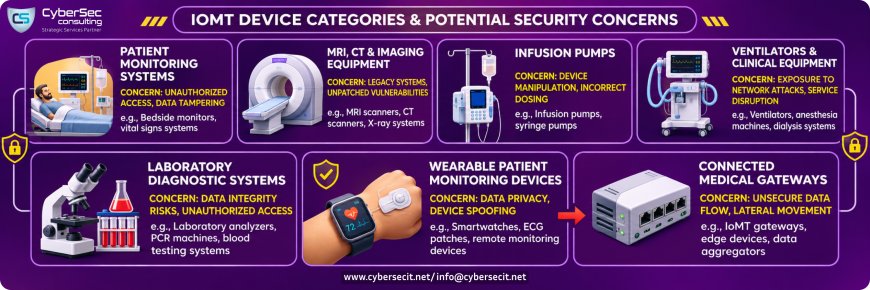
Types of Connected Medical Devices and Their Security Risks
Hospitals use different categories of connected medical equipment. Each device has specific security requirements and potential vulnerabilities.
| Connected Medical Device | Potential Security Concern |
| Patient Monitoring Systems | Unauthorized access, exposure of sensitive patient information, and insecure data transmission. |
| MRI, CT, and Imaging Equipment | Outdated software, unsupported operating systems, and network vulnerabilities. |
| Infusion Pumps | Weak security configurations, unauthorized access, and potential device manipulation. |
| Ventilators and Clinical Equipment | Device availability issues, operational disruption, and insecure network connections. |
| Laboratory Diagnostic Systems | Unauthorized access, data integrity risks, and exposure of diagnostic information. |
| Wearable Patient Monitoring Devices | Unsecured wireless communication, weak authentication, and patient data exposure. |
How Connected Medical Devices Increase Hospital Cybersecurity Risks
Every connected medical device communicates with other components of the healthcare environment. These connections may include clinical applications, medical databases, hospital servers, wireless networks, and cloud-based healthcare platforms.
A vulnerability within one device can create security risks beyond the equipment itself.
Consider a hospital where patient monitoring systems, diagnostic equipment, and administrative applications operate across interconnected networks. An attacker who compromises an exposed medical device may attempt to access other connected systems. Poor network segmentation can make lateral movement easier.
This can expose healthcare organizations to several security threats:
- Unauthorized Access to Clinical Systems - Weak authentication and excessive user permissions can allow unauthorized individuals to access connected medical equipment, clinical applications, and sensitive patient information.
- Exposure of Electronic Health Records - Insecure medical devices and communication channels can expose electronic health records, patient details,s and confidential diagnostic information.
- Ransomware and Malware Attacks - Compromised medical devices may provide an entry point into hospital networks. Attackers may attempt to move towards connected servers, workstations and clinical applications.
- Disruption of Medical Operations - Cybersecurity incidents affecting connected medical equipment can interrupt patient monitoring, diagnostic workflows, and access to essential clinical systems.
- Lateral Movement Across Hospital Networks - Poorly segmented clinical networks can allow attackers to move between connected medical devices, administrative infrastructure, re and enterprise IT environments.
- Third Party and Remote Access Risks - Medical equipment manufacturers and maintenance providers may require remote access to connected devices. Weak access controls and insufficient monitoring can introduce additional security exposure.
Why IoMT Security Must Be a Priority for Healthcare Providers
Healthcare organizations need visibility into every connected medical device operating across their infrastructure. A basic IT security assessment may not provide sufficient insight into device-specific vulnerabilities, clinical network exposure, or insecure medical equipment communication.
A dedicated Healthcare IoMT Security Assessment helps organizations understand how medical devices interact with hospital infrastructure and where cybersecurity weaknesses exist.
Key assessment priorities should include:
- Medical Device Discovery - Identify connected medical equipment and maintain an accurate device inventory.
- Vulnerability Identification - Detect outdated firmware, insecure configurations,s and known security weaknesses.
- Network Security - Evaluate hospital network architecture, device connectivity, ty and segmentation controls.
- Access Management - Review authentication, user permissions,ons and third-party access to clinical systems.
- Communication Security - Identify insecure protocols and exposed communication interfaces.
- Risk Assessment - Evaluate how compromised devices could affect clinical operations and wider IT infrastructure.
Biggest IoMT Security Vulnerabilities in Healthcare Environments
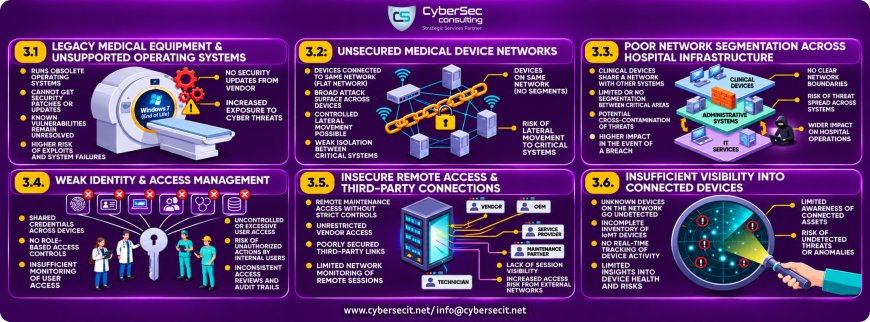
Connected medical devices have become essential to modern healthcare operations. Hospitals depend on medical imaging systems, patient monitoring equipment, laboratory technologies, and connected clinical applications to support patient care. However, these technologies can introduce serious cybersecurity vulnerabilities when they are not properly secured.
Many healthcare environments contain devices with different operating systems, firmware versions, communication protocols,s and security requirements. Some equipment remains operational for years because replacing it can be expensive or may require significant clinical planning. This creates challenges for healthcare IT teams responsible for maintaining device security.
IoMT security vulnerabilities can expose medical devices, hospital networks, ks and sensitive patient information to cyberattacks. Weak access controls, outdated software, insecure network connections, and poor device visibility can create opportunities for attackers to compromise connected healthcare infrastructure.
Healthcare providers across Riyadh, Jeddah, London, Birmingham and Manchester should consider these risks when evaluating their medical device cybersecurity and hospital network security posture.
A comprehensive Healthcare IoMT Security Assessment helps identify these weaknesses before they develop into wider security incidents.
Legacy Medical Equipment and Unsupported Operating Systems
Legacy medical equipment presents one of the most challenging cybersecurity concerns for healthcare organizations. Many hospitals continue to operate MRI scanners, CT systems, patient monitors, and laboratory equipment that depend on older operating systems or outdated firmware.
Medical equipment may remain in service for many years. Software updates can be restricted by manufacturers due to compatibility, certification, or patient safety requirements. Some devices may no longer receive regular security patches.
This creates security gaps that healthcare IT teams must manage carefully.
Common security vulnerabilities include:
- Outdated Operating Systems - Medical equipment running unsupported operating systems may contain known vulnerabilities that attackers can exploit.
- Missing Security Patches - Devices that cannot receive timely updates may remain exposed to publicly documented security weaknesses.
- End-of-life Equipment - Medical devices that have reached the end of manufacturer support may no longer receive essential security updates.
- Vendor-Restricted Updates - Some manufacturers require testing and approval before software changes can be applied to clinical equipment.
- Unsupported Firmware - Outdated device firmware can introduce vulnerabilities affecting device functionality and network security.
- Legacy Communication Protocols - Older protocols may lack modern encryption and authentication capabilities.
Why does this matter?
A vulnerable medical imaging system or patient monitoring device may become an entry point into a hospital network. Attackers could attempt to exploit the device and access other connected systems.
Healthcare organizations need a structured medical device vulnerability assessment to identify unsupported equipment, evaluate exposure, and prioritize remediation.
Unsecured Medical Device Networks
Connected medical devices communicate with hospital servers, clinical applications, medical databases,s and other network resources. These connections support essential healthcare operations. However, insecure network configurations can expose devices to unauthorized access.
Some hospitals operate medical equipment across shared network environments. Devices may communicate with systems that do not require direct access to their clinical functions.
Poorly secured connections increase the risk of unauthorized communication and network compromise.
Common security vulnerabilities include:
- Shared Hospital Networks - Medical devices connected to broad network segments may become accessible to unauthorized systems.
- Unprotected Communication Channels - Unencrypted communication can expose sensitive patient information and device-related data.
- Exposed Network Ports - Unnecessary open ports and services may provide attackers with additional entry points.
- Weak Wireless Security - Poorly configured WiFi networks can expose wireless medical devices to unauthorized connections.
- Inadequate Device Isolation - Medical equipment without appropriate network restrictions may communicate with unrelated systems.
Why does this matter?
An attacker may identify exposed medical devices through network reconnaissance and attempt to exploit insecure services. Weak network controls can increase the possibility of unauthorized access and compromise.
A hospital network security assessment helps identify exposed services, insecure communication pathways, and unnecessary network connections.
Poor Network Segmentation Across Hospital Infrastructure
Network segmentation is a critical security control for connected healthcare environments. It separates network resources based on their purpose, sensitivity, and operational requirements.
Hospitals often operate several interconnected environments. These may include clinical networks, administrative systems, medical imaging infrastructure, laboratory networks, guest WiF, i and corporate IT systems.
Poor network segmentation can allow threats to move between these environments.
Common security vulnerabilities include:
- Shared Clinical and Corporate Networks - Medical devices and administrative workstations operating within the same network segments can increase exposure.
- Unrestricted Device Communication - Medical equipment may communicate with systems that do not require access to its services.
- Lateral Movement Risks - Attackers who compromise one connected device may attempt to reach other network resources.
- Weak Firewall Configurations - Inadequate firewall rules may permit unnecessary traffic between sensitive network segments.
- Insufficient Access Restrictions - Missing network access controls can allow unauthorized devices or users to communicate with critical infrastructure.
Why does this matter?
Consider a hospital where an attacker compromises a connected diagnostic device. Poor segmentation may allow further access attempts towards hospital servers, electronic health records, ds and administrative infrastructure.
A single compromised device can therefore create a wider healthcare cybersecurity incident.
Healthcare providers should evaluate network architecture, firewall configurations, access restrictions, and communication pathways through regular network security assessments and network penetration testing.
Weak Identity and Access Management
Identity and Access Management (IAM) plays an important role in protecting connected medical devices and clinical applications. Healthcare environments involve multiple user groups, including doctors, nurses, biomedical engineers, IT administrators, equipment manufacturer,s anthird-partyty maintenance providers.
Each group requires different levels of access.
Weak identity management can allow unauthorized users to access sensitive medical equipment or clinical systems.
Common security vulnerabilities include:
- Shared Device Credentials - Multiple users accessing medical equipment through the same login credentials can reduce accountability.
- Excessive User Privileges - Clinical or technical users may have permissions beyond their actual responsibilities.
- Uncontrolled Third-party Access - External service providers may retain access to medical devices after their maintenance activities are completed.
- Weak Authentication - Remote device management systems may rely on insufficient authentication controls.
- Limited Access Monitoring - Inadequate logging can make it difficult to identify unauthorized access and suspicious user activity.
Why does this matter?
Compromised user credentials can expose connected medical equipment and sensitive healthcare applications. Excessive privileges may also allow attackers to access additional resources after gaining initial access.
Healthcare providers should implement role-based access control, strong authentication, privileged access management, and regular access reviews.
Insecure Remote Access and Third Party Connections
Medical device manufacturers and external service providers often require remote access to perform maintenance, troubleshoot equipment,t and support clinical operations.
Remote connectivity helps reduce maintenance delays. However, poorly secured access can introduce additional cybersecurity risks.
Healthcare providers need to ensure that every external connection follows appropriate security requirements.
Common security vulnerabilities include:
- Unrestricted Manufacturer Access - Vendors may retain access to medical equipment beyond approved maintenance periods.
- Poorly Secured VPN Connections - Weak VPN configurations can expose remote access pathways to unauthorized users.
- Missing Multi-factor Authentication - Remote connections without strong authentication may be vulnerable to credential compromise.
- Limited Session Monitoring - Unmonitored remote sessions can make unauthorized activities difficult to detect.
- Inactive Vendor Accounts - Former suppliers or maintenance personnel may retain access after their responsibilities end.
- Insufficient Access Approval - Remote maintenance activities may take place without appropriate authorization or oversight.
Why does this matter?
A compromised third-party account can provide attackers with access to connected medical equipment and hospital infrastructure. Unrestricted remote access may also create pathways into clinical networks.
Healthcare organizations should establish secure vendor access policies, time-limited permissions, multi-factor authentication, and detailed session logging.
A structured healthcare cybersecurity assessment can help evaluate third-party access risks and identify weaknesses across remote maintenance connections.
Insufficient Visibility into Connected Medical Devices
Healthcare IT teams cannot effectively secure devices they cannot identify or monitor. Large hospital environments may contain thousands of connected assets across clinical departments, laboratories, imaging facilities, and administrative networks.
Medical devices may be introduced through new installations, equipment upgrade,s othird-partyty maintenance activities. Without centralized visibility, security teams may struggle to identify every device communicating across the network.
Common security vulnerabilities include:
- Unknown Connected Devices - Unregistered equipment may communicate across hospital networks without appropriate security oversight.
- Incomplete Device Inventories - Missing information about device models, operating systems, and firmware can create assessment gaps.
- Unidentified Communication Pathways - Security teams may not know which systems communicate with specific medical devices.
- Limited Network Monitoring - Unusual device activity may go undetected without appropriate monitoring capabilities.
- Lack of Centralized Visibility - Disconnected asset management processes can make it difficult to maintain an accurate view of medical device security.
Why does this matter?
Unknown devices can introduce security weaknesses that remain undetected during routine IT security reviews. Healthcare providers may also struggle to identify compromised equipment quickly when they lack reliable asset and network visibility.
A medical device discovery and IoMT security assessment can help identify connected assets, map communication pathways,s and evaluate device exposure.
Centralized asset visibility also supports better vulnerability management, network segmentation, and healthcare cybersecurity risk management.
How Individual IoMT Vulnerabilities Can Create Wider Hospital Security Risks
The vulnerabilities discussed above are closely connected. A single security weakness may create additional exposure across the healthcare environment.
Consider a connected patient monitoring system operating on an outdated operating system. The device may also use weak credentials and communicate across a poorly segmented hospital network.
An attacker who successfully compromises that device may attempt to:
- Exploit known operating system or firmware vulnerabilities.
- Gain unauthorized access through weak authentication.
- Identify other systems communicating across the same network.
- Attempt lateral movement towards clinical applications and hospital servers.
- Access sensitive patient information or disrupt connected infrastructure.
How Healthcare Organizations Can Identify and Reduce IoMT Security Vulnerabilities
Healthcare providers should adopt a structured approach to medical device cybersecurity. Regular assessments help security teams understand their exposure and prioritize improvements.
Key assessment activities should include:
- Medical Device Discovery - Identify connected medical equipment and maintain an updated asset inventory.
- Vulnerability Assessment - Evaluate known vulnerabilities, outdated firmware, and insecure device configurations.
- Network Security Assessment - Review network architecture, exposed services, and communication pathways.
- Network Segmentation Review - Evaluate isolation between clinical devices, administrative systems,s and corporate IT.
- IAM Assessment - Review user permissions, authentication, and privileged access controls.
- Third-Party Access Assessment - Examine remote maintenance connections and vendor access permissions.
- Security Monitoring Review - Evaluate device visibility, network monitoring, and incident detection capabilities.
How a Compromised Medical Device Can Affect an Entire Hospital Network
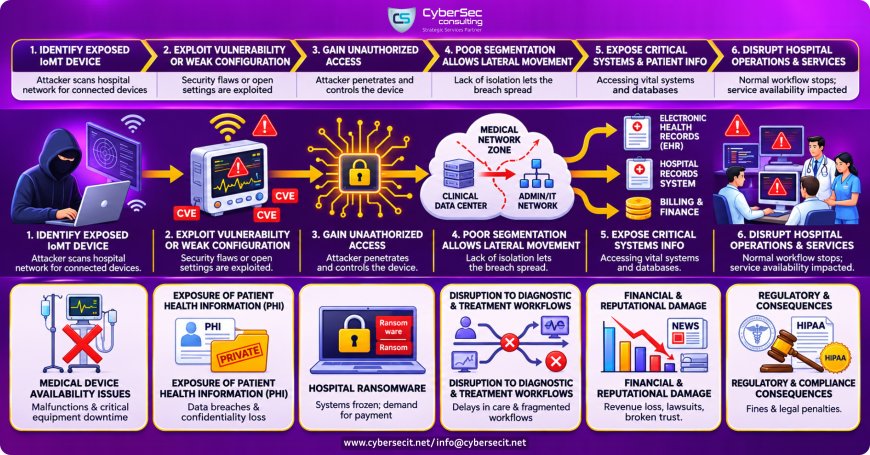
Connected medical devices play an important role in modern healthcare operations. Patient monitoring systems, MRI scanners, CT equipment, laboratory devices, and connected clinical applications exchange information across hospital networks. These connections help medical professionals access patient information and support timely clinical decisions.
However, a security weakness in one medical device can create risks across the wider hospital infrastructure. Attackers may exploit outdated software, weak authentication,n or exposed network services to gain unauthorized access to connected medical equipment.
The risk becomes more serious when clinical devices share network environments with hospital servers, administrative systems, and electronic health records. Poor network segmentation can create opportunities for attackers to move between connected systems.
A compromised medical device can become the starting point of a much larger healthcare cybersecurity incident.
Healthcare providers across Riyadh, Jeddah, London, Manchester and other major healthcare centres need to understand how medical device vulnerabilities can affect clinical operations, patient information and business continuity.
How an Attacker Can Exploit a Vulnerable Medical Device
Consider a hospital operating several connected medical devices across its clinical network. These include patient monitoring systems, diagnostic equipment, laboratory technologies,s and medical imaging systems.
One device may contain outdated firmware, an exposed network service, or a weak security configuration. If appropriate security controls are missing, an attacker may attempt to exploit that weakness.
A possible attack scenario can develop through the following stages.
Identifying an Exposed Medical Device
An attacker begins by identifying connected medical equipment communicating across the hospital network. Network reconnaissance may reveal exposed services, outdated systems, or devices with weak security configurations.
Medical devices with unnecessary open ports or insufficient network restrictions may attract further investigation.
Exploiting a Device Vulnerability
The attacker identifies a weakness within the device. This could involve outdated firmware, an unpatched operating system, insecure communication protocols, or weak authentication.
Known vulnerabilities may provide an opportunity to compromise the device when effective security controls are missing.
Gaining Unauthorized Access
Successful exploitation may allow the attacker to gain unauthorized access to the medical device or its supporting environment.
The level of access depends on the vulnerability and existing security controls. A compromised device may expose sensitive information or provide access to additional network resources.
Moving Across the Hospital Network
Poor network segmentation can increase the impact of the initial compromise.
The attacker may attempt to identify other connected systems, including clinical workstations, hospital servers, diagnostic platforms,s and administrative infrastructure.
Weak firewall configurations and unrestricted communication pathways can make these attempts easier.
Targeting Clinical Applications and Patient Information
Further access attempts may expose electronic health records, patient databases, laboratory applications, ns and other sensitive healthcare systems.
Attackers may also attempt to compromise shared infrastructure that supports multiple clinical departments.
Disrupting Hospital Operations
The incident may develop into a wider cybersecurity event. Ransomware, unauthorized system changes, or service disruption could affect medical device availability and access to essential clinical applications.
Business and Operational Impact of a Medical Device Cyberattack
A cybersecurity incident involving connected medical devices can affect more than the compromised equipment. It may create operational, financial, clinical, and regulatory challenges for healthcare organizations.
The following risks highlight why medical device cybersecurity should be a priority for hospital management and IT security teams.
Medical Device Availability Issues
Cyberattacks may affect the availability or reliability of connected medical equipment. Compromised systems may become inaccessible or require investigation before clinical teams can safely resume normal operations.
Disruptions involving patient monitoring equipment, diagnostic systems, and connected medical devices can place additional pressure on healthcare staff.
Exposure of Patient Health Information
Connected medical devices exchange sensitive information across hospital networks. This may include patient records, diagnostic results, monitoring data, and other confidential healthcare information.
Unauthorized access can expose electronic health records and create serious patient data privacy concerns.
Healthcare providers need effective medical device security controls to protect patient information and maintain data confidentiality.
Ransomware Across Hospital Infrastructure
A compromised medical device may provide an initial entry point into a poorly protected hospital network.
Attackers may attempt to reach connected servers, workstations, ns and administrative systems. Ransomware affecting shared infrastructure can disrupt access to clinical applications and essential business systems.
Healthcare ransomware protection must therefore consider connected medical devices alongside endpoints, servers and network infrastructure.
Disruption to Diagnostic and Treatment Workflows
Healthcare professionals depend on the availability of medical equipment and clinical applications.
A cybersecurity incident may affect diagnostic imaging, laboratory testing, patient monitoring, and access to clinical information. These disruptions can delay healthcare workflows and increase pressure on clinical teams.
Maintaining medical device availability is an important part of healthcare business continuity planning.
Financial and Reputational Damage
Healthcare cybersecurity incidents can create significant financial consequences.
Organizations may need to investigate compromised systems, restore affected infrastructure, engage specialist security teams, and implement additional security controls.
Patient confidence may also decline when sensitive information is exposed, or clinical services are disrupted.
Hospitals need effective cybersecurity risk management to reduce operational exposure and protect their reputation.
Regulatory and Compliance Consequences
Healthcare organizations must protect sensitive patient information and maintain appropriate cybersecurity controls across their infrastructure.
Regulatory expectations differ across healthcare environments.
Relevant considerations include:
- Saudi Healthcare Providers - Saudi PDPL, NCA Essential Cybersecurity Controls, applicable NCA IoT security guidance, and relevant SFDA medical device cybersecurity requirements.
- UK Healthcare Providers - UK GDPR, Data Protection Act 2018, NHS Data Security and Protection Toolkit requirements, and applicable medical device cybersecurity guidance.
Why Network Segmentation Is Critical for Hospital Cybersecurity
Network segmentation is one of the important controls for reducing the impact of compromised medical devices.
Hospitals should separate sensitive clinical infrastructure from general corporate IT environments based on business and clinical requirements.
For example, patient monitoring systems, diagnostic equipment, laboratory networks,s and administrative workstations should not have unrestricted communication simply because they operate within the same hospital.
Appropriate network segmentation helps healthcare organizations:
- Restrict unnecessary communication between medical devices and other systems.
- Reduce opportunities for lateral movement.
- Limit the exposure of sensitive clinical applications.
- Apply more specific firewall and access control policies.
- Improve network monitoring and threat detection.
- Contain security incidents within affected network segments.
How Healthcare Providers Can Reduce the Impact of Medical Device Cyberattacks
Preventing every cyberattack may not be possible. However, healthcare organizations can reduce their exposure through proactive cybersecurity assessments and effective security controls.
Recommended security measures include:
- Maintain Medical Device Visibility - Identify connected medical equipment and maintain an accurate asset inventory.
- Assess Device Vulnerabilities - Review outdated operating systems, unsupported firmware, re and insecure configurations.
- Strengthen Network Segmentation - Restrict unnecessary communication between clinical devices and corporate IT.
- Secure Device Access - Apply strong authentication, role-based permissions, and privileged access controls.
- Control Third-Party Connections - Restrict vendor access and monitor remote maintenance activities.
- Monitor Network Activity - Identify unusual communication patterns and suspicious device behaviour.
- Develop Incident Response Plans - Establish procedures for isolating compromised devices while maintaining patient safety.
- Conduct Regular Security Assessments - Evaluate device vulnerabilities, network exposure, and access control weaknesses.
Why Healthcare Providers in Saudi Arabia and the UK Need IoMT Security Assessments
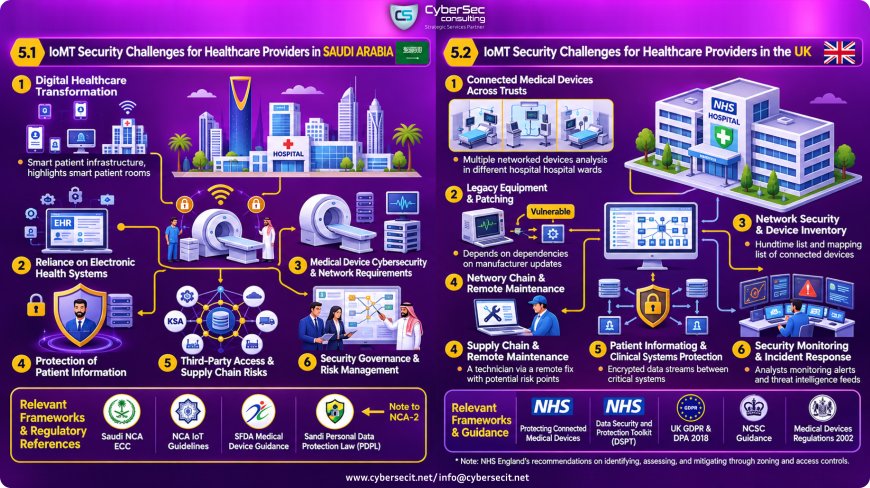
Healthcare organizations are rapidly adopting connected medical devices, digital patient management systems, and intelligent clinical infrastructure. Hospitals, private healthcare groups, diagnostic centres and specialist medical facilities increasingly depend on interconnected technologies to support patient care and daily operations.
This digital transformation also creates new cybersecurity responsibilities. Medical imaging equipment, patient monitoring systems, laboratory devices,s and connected healthcare applications exchange sensitive information across clinical networks. Every connection introduces potential security risks that healthcare providers must identify and manage.
Healthcare IoMT security assessments are becoming an important part of medical device cybersecurity and hospital network protection. These assessments help organizations identify device vulnerabilities, evaluate network exposure, review access controls, ls and strengthen security governance.
Healthcare providers operating in Riyadh, Jeddah, Dammam, London, Manchester, and Birmingham must consider the security of their connected medical infrastructure. Regulatory expectations, digital healthcare adoption, and the growing dependence on connected clinical systems make proactive cybersecurity risk management essential.
IoMT Security Challenges for Healthcare Providers in Saudi Arabia
The healthcare sector is undergoing significant digital transformation. Hospitals and medical facilities are investing in connected medical technologies, electronic health records, digital patient services, and intelligent healthcare infrastructure.
This transformation supports improved patient care and operational efficiency. However, it also increases the number of connected devices communicating across hospital networks.
Healthcare providers in Riyadh, Jeddah, Dammam, and other major medical centres need to address cybersecurity risks associated with connected medical equipment, clinical applications, and third-party healthcare services.
Digital Healthcare Transformation and Connected Hospital Infrastructure
Digital healthcare adoption is increasing the use of connected medical devices across hospitals and specialist healthcare facilities.
Patient monitoring systems, medical imaging equipment, laboratory technologies, and remote healthcare platforms rely on network connectivity to exchange information.
Poor device configurations and insecure network connections can expose these systems to unauthorized access.
Healthcare organizations need regular IoMT security assessments to evaluate device exposure and strengthen connected hospital infrastructure.
Increasing Reliance on Electronic Health Systems
Electronic health records, hospital information systems, and digital patient management platforms have become important components of healthcare operations.
These systems process sensitive patient information and communicate with connected clinical equipment.
Weak access controls, outdated software,e and insecure integrations can expose healthcare applications to cyber threats.
Healthcare cybersecurity assessments help identify weaknesses across connected medical devices, clinical applications, ns and supporting IT infrastructure.
Medical Device Cybersecurity and Network Security Requirements
Connected medical equipment requires appropriate security controls throughout its operational lifecycle.
Healthcare providers need to understand how devices communicate, which systems can access them, and whether their configurations meet security requirements.
Key assessment priorities include:
- Medical device discovery and inventory management.
- Firmware and operating system vulnerability reviews.
- Clinical network security assessments.
- Network segmentation and firewall configuration reviews.
- Secure communication and access control evaluations.
- Medical device exposure and vulnerability identification.
Protection of Sensitive Patient Information
Healthcare organizations process confidential patient records, diagnostic reports, medical histories,s and personal information.
Compromised medical devices or insecure clinical networks can create opportunities for unauthorized access and data exposure.
Healthcare providers must consider the requirements of the Saudi Personal Data Protection Law (PDPL) when protecting personal information.
Strong data protection controls, access management, and network security assessments help reduce unnecessary exposure.
Third Party Access and Healthcare Supply Chain Risks
Medical device manufacturers, maintenance providers, and healthcare technology suppliers may require access to hospital systems for technical support.
Unrestricted remote access and weak vendor authentication can create additional entry points into clinical networks.
Healthcare organizations should evaluate: Third-party access permissions.
- Remote maintenance security.
- Vendor authentication requirements.
- Privileged account management.
- Supplier security responsibilities.
- Access monitoring and audit trails.
Security Governance and Risk Management Across Clinical Environments
Medical device cybersecurity requires coordination between healthcare IT teams, clinical engineering departments, biomedical engineers, and information security professionals.
Organizations need clear responsibilities for device security, vulnerability management, incident response, and third-party risk management.
A structured healthcare cybersecurity risk assessment helps identify gaps and establish priorities for improving medical device and clinical network security.
IoMT Security Challenges for Healthcare Providers in the UK
Healthcare providers across London, Manchester, Birmingham, Leeds and other major cities increasingly depend on connected medical devices and digital clinical infrastructure.
NHS trusts, private hospitals, diagnostic centres and specialist healthcare facilities use connected technologies to support patient monitoring, medical imaging, laboratory testing and digital patient management.
However, connected medical equipment introduces cybersecurity challenges that require continuous attention. Legacy medical devices, delayed security updates, unsecured remote access, and poorly segmented clinical networks can expose healthcare infrastructure to cyber threats.
Healthcare organizations need to assess medical device security alongside their wider IT infrastructure. A dedicated IoMT Security Assessment helps identify vulnerabilities and improve protection across clinical networks.
Connected Medical Devices Across NHS Trusts and Private Hospitals
NHS trusts and private healthcare providers operate complex medical environments containing multiple connected devices and clinical applications.
MRI scanners, CT systems, patient monitors, laboratory equipment and diagnostic technologies exchange information across hospital networks.
These devices may use different operating systems, firmware versions,s and communication protocols. Managing their security requires visibility into device connectivity and network dependencies.
Healthcare providers should conduct regular medical device security assessments to identify exposed equipment and evaluate clinical network risks.
Legacy Medical Equipment and Manufacturer-Dependent Patching
Legacy medical equipment presents a significant cybersecurity challenge across healthcare environments.
Some medical devices operate on older operating systems that cannot be upgraded without manufacturer approval. Hardware dependencies, software compatibility, and clinical safety requirements may also restrict security updates.
NHS England highlights the challenges associated with long device lifecycles, delayed security patches, and equipment that remains in use after manufacturer support ends
Healthcare IT and biomedical engineering teams should evaluate:
- Unsupported operating systems and firmware.
- Medical devices approaching end of manufacturer support.
- Delayed security patches and software updates.
- Exposed network services and communication ports.
- Compensating security controls for devices that cannot be updated.
Clinical Network Security and Medical Device Inventory Management
Hospitals need accurate visibility into every connected medical device operating across their clinical infrastructure.
Incomplete device inventories can make it difficult to identify vulnerabilities, monitor communication pathways,s and manage security incidents.
Healthcare providers should maintain information about:
- Medical device models and manufacturers.
- Operating systems and firmware versions.
- Network addresses and communication protocols.
- Connected clinical applications and supporting systems.
- Remote access requirements.
- Patient information processed or stored by devices.
Healthcare Supply Chain and Remote Maintenance Risks
Medical device manufacturers ,maintenancprovidersse, rs and external technology suppliers may require remote access to healthcare infrastructure.
These connections support troubleshooting, equipment maintenance, and software updates. However, weak remote access controls can expose clinical networks to unauthorized access.
Healthcare providers should evaluate:
- Third-party access permissions.
- Secure VPN configurations.
- Multi-factor authentication.
- Remote maintenance procedures.
- Privileged account management.
- Vendor activity monitoring.
- Access revocation after maintenance.
Protection of Patient Information and Clinical Systems
Connected medical devices may process sensitive patient information and exchange data with electronic health records, hospital information systems, and clinical applications.
A compromised device or insecure communication channel can expose confidential healthcare information.
Healthcare organizations must consider their responsibilities under UK GDPR and the Data Protection Act 2018.
Appropriate security measures should protect patient data against unauthorized access, accidental disclosure,e and inappropriate processing.
Security Monitoring and Incident Response Readiness
Healthcare organizations need the ability to identify suspicious activity across connected medical devices and hospital networks.
Limited device visibility and insufficient network monitoring can delay the detection of cybersecurity incidents.
Security teams should evaluate:
- Medical device network monitoring.
- Suspicious communication detection.
- Security event logging and reporting.
- Incident response procedures.
- Device isolation and containment processes.
- Clinical service recovery arrangements.
What Does a Healthcare IoMT Security Assessment Include?
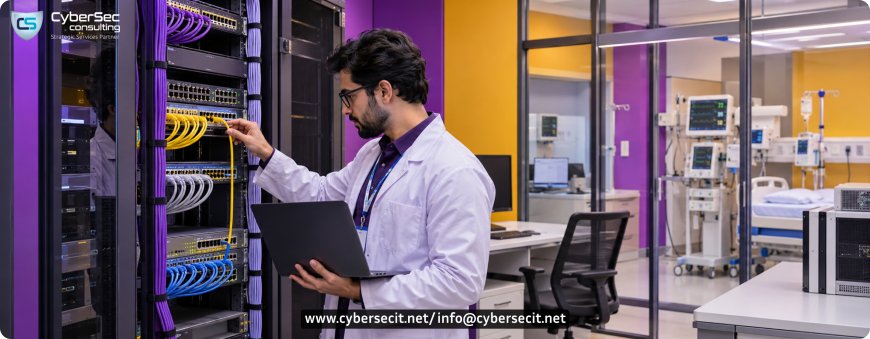
Healthcare organizations depend on connected medical devices, clinical applications and interconnected hospital networks to support patient care. However, identifying security weaknesses across this infrastructure requires more than a routine IT security review.
A Healthcare IoMT Security Assessment evaluates the security of connected medical devices, their communication pathways and the wider clinical network environment. It helps healthcare providers understand how medical equipment connects to hospital systems, where vulnerabilities exist, and how attackers could potentially exploit security gaps.
Hospitals across Riyadh, Jeddah, Dammam, London, Manchester, and Birmingham need visibility into their connected medical infrastructure. A structured assessment can help identify outdated devices, insecure configurations, weak access controls, ls and network exposure.
Connected Medical Device Discovery and Asset Assessment
- Healthcare organizations cannot effectively protect medical devices without knowing what is connected to their networks.
- Hospitals may operate hundreds or thousands of medical devices across patient wards, intensive care units, diagnostic departments, laboratories, and specialist clinical facilities.
- An IoMT asset assessment helps identify these devices and understand their security status.
Key assessment activities include:
- Medical Device Identification - Discover connected medical equipment across clinical networks, including patient monitors, MRI scanners, CT systems, infusion pumps, MPs, and laboratory devices.
- Operating System and Firmware Review - Identify device operating systems, firmware versions, and software dependencies.
- End-of-life Device Identification - Identify unsupported medical equipment that no longer receives regular security updates.
- Device Communication Mapping - Understand how medical devices communicate with hospital servers, clinical applications, and external systems.
- Network Exposure Assessment - Identify devices accessible through unnecessary network connections or exposed services.
Medical Device Vulnerability Assessment
Medical devices may contain software vulnerabilities, outdated firmware, and insecure configurations. These weaknesses can expose healthcare infrastructure to unauthorized access and cyberattacks.
A medical device vulnerability assessment helps identify security gaps across connected equipment and evaluate their potential impact.
Key assessment activities include:
- Known Vulnerability Identification - Review medical device software and firmware against relevant vulnerability information, including applicable CVEs.
- Security Configuration Review - Examine device settings for weak configurations and unnecessary services.
- Exposed Port Assessment - Identify open network ports and services that may increase device exposure.
- Firmware and Software Analysis - Evaluate outdated software, missing patches, and unsupported firmware.
- Device Security Control Review - Examine authentication, encryption, access restrictions,s and other available security protections.
Hospital Network Security Assessment
Connected medical devices rely on hospital networks to exchange information with clinical applications, databases, es and supporting infrastructure.
Poor network architecture and unrestricted communication can increase the impact of a compromised device.
A Hospital Network Security Assessment evaluates how clinical infrastructure is connected and whether appropriate security controls protect sensitive network segments.
Key assessment activities include:
- Clinical Network Architecture Review - Examine network design and connectivity across medical devices, clinical applications,ons and hospital systems.
- Network Segmentation Assessment - Evaluate separation between clinical devices, administrative systems, corporate IT, and guest networks.
- Firewall Configuration Review - Identify weak firewall rules and unnecessary communication permissions.
- Communication Pathway Analysis - Identify network connections that are not required for clinical operations.
- Network Exposure Assessment - Examine accessible services, network weaknesses, and potential lateral movement opportunities.
Clinical System Access and Privilege Assessment
Healthcare environments involve multiple users accessing medical devices, clinical applications, and sensitive patient information.
Doctors, nurses, biomedical engineers, IT administrators, and external maintenance providers require different levels of access.
Weak identity and access management can create opportunities for unauthorized access.
A clinical system access assessment evaluates whether users have appropriate permissions and whether privileged accounts are adequately protected.
Key assessment activities include:
- User Permission Review - Examine access rights across clinical applications and connected medical equipment.
- Excessive Privilege Identification - Identify accounts with permissions beyond their operational requirements.
- Privileged Access Management Assessment - Review controls protecting administrator and high-privilege accounts.
- Authentication Review - Examine shared credentials, password policies, and multi-factor authentication.
- Third-Party Access Review - Evaluate permissions assigned to medical device manufacturers and external maintenance providers.
- Access Monitoring - Review audit trails and account activity to identify suspicious access.
How to Secure Connected Medical Devices and Clinical Networks
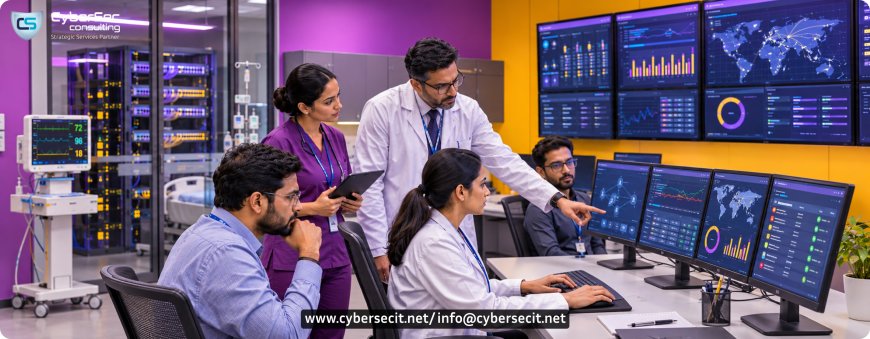
Protecting connected medical devices requires a coordinated cybersecurity strategy across clinical equipment, hospital networks, and supporting IT infrastructure. Healthcare providers rely on patient monitoring systems, medical imaging equipment, laboratory technologies, and connected healthcare applications. Every device communicating across these environments needs appropriate security controls.
However, securing medical devices can be challenging. Some healthcare facilities operate legacy equipment that cannot receive immediate software updates. Others depend on external manufacturers for maintenance and technical support.
Effective healthcare IoMT security requires continuous device visibility, strong access controls, secure network architecture,e and proactive vulnerability management.
Healthcare providers across Riyadh, Jeddah, Dammam, London, Manchester, and Birmingham should implement the following security measures to reduce medical device vulnerabilities and strengthen clinical network protection.
Maintain a Continuously Updated Medical Device Inventory
Healthcare organizations need accurate visibility into every connected medical device operating across their infrastructure.
An incomplete inventory can leave vulnerable equipment outside security monitoring and routine vulnerability management activities.
A centralized medical device inventory should include:
- Device name, type,e and manufacturer.
- Model number and device location.
- Operating system and firmware version.
- IP address and network connection details.
- Communication protocols and connected applications.
- Manufacturer support and maintenance status.
- Known vulnerabilities and security risks.
Isolate Medical Devices Through Appropriate Network Segmentation
Network segmentation is one of the most important security controls for connected healthcare environments.
Medical devices should operate within appropriately controlled network segments based on their clinical purpose and communication requirements.
Patient monitoring systems, diagnostic equipment, laboratory networks, ks and administrative workstations should not have unrestricted access to one another.
Healthcare organizations should:
- Create dedicated network segments for sensitive medical devices.
- Separate clinical networks from general corporate IT environments.
- Apply firewall rules based on approved communication requirements.
- Restrict unnecessary device-to-device communication.
- Review network access policies regularly.
- Monitor traffic between network segments.
Restrict Communication Between Clinical and Corporate Networks
Clinical networks support essential healthcare activities. Corporate networks support administrative operations, business applications, and employee services.
Unrestricted communication between these environments can increase the risk of wider infrastructure compromise.
Healthcare IT teams should establish clear network access boundaries.
Recommended controls include:
- Restrict connections between clinical devices and administrative workstations.
- Allow only approved communication between network segments.
- Block unnecessary ports and services.
- Apply firewall controls to sensitive clinical systems.
- Review connections to hospital servers and databases.
- Monitor unusual traffic between clinical and corporate networks.
Implement Role-Based Access Control and Strong Authentication
Medical devices and clinical applications often require access from doctors, nurses, biomedical engineers, IT administrators, and external service providers.
Every user should receive permissions based on their responsibilities.
Healthcare organizations should implement role-based access control for clinical systems.
- Unique user accounts wherever supported.
- Multi-factor authentication for sensitive access.
- Strong password and authentication policies.
- Privileged Access Management for administrator accounts.
- Regular user permission reviews.
- Timely removal of inactive accounts.
Secure Remote Vendor and Medical Equipment Maintenance Access
Medical device manufacturers and external maintenance providers may require remote access to diagnose equipment issues, install updates, and provide technical support.
Uncontrolled remote connections can expose clinical networks to external threats.
Healthcare providers should establish secure vendor access procedures.
Recommended controls include:
- Require multi-factor authentication for remote access.
- Use approved and monitored VPN connections.
- Provide time-limited access permissions.
- Restrict vendor access to authorized devices and systems.
- Monitor remote maintenance sessions.
- Maintain records of vendor activities.
- Revoke access when maintenance activities are completed.
Conclusion
Connected medical devices have transformed healthcare delivery. Patient monitoring systems, medical imaging equipment, connected diagnostic tools, and clinical applications now play an important role in hospital operations.
However, every connected device introduces potential cybersecurity risks. Weak device configurations, outdated firmware, exposed clinical networks, and excessive access permissions can create opportunities for cyber attackers.
Healthcare providers must look beyond individual medical device vulnerabilities. They need a coordinated cybersecurity strategy that protects connected equipment, clinical networks, patient information,n and enterprise infrastructure.
A structured IoMT security assessment helps identify these weaknesses and provides a clear direction for reducing risk. Network security assessments, vulnerability assessments, penetration testing, access control reviews and security configuration assessments further strengthen this approach.
Healthcare organizations across Riyadh, Jeddah, Dammam, London, Manchester and Birmingham should make medical device security an essential part of their wider healthcare cybersecurity and risk management programmes.
CyberSec Consulting helps healthcare providers identify vulnerabilities, evaluate network exposure and strengthen security across connected medical devices and supporting IT infrastructure.
Explore CyberSec Consulting Services for Healthcare IoMT Security
Protecting connected medical devices requires multiple security capabilities working together. CyberSec Consulting offers a range of cybersecurity services that can support healthcare organizations throughout their IoMT security and risk management initiatives.
Relevant services include:
- IoT Security Assessment - Identify vulnerabilities, insecure configurations, and exposure across connected medical devices.
- Network Security Assessment - Evaluate hospital network architecture, firewall policies, network segmentation, and clinical network exposure.
- Vulnerability Assessment - Identify known vulnerabilities across medical devices, servers, endpoints,s and supporting infrastructure.
- Penetration Testing - Evaluate security weaknesses and approved attack paths across networks and systems.
- Network Architecture and Segmentation Review - Assess communication pathways and recommend stronger separation between clinical and corporate networks.
- Identity and Access Management (IAM) - Strengthen user authentication, access governance,ce and permissions across clinical systems.
- Privileged Access Management (PAM) - Protect administrator accounts, privileged credentials, ls and external maintenance access.
- Network and Endpoint Security - Strengthen protection across hospital networks, workstations, servers, and connected infrastructure.
- Security Configuration Assessment - Identify insecure devices, operating systems, firewalls, and network configurations.
- Compliance and Risk Management - Identify cybersecurity control gaps and support structured risk management.
- Security Monitoring and Incident Response Support - Improve threat visibility and support incident detection, investigation,n and response planning.
Are Your Connected Medical Devices Exposing Your Hospital Network to Cybersecurity Risks?
Identify vulnerabilities. Evaluate clinical network exposure. Strengthen your healthcare security posture.
CyberSec Consulting helps healthcare providers build a stronger security foundation for connected medical devices, clinical applications, and hospital IT infrastructure.
Request an IoMT and Network Security Assessment.
FAQs
What is Healthcare IoMT Security?
Healthcare IoMT security protects connected medical devices, clinical applications,s and healthcare networks against cyber threats. It helps prevent unauthorized access, data exposure, and disruption to medical operations.
Why is IoMT Security Important for Hospitals?
Connected medical devices can expose vulnerabilities across hospital networks. Effective IoMT security helps protect patient information, maintain device availability,y and reduce cybersecurity risks.
What Does a Healthcare IoMT Security Assessment Include?
It includes medical device discovery, vulnerability assessment, network security reviews, access control evaluation, and security configuration checks. It also identifies risks and recommends remediation measures.
How Can Hospitals Protect Legacy Medical Devices?
Hospitals can use network segmentation, restricted access, firewall controls,s and continuous monitoring. These measures help reduce exposure when older medical devices cannot be patched immediately.
Which Cybersecurity Standards and Regulations Are Relevant to Healthcare Providers in Saudi Arabia and the UK?
Relevant requirements may include NCA cybersecurity controls, SFDA medical device guidance, and Saudi PDPL. UK healthcare providers may need to consider NHS cybersecurity requirements, UK GDPR, and the Data Protection Act 2018.
How Can CyberSec Consulting Help Improve Healthcare IoMT Security?
CyberSec Consulting offers IoT security assessments, network security assessments, vulnerability assessments, penetration testing, IAM, PAM, and cybersecurity risk management. These services help identify vulnerabilities and strengthen clinical network protection.
What's Your Reaction?
 Like
0
 Dislike
0
 Love
0
 Funny
0
 Angry
0
 Sad
0
 Wow
0