






























How Secure Are BMS, IoT, and Physical Access Systems in Saudi Arabia Smart Buildings?
Protect smart buildings in Saudi Arabia with BMS, IoT, and physical access control security assessments. Identify vulnerabilities and strengthen infrastructure security.



Introduction
Saudi Arabia's rapid growth in smart infrastructure is transforming commercial buildings, offices, hotels, hospitals, residential towers, and mixed-use developments. Smart building technologies now connect Building Management Systems (BMS), Internet of Things (IoT) devices, surveillance cameras, elevators, HVAC systems, and physical access controls. These technologies improve operational efficiency, but they also create new cybersecurity risks.
A single security weakness can expose multiple connected building systems. Cyberattacks targeting building automation systems can disrupt air conditioning, lighting, elevator operations, security monitoring, and electronic door access. Such incidents can affect occupant safety, business continuity, and sensitive operational data.
Smart building cybersecurity in Saudi Arabia is increasingly a priority for property developers, facility managers, and infrastructure operators. Regular BMS security assessments, IoT security testing, network vulnerability assessments, and physical access control reviews help identify weaknesses before attackers exploit them.
Understanding the Smart Building Attack Surface
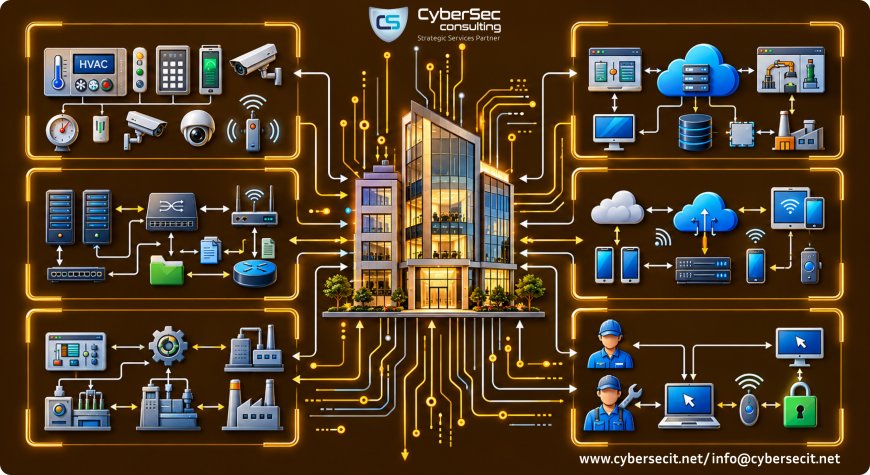
Smart buildings across Saudi Arabia rely on interconnected technologies to manage daily operations. Building Management Systems (BMS), corporate IT networks, Operational Technology (OT), cloud platforms, wireless devices, and IoT sensors continuously exchange information. These connections help facility teams monitor HVAC systems, control lighting, manage elevators, and oversee physical security.
However, every connected device and communication channel can introduce a potential cybersecurity weakness. Poor network segmentation may allow attackers to move between corporate IT networks and building automation systems. Weak passwords, shared administrator accounts, outdated device firmware, and unsecured remote access can create opportunities for unauthorised access.
Third-party maintenance providers also require careful security controls. Unrestricted vendor connections can expose building management platforms and sensitive operational systems to external threats. Cloud-connected devices may introduce further risks when authentication and data protection are poorly configured.
Smart building cybersecurity in Saudi Arabia requires clear visibility across connected assets. Organisations should prioritise BMS security assessments, IoT vulnerability assessments, OT network security, and third-party access reviews.
Building Management System (BMS) Security Assessment
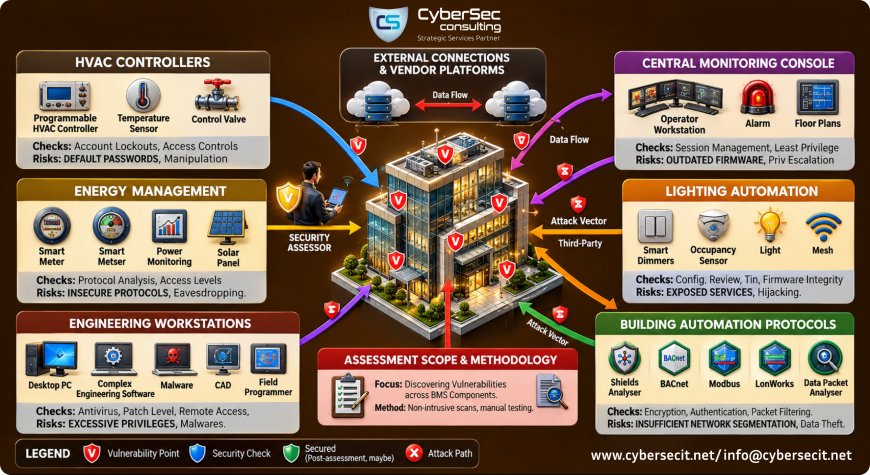
Building Management Systems (BMS) play an important role in managing commercial buildings, hotels, hospitals, and large infrastructure facilities across Saudi Arabia. These systems control essential operations such as heating, ventilation, and air conditioning (HVAC), lighting automation, energy management, and environmental monitoring. A security weakness in one component can expose other connected building systems to cyber threats.
A BMS security assessment in Saudi Arabia helps organisations identify vulnerabilities across controllers, central monitoring consoles, engineering workstations, and building automation networks. Security testing should examine commonly used protocols such as BACnet, Modbus, and KNX. Misconfigured communication channels and exposed network services can create entry points for attackers.
Default passwords, weak authentication, and shared administrator accounts can allow unauthorised access to critical building systems. Outdated firmware may contain known vulnerabilities that attackers can exploit. Excessive user privileges can also expose sensitive configurations and operational controls. Poor network segmentation may allow threats to move between corporate IT networks and building automation environments.
Saudi businesses should prioritise regular cybersecurity assessments of Building Management Systems, configuration reviews, vulnerability scanning, and network security testing.
IoT Security Assessment for Connected Buildings
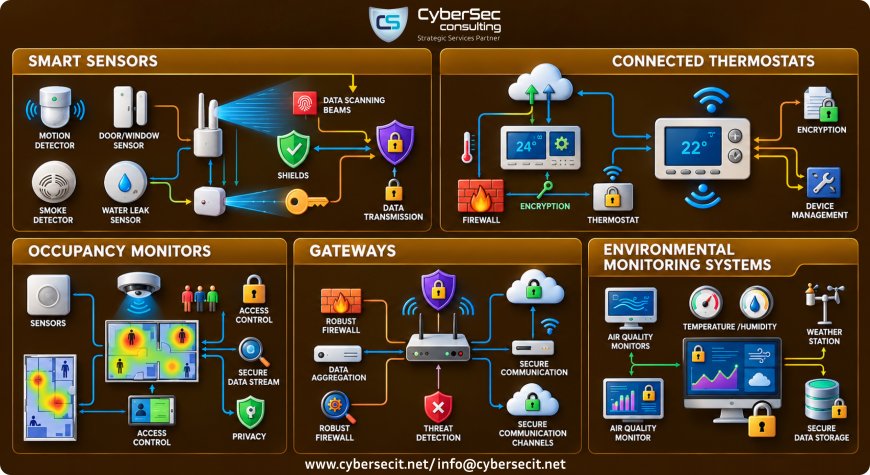
Smart buildings across Saudi Arabia use Internet of Things (IoT) devices to improve facility management, energy efficiency, and operational visibility. Smart sensors, connected thermostats, occupancy monitors, wireless gateways, and environmental monitoring systems collect and exchange data across building networks. Cloud-connected devices also allow facility managers to monitor building operations remotely.
However, every connected device can introduce potential cybersecurity risks. Weak authentication and default credentials may allow unauthorised users to access IoT devices. Insecure APIs can expose sensitive information or provide access to connected building platforms. Vulnerable firmware and delayed security updates may leave smart devices open to known cyberattacks.
Unencrypted communication can expose sensitive data transmitted between sensors, gateways, and cloud platforms. Exposed management interfaces may also provide attackers with access to building infrastructure. Unmanaged IoT devices create further risks when organisations lack proper asset visibility and security monitoring.
IoT security assessments in Saudi Arabia help businesses identify these weaknesses before they affect building operations. Organisations should prioritise IoT vulnerability assessments, API security testing, firmware reviews, device authentication checks, and network security assessments.
Physical Access Control and Smart Building Security

Smart buildings across Saudi Arabia depend on physical access control systems to protect employees, visitors, sensitive areas, and critical infrastructure. Card readers, biometric authentication, smart locks, and visitor management platforms help organisations control entry across offices, hotels, hospitals, and commercial properties. These systems often connect to central access control servers and identity management platforms.
However, weak security configurations can create serious risks. Excessive user privileges may allow employees to access restricted areas without proper authorisation. Weak administrator accounts and shared credentials can expose access control systems to unauthorised users. Inactive employee accounts and outdated access permissions may also leave security gaps.
Insecure integrations between physical access systems and identity platforms can expose sensitive credentials and access records. Limited visibility between physical access logs and cybersecurity monitoring can make suspicious activities harder to detect. Such weaknesses may affect building security and increase the risk of unauthorised entry.
Physical access control security assessments in Saudi Arabia help organisations identify these vulnerabilities. Regular reviews of biometric security, smart lock configurations, administrator privileges, identity integrations, and access logs can strengthen protection.
How to Conduct a Smart Building Cybersecurity Assessment

A structured smart building cybersecurity assessment helps organisations across Saudi Arabia identify security weaknesses before they affect critical building operations. The process should cover connected devices, building automation systems, operational technology, corporate networks, and physical access infrastructure.
Comprehensive Smart Building Security Assessment in Saudi Arabia should include the following steps:
- Asset Discovery - Identify all connected assets, including HVAC controllers, IoT sensors, smart locks, surveillance cameras, gateways, and building management servers. Maintain an updated inventory of devices and their network connections.
- Architecture Review - Examine how BMS, IT networks, OT environments, cloud platforms, and third-party systems communicate. Identify exposed connections and potential entry points.
- Configuration Analysis - Review device settings, firmware versions, administrator accounts, authentication policies, and exposed services. Identify default passwords and insecure configurations.
- Vulnerability Assessment - Perform security scans to identify known vulnerabilities across building automation systems, IoT devices, and network infrastructure. Prioritise findings based on their operational impact.
- Access Control Review - Examine user permissions, biometric systems, administrator privileges, inactive accounts, and remote access policies.
- Network Segmentation Validation - Verify that corporate IT networks remain properly separated from critical OT and building automation systems.
- Controlled Security Testing - Conduct authorised penetration testing to validate identified weaknesses. Testing should follow approved procedures and avoid unnecessary disruption.
Smart Building Cybersecurity Priorities for Saudi Organizations

Saudi Arabia's expanding real estate and infrastructure sectors are increasing the demand for connected building technologies. Property developers, hospitality groups, healthcare facilities, commercial towers, and large-scale developments rely on smart systems to manage daily operations. Protecting these environments requires a clear smart building cybersecurity strategy in Saudi Arabia.
Organisations should prioritise risk-based security planning to identify critical assets and address vulnerabilities across BMS, IoT devices, OT networks, and physical access systems. Regular asset discovery helps security teams maintain visibility across connected infrastructure. Third-party vendor access should also be reviewed to prevent unauthorised connections and excessive privileges.
Effective incident response planning is essential for managing cyber threats that could disrupt building operations. Security teams should establish clear response procedures and recovery plans. Business continuity measures can help maintain essential services during security incidents. Organisations must also consider applicable requirements from the Saudi National Cybersecurity Authority (NCA), particularly relevant OT and IoT cybersecurity controls.
Smart building cybersecurity services in Saudi Arabia can help businesses strengthen infrastructure protection and reduce operational risks.
Strengthening Smart Building Security with CyberSec Consulting
Smart building infrastructure requires continuous security assessments to identify vulnerabilities and protect connected systems. CyberSec Consulting helps organisations across Saudi Arabia strengthen their building security through comprehensive cybersecurity assessment services. Our approach covers Building Management Systems (BMS), IoT devices, OT environments, network infrastructure, and physical access control systems.
Our cybersecurity experts assess security configurations, identify vulnerabilities, review network architecture, and evaluate access permissions. We also support identity and access management, network security reviews, and risk-based remediation planning. These services help businesses address security gaps and improve protection across connected building infrastructure.
Protect your smart building infrastructure before security weaknesses become operational risks. Connect with CyberSec Consulting for professional smart building cybersecurity assessments in Saudi Arabia. Contact our team to identify vulnerabilities, strengthen connected systems, and improve your organisation's cybersecurity resilience.
Request a Smart Building Cybersecurity Assessment Today.
FAQs
What is smart building cybersecurity?
Smart building cybersecurity protects connected systems such as BMS, IoT devices, HVAC controls, surveillance, and access management. It helps Saudi organisations prevent cyberattacks, unauthorised access, and operational disruptions.
Why do Saudi smart buildings need cybersecurity assessments?
Smart buildings rely on connected infrastructure that can expose operational and sensitive data to cyber threats. Regular cybersecurity assessments in Saudi Arabia help identify vulnerabilities and protect essential building operations.
What are the most common vulnerabilities in building management systems?
Common BMS vulnerabilities include default passwords, outdated firmware, exposed services, weak authentication, and insecure communication protocols. Poor network segmentation can also expose building automation systems to cyberattacks.
How can IoT devices expose a smart building to cyberattacks?
Insecure IoT devices, weak passwords, vulnerable firmware, and unprotected APIs can provide attackers with unauthorised access. IoT security assessments in Saudi Arabia help identify and address these weaknesses.
What is included in a BMS security assessment?
A BMS security assessment includes asset discovery, configuration reviews, vulnerability scanning, access control checks, and network security testing. It helps identify weaknesses across HVAC controllers, lighting systems, and building automation infrastructure.
How can organisations secure physical access control systems?
Organisations should strengthen biometric authentication, review user privileges, remove inactive credentials, and secure administrator accounts. Regular physical access control security assessments help protect connected buildings across Saudi Arabia.
What's Your Reaction?
 Like
0
 Dislike
0
 Love
0
 Funny
0
 Angry
0
 Sad
0
 Wow
0