



























How Attack Path Analysis Helps Security Teams Prioritize Real Cyber Risks
Discover how attack path analysis helps security teams identify exploitable weaknesses, prioritize critical assets, reduce cyber risk, and strengthen enterprise security.



Introduction
Cyber threats are growing across the UAE, making cybersecurity risk prioritization a key concern for businesses. Organizations in Dubai and Abu Dhabi face increasing pressure to protect sensitive data, cloud environments, business applications, and critical IT infrastructure. A strong cybersecurity strategy requires more than identifying vulnerabilities. It requires understanding which weaknesses pose the greatest risk to business operations.
Growing vulnerability counts, cloud security misconfigurations, excessive user privileges, and disconnected security alerts make this task challenging. A high number of vulnerabilities does not always indicate the highest business risk. A single weakness can become a serious threat when it connects an exposed application to a privileged account or sensitive database.
Attack Path Analysis helps security teams understand how these weaknesses connect. It reveals potential routes attackers could exploit to access critical systems, move across networks, or compromise business data. This insight helps organizations prioritize remediation based on exploitability, asset importance, and potential business impact.
CyberSec Consulting helps organizations strengthen enterprise cybersecurity through security assessments, cloud infrastructure security, identity and access management, and risk management services. A risk-focused approach enables UAE businesses to make informed security decisions and protect their critical digital assets.
What Is Attack Path Analysis in Cybersecurity?
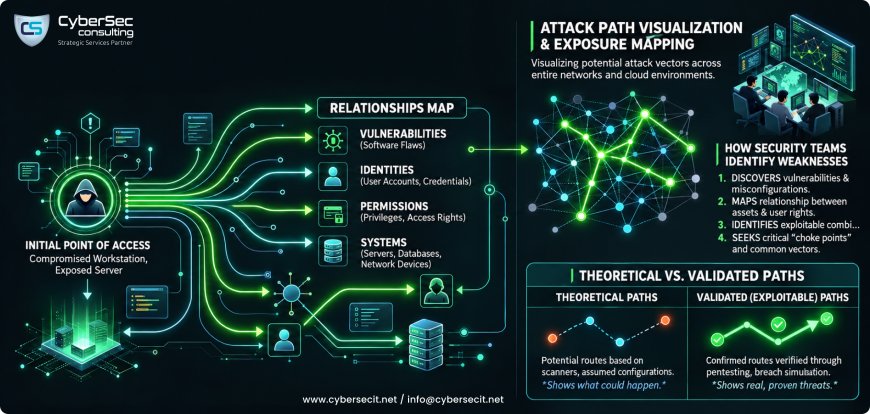
Attack Path Analysis in cybersecurity helps organizations identify how attackers could move through connected systems to reach sensitive data, privileged accounts, or critical business assets. UAE businesses rely on cloud platforms, enterprise applications, and digital infrastructure. Understanding these connections is essential for effective cybersecurity risk management.
Attack path analysis examines relationships between software vulnerabilities, user identities, access permissions, network connections, and cloud resources. A weakness in one system may create an opportunity to access another. Excessive privileges or misconfigured cloud security settings can increase this risk.
Attack path visualization presents these relationships as connected routes. Security teams can see where an attacker might gain initial access, escalate privileges, move across systems, and reach valuable business data. This exposure mapping helps organizations in Dubai, Abu Dhabi, and across the UAE identify security gaps that require immediate attention.
Effective attack path management also requires validation. A theoretical attack path indicates a possible route based on available information and assumptions. A validated attack path has been investigated to confirm that the required conditions exist and the route is realistically exploitable.
CyberSec Consulting helps UAE organizations strengthen their security posture through cybersecurity assessments, cloud infrastructure security, identity and access management, and risk management services. Understanding attack paths enables security teams to focus remediation efforts on weaknesses that could have the greatest business impact.
Why Severity-Based Vulnerability Prioritization Is Not Enough
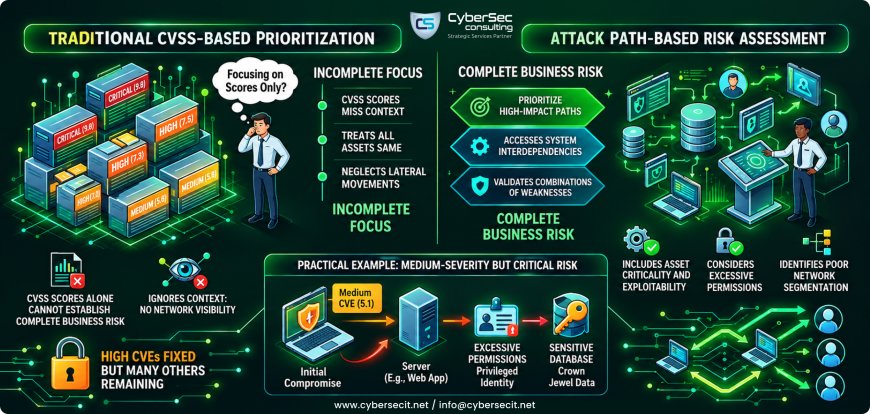
Cybersecurity teams in the UAE often manage thousands of vulnerabilities across cloud platforms, business applications, networks, and endpoints. Prioritizing these findings by severity alone can leave critical security gaps unresolved. Effective vulnerability prioritization requires a clear understanding of how each weakness could affect business operations and sensitive data.
The Common Vulnerability Scoring System (CVSS) helps assess vulnerability severity. However, a CVSS score does not fully reflect business impact, asset importance, existing security controls, or the likelihood of successful exploitation. A high severity vulnerability on an isolated test system may present less immediate risk than a moderate weakness connected to a critical business application.
Risk-based vulnerability management considers these factors together. Attack path analysis helps security teams understand how vulnerabilities, excessive permissions, and poor network segmentation can create opportunities for attackers. This supports better cybersecurity exposure management across enterprise IT environments in Dubai and Abu Dhabi.
Consider a medium-severity vulnerability in an internal application. The issue may appear manageable on its own. However, if exploiting it allows access to a privileged service account connected to a sensitive database, the potential business impact increases significantly.
UAE organizations can use attack path analysis to identify these connected risks, prioritize remediation, and strengthen cloud security, identity protection, and enterprise cybersecurity.
How Attack Path Analysis Identifies Real Cyber Risks
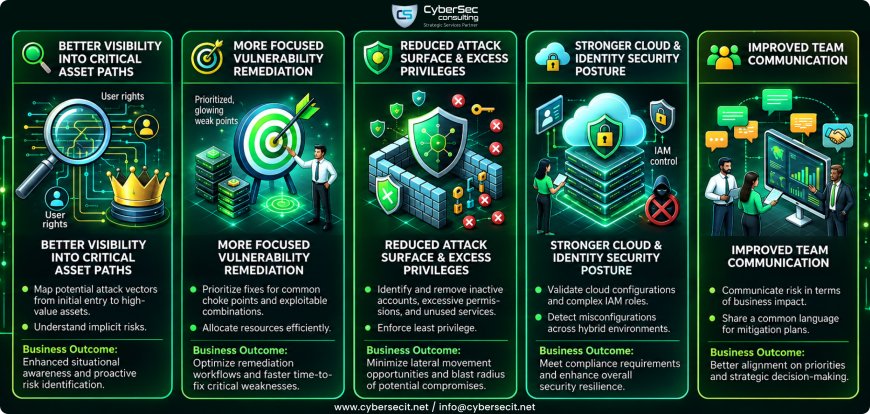
Attack path analysis helps UAE organizations uncover security weaknesses that could expose critical business systems and sensitive data. The process connects findings across cloud security, network infrastructure, endpoint protection, and identity management. Security teams gain a clearer view of how an attacker could move through the environment.
- Discover Assets, Identities, and Exposed Services - The first step identifies critical assets, cloud resources, user accounts, service accounts, open ports, and exposed applications. This discovery helps security teams understand the organization's attack surface.
- Map Relationships Between Systems - Attack path identification examines trust relationships, network connections, access permissions, and dependencies. Active Directory misconfigurations, excessive IAM permissions, and unmanaged service accounts can create opportunities for unauthorized access.
- Identify Routes to Critical Business Assets - Cloud attack path analysis reveals potential routes from exposed workloads to sensitive databases, business applications, and cloud storage. It also helps identify how attackers could move between connected systems.
- Assess Exploitability and Business Impact - Security teams evaluate vulnerability severity, available privileges, internet exposure, asset criticality, and existing security controls. This supports risk-based vulnerability management and more accurate remediation priorities.
- Validate High-Risk Findings - Potential attack paths require further investigation. Security teams verify whether the identified weaknesses and access relationships create a realistic route to critical assets. Identity security risk assessment can reveal whether compromised accounts could gain excessive privileges.
- Remediate the Weakest Links - Recommended actions may include restricting IAM permissions, strengthening Privileged Access Management (PAM), correcting Active Directory configurations, improving endpoint security, and enforcing network segmentation.
How Security Teams Prioritize Risks Using Attack Path Analysis

Security teams in the UAE often face large volumes of vulnerability alerts, cloud security findings, and identity risks. Attack Path Analysis helps organizations prioritize cyber risks based on their potential impact. It connects individual weaknesses to show which attack paths could expose critical business assets.
Assess Business Impact
Security teams should first identify assets that support essential business operations. Sensitive customer data, financial systems, cloud infrastructure, and privileged accounts require greater attention. A potential attack path to these assets may demand faster remediation than a weakness affecting a low-risk system.
Evaluate Exploitability and Access
The likelihood of exploitation depends on several factors. Internet-exposed applications, known vulnerabilities, weak authentication, and accessible services may create opportunities for attackers. Security teams should assess the access required to exploit each weakness.
Identify Privilege Escalation and Lateral Movement
Excessive permissions, exposed credentials, and misconfigured Active Directory environments can help attackers gain higher privileges or move between systems. Identity security and Privileged Access Management (PAM) controls help reduce these risks.
Review Existing Security Controls
Effective cybersecurity risk assessment considers endpoint protection, network segmentation, monitoring, and access restrictions. Teams should also assess whether these controls can detect or prevent the identified attack path.
Rank Risks and Assign Remediation
Security teams can rank attack paths by combining business impact, exploitability, asset criticality, and the effectiveness of existing controls. Each priority should have a clear remediation owner, deadline, and verification process. Critical paths to sensitive systems should be addressed urgently.
From a Minor Weakness to a Critical Attack Path
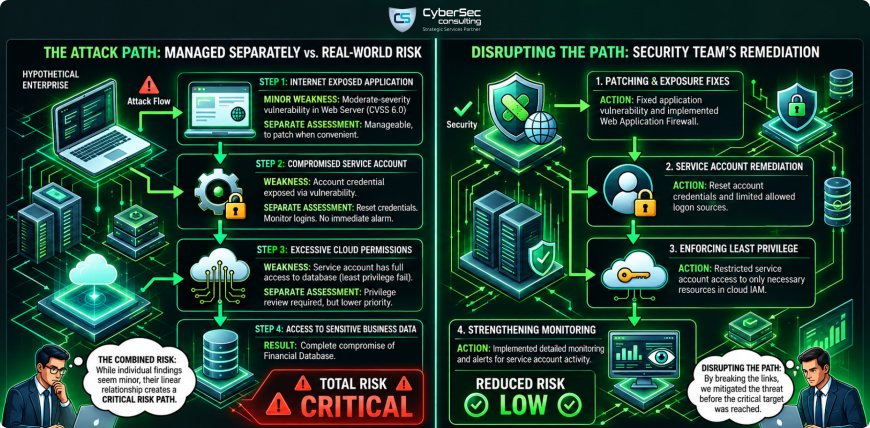
Hypothetical Scenario: Cloud Security Risks in a UAE Enterprise
Consider a UAE-based business that uses cloud applications to manage customer records and financial data. A routine security assessment identifies a medium-risk vulnerability in an internet-exposed application. Another finding reveals excessive permissions assigned to a cloud service account.
Each issue may appear manageable when reviewed separately. However, attack path analysis reveals how these weaknesses could connect and create a serious security risk.
Potential attack path:
Internet-exposed application → Compromised service account → Excessive cloud permissions → Access to sensitive business data.
An attacker who exploits the application may gain access to the service account. Excessive permissions could then allow access to sensitive cloud resources. This creates a potential route to confidential customer information or critical business data.
How Can Security Teams Break This Attack Path?

Security teams can correct the application vulnerability, restrict service account permissions, and enforce the principle of least privilege. Strong authentication, cloud activity monitoring, and timely security alerts can further reduce exposure.
This highlights why cloud security assessment and identity security risk assessment must consider connected weaknesses. Businesses in Dubai and Abu Dhabi can use attack path analysis to prioritize remediation based on actual exposure and potential business impact.
CyberSec Consulting supports enterprise cybersecurity through security assessments, cloud infrastructure security, and identity and access management services. These capabilities help organizations identify security gaps and strengthen protection for critical digital assets.
Business Benefits of Attack Path Analysis
Attack Path Analysis helps UAE businesses move beyond isolated security findings and focus on risks that could affect critical operations. It gives security teams a clearer view of how vulnerabilities, access permissions, and exposed systems connect. This insight supports better cybersecurity risk management across enterprise IT environments.
- Better Visibility into Critical Assets - Organizations can identify potential routes to sensitive data, financial systems, and cloud infrastructure. This visibility helps security teams understand where cyber threats could create the greatest business impact.
- More Focused Vulnerability Remediation - Risk-based vulnerability management helps teams address the most important weaknesses first. Security resources can focus on exploitable attack paths instead of treating every finding with equal urgency.
- Stronger Cloud and Identity Security - Attack path analysis helps identify excessive privileges, exposed credentials, and cloud misconfigurations. Corrective action can reduce the attack surface and strengthen identity security across business applications.
- Improved Security Decisions and Reporting - Clear attack path insights help security, IT, and business teams understand cybersecurity risks. Decision makers can use these findings to assign remediation priorities, support compliance efforts, and plan security investments.
How CyberSec Consulting Can Help
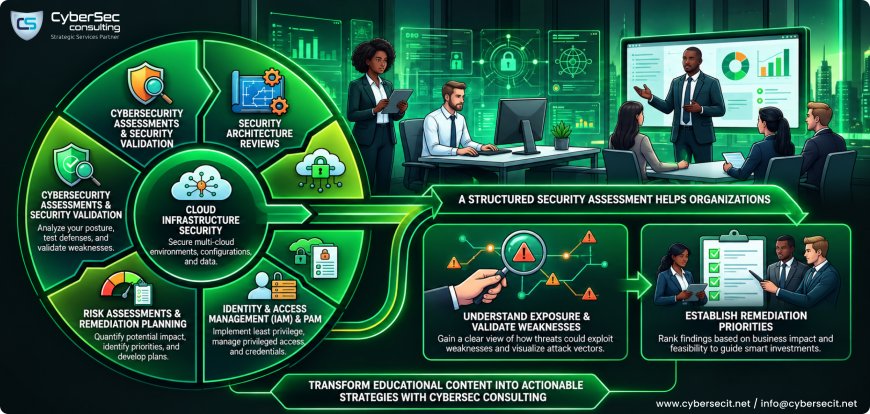
CyberSec Consulting helps UAE businesses strengthen their cybersecurity posture through security assessments, security architecture reviews, and risk management services. Our approach helps organizations identify security gaps, understand potential exposure, and establish clear remediation priorities.
Cloud security assessments help evaluate misconfigurations, exposed resources, and weaknesses across enterprise cloud environments. Identity and Access Management (IAM) and Privileged Access Management (PAM) services help organizations strengthen access controls and reduce risks linked to excessive permissions.
Cybersecurity risk assessments also help businesses understand potential threats to critical systems and sensitive data. Security teams can use these insights to make informed decisions and focus resources on the risks that matter most.
Organizations in Dubai, Abu Dhabi, and across the UAE can work with CyberSec Consulting to improve security visibility, support compliance objectives, and strengthen enterprise security.
Conclusion
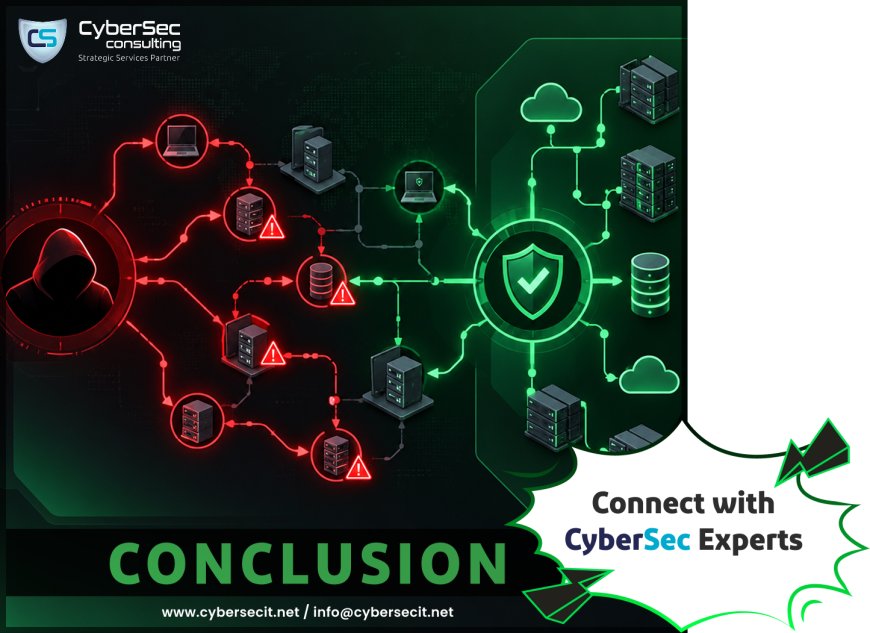
Attack Path Analysis helps organizations move beyond individual vulnerability scores and understand how security weaknesses connect. It reveals potential routes to critical systems, sensitive business data, and privileged accounts. This insight enables security teams to prioritize remediation based on exploitability, business impact, and overall risk exposure.
Businesses across the UAE need a proactive cybersecurity strategy to protect cloud infrastructure, enterprise applications, and digital assets. Combining attack path analysis with vulnerability management, identity security, and cloud security assessments helps organizations reduce cyber risks and strengthen their enterprise security posture.
CyberSec Consulting offers comprehensive cybersecurity assessment services to help businesses identify vulnerabilities, evaluate security gaps, validate risks, and establish effective remediation priorities. Our assessment services help organizations in Dubai, Abu Dhabi, and across the UAE make informed security decisions and improve cyber resilience.
Ready to Strengthen Your Cybersecurity Posture?

Choose CyberSec Consulting for professional security assessments, vulnerability assessments, penetration testing, cloud security assessments, and cybersecurity risk assessment services.
Identify your security gaps. Prioritize critical risks. Strengthen your defences.
Visit to explore our assessment services and take the next step towards stronger enterprise cybersecurity.
FAQs
What is attack path analysis in cybersecurity?
Attack path analysis identifies potential routes attackers could use to access critical systems, privileged accounts, or sensitive data. It connects vulnerabilities, access permissions, and system relationships to help organizations understand security risks and prioritize remediation. UAE businesses can use this approach to strengthen enterprise cybersecurity and protect critical digital assets.
How does attack path analysis help UAE businesses reduce cyber risks?
Attack path analysis helps businesses in Dubai, Abu Dhabi, and across the UAE identify connected security weaknesses that could expose critical assets. Security teams can prioritize high-risk attack paths, reduce excessive permissions, improve cloud security, and focus remediation efforts on threats with the greatest potential business impact.
What is the difference between attack path analysis and vulnerability assessment?
Vulnerability assessment identifies and evaluates security weaknesses across systems, applications, and networks. Attack path analysis examines how these weaknesses connect and could provide routes to critical assets. Both approaches support cybersecurity risk management. Combining them helps organizations improve vulnerability prioritization and strengthen their overall security posture.
How does attack path analysis improve cloud security?
Cloud attack path analysis identifies potential routes through misconfigured cloud resources, exposed applications, compromised identities, and excessive access permissions. Security teams can use these findings to strengthen cloud infrastructure security, enforce least privilege, improve monitoring, and protect sensitive business data.
How does attack path analysis support identity and access management?
Attack path analysis helps identify risks involving compromised accounts, excessive user privileges, exposed credentials, and misconfigured Active Directory environments. Identity and Access Management (IAM) and Privileged Access Management (PAM) controls help restrict unauthorized access and reduce opportunities for privilege escalation.
How can CyberSec Consulting help organizations identify cybersecurity risks in the UAE?
CyberSec Consulting offers cybersecurity assessment services, cloud infrastructure security, identity and access management, and risk management services. These capabilities help organizations identify vulnerabilities, evaluate security gaps, and establish remediation priorities. Businesses across the UAE can explore CyberSec Consulting to strengthen their enterprise security posture.
What's Your Reaction?
 Like
0
 Dislike
0
 Love
0
 Funny
0
 Angry
0
 Sad
0
 Wow
0