




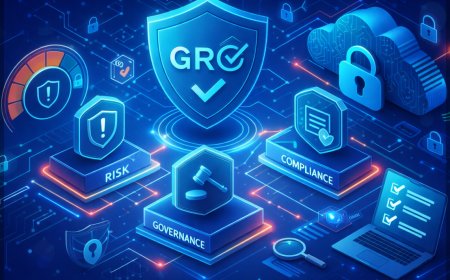

























How Security Architecture Reviews Identify Hidden Enterprise Security Weaknesses
Continuous security architecture review helps UK organisations identify emerging cyber risks, validate security controls, strengthen Zero Trust security, and improve cyber resilience.



Introduction
Security tools provide valuable visibility across modern enterprise environments. Security dashboards can display alerts, vulnerabilities, endpoint status, identity events, compliance results, and security control performance. These indicators help security teams understand what is happening across their technology environment.
Visibility does not always provide complete security assurance. A dashboard may show that security controls are active. It may not show how those controls interact across the wider enterprise architecture.
A vulnerability management platform can identify security weaknesses. An identity platform can report access events. An endpoint security solution can show device health. A compliance platform can indicate control status. Each tool provides an important view of the environment.
Security risks can emerge between these separate views.
Weak integration between security controls can create blind spots. Excessive privileges can remain unnoticed. Identity permissions can conflict with business requirements. Network segmentation can introduce unexpected access paths. Cloud services can create new dependencies. Legacy systems can also introduce architectural security gaps.
Security architecture reviews help connect these individual security views.
A security architecture review examines how security controls, technologies, applications, networks, identities, data, and business processes work together. The review can identify weaknesses that individual security tools may miss.
Enterprise security architecture also needs to support cybersecurity risk management, Zero Trust security, identity and access management, cloud security, network security, data protection, and regulatory compliance.
UK organisations face increasing requirements around cyber risk, resilience, data protection, and security governance. Security architecture reviews can help security leaders examine whether existing controls support business requirements and regulatory expectations.
The goal is not simply to collect more security alerts.
The goal is to understand whether the entire security architecture provides effective protection.
A structured cybersecurity architecture assessment can uncover control gaps, technology dependencies, access risks, configuration weaknesses, and architectural issues. It can also help CISOs, CIOs, IT managers, and security teams establish clearer priorities for security improvement.
Security visibility shows what security tools can detect.
Security assurance examines whether the wider security architecture can withstand real-world threats.
What is a Security Architecture Review?

A security architecture review is a structured evaluation of how security has been designed across an organisation’s technology environment. The review examines whether security controls work together to protect systems, identities, applications, networks, and data.
- Security architecture assessment looks beyond individual security tools. It evaluates the relationships between technologies, processes, access paths, and security controls. This approach helps organisations identify cybersecurity risks, architectural weaknesses, security gaps, and control failures.
- Architecture evaluation assesses the overall design of the IT environment. It considers how security requirements are incorporated into infrastructure, applications, cloud platforms, and business systems.
- Security control placement examines where controls are deployed. The review checks whether controls provide suitable protection at critical points across the environment.
- System dependencies are assessed to identify relationships between applications, infrastructure, identity services, databases, and security platforms. Hidden dependencies can create additional cybersecurity risks.
- Identity and access flows are reviewed to understand how users, administrators, service accounts, and third parties access business resources. This assessment supports IAM security, identity governance, privileged access management, and Zero Trust security.
- Network segmentation is examined to determine how systems and workloads communicate. Effective segmentation can reduce unnecessary access and limit the potential impact of a security incident.
- Cloud architecture receives specific attention across public, private, and hybrid cloud environments. Reviews can assess cloud security controls, identity permissions, workload access, configuration, and connectivity.
- Data flows are mapped to understand how sensitive information moves between systems. This supports data security, data protection, and regulatory requirements relevant to UK organisations.
- Application connections are assessed across APIs, databases, authentication services, internal platforms, and external applications. Weak application connections can create security exposure across connected environments.
- Security monitoring is reviewed to determine whether important events can be detected and investigated. This can include SIEM integration, security logging, identity monitoring, endpoint monitoring, and threat detection.
- Third-party integrations are also assessed. Suppliers, partners, managed service providers, SaaS platforms, and external applications can introduce additional access and security risks.
- A cybersecurity architecture assessment brings these areas together. It evaluates whether security has been properly designed into the environment rather than added only around individual systems.
- UK organisations can use security architecture reviews to support cyber risk management, Zero Trust architecture, cloud security assessment, IAM assessment, network security, application security, and regulatory compliance.
- The outcome is a clearer view of how security controls operate across the enterprise. It also helps CISOs, CIOs, IT managers, and security teams identify areas that require stronger protection, better integration, or further security validation.
Why Hidden Security Weaknesses Exist in Enterprise Environments
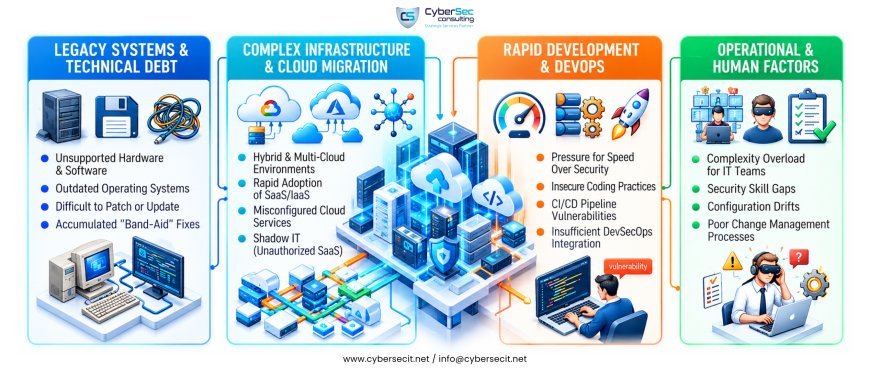
Enterprise technology environments continue to become more connected. Applications, cloud platforms, identities, networks, data, and third-party services often depend on each other.
Security teams may have strong monitoring across individual systems. Hidden risks can still exist across the connections between those systems. A cybersecurity architecture assessment helps identify these gaps and provides a broader view of enterprise security.
Complex Technology Environments
- Modern organisations often operate a combination of legacy infrastructure, cloud platforms, SaaS applications, enterprise applications, databases, and modern digital services.
- Each technology can have different security requirements. Different authentication methods, access models, configurations, and monitoring capabilities can also exist.
- Complexity can create cybersecurity vulnerabilities that are difficult to identify through individual security assessments. UK organisations managing hybrid IT environments need visibility across their complete technology architecture.
Security Tools Operate in Silos
- Security platforms often focus on specific areas of the environment. SIEM tools monitor security events. EDR platforms monitor endpoints. IAM platforms monitor identities and access. Vulnerability management tools identify technical weaknesses.
- Each platform can report healthy control performance. Security gaps can still exist between these technologies.
- Disconnected security monitoring can make it difficult to understand the complete attack path. **Security architecture reviews** help connect these individual security views.
Excessive Trust Between Systems
- Trusted connections can create hidden attack paths across enterprise environments.
- Applications may trust identity platforms. Cloud workloads may communicate with internal systems. Service accounts may have access to multiple resources. Third-party applications may connect to sensitive business services.
- Excessive trust can increase identity security risks, privileged access risks, and lateral movement opportunities. Architecture reviews examine these relationships to identify unnecessary trust and excessive access.
Architecture Changes Over Time
- Enterprise architecture rarely remains static.
- Business expansion, acquisitions, cloud migration, new applications, infrastructure upgrades, and digital transformation can change the security environment. New connections can also introduce new access paths.
- Security controls that were effective during the original architecture design may require reassessment after major changes.
- Regular cybersecurity risk assessments and security architecture reviews can help UK organisations identify emerging security gaps.
Security Controls May Not Align
- Security controls can exist across every major part of an enterprise environment. The challenge is ensuring that those controls work together.
- MFA may protect user authentication. IAM may manage access. PAM may protect privileged accounts. Network security may control connectivity. EDR may monitor endpoints. SIEM may collect security events.
- These controls need to support the complete security architecture.
What Does a Security Architecture Review Examine
| Architecture Area | Review Focus |
|---|---|
| Identity & Access | Authentication, authorization, privileged access |
| Network Security | Segmentation, trust zones, traffic flows |
| Cloud Security | Cloud controls, configurations, identities |
| Application Security | Application architecture and security controls |
| Data Security | Data flows, storage, encryption and access |
| Endpoint Security | Endpoint controls and integration |
| Monitoring | Logging, detection and security visibility |
| Third Party Access | Vendor connectivity and external trust |
| Security Operations | Detection, response and escalation |
| Governance | Policies, standards and security ownership |
7 Hidden Weaknesses a Security Architecture Review Can Reveal

A security architecture review can reveal risks that individual security tools may not identify. The assessment examines relationships between identities, applications, networks, cloud services, data, and security controls.
UK organisations can use a security architecture assessment to strengthen cybersecurity risk management and improve enterprise security visibility. The following seven areas can expose important weaknesses.
Excessive Privileged Access
- Privileged accounts can provide extensive access across critical systems. Unnecessary administrative permissions can increase the impact of a compromised account.
- A security architecture review examines privileged access management, administrator roles, service accounts, access pathways, and privilege escalation routes.
- The assessment can identify excessive privileges and unnecessary administrative access. These findings can support stronger IAM security, least privilege, and Zero Trust security practices.
Weak Network Segmentation
- Poor network segmentation can allow attackers to move between systems after gaining initial access.
- Critical applications, databases, user networks, cloud workloads, and administrative environments may require different levels of protection.
- A network security assessment can examine communication paths between these environments. The review can identify unnecessary connectivity and potential lateral movement opportunities.
- Strong network architecture supports cybersecurity risk management and reduces unnecessary exposure across enterprise environments.
Uncontrolled System Trust Relationships
- Enterprise systems frequently rely on trusted connections.
- Applications may connect to databases. Identity platforms may provide authentication services. Cloud workloads may communicate with internal infrastructure. APIs may connect business applications.
- Uncontrolled trust relationships can create hidden attack paths.
- A security architecture review examines authentication flows, application connections, database relationships, identity dependencies, and infrastructure trust.
- The assessment can identify unnecessary trust and access relationships that require stronger security controls.
Security Monitoring Blind Spots
- Security monitoring depends on effective visibility across critical systems and data flows.
- Some applications may generate limited security logs. Certain cloud services may have incomplete monitoring. Important identity events may also remain outside central security monitoring.
- These gaps can delay threat detection and incident response.
- A cybersecurity architecture assessment can examine SIEM integration, security logging, identity monitoring, endpoint visibility, application monitoring, and cloud security monitoring.
- The goal is to identify areas where important security events may not receive adequate visibility.
Insecure Cloud Connectivity
- Cloud adoption can introduce new security dependencies.
- Hybrid cloud environments may connect cloud platforms with internal networks, identity services, applications, and databases.
- Exposed services, excessive permissions, weak authentication, and poorly controlled connectivity can increase cloud security risks.
- A cloud security assessment can examine cloud access, identity relationships, network connectivity, exposed services, APIs, and workload communication.
Third-Party Security Gaps
- Third-party services can create additional access pathways into enterprise environments.
- Suppliers, managed service providers, contractors, SaaS platforms, and technology partners may require remote or application access.
- Uncontrolled vendor access can increase cybersecurity risk. Excessive permissions can also remain active beyond business requirements.
- A security architecture review can examine third-party access, remote connections, authentication mechanisms, APIs, data sharing, and external integrations.
Architecture and Compliance Misalignment
- Compliance controls can provide important security requirements. Meeting individual compliance requirements does not automatically demonstrate that the complete security architecture is secure.
- An organisation may satisfy specific control requirements while still having excessive access, weak system trust, poor segmentation, or monitoring gaps.
- A cybersecurity architecture assessment provides a broader view of these relationships.
- The review can consider security architecture alongside UK cybersecurity requirements, data protection, risk management, access control, cloud security, and security monitoring.
- This approach helps CISOs, CIOs, IT managers, and security teams understand where compliance controls and wider security architecture need stronger alignment.
Security Architecture Review vs Vulnerability Assessment

| Vulnerability Assessment | Security Architecture Review |
| Finds known vulnerabilities | Examines architectural weaknesses |
| Focuses on systems and assets | Focuses on relationships and design |
| Identifies technical weaknesses | Identifies structural security gaps |
| Often tool-driven | Combines documentation, technical analysis, and expert review |
| Produces vulnerabilities | Produces architecture risks and recommendations |
How the Security Architecture Review Process Works
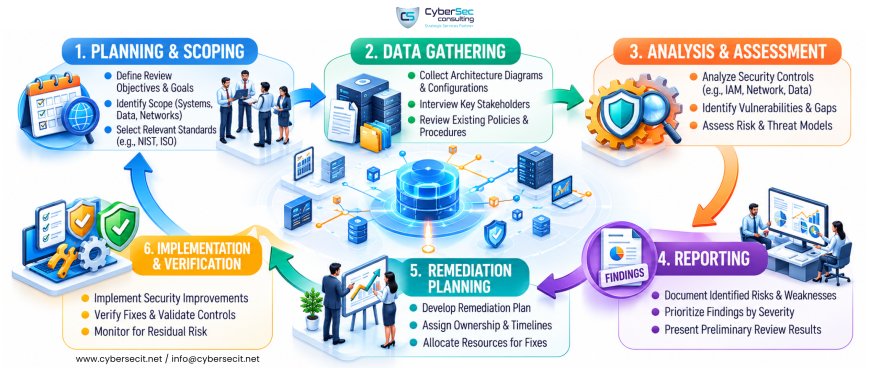
A security architecture review follows a structured process to understand how security controls operate across an enterprise environment. The process examines networks, applications, identities, cloud platforms, data, security controls, and external connections.
A structured cybersecurity architecture assessment can help UK organisations identify security gaps and improve their overall cyber risk management. The review can also support Zero Trust security, IAM security, cloud security, network security, and regulatory requirements.
Architecture Discovery
The first stage establishes a clear view of the existing technology environment. The assessment team reviews network diagrams, application architecture, cloud environments, infrastructure, identity flows, data flows, and security documentation.
Relevant information Include
- Network architecture and connectivity
- Application dependencies
- Cloud infrastructure
- Identity and access flows
- Critical business systems
- Data locations and movement
- Security policies
- Existing security controls
- Third-party connections
Security Control Mapping
- The second stage maps existing security controls across the technology environment.
- Controls can include identity and access management, privileged access management, network security, endpoint security, application security, cloud security, data protection, vulnerability management, and security monitoring.
- Each control is reviewed against relevant systems, applications, identities, and data flows.
- Control mapping helps identify areas where security protections are strong, duplicated, disconnected, or insufficient.
Attack Path Analysis
The third stage examines potential attack paths across the environment. Security specialists assess how an attacker could potentially move between systems, identities, applications, networks, and trust zones.
Analysis Consider
- Privileged accounts
- Compromised user identities
- Lateral movement
- Excessive permissions
- Trusted connections
- Application dependencies
- Cloud access
- Third-party connectivity
Gap Identification
- The fourth stage focuses on identifying security weaknesses.
- Findings can include architectural design issues, security control gaps, excessive trust, weak network segmentation, excessive privileges, insecure cloud connectivity, and security monitoring limitations.
- The assessment also considers whether security controls provide adequate protection across important attack paths.
- This stage can support cybersecurity risk assessment, security gap analysis, IAM assessment, and enterprise security improvement.
Remediation Roadmap
The final stage converts assessment findings into practical recommendations. Recommendations can be prioritised according to risk, business impact, technical complexity, and implementation requirements.
Remediation Roadmap Include
- Critical Security Improvements
- Identity and Access Recommendations
- Network Architecture Changes
- Cloud Security Improvements
- Monitoring Enhancements
- Third-party Access Controls
- Security Control Integration
- Long-term Architecture Improvements
How Architecture Reviews Support Zero Trust Security
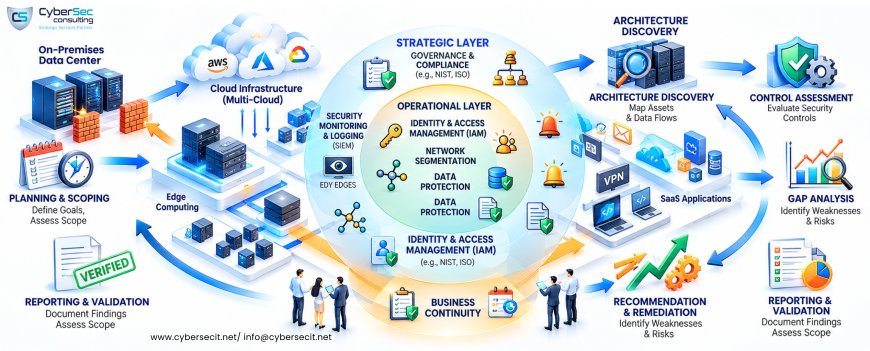
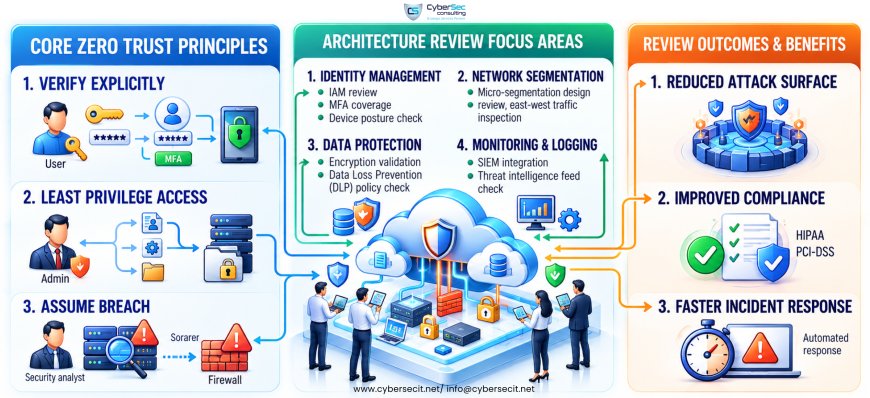
Zero Trust Architecture is built around continuous verification and controlled access. The model assumes that access should be verified based on identity, device, application, context, and risk.
A security architecture review helps organisations examine whether these principles are reflected across their actual technology environment. The review connects Zero Trust security, identity and access management, network security, cloud security, and privileged access management.
Continuous Verification
- Zero Trust security requires access to remain subject to verification.
- Security architecture reviews can examine authentication, authorisation, session controls, and access policies. The assessment can identify areas where access remains overly dependent on previous trust.
- Continuous verification also supports stronger identity security and access control.
Least Privilege
- Least privilege limits access to what users and systems need for their roles.
- A security architecture assessment can review user permissions, administrator privileges, service accounts, and application access.
- Excessive permissions can create additional cybersecurity risk. Regular access validation can help identify unnecessary privileges.
Identity-Centric Security
- Identity is a key component of Zero Trust Architecture.
- Users, administrators, contractors, service accounts, applications, and workloads can all require controlled access.
- A Zero Trust security assessment can examine identity flows, authentication methods, access policies, and identity governance. The review can also assess how IAM controls interact with other security technologies.
Micro Segmentation
- Microsegmentation limits communication between workloads, applications, systems, and network zones.
- Security architecture reviews can examine whether network boundaries reflect business and security requirements. The assessment can identify unnecessary connectivity and potential lateral movement paths.
- Network segmentation can therefore support Zero Trust implementation and broader network security objectives.
Device Trust
- Zero Trust decisions can consider the security state of the device requesting access.
- Architecture reviews can examine how device identity, endpoint security, authentication, and access policies interact.
- Security teams can identify gaps where unmanaged or insufficiently protected devices may receive inappropriate access to business resources.
Application Access
- Applications need controlled and monitored access to business resources.
- A security architecture review can examine application authentication, API connections, identity dependencies, databases, cloud services, and user access.
Privileged Access Management
- Privileged accounts require stronger controls because they can access critical systems.
- A Zero Trust architecture review can examine Privileged Access Management, administrator access, privilege elevation, privileged sessions, and credential controls.
- The assessment can identify excessive privileges and unnecessary administrative pathways.
Continuous Monitoring
- Zero Trust security requires ongoing visibility into access and activity.
- Security architecture reviews can examine SIEM integration, identity monitoring, endpoint monitoring, cloud monitoring, security logs, and threat detection capabilities.
- Continuous monitoring can help security teams identify abnormal access patterns and potential identity threats.
Validating Zero Trust Architecture
- A Zero Trust strategy requires more than implementing individual security technologies.
- A security architecture assessment can examine whether Zero Trust principles are reflected across identities, devices, applications, networks, cloud environments, data, and privileged access.
- UK organisations can use this approach to support Zero Trust Architecture, cybersecurity risk management, IAM security, cloud security, network security, and wider cyber resilience objectives.
Security Architecture Review Across Modern Enterprise Environments

Modern enterprise environments connect cloud platforms, on-premises infrastructure, SaaS applications, identities, networks, applications, and sensitive data. A security architecture review examines how these environments interact. The assessment helps identify security gaps across technology layers and access pathways.
UK organisations can use cybersecurity architecture assessments to strengthen cyber risk management, cloud security, identity security, network security, and application security.
Cloud Security Architecture Review
- Cloud environments can introduce complex security relationships between workloads, identities, APIs, applications, and networks.
- A cloud security architecture review examines cloud workloads, IAM permissions, APIs, connectivity, authentication, data flows, and security controls.
- The assessment can identify excessive cloud permissions, exposed services, insecure connections, and weak identity relationships.
- Cloud architecture reviews can support cloud security assessment, Zero Trust security, IAM security, and secure cloud adoption.
Hybrid IT Security Architecture Review
- Hybrid IT environments can combine on-premises infrastructure with cloud platforms, SaaS applications, remote access, and third-party services.
- These connections can create complex dependencies and additional security pathways.
- A hybrid IT security architecture review examines network connectivity, identity integration, application dependencies, data flows, authentication, and security monitoring.
- The assessment can identify security gaps across connected environments. UK organisations can use this approach to improve hybrid cloud security and enterprise cybersecurity.
Identity Security Architecture Review
- Identity controls influence access to applications, infrastructure, cloud platforms, databases, and sensitive information.
- An identity security architecture review examines IAM, PAM, SSO, privileged accounts, service accounts, authentication, authorisation, and identity lifecycle processes.
- The review can identify excessive permissions, unnecessary privileged access, inactive accounts, weak authentication flows, and identity dependencies.
- Strong identity architecture supports identity and access management, Privileged Access Management, Zero Trust Architecture, and access governance.
Network Security Architecture Review
- Network architecture determines how users, applications, workloads, devices, and systems communicate.
- A network security architecture review examines segmentation, firewalls, remote access, network connectivity, trust boundaries, VPN access, and traffic flows.
- The assessment can identify unnecessary connections and weak segmentation that may increase lateral movement opportunities.
- Network architecture reviews can support network security assessment, Zero Trust implementation, secure remote access, and cyber risk management.
Application Security Architecture Review
- Enterprise applications often connect to APIs, databases, identity platforms, cloud services, and external systems.
- These relationships can create security risks across application and data flows.
- An application security architecture review examines application dependencies, APIs, authentication, authorisation, integrations, data flows, and security controls.
- The assessment can identify insecure application connections, excessive access, weak authentication, and sensitive data exposure.
- Application architecture reviews support application security, API security, data protection, IAM security, and secure digital transformation.
Building a Connected Security Architecture
- Each technology layer contributes to the overall cybersecurity posture. Cloud, identity, network, application, and data security therefore need to operate as part of a connected architecture.
- A structured security architecture assessment helps UK security leaders examine these relationships. The process can reveal gaps that may remain hidden when each technology is assessed separately.
- CISOs, CIOs, IT managers, and security teams can use these findings to strengthen enterprise security architecture, Zero Trust security, cybersecurity risk management, and security control effectiveness.
What Happens After a Security Architecture Review
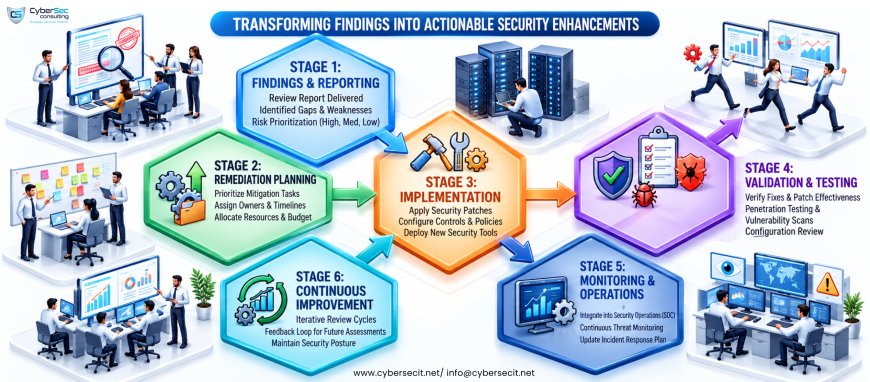
A security architecture review creates value when assessment findings are converted into practical security improvements. A clear set of deliverables helps security leaders understand identified risks and determine the next steps.
UK organisations can use these outputs to support cybersecurity risk management, security governance, Zero Trust security, cloud security, identity security, and regulatory compliance.
- Executive Security Architecture Report - An executive report provides a clear summary of the security architecture assessment. The report can highlight major findings, business risks, affected systems, and key security priorities. Senior leaders can use this information to understand the wider cybersecurity posture.
- Architecture Gap Assessment - An architecture gap assessment documents weaknesses across the technology environment. Findings can cover identity, network security, cloud architecture, applications, data flows, security monitoring, and third-party connections. The assessment provides a structured view of areas that require improvement.
- Risk Register - A cybersecurity risk register records identified risks and their potential business impact. Each finding can include its affected asset, risk context, priority, and recommended treatment. Security teams can use the register to track risk remediation and security improvement activities.
- Security Control Recommendations - Recommendations can address weaknesses identified during the review. Actions may include stronger access controls, improved network segmentation, enhanced monitoring, cloud security improvements, or better identity governance. Recommendations can also support IAM security, Privileged Access Management, application security, and data protection.
- Attack Path Findings - Attack path analysis can identify potential routes through which a security incident could move across connected systems. Findings can highlight excessive privileges, trusted connections, weak segmentation, identity dependencies, and exposed services. These insights can help security teams strengthen defensive controls around critical attack paths.
- Prioritised Remediation Roadmap - A remediation roadmap converts technical findings into practical actions. Priorities can consider cybersecurity risk, business impact, technical complexity, and implementation requirements. This approach helps UK organisations plan security improvements in a structured way.
- Security Architecture Improvement Plan - An improvement plan provides longer-term direction for enterprise security architecture. The plan can cover identity security, cloud security, network architecture, application security, data protection, monitoring, and security control integration. CISOs and CIOs can use the plan to align security architecture improvements with business requirements.
- Compliance Alignment Recommendations - Security architecture reviews can also identify areas where architecture needs stronger alignment with applicable requirements. Recommendations may support UK cybersecurity compliance, data protection, security governance, risk management, and organisational security controls. Compliance alignment can form part of a wider cybersecurity improvement programme.
- Turning Findings Into Security Improvements - The review should provide more than a list of technical weaknesses. Findings should help organisations understand where risks exist and how they can be addressed. A structured security architecture assessment can therefore support practical decisions across identity, cloud, network, application, data, and security monitoring environments.
When Should an Enterprise Conduct a Security Architecture Review
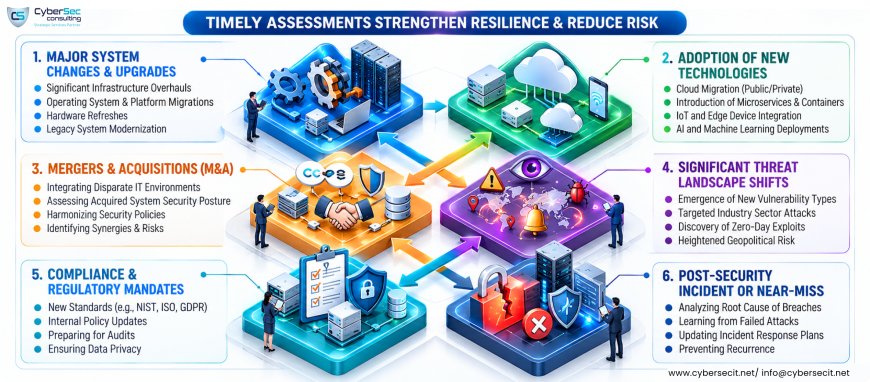
A security architecture review can be valuable when major technology, business, or security changes affect the enterprise environment. Regular reviews can also help UK organisations identify emerging cybersecurity risks, validate security controls, and maintain a stronger cybersecurity posture.
Several business and technology events can trigger a security architecture assessment.
- Major Cloud Migration - Cloud migration can change identity flows, network connectivity, application dependencies, and data movement. A cloud security architecture review can identify risks before critical workloads move into cloud environments.
- New Application Deployment - New applications can introduce APIs, databases, authentication requirements, and external integrations. An application security architecture review can assess these connections before the application becomes part of the wider enterprise environment.
- Digital Transformation - Digital transformation often introduces new platforms, services, applications, and connected technologies. Security architecture reviews can help organisations integrate security requirements into these changing environments.
- Merger or Acquisition - Mergers and acquisitions can bring together separate networks, identity systems, applications, cloud platforms, and security controls. A security architecture assessment can identify incompatible architectures, excessive access, duplicated systems, and security gaps.
- Data Centre Transformation - Data centre changes can affect network segmentation, application connectivity, identity services, data flows, and security monitoring. A network security architecture review can help assess these changes before critical systems are migrated.
- IAM or PAM Implementation - IAM and PAM programmes can significantly change how users, administrators, service accounts, and applications access resources. An identity security architecture review can examine authentication, authorisation, privileged access, identity lifecycle, and access governance.
- Zero Trust Initiative - Zero Trust programmes require changes across identity, devices, applications, networks, data, and access policies. A Zero Trust Architecture review can assess whether Zero Trust principles are reflected across the technology environment.
- Regulatory Requirements - UK organisations may need to review security architecture when regulatory or contractual requirements change. Architecture assessments can support cybersecurity governance, risk management, data protection, and compliance alignment.
- Major Security Incident - A significant security incident can expose weaknesses across architecture, identity, network security, applications, or monitoring. A post-incident security architecture review can help identify control gaps and architectural weaknesses that require remediation.
- Network Redesign - Network redesign can change segmentation, firewall policies, remote access, trust boundaries, and system connectivity. A security architecture review can assess whether the redesigned network supports the organisation’s cybersecurity requirements.
- Significant Third-Party Integration - New suppliers, SaaS platforms, managed services, and external integrations can introduce additional access pathways. A third-party security assessment can examine authentication, connectivity, data sharing, vendor access, and security controls.
- Rapid Business Expansion - Business growth can increase the number of users, applications, locations, cloud services, and third-party connections. Security architecture reviews can help organisations scale security controls alongside business growth.
- Building Security Into Business Change - Security architecture reviews do not need to be limited to annual assessment cycles. Major technology and business changes can create new dependencies and security risks. Reviewing architecture at key points can help UK organisations identify these risks earlier.
Why Continuous Architecture Review Matters

Enterprise security architecture should not be treated as a one-time exercise. Technology environments change constantly. Each change can introduce new security risks, access paths, dependencies, and compliance challenges.
New applications can create new attack surfaces. New users can change identity and access requirements. New integrations can introduce additional trust relationships. Cloud workloads can create new connectivity and configuration risks.
Technology upgrades can also change how security controls operate. Business acquisitions can introduce legacy systems, unfamiliar networks, and different security policies. Vendor connections can expand external access to critical systems. Regulatory changes can also require updates to security controls and governance.
Key Changes That Can Affect Security Architecture
A continuous security architecture review helps organisations evaluate changes such as:
- New business applications and digital services
- New users, roles, and privileged accounts
- New application and API integrations
- Cloud workloads and hybrid cloud environments
- Technology upgrades and infrastructure changes
- Business acquisitions and system consolidation
- Vendor and third-party connections
- New cybersecurity and regulatory requirements
Security Architecture Requires Continuous Validation

Periodic security architecture reviews help UK organisations validate whether security controls still support the current technology environment. Security architecture assessment can identify excessive privileges, weak network segmentation, insecure integrations, exposed services, monitoring gaps, and uncontrolled access paths.
Continuous security validation also supports Zero Trust Architecture. It helps organisations review identity security, privileged access management, authentication, authorisation, device trust, and application access. Security architecture consulting can further connect technical findings with cyber risk management and compliance requirements.
A continuous review approach helps maintain a stronger cybersecurity posture as the business evolves. It also supports cyber resilience, security gap analysis, and long-term security architecture improvement. CyberSec Consulting helps organisations assess security architecture, identify hidden security weaknesses, and build practical remediation plans aligned with business and compliance requirements.
Conclusion

Enterprise security depends on more than individual security tools. Vulnerability scanners, SIEM platforms, endpoint security, and compliance tools provide valuable visibility. They may not reveal weaknesses created by system relationships, trust paths, and security architecture decisions.
A security architecture review provides a broader view of enterprise security. It examines how identity, networks, cloud platforms, applications, data and security controls work together. It can expose security gaps that remain hidden during routine security monitoring.
Regular cybersecurity assessments can help organisations validate their security architecture as their technology environment changes. Cloud adoption, remote access, third-party integrations, and digital transformation can introduce new risks.
A structured enterprise security architecture assessment helps security teams understand these risks. It also provides a practical path towards stronger security controls, better risk management, and improved cyber resilience.
Find the Security Weaknesses Your Security Dashboard Cannot Show.
Security dashboards provide important information about alerts, vulnerabilities, endpoints, and identity activity. A dashboard may not show how weaknesses connect across the wider technology environment.
CyberSec provides security assessment services that examine enterprise security architecture at a deeper level. Our approach helps UK organisations identify security gaps across infrastructure, cloud environments, identities, applications and critical data.
Our enterprise security architecture assessment can examine:
- Enterprise Security Architecture Assessment - Review security architecture, technology dependencies, trust relationships and control coverage.
- Network Security Architecture Review - Assess network segmentation, firewall architecture, remote access and internal trust boundaries.
- Cloud Security Architecture Assessment - Review cloud security controls, cloud identity, connectivity, workloads and exposure risks.
- IAM and PAM Architecture Review - Assess identity governance, privileged access, authentication, authorisation and access pathways.
- Security Control Assessment - Evaluate whether security controls provide appropriate protection across critical systems and business processes.
- Attack Path Analysis - Identify potential routes between identities, applications, networks, cloud resources, and sensitive data.
- Security Gap Identification - Detect architectural weaknesses, control gaps, excessive privileges, and security visibility gaps.
- Risk Prioritisation - Organise identified risks based on potential business impact and security exposure.
- Remediation Planning - Develop practical recommendations to strengthen security architecture and improve cyber resilience.
CyberSec helps organisations move beyond security monitoring towards stronger security assurance. Our assessment approach supports security leaders seeking greater visibility across complex enterprise environments.
A focused cybersecurity architecture review can help identify weaknesses before they develop into larger security risks. It can also support cyber risk management, Zero Trust security, cloud security, identity security, and broader enterprise cybersecurity strategy.
For organisations looking for cybersecurity assessment services in the UK, CyberSec can help assess the security architecture, identify hidden weaknesses, and develop a clear remediation roadmap.
Identify what your security dashboard cannot show.
Talk to CyberSec about an enterprise security architecture assessment and strengthen your organisation's security posture with a structured, risk-focused approach.
What's Your Reaction?
 Like
0
 Dislike
0
 Love
0
 Funny
0
 Angry
0
 Sad
0
 Wow
0