

















How does a ransomware attack progress from a phishing email and initial access to full-scale business disruption
Explore ransomware prevention and cybersecurity services in the UAE. Strengthen business resilience with security assessments, IAM, PAM, and threat monitoring.

Introduction
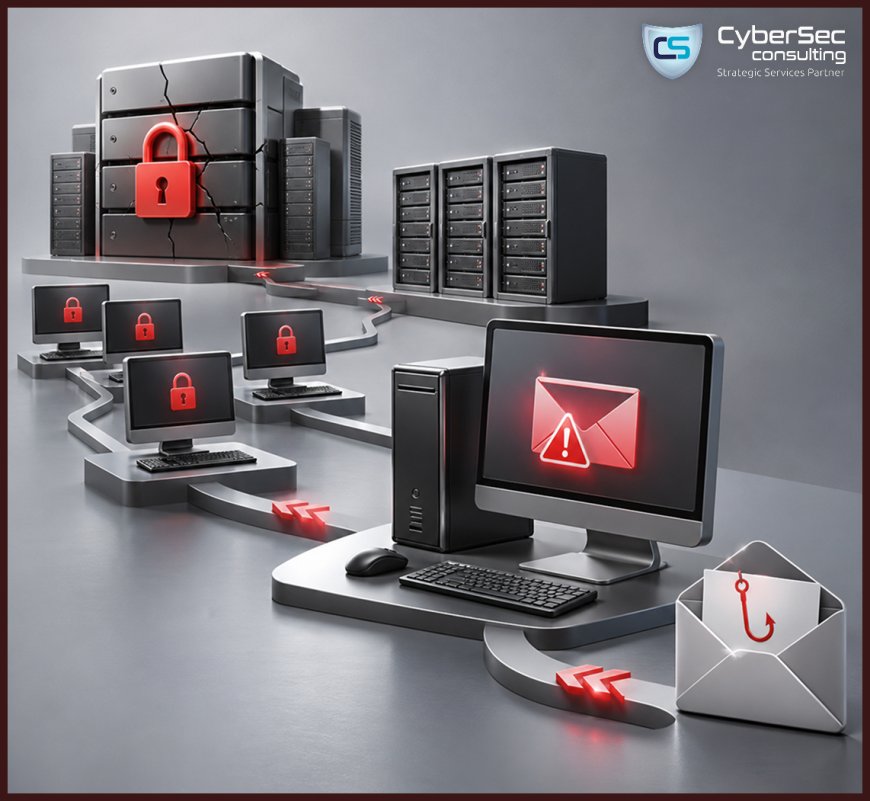
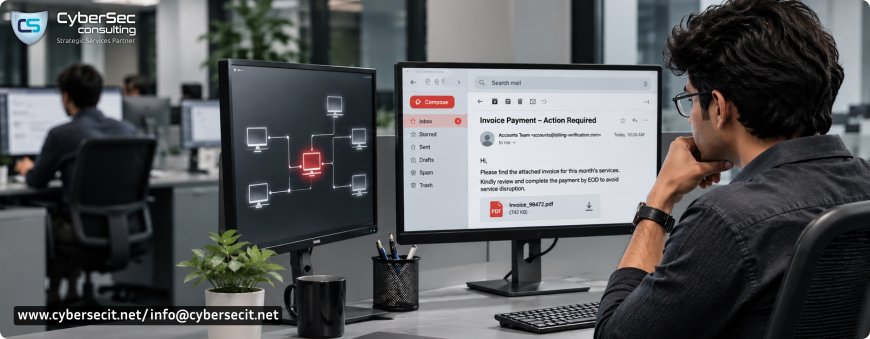
A ransomware attack does not always begin with an advanced technical exploit. Sometimes, it starts with an ordinary-looking email that convinces an employee to click a malicious link, download an infected attachment, or share corporate login credentials. One small interaction can allow attackers to enter an organisation's network and compromise critical business systems.
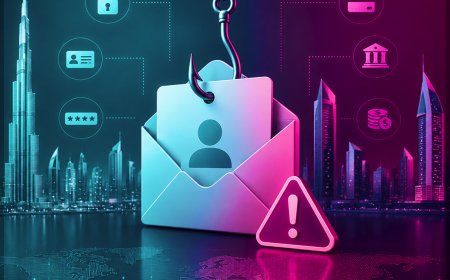
Phishing remains one of the most effective initial access techniques used in cyberattacks. Attackers often impersonate trusted suppliers, financial institutions, business partners, or senior executives. Their emails are designed to create urgency and encourage employees to act without verifying the request. A single successful phishing attempt can expose sensitive information, compromise user accounts, and introduce malware into corporate environments.
The risk extends far beyond the compromised mailbox. Once attackers gain access, they may steal credentials, exploit excessive permissions, and move across connected systems. Weak identity controls and insufficient endpoint monitoring can make it easier to reach privileged accounts, critical applications, and sensitive business data. These activities can eventually lead to ransomware deployment, data encryption and operational disruption.
Businesses across the UAE face growing cybersecurity challenges as cloud adoption, digital banking, connected infrastructure and enterprise applications expand their attack surfaces. Organisations in Dubai, Abu Dhabi and other major business centres need stronger phishing protection, ransomware prevention, email security and enterprise cybersecurity solutions to reduce these risks.
Effective ransomware defence requires more than email filtering. Organisations need continuous security assessments, identity and access management (IAM), privileged access management (PAM), endpoint security and proactive threat monitoring. These controls help identify weaknesses before attackers can turn an individual phishing incident into a wider security breach.
Understanding how phishing leads to ransomware is the first step towards building a stronger cybersecurity posture. Businesses need visibility across users, identities, endpoints, networks, and cloud environments to detect suspicious activity and prevent attacks from escalating.
Ransomware Attack Lifecycle
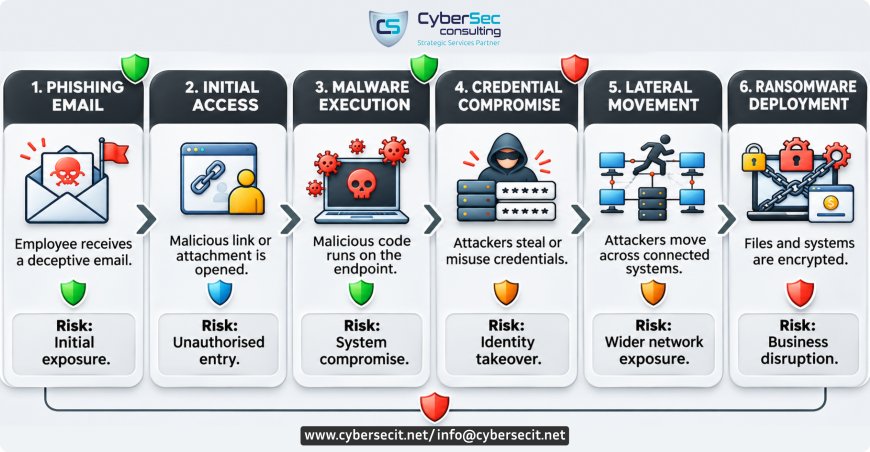
A ransomware attack rarely happens in a single step. It often develops through a sequence of activities that allow attackers to gain access, compromise systems, and disrupt business operations. A phishing email may provide the initial opportunity, but the real damage can occur as attackers expand their access across the corporate network.
Understanding the ransomware attack lifecycle helps organisations identify where security controls may fail. Each stage presents an opportunity to detect suspicious activity and prevent further compromise.
Businesses across the UAE need visibility into how phishing attacks develop into larger cybersecurity incidents. Organisations in Dubai, Abu Dhabi and other commercial centres must consider the security of employee accounts, endpoints, cloud environments and critical business applications.
Six Stages of a Ransomware Attack
Initial Exposure
The attack often begins when an employee receives a deceptive email that appears to come from a trusted organisation, supplier, or business contact. Attackers use fake invoices, payment requests, delivery notifications, and corporate messages to encourage interaction.
These phishing emails may contain malicious links or infected attachments. Employees who fail to recognise suspicious messages can unintentionally expose their organisation to cyber threats.
Unauthorised Entry
A successful phishing attempt can allow attackers to gain unauthorised access. Clicking a malicious link may redirect an employee to a fraudulent login page. Opening an infected attachment may also trigger a malicious process or exploit a software vulnerability.
Attackers may use the initial compromise to establish access to corporate systems, applications, or user accounts. Weak email security and insufficient access controls can increase the risk.
System Compromise
Once attackers establish an entry point, malicious code may execute on the compromised endpoint. Malware can collect information, establish persistence, and communicate with attacker-controlled infrastructure.
Some attacks use remote access tools or malicious scripts to maintain control over infected devices. Weak endpoint protection and outdated software can make detection more difficult.
Identity Takeover
Attackers may attempt to steal usernames, passwords, authentication tokens, or other credentials. Compromised accounts can provide access to additional applications, servers, and business resources.
Excessive permissions and weak identity security can make the situation more serious. Attackers may also target privileged accounts to gain greater control over critical infrastructure.
Organisations need effective identity and access management, multi-factor authentication, and privileged access management to reduce these risks.
Wide Network Exposure
After gaining access to an account or endpoint, attackers may attempt to move across the corporate network. They look for additional systems, shared resources, servers, and applications that can provide broader access.
Weak network segmentation and excessive user permissions can allow attackers to expand their reach. Cloud environments, connected business applications, and backup infrastructure may also become targets.
This stage is particularly dangerous because an initially isolated security incident can develop into a wider enterprise compromise.
Business Disruption
The final stage involves deploying ransomware across targeted systems. Attackers may encrypt files, disable access to business applications, and disrupt critical IT infrastructure.
Some ransomware groups also steal confidential information before encryption. They may threaten to publish the stolen data unless the organisation pays a ransom.
Businesses can experience operational downtime, financial losses, regulatory challenges, and reputational damage. Recovery becomes more difficult when backup systems and critical infrastructure are also compromised.
Ransomware Attack Lifecycle at a Glance
| Attack Stage | What Happens | Business Security Risk |
| Phishing Email | Employee receives a deceptive email | Initial Exposure |
| Initial Access | Malicious link or attachment is opened | Unauthorised Entry |
| Malware Execution | Malicious code runs on the endpoint | System Compromise |
| Credential Compromise | Attackers steal or misuse credentials | Identity Takeover |
| Lateral Movement | Attackers move across connected systems | Wider Network Exposure |
| Ransomware Deployment | Files and systems are encrypted | Business Disruption |
Why Understanding Each Attack Stage Matters
Every stage of the ransomware attack lifecycle presents an opportunity for prevention, detection, and response. Organisations should not wait until files are encrypted to investigate suspicious activity.
A phishing email may indicate an email security weakness. Unexpected account activity may point towards compromised credentials. Unusual access to servers and applications may indicate lateral movement.
Early detection depends on visibility across the entire IT environment.
Phishing Emails as the Initial Entry Point
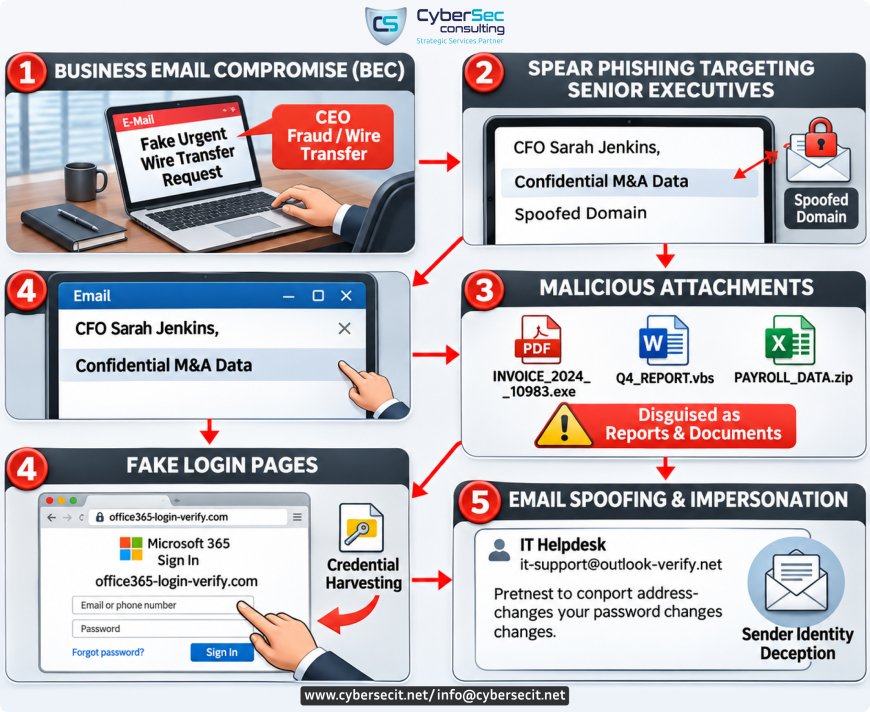
Phishing emails remain one of the most common ways attackers attempt to gain unauthorised access to corporate environments. These emails are designed to look genuine and encourage employees to share sensitive information, open malicious attachments, or visit fraudulent websites. A single interaction can expose corporate credentials and create an entry point for further cyberattacks.
Businesses across the UAE face phishing risks as digital communication, cloud applications and online business transactions continue to expand. Attackers often target organisations in Dubai, Abu Dhabi and other major business centres. Their campaigns may imitate banks, government authorities, suppliers, technology providers and internal departments.
Several phishing techniques are particularly relevant to enterprise cybersecurity.
Business Email Compromise (BEC)
Business Email Compromise is a targeted email attack where criminals impersonate trusted business contacts or compromise legitimate email accounts. Attackers often pretend to be senior executives, finance managers, suppliers, or business partners.
These emails may request urgent payments, changes to bank account details, confidential documents, or sensitive business information. Finance and procurement teams are frequent targets because their responsibilities involve financial transactions and supplier communication.
UAE businesses handling international payments and supplier relationships should pay particular attention to suspicious payment instructions and unexpected changes to financial details.
Spear Phishing Targeting Senior Executives
Spear phishing involves sending highly personalised emails to specific individuals. Attackers research their targets before creating messages that appear relevant to their roles and responsibilities.
Senior executives, CEOs, CFOs, CIOs, and CISOs are attractive targets because their accounts may provide access to sensitive business information and important corporate decisions.
Attackers may imitate board members, business partners, or internal departments. A carefully crafted message can pressure an executive into opening an attachment, approving a request, or sharing confidential credentials.
Malicious Attachments Disguised as Business Documents
Malicious attachments often appear as ordinary business files. Attackers may disguise them as invoices, purchase orders, financial statements, delivery receipts, or project reports.
Employees may open these documents because they appear connected to routine business activities. Certain attachments can execute malicious code, exploit software vulnerabilities, or direct users towards harmful websites.
Commonly abused file types include Office documents, PDF files, archive files, and executable attachments.
Fake Microsoft 365 and Corporate Login Pages
Cloud email and collaboration platforms are valuable targets for phishing campaigns. Attackers create fraudulent login pages that imitate Microsoft 365 and other corporate applications.
Employees may receive emails asking them to verify their accounts, reset passwords, or review shared documents. Clicking the link redirects them to a fake login page designed to capture usernames and passwords.
Some campaigns also attempt to steal authentication tokens or exploit weaknesses in authentication processes.
UAE organisations using Microsoft 365 and cloud-based business applications should strengthen identity security through multi factor authentication, conditional access and continuous account monitoring.
Email Spoofing and Brand Impersonation
Email spoofing involves manipulating sender information to make a message appear as though it originated from a trusted source. Attackers may imitate company domains, government organisations, financial institutions or recognised service providers.
These messages can appear convincing, particularly when employees do not verify the sender's actual email address or domain.
Organisations should implement and monitor email authentication controls such as SPF, DKIM and DMARC. These technologies help reduce domain impersonation and improve email security.
Malicious URLs and Credential Harvesting
Malicious URLs redirect employees to fraudulent websites designed to collect login credentials or deliver malware. Attackers may use shortened links, lookalike domains, and misleading website addresses to hide the actual destination.
Credential harvesting campaigns often imitate corporate portals, cloud applications, and online payment platforms. Once an employee submits their credentials, attackers may attempt to use the stolen information to access legitimate business services.
These attacks can become more serious when employees reuse passwords across multiple platforms or have excessive access permissions.
Malware Execution and Endpoint Compromise
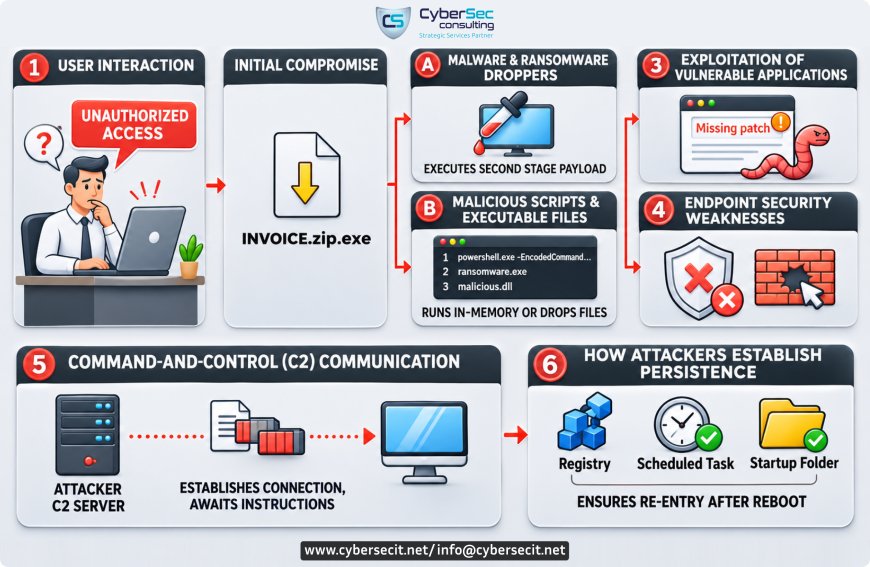
A phishing email can become a serious security incident when an employee opens a malicious attachment or visits a compromised website. This interaction may trigger malware execution on the employee's device. Attackers can then attempt to gain control of the endpoint, collect information, and establish a connection to external systems.
Malware execution is a critical stage in the ransomware attack lifecycle. It creates opportunities for attackers to move beyond the initial phishing attempt and target other parts of the corporate environment.
Businesses across the UAE rely on employee devices, corporate laptops, servers, cloud applications and connected infrastructure to support daily operations. Weak endpoint security controls can expose these environments to malware infections, unauthorised access and ransomware attacks.
Understanding how malware operates helps organisations identify endpoint security gaps before an individual device compromise develops into a wider cybersecurity incident.
Malware and Ransomware Droppers
A malware dropper is a malicious program designed to deliver or install additional malware onto a compromised device. Attackers may use phishing attachments, malicious downloads, or compromised websites to introduce these programs.
Once executed, a dropper can download additional malicious components. These may include ransomware, information-stealing malware, remote access tools, or other harmful programs.
Some attackers use multi-stage malware delivery. The initial file may appear harmless but can trigger additional malicious activity after execution.
Malicious Scripts and Executable Files
Attackers may use malicious scripts and executable files to run unauthorised commands on employee devices. These files can be disguised as invoices, reports, software updates, or other business documents.
Common attack techniques include:
- Malicious PowerShell commands.
- Windows Script Host abuse.
- Executable files designed to install malware.
- Macro-enabled Office documents.
- Malicious archive files.
- Scripts that download additional malware.
Exploitation of Vulnerable Applications
Outdated applications and unpatched operating systems can provide attackers with additional opportunities to compromise endpoints. Software vulnerabilities may allow malicious code execution, unauthorised access, or privilege escalation.
Attackers often look for weaknesses in commonly used business applications, browsers, operating systems, and remote access services.
An employee opening a malicious link may also be redirected to a website that attempts to exploit an unpatched browser or vulnerable application.
UAE organisations using large IT environments should maintain regular vulnerability assessments and patch management processes. Critical business applications must receive timely security updates.
Command and Control (C2) Communication
After compromising an endpoint, attackers may establish communication with external command and control infrastructure. This allows them to send instructions to infected devices and manage malicious activity remotely.
Command and control communication can support several attack activities, including:
- Downloading additional malware.
- Sending stolen information to external servers.
- Receiving instructions from attackers.
- Maintaining remote access to compromised devices.
- Coordinating activities across multiple infected endpoints.
Endpoint Security Weaknesses
Endpoint devices are important entry points into corporate networks. Employee laptops, desktops, servers, and remote-work devices may contain access to sensitive business information and enterprise applications.
Weak endpoint security can make it easier for attackers to execute malware and expand their access.
Common endpoint security gaps include:
- Missing operating system and application updates.
- Outdated antivirus and endpoint protection software.
- Limited endpoint detection and response visibility.
- Excessive local administrator permissions.
- Unrestricted execution of unknown applications.
- Weak device security configurations.
- Insufficient monitoring of remote endpoints.
How Attackers Establish Persistence
Gaining access to an endpoint is not always enough for an attacker. They may attempt to maintain access even after a device restarts or an initial malicious process is removed.
This activity is known as persistence. Attackers may modify system configurations, create scheduled tasks, misuse legitimate services, or establish unauthorised startup processes.
Some attackers also create additional accounts or abuse existing authentication mechanisms to maintain access.
Persistence lets attackers continue their activities while collecting information, compromising credentials, and preparing for further movement across the network.
Security teams should monitor unexpected system changes, unusual account creation, suspicious startup activity, and unauthorised scheduled tasks.
Credential Theft and Privilege Escalation
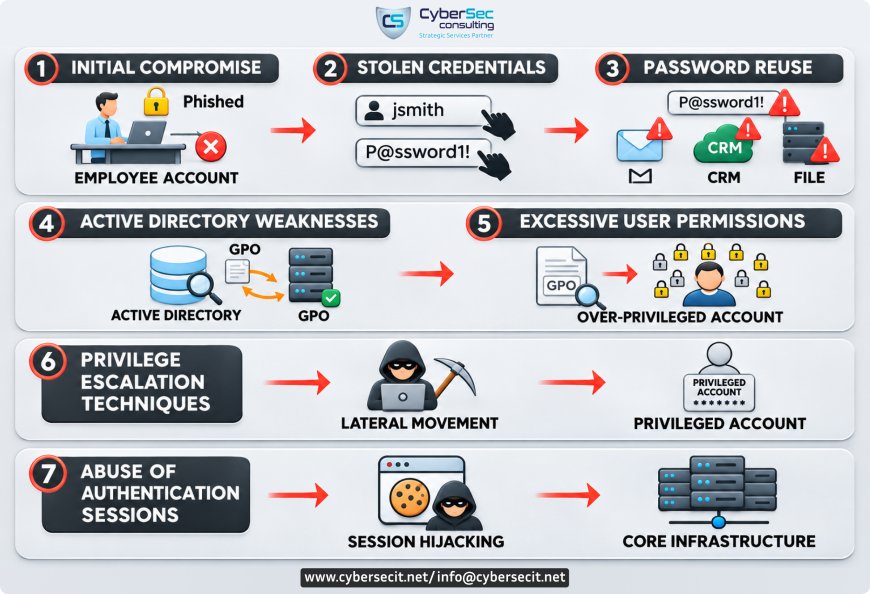
A compromised employee account can give attackers more than access to a single device or mailbox. Stolen credentials may allow them to access corporate applications, internal systems, shared resources, and sensitive business information. The risk increases when the compromised account has excessive permissions or access to critical enterprise infrastructure.
Credential theft is an important stage in the ransomware attack lifecycle. Attackers often attempt to move beyond the initially compromised account by identifying additional users, privileged accounts, and authentication weaknesses. Their objective is to gain greater access and control over the organisation's IT environment.
Businesses across the UAE depend on cloud platforms, enterprise applications, Active Directory and identity management systems. Weak password security, poor access governance and insufficient privileged account protection can create opportunities for attackers to escalate their access.
Organisations in Dubai, Abu Dhabi and other UAE business centres need stronger identity and access management (IAM), privileged access management (PAM) and identity security controls to reduce the risk of credential compromise.
Stolen Usernames and Passwords
Attackers may collect usernames and passwords through phishing websites, malicious software, compromised devices, or previously exposed credentials. These details can provide an opportunity to access legitimate corporate services.
A compromised employee account may expose business emails, internal documents, cloud applications, and shared resources. Attackers may also use the account to send additional phishing emails to colleagues.
Credential theft becomes more serious when organisations do not monitor unusual login activity or enforce strong authentication controls.
Password Reuse Across Corporate Applications
Employees sometimes reuse passwords across multiple business applications and online services. This creates an opportunity for attackers to use previously stolen credentials against other corporate platforms.
For example, credentials obtained through a phishing campaign may also provide access to email accounts, collaboration tools, or remote access services if the same password is used.
Password reuse can increase the impact of a single compromised account. Organisations should implement strong password policies, multi-factor authentication and centralised identity management.
Compromised Privileged Accounts
Privileged accounts provide elevated access to important systems, applications and infrastructure. These accounts may belong to system administrators, database administrators, IT managers, and security teams.
Attackers who compromise privileged credentials can potentially gain control over critical resources. They may modify security configurations, create additional accounts, access sensitive information,n or disable security controls.
Privileged accounts are attractive targets because they often have broader permissions than standard employee accounts.
Organisations should use Privileged Access Management (PAM) solutions to control administrative access, secure privileged credentials, and monitor sensitive activities.
Technologies such as CyberArk and BeyondTrust can support privileged account security and access governance.
Active Directory Weaknesses
Active Directory plays an important role in managing users, computers, authentication, and permissions across many enterprise environments.
Misconfigured Active Directory environments can create opportunities for attackers to discover accounts, misuse permissions, and gain higher levels of access.
Common security weaknesses include:
- Excessive privileges assigned to user accounts.
- Weak Group Policy configurations.
- Unsecured service accounts.
- Poor password management.
- Inactive accounts that remain enabled.
- Insufficient monitoring of administrative activity.
- Unprotected domain administrator credentials.
Excessive User Permissions
Employees should only have access to the applications, systems, and information required for their responsibilities. However, some organisations provide broader permissions than necessary.
These excessive permissions can increase the impact of compromised accounts. An attacker who gains access to an employee account may be able to access resources that are not required for that employee's daily activities.
Common access management weaknesses include:
- Unnecessary administrative privileges.
- Unrestricted access to shared folders.
- Excessive access to sensitive business applications.
- Poorly managed third-party accounts.
- Unreviewed access after employee role changes.
- Inactive user accounts with active permissions.
Privilege Escalation Techniques
Privilege escalation occurs when attackers attempt to gain higher levels of access within a compromised environment.
An attacker may initially compromise a standard employee account. Further exploitation of system misconfigurations, vulnerable services, es or excessive permissions may allow them to obtain administrative access.
Common privilege escalation techniques include:
- Exploiting vulnerable operating systems.
- Abusing misconfigured services.
- Misusing excessive user permissions.
- Exploiting weak service account configurations.
- Accessing stored administrative credentials.
- Abusing legitimate system management tools.
Abuse of Legitimate Authentication Sessions
Attackers do not always need to steal a password to access a corporate account. Some campaigns target active authentication sessions, browser tokens and session cookies.
A stolen session token may allow an attacker to access an authenticated application without completing the normal login process again.
This can create additional risks for organisations using cloud-based applications, remote working platforms and enterprise collaboration tools.
Lateral Movement Across the Corporate Network
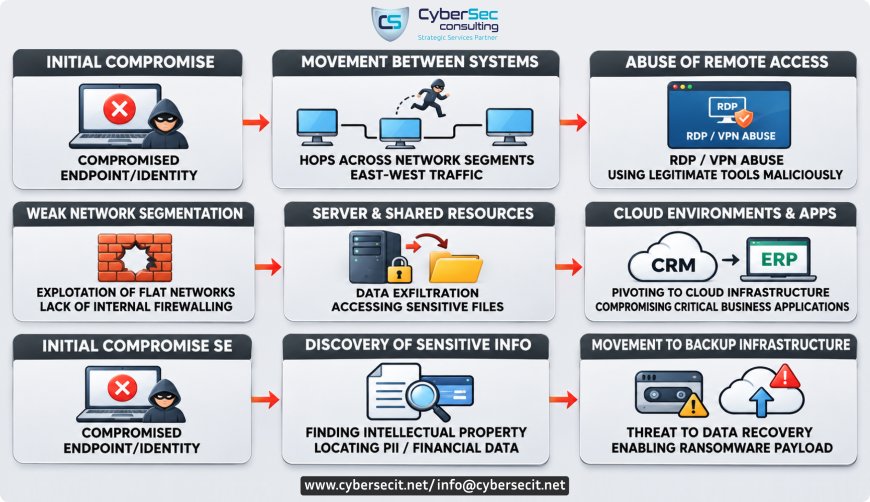
Gaining access to one employee account or endpoint may not be the attacker's final objective. Once inside a corporate environment, attackers often attempt to expand their access across connected systems, servers, applications, and network resources. This activity is known as lateral movement.
Lateral movement is a critical stage in the ransomware attack lifecycle. It allows attackers to explore the internal network, identify valuable resources, and search for additional access opportunities. Compromised credentials, weak network segmentation, and poorly secured remote access services can make these activities easier.
Businesses across the UAE depend on interconnected IT infrastructure, cloud platforms, enterprise applications, and remote working environments. A security weakness in one area can create exposure across multiple business systems.
Organisations in Dubai, Abu Dhabi and other UAE business centres need strong network security, endpoint protection, cloud infrastructure security and continuous threat monitoring. These controls help detect suspicious movement before attackers reach critical business assets.
Movement Between Connected Systems
After compromising an endpoint or employee account, attackers may attempt to access other devices and systems within the corporate network.
They often look for connected workstations, internal servers, shared folders, and applications. Stolen credentials may allow them to access additional resources without immediately triggering security alerts.
Attackers may also identify systems that have weaker security configurations or broader access permissions.
Unrestricted communication between network devices can increase the risk of wider compromise. Organisations should monitor internal network traffic and restrict unnecessary communication between systems.
Abuse of Remote Access Tools
Remote access tools support employees and IT teams who need to manage systems from different locations. However, attackers may misuse these tools after obtaining valid credentials or compromising remote access services.
Commonly targeted technologies include Remote Desktop Protocol (RDP), VPN services, and remote administration applications.
Attackers may use legitimate remote access tools to control compromised devices, access internal servers, and maintain their presence within the corporate network.
Weak passwords, exposed remote access services, and insufficient authentication controls can increase these risks.
UAE businesses supporting remote employees and distributed IT operations should secure remote access through multi-factor authentication, access restrictions, and continuous monitoring.
Exploitation of Weak Network Segmentation
Network segmentation separates an organisation's infrastructure into different security zones. It helps restrict communication between systems and limits the impact of a compromised device.
However, poorly designed network segmentation can allow attackers to move between connected environments.
For example, an employee workstation may have unnecessary access to internal servers, administrative systems, or sensitive business applications. A compromised endpoint could then become a pathway to other critical resources.
Organisations should review network architecture, access policies, and communication rules. Critical systems should have restricted access based on business requirements.
Compromise of Servers and Shared Resources
Corporate servers and shared resources often contain valuable business information. These systems may support financial operations, employee records, customer databases, and enterprise applications.
Attackers may attempt to compromise file servers, application servers, and database environments after gaining access to the internal network.
Shared folders can also expose sensitive information when permissions are not properly managed. Excessive access rights may allow compromised accounts to view, modify, or copy confidential business data.
Regular server security assessments, access reviews, and endpoint monitoring help organisations identify weaknesses across their infrastructure.
Ransomware Deployment and Business Disruption
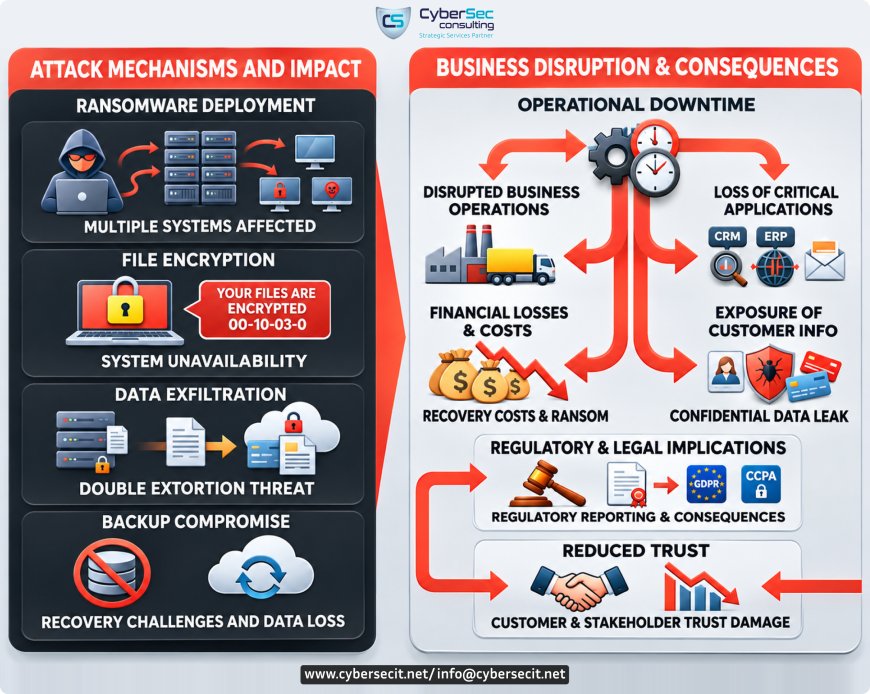
Ransomware deployment marks one of the most damaging stages of a ransomware attack. By this point, attackers may have gained access to multiple systems, compromised privileged accounts, and identified critical business resources. Their next objective is to disrupt operations by encrypting files, disabling systems, or threatening to expose stolen information.
A ransomware attack can affect far more than individual computers. It may spread across corporate servers, business applications, cloud environments, and shared storage systems. Critical services can become unavailable, leaving employees unable to perform essential tasks.
Businesses across the UAE depend on reliable digital infrastructure to support financial transactions, customer services, healthcare operations, logistics and enterprise applications. A successful ransomware attack can interrupt these activities and create significant financial and operational consequences.
Organisations in Dubai, Abu Dhabi and other UAE business centres need effective ransomware protection, incident response planning, data protection and business continuity measures. Early threat detection and rapid incident containment can help reduce the impact of ransomware attacks.
Ransomware Deployment Across Multiple Systems
After gaining sufficient access, attackers may deploy ransomware across multiple devices and systems within the compromised environment. They may target employee workstations, application servers, databases, and shared network resources.
Compromised privileged accounts can make widespread deployment easier. Attackers may also misuse legitimate administrative tools to execute malicious processes across connected systems.
A single compromised endpoint can therefore become part of a much larger security incident.
Organisations need continuous endpoint monitoring, network security and privileged access controls to identify suspicious activity before ransomware spreads.
File Encryption and System Unavailability
Ransomware encrypts files and prevents users from accessing affected information. Attackers may display ransom messages demanding payment in exchange for a decryption key or other promises.
Affected systems may include:
- Employee workstations and laptops.
- Corporate file servers.
- Enterprise databases.
- Business applications.
- Shared storage systems.
- Virtual machines and cloud workloads.
Data Exfiltration and Double Extortion
Modern ransomware attacks may involve data theft before file encryption. This activity is known as data exfiltration.
Attackers may collect confidential business documents, customer information, financial records, and employee data. They may then threaten to publish or sell the stolen information unless the organisation pays a ransom. This approach is known as double extortion.
It creates two separate risks for affected organisations:
- Loss of access to business systems.
- Exposure of confidential information.
Backup Compromise and Recovery Challenges
Backups are essential for restoring systems after a ransomware attack. However, attackers may deliberately target backup infrastructure to make recovery more difficult.
They may attempt to delete backup copies, disable recovery services, or compromise backup administration accounts. Poorly protected backup environments can leave organisations with limited recovery options.
Common backup security weaknesses include:
- Backups connected directly to production networks.
- Excessive administrative access.
- Lack of immutable backup storage.
- Infrequent backup testing.
- Insufficient backup monitoring.
- Weak protection of backup credentials.
Operational Downtime and Business Continuity Challenges
Ransomware can interrupt essential business processes when critical applications and infrastructure become unavailable.
Employees may lose access to business systems. Customer services may become unavailable. Internal teams may struggle to process transactions, manage operations or communicate effectively.
The impact can extend across several business functions.
For example:
- Financial institutions may experience disruption to internal systems and customer services.
- Healthcare organisations may face interruptions to clinical applications and patient information systems.
- Logistics companies may experience delays in shipment tracking and operational coordination.
- Retail businesses may lose access to payment and inventory systems.
- Telecommunications providers may face disruption to supporting IT infrastructure.
Financial and Reputational Damage
Ransomware incidents can create substantial financial pressure. Organisations may face recovery costs, business interruption losses, forensic investigation expenses, and additional security investment.
The financial impact may continue even after systems are restored. Customers and business partners may question whether the organisation can protect sensitive information.
Potential financial and reputational consequences include:
- Revenue loss during operational downtime.
- Incident investigation and recovery expenses.
- Additional cybersecurity investment.
- Contractual and legal costs.
- Customer dissatisfaction and lost business opportunities.
- Damage to brand reputation.
- Reduced confidence among business partners and stakeholders.
Where Organisations Can Interrupt the Ransomware Attack Chain

Preventing a ransomware attack requires more than identifying threats after systems have been compromised. Organisations need security controls that can detect suspicious activity, restrict unauthorised access and prevent attackers from moving further across the corporate network.
Every stage of the ransomware attack lifecycle presents an opportunity to interrupt the attack. A phishing email can be blocked before reaching an employee. A compromised endpoint can be isolated before malware spreads. Stolen credentials can be restricted before attackers gain privileged access.
Businesses across the UAE need a coordinated cybersecurity strategy that protects users, identities, endpoints, networks and cloud infrastructure. Organisations in Dubai, Abu Dhabi and other commercial centres should regularly evaluate their security controls to identify weaknesses that could lead to ransomware incidents.
Prevent Phishing Before It Reaches Employees
Email security is the first important layer of protection against phishing attacks. Organisations should implement email filtering, sender authentication, and malicious URL detection to identify suspicious messages.
Employee awareness training also plays an important role. Staff should understand how to recognise fraudulent emails, suspicious attachments, fake login pages, and unusual payment requests.
Recommended security measures include:
- Deploy email security and anti-phishing solutions.
- Implement SPF, DKIM, and DMARC.
- Conduct regular phishing simulation exercises.
- Train employees to identify suspicious email activity.
- Establish procedures for reporting suspected phishing attempts.
Identify Vulnerabilities Before Attackers Exploit Them
Security assessments help organisations identify weaknesses across their IT infrastructure. Vulnerability management provides a structured approach to discovering, prioritising, and addressing security issues.
Regular assessments can reveal outdated software, insecure configurations, exposed services, and weaknesses in network architecture.
Recommended security measures include:
- Conduct regular vulnerability assessments.
- Perform penetration testing where appropriate.
- Review operating system and application configurations.
- Prioritise critical security patches.
- Assess internet-facing systems and remote access services.
- Evaluate potential attack paths across enterprise infrastructure.
Detect Malware Through Endpoint Security
Endpoint Detection and Response solutions help identify suspicious activities across laptops, desktops, and servers. These solutions provide visibility into endpoint behaviour and support security investigation.
EDR capabilities can help detect malicious processes, unusual file activity, and suspicious system behaviour.
Recommended security measures include:
- Deploy endpoint detection and response solutions.
- Monitor suspicious process execution.
- Restrict unauthorised applications and scripts.
- Apply endpoint security policies.
- Isolate compromised devices when necessary.
- Maintain regular endpoint configuration reviews.
Protect Employee Identities and Authentication
Compromised credentials can allow attackers to access corporate applications and expand their presence across enterprise environments.
Strong identity security controls help prevent unauthorised access and improve visibility into suspicious authentication activity.
Recommended security measures include:
- Enforce Multi-Factor Authentication (MFA).
- Implement conditional access policies.
- Monitor unusual login locations and authentication behaviour.
- Review user access permissions regularly.
- Implement Identity and Access Management (IAM).
- Detect suspicious identity activity across enterprise applications.
Conclusion
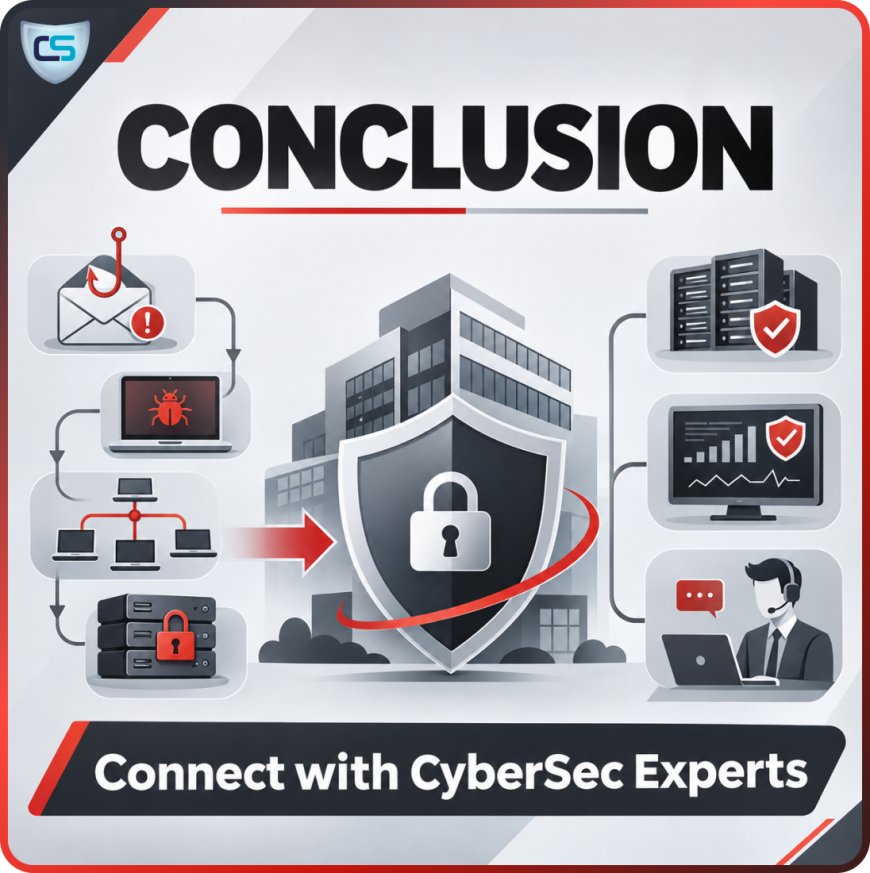
A ransomware attack can begin with a single phishing email. Its impact can extend across employee accounts, business applications, corporate networks, and critical infrastructure. What starts as an email security weakness can quickly become a major business disruption.
Organisations across the UAE need to understand that ransomware protection involves more than blocking suspicious emails. Effective cybersecurity requires visibility and protection across the entire IT environment.
Three important lessons stand out:
- Phishing is an enterprise-wide cybersecurity risk - Phishing attacks can expose employee credentials, compromise endpoints, and provide attackers with access to corporate systems. Businesses in Dubai, Abu Dhabi, and across the UAE should strengthen email security, employee awareness, and phishing detection capabilities.
- Weak identity controls can increase the impact of an attack - Compromised accounts, excessive privileges, and poor network visibility can allow attackers to access sensitive systems and move across the corporate environment. Strong Identity and Access Management (IAM), Privileged Access Management (PAM), and network security controls help reduce these risks.
- Continuous security assessment and response readiness are essential - Regular cybersecurity assessments, endpoint protection, identity monitoring, and incident response planning help organisations identify weaknesses before they become major security incidents. Continuous threat monitoring and tested recovery procedures also support faster incident containment and business recovery.
Strengthen Your Cybersecurity Posture with CyberSec Consulting
Ransomware prevention requires a coordinated approach to enterprise cybersecurity. CyberSec Consulting helps businesses strengthen their security posture through cybersecurity assessment services, IAM and PAM implementation, managed identity services, network and endpoint security, cloud infrastructure security, compliance risk management and managed security services.
Organisations seeking cybersecurity services in the UAE can work with CyberSec Consulting to identify security gaps, improve access controls and strengthen threat detection and incident response readiness.
Is your organisation prepared to stop a ransomware attack before it disrupts business operations?
Evaluate your current security posture with CyberSec Consulting. Identify critical vulnerabilities, strengthen identity protection, and build a more resilient cybersecurity strategy.
FAQs
How does a phishing attack lead to a ransomware infection?
Phishing emails trick employees into clicking malicious links, downloading infected attachments, or sharing login credentials. Attackers use this access to infiltrate networks and deploy ransomware.
What are the common signs of a phishing email?
Common signs include suspicious links, unexpected attachments, urgent payment requests, unusual sender addresses, and requests for sensitive information or login credentials.
Why are businesses in the UAE vulnerable to ransomware attacks?
Expanding cloud adoption, digital infrastructure, connected systems, and enterprise applications increase attack surfaces. Weak identity controls and inadequate security monitoring further increase ransomware risks.
How can Identity and Access Management (IAM) prevent ransomware attacks?
IAM helps enforce access controls, user authentication, and least privilege policies. It reduces unauthorised access and limits attackers' ability to compromise critical business systems.
What cybersecurity measures help prevent phishing and ransomware attacks?
Businesses should implement email security, endpoint protection, IAM, PAM, continuous security assessments, threat monitoring, and incident response procedures.
How can organisations detect ransomware threats before major damage occurs?
Continuous security monitoring, endpoint detection, vulnerability assessments, and suspicious login activity analysis help identify early indicators of compromise and prevent attack escalation.
What's Your Reaction?
 Like
0
 Dislike
0
 Love
0
 Funny
0
 Angry
0
 Sad
0
 Wow
0