





















How Phishing Attacks Lead to Enterprise Identity Compromise
Discover how phishing attacks compromise enterprise identities through credential theft, MFA bypass, and account takeover. Strengthen enterprise cybersecurity with IAM and PAM solutions across Africa.


Introduction
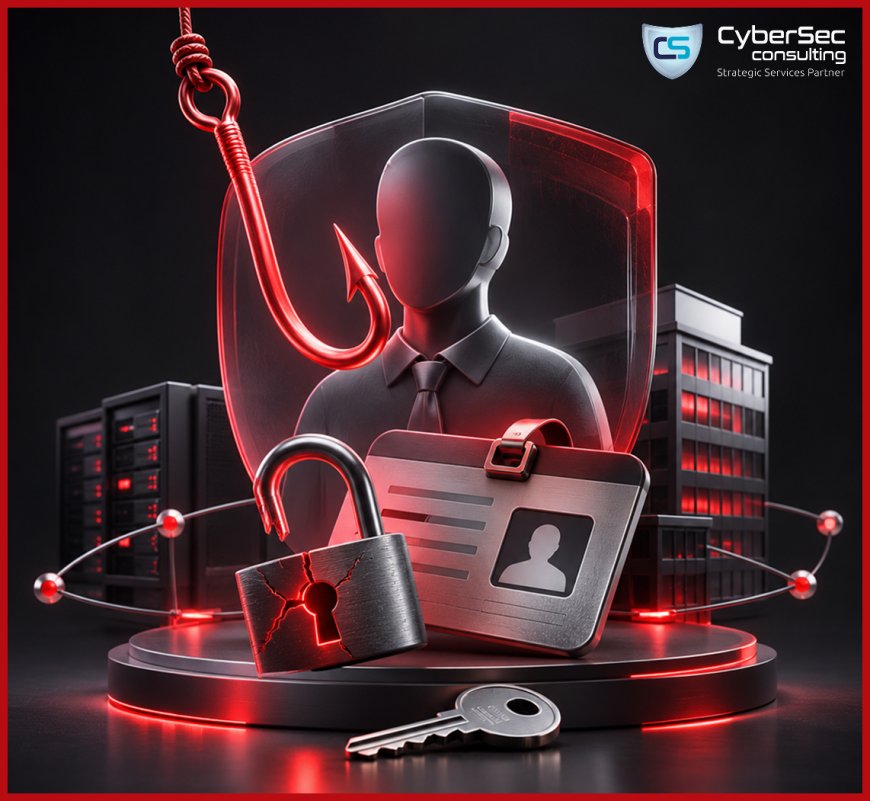
Phishing attacks remain one of the major cybersecurity threats facing businesses across Africa. Cybercriminals are using deceptive emails, fake login pages, and targeted social engineering attacks to steal employee credentials and gain unauthorised access to enterprise systems. A single compromised account can expose sensitive business data, disrupt operations, and create serious financial and reputational risks.
Enterprise phishing attacks are no longer limited to fraudulent emails or suspicious attachments. Attackers increasingly target corporate identities, cloud applications, Microsoft 365 accounts, and privileged user access. Stolen credentials can give cybercriminals access to business systems without triggering obvious security alerts. This makes phishing prevention, identity protection, and enterprise access security critical for organisations operating across Africa.
How Phishing Attacks Target Enterprise Identities?
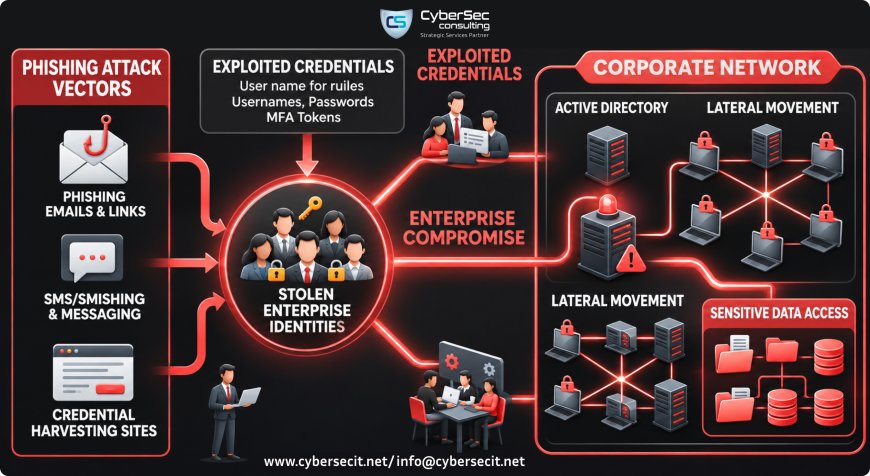
Phishing attacks are designed to trick employees into revealing credentials, approving fraudulent login requests, or sharing sensitive business information. Cybercriminals target corporate email accounts, cloud platforms, financial systems and enterprise applications. Organisations across Africa face growing risks from credential theft, business email compromise and identity-based cyberattacks.
Credential Harvesting
Credential harvesting uses fake login pages, fraudulent emails and deceptive websites to steal usernames and passwords. Employees may receive messages that appear to come from Microsoft 365, company IT support, banks or business partners. Stolen credentials can allow attackers to access corporate email, cloud applications and confidential business data.
Businesses across South Africa, Kenya, Nigeria, Egypt and other African markets need strong identity security controls to reduce credential theft risks. Secure authentication, access management and employee awareness can help prevent unauthorised enterprise access.
Spear Phishing
Spear phishing involves highly targeted phishing emails designed for specific employees, departments or senior executives. Attackers research their targets using company websites, LinkedIn profiles and publicly available business information. They then create personalised messages that appear relevant to the employee's role or ongoing business activities.
Finance teams, HR departments, IT administrators and senior management are common targets. A convincing email may request a password reset, document review, or urgent access to a business application. Successful spear phishing attacks can expose corporate identities and give attackers access to sensitive enterprise systems.
Business Email Compromise (BEC)
Business Email Compromise (BEC) attacks target corporate email accounts to manipulate business communications, steal information or redirect financial transactions. Attackers may impersonate executives, suppliers, business partners or employees responsible for payments.
Across Africa, BEC attacks pose significant risks to businesses, financial institutions and government organisations. Cybercriminals may use compromised email identities to request fraudulent payments, change supplier banking details or access confidential business information. INTERPOL identifies phishing, impersonation, and credential theft as key techniques used in BEC attacks across the continent.
MFA Fatigue Attacks
Multi-Factor Authentication (MFA) fatigue attacks target employees who receive repeated authentication approval requests. Attackers first obtain a user's credentials and then send multiple login approval notifications to the employee's registered device.
Repeated notifications can cause frustration or confusion. An employee may eventually approve a request without verifying its source. That single approval can allow an attacker to access corporate email, cloud applications, or internal business systems.
Organisations in Africa should strengthen enterprise authentication security through number matching, phishing-resistant MFA, conditional access policies, and identity monitoring. These controls help reduce the risk of unauthorised access caused by fraudulent authentication requests.
Adversary in the Middle (AiTM) Phishing
Adversary in the Middle phishing uses a malicious intermediary to intercept communication between a user and a legitimate authentication service. Attackers may create fake login portals that closely resemble corporate sign-in pages.
Employees enter their credentials on the fraudulent page. The attacker can capture login details and, in some cases, authentication session tokens. This allows cybercriminals to reuse an active session and access enterprise applications, even when MFA has been enabled.
AiTM phishing presents a serious identity security risk for organisations using cloud-based platforms, Microsoft 365, remote access solutions and enterprise applications. Strong authentication controls, session protection and continuous identity monitoring are essential to prevent account takeover and protect corporate access.
From Stolen Credentials to Enterprise Identity Compromise
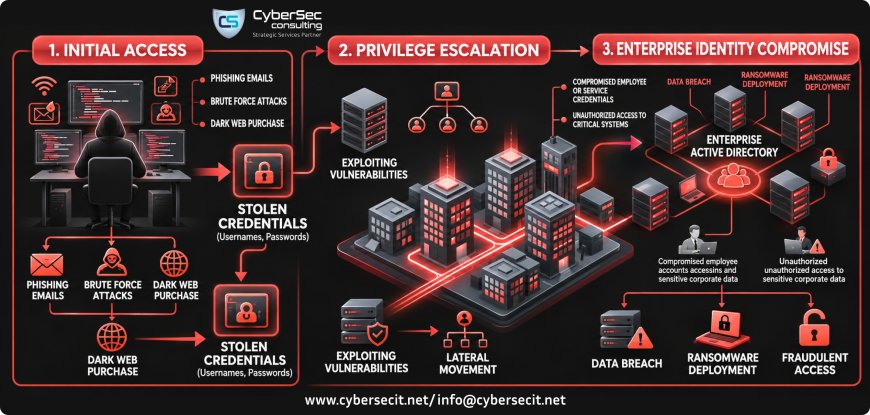
Stolen credentials can turn a phishing attack into a serious enterprise cybersecurity incident. Attackers use compromised usernames and passwords to access corporate email, cloud platforms, business applications and internal networks. A successful login can give cybercriminals access to sensitive information without immediately raising suspicion.
Businesses across Africa face growing risks from identity theft, credential compromise and unauthorised account access. Organisations in South Africa, Nigeria, Kenya, Ghana, Egypt and other African markets rely on cloud services, remote access platforms and digital business applications. These environments make enterprise identity security a critical part of cybersecurity risk management.
How Do Attackers Exploit Stolen Credentials?
Cybercriminals use stolen usernames and passwords to authenticate as legitimate employees. Compromised accounts may provide access to Microsoft 365, corporate email, cloud storage, CRM platforms, financial systems, and internal business applications.
Attackers may also exploit password reuse across multiple platforms. A password stolen through phishing could expose several business accounts if the same credentials are used across different services. Weak authentication controls and excessive user permissions can increase the impact of such attacks.
How Session Tokens and Authentication Cookies Are Abused?
Credential theft is not the only way attackers compromise enterprise identities. Session tokens and authentication cookies can also become valuable targets. These digital tokens help maintain an authenticated session after a user successfully signs in.
Attackers who obtain valid session tokens or authentication cookies may attempt to reuse an existing authenticated session. This can allow them to access business applications without repeating the entire login process. Certain attacks may also bypass authentication protections that rely on verifying the initial login.
Organisations using cloud identity platforms, Microsoft 365, remote access solutions and enterprise SaaS applications need effective session security. Secure token handling, session expiration policies, device verification and continuous access monitoring can help reduce the risk of session hijacking and unauthorised access.
What Happens After an Enterprise Account Is Compromised?
A compromised employee account can become the starting point for wider enterprise security incidents. Attackers may search corporate emails, access confidential documents, identify privileged users, or exploit permissions to reach additional systems.
Common consequences include:
- Unauthorised access to corporate email and cloud applications.
- Exposure of customer data and sensitive business information.
- Fraudulent financial transactions and business email compromise.
- Privilege escalation through excessive access permissions.
- Lateral movement across enterprise networks.
- Compromise of administrator and privileged accounts.
- Disruption of business operations and regulatory compliance risks.
Strengthening Enterprise Identity Security Across Africa
Preventing phishing-led identity compromise requires more than securing corporate email. Enterprises need stronger Identity and Access Management (IAM), Privileged Access Management (PAM), identity monitoring, and access governance controls.
Organisations across Africa can strengthen enterprise identity security through:
- Multi-Factor Authentication - Add stronger verification to employee and administrator accounts.
- Identity and Access Management - Enforce secure authentication, access policies, and identity lifecycle controls.
- Privileged Access Management - Protect administrator accounts and restrict access to critical enterprise systems.
- Access Reviews - Identify excessive permissions, inactive accounts, and unauthorised access.
- Identity Threat Detection - Monitor suspicious login activities, unusual access patterns, and compromised accounts.
- Cybersecurity Assessments - Identify identity security weaknesses, access control gaps, and vulnerabilities across enterprise environments.
How Do Attackers Exploit Compromised Identities?

A compromised enterprise identity can provide attackers with access to far more than a single email account. Cybercriminals may exploit stolen credentials to access internal networks, cloud applications, privileged accounts, and sensitive business information. Weak access controls can allow a single phishing incident to escalate into a wider enterprise security breach.
Businesses across Africa face growing identity security risks as they adopt cloud platforms, digital banking systems, remote working environments and enterprise applications. Organisations in South Africa, Nigeria, Kenya, Ghana and Egypt need stronger Identity and Access Management (IAM), Privileged Access Management (PAM) and identity threat detection to protect against unauthorised access.
Privilege Escalation
Privilege escalation occurs when attackers gain access to higher levels of permissions within an enterprise environment. A compromised employee account may initially have limited access. Weak access controls, misconfigured permissions, or exposed privileged credentials can allow attackers to gain administrative access.
Privileged account compromise can expose critical systems, sensitive databases, security configurations, and business applications. Enterprises across Africa need strong Privileged Access Management (PAM), role-based access controls, and continuous privilege monitoring to reduce the risk of unauthorised administrative access.
Lateral Movement Across Enterprise Networks
Lateral movement allows attackers to expand their access after compromising an initial user account. They may attempt to access additional systems, shared folders, internal applications and other accounts within the organisation.
Weak network segmentation, reused credentials and excessive access permissions can make lateral movement easier. Attackers may target Active Directory environments, corporate email systems, file servers and cloud-connected infrastructure.
Enterprises in South Africa, Nigeria, Kenya, Egypt, and other African markets should strengthen network security, identity monitoring, and access control policies. Cybersecurity assessments can help identify weaknesses that may allow attackers to move between systems after an initial compromise.
Account Takeover
Account takeover occurs when cybercriminals gain control of a legitimate employee, administrator, or business account. Stolen credentials, phishing attacks, session hijacking, and weak authentication controls can help attackers maintain access to compromised identities.
A compromised corporate email account may be used to impersonate employees, steal confidential information, manipulate business communications, or launch further phishing attacks. Account takeover can also affect customer portals, cloud platforms, and financial applications.
Businesses across Africa need effective account takeover protection, secure authentication, Multi-Factor Authentication, and continuous identity monitoring. These controls help detect suspicious login activities and reduce the risk of unauthorised access to enterprise accounts.
Cloud Access Abuse
Cloud access abuse occurs when attackers exploit compromised identities to access cloud platforms, enterprise SaaS applications and hosted business infrastructure. Stolen credentials may provide access to Microsoft 365, cloud storage, business applications and sensitive corporate data.
Attackers may exploit weak cloud identity security, misconfigured access policies or compromised administrator accounts. Unauthorised cloud access can expose confidential documents, customer records, business data and critical workloads.
Organisations across Africa adopting cloud computing, digital transformation and hybrid working environments should prioritise cloud security, IAM implementation, conditional access policies and cloud identity monitoring. Secure cloud access management helps protect enterprise resources against phishing attacks and identity-based cyber threats.
Exploitation of Excessive Permissions
Excessive permissions allow users to access more systems, applications, or information than their job responsibilities require. Attackers can exploit these permissions after compromising an employee identity to access sensitive resources and expand their reach across the enterprise.
Weak access governance, inactive accounts, unmanaged service accounts,s and poorly defined user roles can increase the risk of identity compromise. These security gaps may allow attackers to access financial information, customer databases, confidential documents and privileged business systems.
Enterprises in South Africa, Nigeria, Kenya, Ghana and Egypt should implement least privilege access, regular access reviews, identity governance and privileged access controls. Effective IAM and PAM solutions help organisations reduce unnecessary permissions and strengthen enterprise identity security.
Reducing Identity-Based Cybersecurity Risks Across Africa
Identity compromise can quickly escalate into a major enterprise cybersecurity incident when attackers exploit weak access controls, excessive permissions, and poor identity monitoring. Organisations need to understand how compromised identities can affect their business systems, cloud environments, and sensitive information.
Role of Weak IAM and PAM Controls

Weak Identity and Access Management (IAM) and Privileged Access Management (PAM) controls can turn a phishing incident into a major enterprise cybersecurity breach. Stolen employee credentials become more dangerous when organisations lack proper access governance, privilege restrictions, and authentication security.
Businesses across Africa face growing identity security challenges as cloud adoption, remote working and digital transformation expand. Poor identity management can expose corporate email, financial systems, customer databases, cloud platforms and critical business applications to unauthorised access.
Effective IAM and PAM security solutions help organisations protect employee identities, control privileged access and reduce the impact of phishing attacks across enterprise environments.
Poor Access Governance
Poor access governance occurs when organisations fail to regularly review, manage and control user access to business applications and sensitive resources. Employees may retain access to systems they no longer need. User permissions may also remain unchanged after role transfers or departmental changes.
Attackers can exploit these weaknesses after compromising an employee identity. Unnecessary access may allow them to reach sensitive business information, internal applications and financial systems.
Organisations in South Africa, Nigeria, Kenya, Ghana and Egypt need effective Identity Governance and Administration (IGA), user access reviews and role-based access controls. Strong access governance helps reduce unauthorised access and improves enterprise identity security.
Excessive Privileges
Excessive privileges give employees access to systems, applications, or data beyond their job responsibilities. Poor privilege management can expose administrator accounts, critical infrastructure, and sensitive business information.
Attackers who compromise an employee account may exploit excessive permissions to access additional resources. A low-level user account with unnecessary administrative privileges can increase the impact of phishing and credential theft.
Enterprises across Africa should adopt the principle of least privilege. Privileged Access Management (PAM) solutions can help restrict administrator access, secure privileged credentials, monitor privileged sessions, and reduce the risk of privilege escalation.
Orphaned and Inactive Accounts
Orphaned accounts are user accounts that remain active after an employee leaves the organisation or changes roles. These accounts may no longer have an assigned owner. They can also remain outside regular identity security monitoring.
Attackers may target inactive accounts because unusual login activity can go unnoticed. Unmanaged accounts across corporate email, cloud platforms, Active Directory and enterprise applications can create security gaps.
Businesses across Africa should implement automated identity lifecycle management, regular account reviews, and timely access revocation. Effective IAM implementation helps organisations identify inactive accounts, remove unnecessary access, and strengthen enterprise access security.
Weak Authentication Policies
Weak authentication policies increase the risk of credential theft, account takeover, and unauthorised access. Password reuse, simple passwords, missing Multi-Factor Authentication (MFA), and inconsistent access policies can make enterprise accounts easier to compromise through phishing attacks.
Attackers may use stolen credentials to access corporate email, cloud applications, remote access systems, and sensitive business platforms. Weak authentication security can also expose privileged accounts and administrator identities.
Organisations in South Africa, Nigeria, Kenya, Egypt and other African markets should enforce strong authentication policies, phishing-resistant MFA, conditional access and secure password management. These controls help protect enterprise identities against credential harvesting, MFA fatigue attacks and unauthorised login attempts.
Limited Identity Monitoring and Access Visibility
Poor identity monitoring can prevent security teams from detecting suspicious login activities and compromised accounts. Unusual access patterns, repeated authentication failures, unexpected privilege changes, and logins from unfamiliar locations may go unnoticed.
Limited visibility across IAM, PAM, cloud platforms and enterprise applications can delay incident response. Attackers may maintain access for longer and increase the impact of an identity compromise.
Enterprises across Africa need identity threat detection, centralised security monitoring, and clear visibility into access. Integrating identity security monitoring with SIEM and incident response capabilities helps organisations detect compromised accounts and respond more effectively to identity-based cyber threats.
Why Traditional Security Tools May Not Detect Identity Compromise?
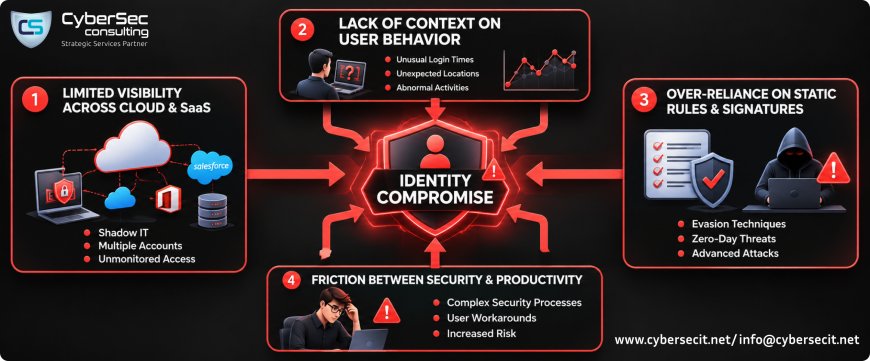
Enterprise security tools play an important role in protecting business networks, endpoints and applications. However, phishing attacks can compromise legitimate employee identities without immediately triggering conventional security alerts. Attackers may use stolen usernames, passwords, session tokens and authentication cookies to access enterprise systems through seemingly valid login sessions.
This creates a major identity security challenge for organisations across Africa. Businesses in South Africa, Nigeria, Kenya, Ghana and Egypt increasingly depend on cloud platforms, remote access solutions and digital business applications. Limited visibility across identity platforms, endpoint security,y and access monitoring can make it difficult to detect compromised accounts.
Effective enterprise cybersecurity requires more than network and endpoint protection. Organisations need stronger Identity and Access Management (IAM), Privileged Access Management (PAM), and Identity Threat Detection and Response (ITDR) capabilities.
Limited Visibility Across Identity Platforms
Identity platforms manage employee accounts, authentication requests, application access, and user permissions. However, security teams may not have complete visibility into suspicious identity activities across different platforms.
An attacker using stolen credentials may successfully authenticate as a legitimate employee. The login may appear normal if security teams cannot identify unusual access patterns, unfamiliar devices, or suspicious authentication behaviour.
Businesses using Microsoft Entra ID, Active Directory,ry and cloud identity platforms need continuous identity monitoring. Centralised identity visibility helps security teams identify compromised accounts and investigate suspicious authentication activities.
Endpoint Security Cannot Identify Every Identity Threat
Endpoint Detection and Response (EDR) solutions monitor computers, servers, and other devices for suspicious activities. These tools help detect malware, malicious processes, and endpoint vulnerabilities.
However, credential theft and session hijacking do not always require malware installation. Attackers may access enterprise applications through legitimate browsers, stolen credentials, or compromised authentication sessions.
A secure endpoint does not necessarily mean that the identity accessing it is trustworthy. Organisations across Africa should combine endpoint security with IAM, PAM and identity threat detection to improve enterprise security visibility.
SIEM Visibility Gaps Across Enterprise Environments
Security Information and Event Management (SIEM) platforms collect and analyse security logs from different systems. They help security teams investigate suspicious activities and identify potential cyberattacks.
However, incomplete log collection, poor event correlation, and limited identity context can create detection gaps. Suspicious login activities may not trigger alerts when identity events are not properly integrated into security monitoring.
For example, an attacker may access a compromised employee account from an unfamiliar location. Additional activities, such as unusual file access or privilege changes, may go unnoticed without effective correlation.
Enterprises in South Africa, Nigeria, Kenya and other African markets should integrate identity platforms, cloud applications, endpoint security and authentication logs into their SIEM environments.
Inadequate Access Monitoring
Access monitoring helps organisations understand who is accessing business systems, which resources they can reach, and whether their activities follow approved security policies.
Poor access monitoring can allow attackers to exploit compromised identities without attracting attention. Unusual access to confidential documents, unexpected administrator activity, and unauthorised application access may remain undetected.
Organisations need continuous access monitoring, regular permission reviews, and privileged session monitoring. Effective IAM and PAM solutions can help security teams identify suspicious access activities and restrict unnecessary privileges.
Limited Detection of Privileged Account Abuse
Privileged accounts provide administrative access to critical enterprise systems, databases, cloud environments, and security infrastructure. Attackers who compromise these accounts can gain extensive control over business resources.
Security monitoring may fail to identify privileged account abuse when organisations lack proper visibility into administrator activities. Unmanaged service accounts, shared administrator credentials and excessive permissions can further increase the risk.
Privileged Access Management helps secure administrator credentials, control privileged sessions and monitor access to critical systems. Enterprises across Africa should prioritise PAM implementation to reduce the impact of phishing-led identity compromise.
How Can Enterprises Prevent Phishing-Led Identity Attacks?
Preventing phishing-led identity attacks requires more than email filtering and employee awareness training. Organisations need strong identity security controls to protect employee credentials, privileged accounts, cloud applications and sensitive business information.
Cybercriminals increasingly target enterprise identities through credential harvesting, session hijacking, MFA fatigue and business email compromise. A single compromised account can expose multiple business systems and create serious cybersecurity risks.
Businesses across Africa need a proactive approach to enterprise identity security. Organisations in South Africa, Nigeria, Kenya, Ghana and Egypt should prioritise phishing prevention, secure authentication, Identity and Access Management (IAM) and Privileged Access Management (PAM).
The following security measures can help enterprises prevent unauthorised access and reduce the impact of phishing attacks.
Implement Phishing-Resistant Multi-Factor Authentication
Multi-factor authentication (MFA) adds an additional verification layer to enterprise accounts. However, attackers may bypass some MFA methods through phishing proxies, fraudulent approval requests, and session token theft.
Phishing-resistant MFA provides stronger protection against credential harvesting and authentication attacks. Organisations should consider FIDO2 security keys, passkeys, and certificate-based authentication.
Businesses across Africa can strengthen enterprise authentication security by:
- Enforcing phishing-resistant MFA for employees and administrators.
- Protecting privileged accounts with stronger authentication requirements.
- Restricting access from untrusted devices.
- Monitoring repeated authentication failures and suspicious login requests.
- Reviewing authentication policies across cloud applications.
Enforce Conditional Access Policies
Conditional Access evaluates different factors before granting access to enterprise applications and resources. These factors may include user identity, device security, login location, application sensitivity, and authentication strength.
A valid username and password should not automatically guarantee access to sensitive business systems. Conditional Access policies help organisations identify risky login attempts and apply additional security requirements.
Enterprises in South Africa, Nigeria, Kenya, Ghana and Egypt should consider implementing:
- Device compliance checks before granting access.
- Location-based access restrictions where appropriate.
- Risk-based authentication policies.
- Session controls for sensitive business applications.
- Additional verification for privileged accounts.
- Restrictions on access from unmanaged devices.
Deploy Identity Threat Detection and Response
Identity Threat Detection and Response (ITDR) helps security teams identify suspicious activities involving employee accounts, privileged identities, and enterprise authentication systems.
Attackers may use stolen credentials to access business applications while appearing to be legitimate users. Identity monitoring helps detect unusual behaviour that may indicate account compromise.
Organisations should monitor:
- Multiple failed login attempts across employee accounts.
- Authentication requests from unusual locations or devices.
- Unexpected changes to user permissions.
- Suspicious administrator activities.
- Unusual access to sensitive business applications.
- Unexpected session activity and authentication token misuse.
Strengthen Privileged Access Management
Privileged accounts provide access to critical business applications, databases, cloud environments, and enterprise infrastructure. Attackers frequently target these identities because compromised administrator access can create significant security risks.
Privileged Access Management (PAM) helps organisations control, monitor, and secure access to sensitive systems.
Effective PAM implementation should include:
- Secure storage and management of privileged credentials.
- Just-in-time access for administrative activities.
- Privileged session monitoring and recording.
- Regular password rotation for privileged accounts.
- Removal of unnecessary administrator permissions.
- Restrictions on shared and unmanaged privileged accounts.
Conduct Continuous Access Reviews
Employee access requirements change as organisations grow, departments restructure, and employees move between roles. Failure to review permissions can leave unnecessary access active across enterprise applications.
Attackers can exploit these access gaps after compromising an employee identity. Excessive permissions may allow them to access confidential information, financial systems,s and critical business applications.
Continuous access reviews help organisations maintain visibility into user permissions and identify unnecessary access.
Enterprises should:
- Review employee access permissions regularly.
- Identify inactive and orphaned accounts.
- Remove unnecessary administrative privileges.
- Validate access to sensitive business applications.
- Enforce role-based access controls.
- Automate identity provisioning and deprovisioning.
Conclusion
Phishing attacks have become a serious enterprise identity security threat. Stolen credentials, compromised authentication sessions and unauthorised account access can expose critical business systems and sensitive information. Email security alone cannot prevent attackers from exploiting weak identity controls.
Organisations across Africa need to make identity security a core part of their enterprise cybersecurity strategy. Businesses in South Africa, Nigeria, Kenya, Ghana and Egypt should prioritise secure authentication, Identity and Access Management (IAM), Privileged Access Management (PAM) and continuous identity monitoring.
Strong identity governance helps organisations control employee access, protect privileged accounts and reduce the risk of account takeover. Regular cybersecurity assessments can also identify excessive permissions, inactive accounts and authentication weaknesses before attackers exploit them.
Digital transformation, cloud adoption and remote working continue to increase the importance of enterprise identity protection. Businesses need integrated cybersecurity solutions that secure user identities, business applications and critical infrastructure.
CyberSec Consulting helps enterprises strengthen identity security through IAM implementation, PAM solutions, Managed Identity Services, cybersecurity assessments, and compliance risk management. Organisations across Africa can improve access governance, reduce identity-related risks and build stronger enterprise cybersecurity capabilities.
Protecting enterprise identities requires the right combination of identity management, privileged access security, continuous monitoring and cybersecurity assessments. CyberSec Consulting provides services that help organisations identify identity security weaknesses and strengthen enterprise access controls.
| CyberSec Service | Solutions |
| Identity and Access Management (IAM) | Enforce secure authentication, access governance and identity lifecycle management across enterprise applications. |
| Privileged Access Management (PAM) | Protect administrator accounts, secure privileged credentials and restrict unauthorised access to critical systems. |
| Managed Identity Services | Monitor identity environments, manage access controls and support ongoing identity security operations. |
| Assessment Services | Identify identity security weaknesses, excessive permissions, authentication gaps, and access control vulnerabilities. |
| Threat Assessment | Evaluate potential attack paths, credential abuse, and identity-based cybersecurity threats. |
| Compliance and Risk Management | Assess identity security controls against relevant security frameworks and regulatory requirements. |
| CyberSec Shield | Address identity-related security risks through managed threat detection, incident response, and continuous security monitoring. |
Protect Your Enterprise Identities Before Attackers Exploit Them
Is your organisation prepared to detect and prevent phishing led identity compromise?
Strengthen your enterprise security posture with CyberSec Consulting's IAM, PAM, Managed Identity Services and cybersecurity assessment capabilities.
Stay Vigilant, Stay Alert. Protect your identities.
Secure your enterprise. Strengthen your cybersecurity resilience across Africa.
FAQs
How do phishing attacks compromise enterprise identities?
Phishing attacks trick employees into sharing corporate usernames, passwords, and authentication details. Attackers use stolen credentials to access business applications, cloud platforms and sensitive enterprise data. Organisations across Africa need strong IAM and identity monitoring to prevent unauthorised access.
Can phishing attacks bypass Multi-Factor Authentication?
Yes. Attackers may use MFA fatigue, session hijacking, and adversary-in-the-middle phishing to bypass certain MFA methods. Phishing-resistant MFA helps protect enterprise accounts across African businesses.
How do attackers use stolen credentials to access enterprise systems?
Cybercriminals use stolen usernames and passwords to impersonate legitimate employees and access corporate email, cloud applications, and internal networks. Weak authentication and excessive permissions can increase the risk of enterprise account takeover.
What is the relationship between phishing and Identity and Access Management?
Phishing steals employee credentials, while IAM helps control how those identities access enterprise systems. Effective IAM implementation strengthens authentication, access governance, and identity lifecycle management for businesses across Africa.
How can PAM prevent privileged account compromise?
Privileged Access Management protects administrator credentials, restricts unnecessary permissions, and monitors privileged sessions. PAM solutions help African enterprises reduce unauthorised administrative access and protect critical business infrastructure.
What are the warning signs of an enterprise identity compromise?
Unusual login locations, repeated authentication failures, unexpected permission changes, and suspicious administrator activities can indicate identity compromise. Continuous identity monitoring and cybersecurity assessments help organisations detect these threats early.
What's Your Reaction?
 Like
0
 Dislike
0
 Love
0
 Funny
0
 Angry
0
 Sad
0
 Wow
0