



























Your IAM Dashboard Says Healthy. Should You Trust It?
Discover how an IAM health check strengthens identity security, access governance, privileged access management, authentication, compliance, and cyber resilience.

Introduction
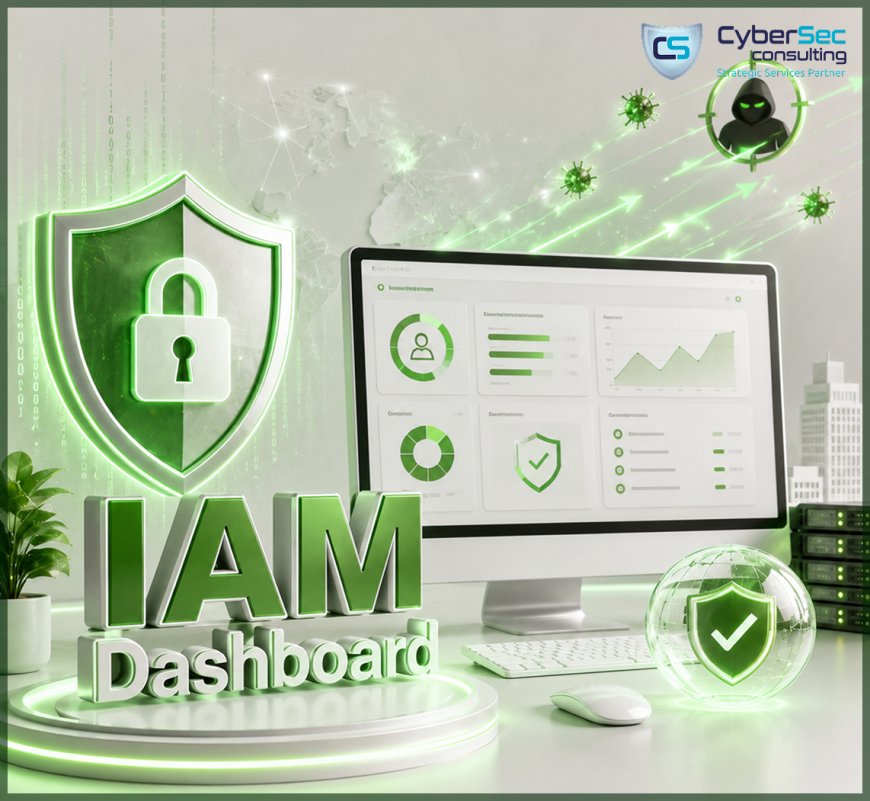
Your IAM dashboard shows green indicators. Authentication services are running normally. User provisioning is completing successfully. Applications are synchronising without errors. System performance looks stable.
Everything appears healthy.
But is your IAM environment actually secure, or is the dashboard only telling you that the technology is functioning?
A healthy IAM platform does not automatically mean strong identity security. Successful authentication does not prove that every access decision is appropriate. A functioning provisioning workflow does not confirm that users have the right permissions. A stable IAM system can still contain excessive access, dormant identities, privilege risks, and unmanaged accounts.
This distinction matters for organisations managing complex IT environments, cloud applications and growing digital identities. Strong identity and access management requires more than system availability. It requires continuous visibility, access governance and security controls.
IAM platform health measures whether the technology is operating as expected.
Identity security health measures whether identities, credentials, privileges and access remain secure.
A complete IAM security assessment should therefore look beyond green dashboards. It should examine access governance, privileged access management, identity lifecycle management, authentication security, access reviews,s and identity monitoring.
The goal is simple: know that your IAM is running, and prove that your identities are secure.
What Does a Healthy IAM Dashboard Actually Tell You?
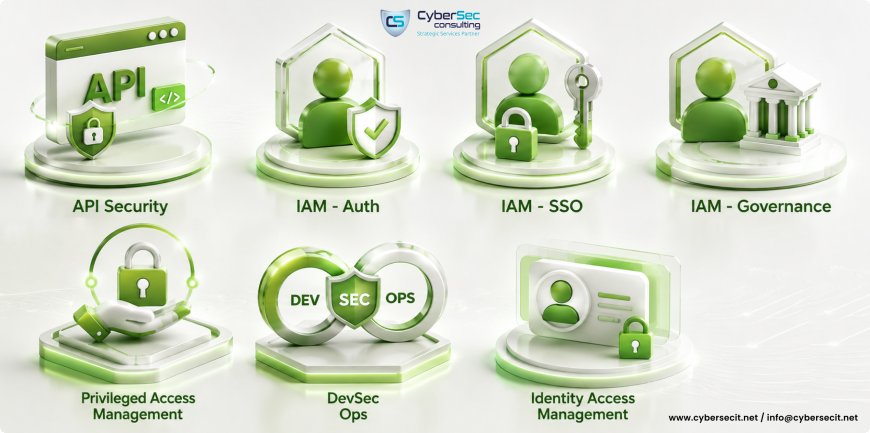
A healthy IAM dashboard primarily confirms that your identity and access management infrastructure is operating as configured.
- Authentication success rates - Shows whether users can authenticate successfully, helping security teams monitor IAM authentication performance and access reliability.
- System availability - Confirms that critical IAM security services and identity platforms remain available for users and business applications.
- Provisioning status - Shows whether user accounts and access rights are being created correctly through identity lifecycle management processes.
- Integration health - Confirms whether IAM solutions are communicating properly with applications, directories, cloud platforms, MS, and security systems.
- Synchronisation status - Indicates whether identity and access data remains consistent across connected systems and directories.
- Workflow completion - Confirms whether access requests, approvals and identity governance workflows are being completed as configured.
Gap Between IAM Operations and Identity Security
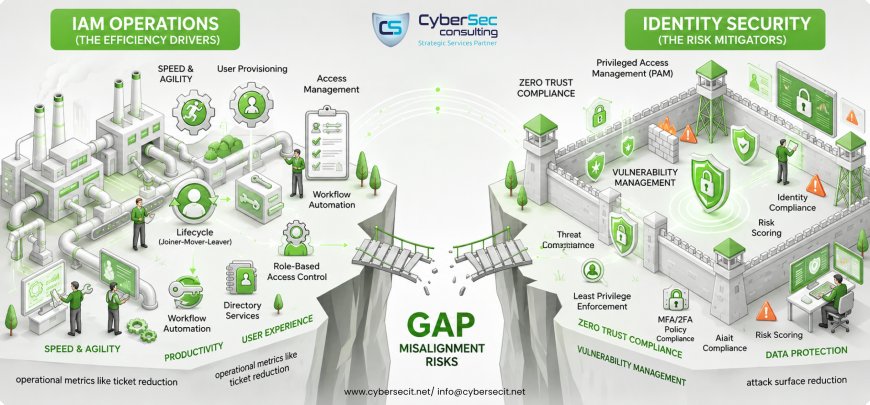
A strong IAM security strategy must go beyond keeping identity platforms operational and focus on protecting identities, privileges, and access.
| Platform Health | Security Health |
| Is the IAM technology functioning? | Are identities, privileges and access behaving securely? |
|
System availability - Confirms that IAM services remain accessible and operational. |
Identity risk - Identifies compromised, suspicious,s or high-risk identities requiring investigation. |
|
Authentication performance - Measures whether users can authenticate successfully across business applications. |
Access security - Detects excessive permissions and inappropriate access across critical systems. |
|
Provisioning operations - Confirms that identity lifecycle processes are executing as configured. |
Identity monitoring - Detects unusual behaviour, privilege misuse, and suspicious authentication patterns. |
6 Things Your IAM Dashboard May Not Tell You

A complete IAM security assessment must look beyond platform metrics to uncover hidden identity, access,s and privilege risks.
- Excessive Access - Users may retain permissions beyond their current responsibilities, increasing access management risk and weakening least privilege controls.
- Identity Risk - Compromised or suspicious identities can remain unnoticed when identity threat detection and continuous monitoring are not integrated with IAM.
- Permission Accumulation - Role changes can continuously add new access while previous permissions remain active, creating identity governance and privilege risks.
- Privileged Identity Exposure - High-privilege accounts require stronger oversight because compromised administrator access can create significant cybersecurity risks across critical systems.
- Dormant and Unused Identities - Inactive accounts can retain access to business resources, creating unnecessary exposure across enterprise identity security environments.
- Third-Party and Non-Human Identities - Service accounts, application identities, es and external users need clear ownership, appropriate permissions, and continuous identity governance controls.
Problem With Relying on Authentication Success
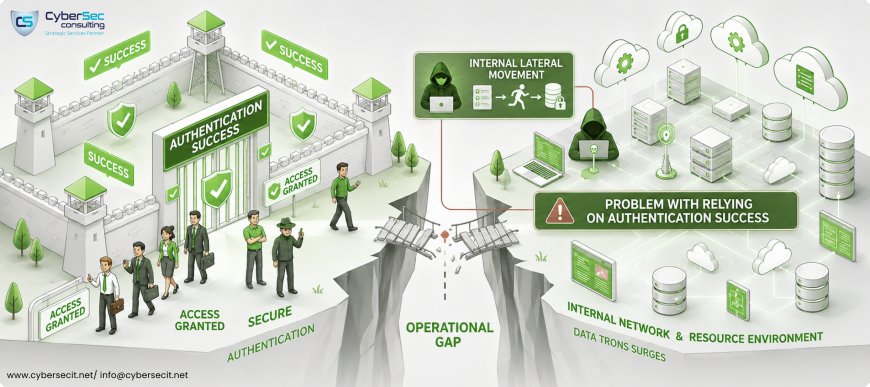
Authentication confirms an identity, but it does not confirm that the activity is legitimate, secure, or authorised.
- Authentication validates credentials, not user intent - A successful login only proves that valid credentials or authentication factors were presented. It does not prove that the user is acting within approved security policies.
- Identity security requires continuous monitoring - Modern IAM, Identity Threat Detection and Response, Zero Trust security, and access governance must evaluate user behaviour after authentication to identify identity-based risks.
- Compromised - A legitimate account can be compromised through phishing, credential theft, malware, or session hijacking. Identity monitoring helps detect suspicious access before it becomes a major cybersecurity incident.
- Misused - Valid credentials can be intentionally or accidentally misused to access sensitive systems, applications, or data. IAM controls help enforce authorised access and strengthen identity security.
- Overprivileged - Users may have more permissions than their current responsibilities require. Excessive access increases the risk of data exposure, privilege abuse, and insider threats.
- Operating Outside Expected Patterns - A valid identity may suddenly access unusual applications, locations, devices, or sensitive resources. User and Entity Behaviour Analytics can identify these deviations and support faster threat detection.
What Should a Secure IAM Health Check Measure?
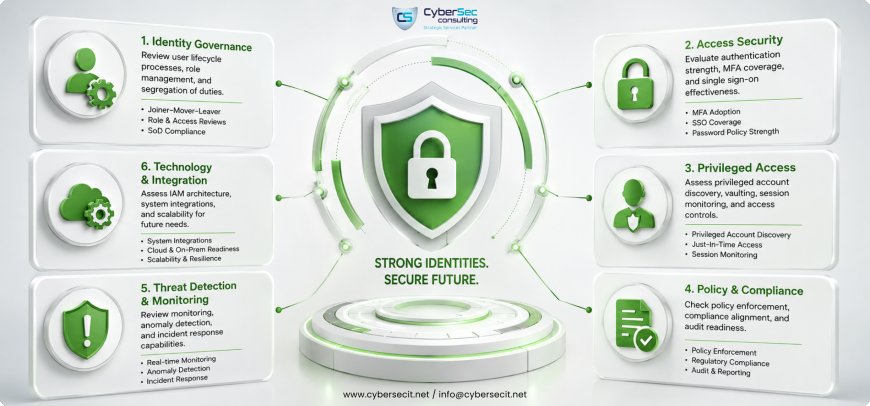
A secure IAM health check should measure whether identities, access, privileges, and security controls are continuously governed, monitored, and protected.
- Identity Lifecycle Management - Ensure user access is provisioned, modified, and revoked promptly as roles and responsibilities change.
- Access Governance - Review who has access to critical systems and whether every permission is aligned with business requirements.
- Privilege Management - Control privileged accounts and excessive permissions to reduce the risk of privilege abuse and insider threats.
- Authentication Controls - Strengthen identity verification with MFA, adaptive authentication, SSO, and risk-based access controls.
- Access Certification - Regularly validate user permissions to remove unnecessary access and support effective access governance.
- Identity Monitoring - Detect suspicious login activity, abnormal behaviour, compromised accounts, and identity-based threats in real time.
- Account Hygiene - Identify dormant, duplicate, orphaned, and inactive accounts that could create unnecessary cybersecurity risk.
- Policy Enforcement - Ensure IAM policies are consistently applied across users, applications, privileged accounts, and critical resources.
- Auditability - Maintain clear identity and access records to support compliance, security audits, risk management, and regulatory requirements.
- Incident Response - Enable rapid investigation, access revocation, account containment, and remediation when identity security incidents occur.
Build an IAM Security Scorecard
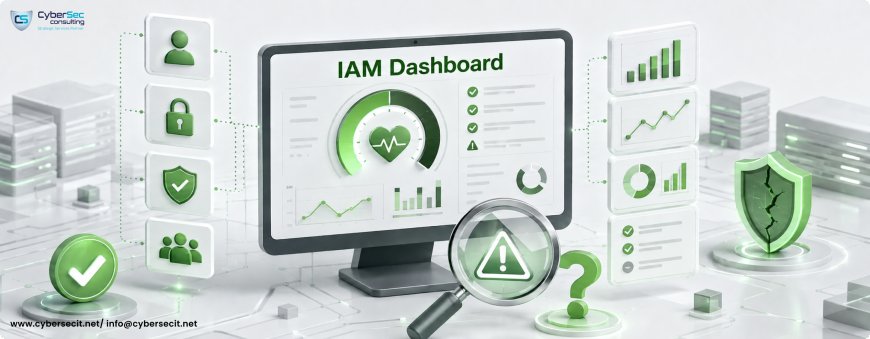
Measure IAM security across identity governance, access control, privileged access, authentication, compliance, and identity threat detection to turn security gaps into actionable risk priorities. For example -
| Area | Question |
| Identity | Are all identities known and owned? |
| Access | Is access appropriate to each role? |
| Privilege | Are privileged identities controlled? |
| Lifecycle | Are identity changes handled promptly? |
| Monitoring | Can unusual identity activity be detected? |
| Governance | Can access decisions be audited? |
From IAM Visibility to IAM Assurance
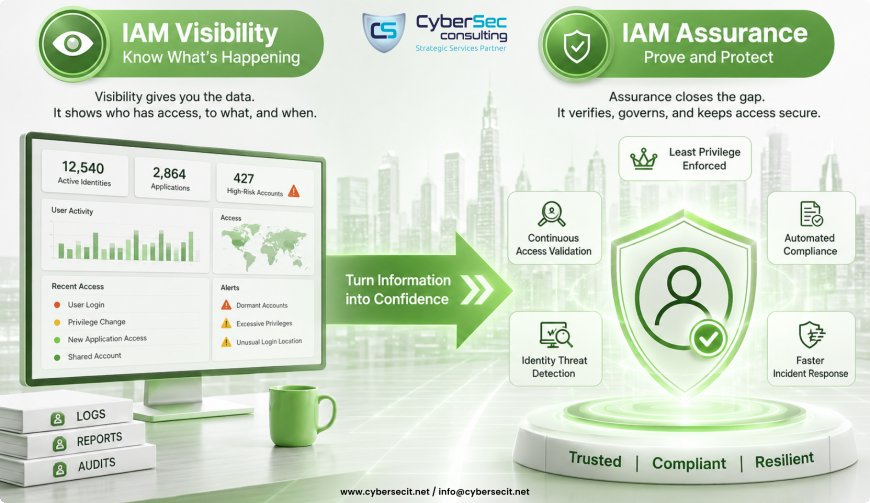
Build stronger IAM security by moving from visibility to validation, detection, governance, and continuous improvement across identity and access management.
- Visibility - Gain a clear view of identities, permissions, privileged accounts, applications, and access risks.
- Validation - Verify that access rights match business roles, security policies, and compliance requirements.
- Detection - Identify suspicious identity behaviour, compromised accounts, privilege misuse, and abnormal access activity.
- Governance - Apply IAM policies, access reviews, least privilege, and identity governance across critical systems.
- Continuous Improvement - Regularly assess IAM controls, close security gaps, strengthen access management, and improve cyber risk resilience.
Conclusion

IAM security is not measured by successful logins alone. Strong identity security requires continuous visibility, access governance, privilege management, identity monitoring, and compliance validation.
Instead of asking -
Is our IAM healthy?
Security leaders should ask -
Can we prove that our identities and access remain secure?
That proof comes from measurable IAM controls, continuous identity threat detection, least privilege, access certification, and strong identity governance. A proactive IAM strategy also helps organisations strengthen cybersecurity resilience, protect sensitive data, and meet evolving compliance requirements.
Ready to turn IAM visibility into measurable security assurance?
Connect with CyberSec Consulting for an IAM assessment, IAM implementation, or ongoing IAM support consultation.
Strengthen identity security, reduce access risk, and build a more resilient access management framework.
FAQs
What does an IAM health check measure?
An IAM health check evaluates identity lifecycle management, access governance, privileged access, authentication controls, access certification, identity monitoring, account hygiene, policy enforcement, auditability, and incident response. It helps organisations identify identity security gaps and strengthen IAM compliance.
Why is a healthy IAM dashboard not enough for identity security?
A healthy IAM dashboard mainly shows that identity services are operating correctly. It may not reveal excessive permissions, dormant accounts, compromised identities, privilege risks, or unusual access activity. A complete IAM security assessment provides deeper visibility into identity and access risks.
Does successful authentication mean an identity is secure?
Successful authentication only confirms that valid credentials or authentication factors were presented. A legitimate identity can still be compromised, misused, overprivileged, or involved in suspicious activity. Continuous identity monitoring and threat detection are essential for stronger access security.
How can organisations identify excessive user access?
Access governance and access certification can compare user permissions against current job responsibilities and business requirements. Regular access reviews help identify excessive access, privilege accumulation, dormant accounts, and inappropriate permissions.
What should organisations include in an IAM security scorecard?
An IAM security scorecard should measure identity ownership, access appropriateness, privileged identity controls, lifecycle management, identity monitoring, governance, authentication security, and compliance. These metrics help security leaders prioritise IAM risks and improve cyber resilience.
How can an IAM assessment improve cybersecurity and compliance?
An IAM assessment identifies weaknesses across identity governance, access control, privileged access management, authentication, monitoring, and auditability. The findings can support stronger least privilege controls, regulatory compliance, identity threat detection, and secure access management. CyberSec Consulting can support organisations with IAM assessment, implementation, and ongoing IAM support.
What's Your Reaction?
 Like
0
 Dislike
0
 Love
0
 Funny
0
 Angry
0
 Sad
0
 Wow
0