























7 Cloud Configurations Your Security Team Should Review Today
Secure your cloud environment with a review of 7 critical cloud configurations covering IAM, storage, network security, encryption, logging, backup, CSPM, and compliance.

Introduction
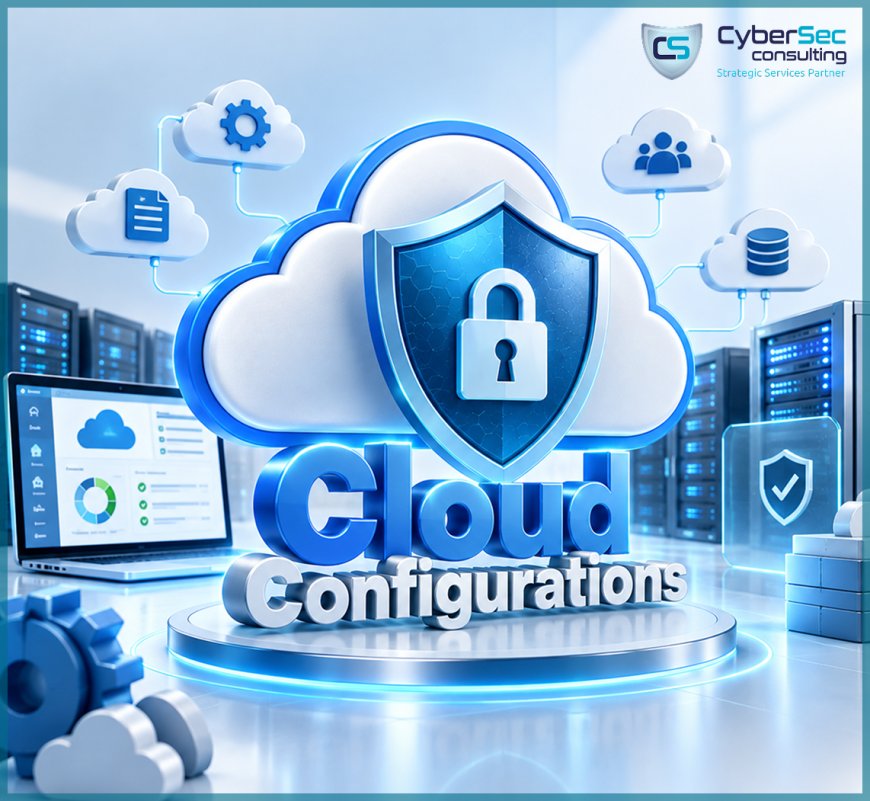
Cloud security risks often begin with misconfigured cloud resources, excessive access permissions, and exposed workloads rather than sophisticated attacks. Strong cloud configuration security helps organizations reduce attack surfaces, protect sensitive data, and strengthen their overall cybersecurity posture. Continuous cloud security assessment and CSPM monitoring can help security teams identify configuration gaps before attackers exploit them.
- Rapid Adoption of AWS, Azure, and Google Cloud - Growing adoption of AWS, Microsoft Azure, and Google Cloud is driving demand for secure cloud infrastructure across enterprises. Cloud security services help organizations protect workloads, applications, identities, and sensitive business data.
- Increasing Complexity Across Multi-Cloud Environments - Multi-cloud environments create greater visibility and governance challenges for security teams. Cloud security consulting and CSPM solutions help centralize security posture monitoring across complex cloud infrastructures.
- Misconfigured Cloud Resources as a Major Security Concern - Public storage, excessive IAM permissions, exposed ports, and weak security controls can increase cloud security risks. Cloud security assessment services help identify these misconfigurations and prioritize critical vulnerabilities.
- Why Configuration Reviews Should Be Continuous - Cloud environments change rapidly through new deployments, policy updates, and access changes. Continuous cloud security monitoring and posture management help detect configuration drift and emerging security gaps.
- Connection Between Cloud Configuration, Identity, Data Protection and Compliance - Secure cloud configurations must align IAM, data protection, encryption, access control, and compliance requirements. Strong configuration governance supports frameworks such as ISO 27001, UAE Information Assurance, SAMA cybersecurity requirements, and data protection regulations.
Configuration 1 - Public Access to Cloud Storage
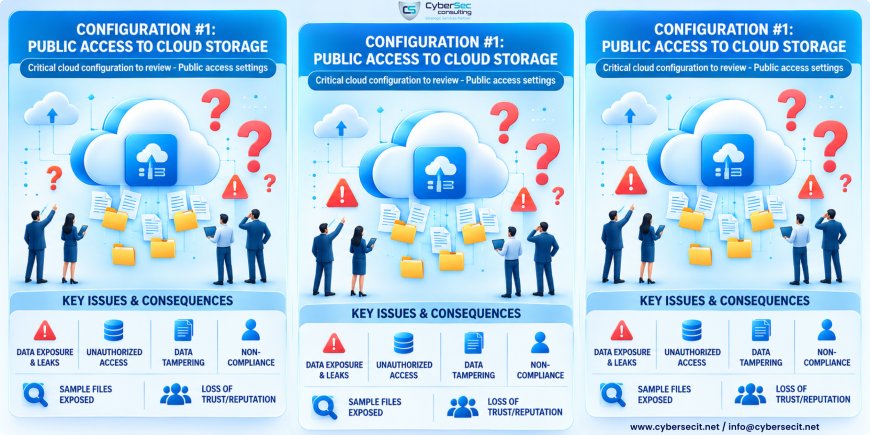
Publicly exposed cloud storage can create serious cloud data security risks, making storage access controls a critical part of every cloud security assessment.
What to Review?
- Public Buckets and Containers - Check whether cloud storage resources are publicly accessible without a legitimate business requirement.
- Anonymous Access - Identify storage resources that allow users to access data without authentication.
- Public Read /Write Permissions - Review unrestricted read or write permissions that could enable data theft or unauthorized modification.
- Object-Level Permissions - Validate permissions assigned to individual files, folders, and objects to prevent excessive access.
- External Sharing - Review external users, accounts, and applications that can access sensitive cloud storage.
- Access Control Policies - Assess IAM policies and storage policies for excessive permissions and weak access controls.
- Sensitive Data Exposure - Identify confidential, personal, financial, and business-critical information exposed through misconfigured storage.
Security Risk
Misconfigured storage can expose:
- Customer Information - Personal and customer data could become accessible to unauthorized users.
- Financial Records - Sensitive financial documents may be exposed through public storage permissions.
- Credentials - API keys, passwords, certificates, and access tokens can be exposed through unsecured files.
- Intellectual Property - Business documents, source code, designs, and proprietary information may be compromised.
- Application Data - Production data and application files can become accessible through weak storage controls.
- Backup Files - Unprotected backups can provide attackers with large volumes of sensitive organizational data.
Recommended Controls
- Disable Unnecessary Public Access - Restrict public storage exposure unless a verified business requirement exists.
- Apply Least Privilege Access - Give users and applications only the permissions they need to do their jobs.
- Enable Encryption - Protect sensitive cloud data with encryption at rest and in transit.
- Monitor Storage Access - Track access activity and generate alerts for unusual downloads or permission changes.
- Implement Continuous Configuration Monitoring - Use CSPM and cloud security monitoring to detect configuration drift and storage exposure continuously.
Configuration 2 - IAM Roles, Users, and Privileges
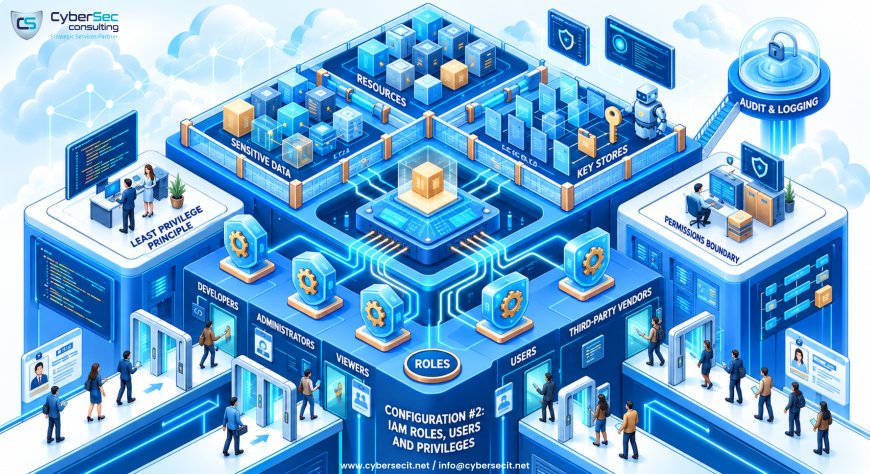
Strong cloud IAM security helps organizations control identities, enforce least privilege, and reduce unauthorized access across cloud environments.
What to Review?
- Excessive Privileges - Identify users with permissions beyond their actual job responsibilities and security requirements.
- Dormant Accounts - Review inactive user accounts and disable access that is no longer required.
- Shared Accounts - Eliminate shared identities to improve accountability and strengthen access governance.
- Privileged Identities - Closely monitor administrator and other high-privilege accounts for unauthorized activity.
- Service Accounts - Review application and service identities for excessive permissions and unnecessary access.
- IAM Roles - Validate cloud IAM roles against least privilege and Zero Trust security principles.
- Cross Account Access - Review access between cloud accounts, subscriptions, and environments for unauthorized exposure.
- MFA Enforcement - Ensure multi-factor authentication protects privileged and sensitive cloud accounts.
- Access Keys - Identify unused or exposed access keys and enforce secure lifecycle management and regular rotation.
Questions Security Teams Should Ask
- Who has administrative access?
- Which identities have excessive privileges?
- Are inactive accounts still enabled?
- Are service accounts overprivileged?
- Are privileged actions monitored?
Configuration 3 - Network Security Rules
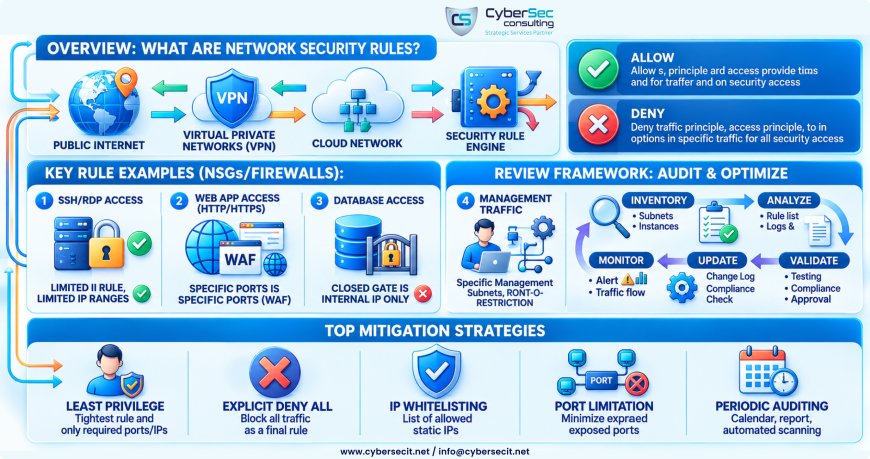
Strong cloud network security helps organizations reduce exposed attack surfaces, control traffic, and protect cloud workloads against unauthorized access.
What to Review?
- Security Groups - Review inbound and outbound rules to ensure cloud resources only allow required network traffic.
- Network ACLs - Validate network access control lists to restrict unauthorized traffic between cloud networks and workloads.
- Firewall Policies - Check cloud firewall rules for excessive permissions, outdated policies, and unrestricted traffic.
- Open Ports - Identify unnecessary open ports that could expose applications, databases, and cloud services to attackers.
- Internet-Facing Workloads - Review public-facing workloads and ensure only approved applications are accessible from the internet.
- Remote Administration Ports - Restrict SSH, RDP, and other administrative ports to authorized users and trusted network sources.
- East-West Traffic - Monitor internal workload communication to reduce lateral movement after a cloud security breach.
- Segmentation - Implement strong network segmentation to isolate critical workloads, sensitive data, and privileged systems.
High-Risk Examples
- 0.0.0.0/0 access
- Unrestricted SSH
- Unrestricted RDP
- Public database access
- Flat cloud networks
Configuration 4 - Encryption and Key Management
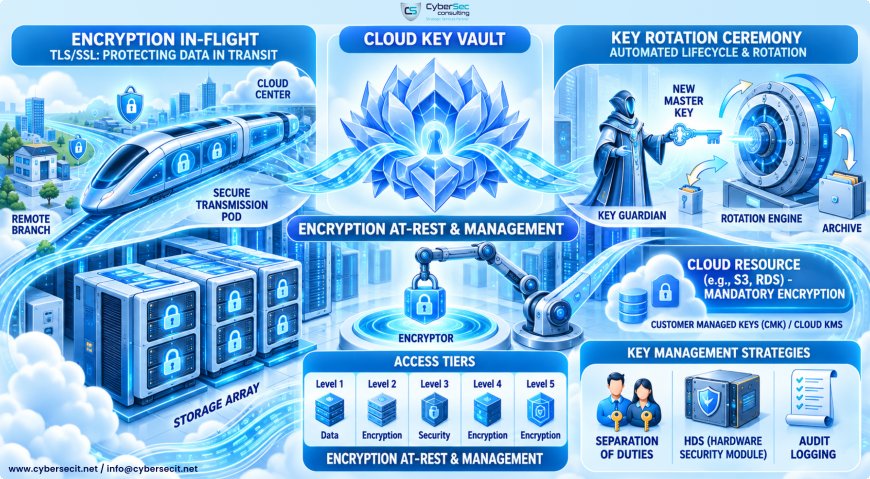
Strong cloud encryption and key management protect sensitive workloads, strengthen cloud data security, and support regulatory compliance requirements.
What to Review?
- Encryption at Rest - Ensure sensitive cloud data is encrypted when stored across databases, storage services, and backups.
- Encryption in Transit - Verify that data moving between users, applications, and cloud services uses secure encryption protocols.
- KMS Configuration - Review Key Management Service settings to ensure encryption keys are securely created, stored, and managed.
- Key Rotation - Establish regular key rotation to reduce the security impact of compromised or outdated encryption keys.
- Key Access Permissions - Restrict access to encryption keys through least privilege and strong IAM controls.
- Secrets Management - Secure passwords, API keys, tokens, and application secrets through dedicated cloud secrets management solutions.
- Certificate Management - Monitor digital certificates, expiration dates, renewal processes, and certificate access permissions.
Security Risks
- Access Encrypted Data - Compromised keys or excessive permissions can allow unauthorized users to access protected cloud data.
- Decrypt Sensitive Information - Weak key controls can enable attackers to decrypt confidential business and customer information.
- Abuse Compromised Credentials - Stolen credentials with key management access can be used to bypass established security controls.
- Bypass Data Protection Controls - Poor encryption governance can weaken cloud data protection, compliance, and cybersecurity controls.
Configuration 5 - Logging, Monitoring and Audit Trails
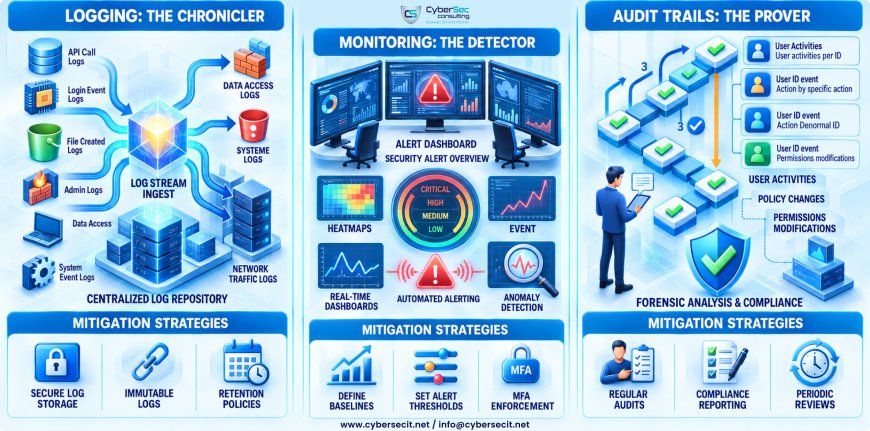
Effective cloud security monitoring and audit logging provide visibility into user activity, security events, and suspicious changes across cloud environments.
What to Review?
- Cloud Activity Logs - Monitor cloud resource changes, user activity, and security events across critical cloud services.
- IAM Activity - Track authentication events, permission changes, role assignments, and unusual identity activity.
- Administrative Actions - Record privileged actions to identify unauthorized configuration changes and potential insider threats.
- API Calls - Monitor API activity to detect suspicious requests, unauthorized access, and abnormal application behaviour.
- Network Logs - Review network traffic and connection records to identify unusual communication and potential attack activity.
- Storage Access - Monitor file and object access to detect unusual downloads, data movement, or unauthorized activity.
- Security Alerts - Configure real-time alerts for critical events such as privilege escalation, exposed resources, and suspicious logins.
- Log Retention - Define appropriate retention periods to support cloud security investigations, incident response, and regulatory compliance.
Key Questions
- Are critical cloud actions being logged?
- Are logs protected against tampering?
- Is there centralized monitoring?
- Are suspicious activities generating alerts?
- Can security teams reconstruct an incident?
Configuration 6 - Backup, Recovery and Resilience
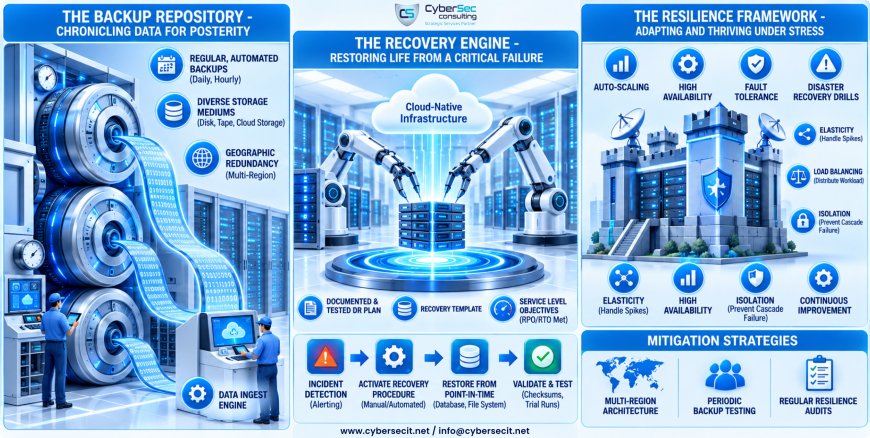
Strong cloud backup security and disaster recovery help organizations protect critical data, maintain business continuity, and recover quickly after security incidents.
What to Review?
- Backup Policies - Review backup policies to ensure critical cloud workloads and business data are consistently protected.
- Backup Frequency - Define backup schedules based on business requirements, data sensitivity, and recovery objectives.
- Recovery Points - Validate recovery points to ensure organizations can restore data within required **RPO and RTO targets**.
- Backup Encryption - Protect backup data with strong encryption and restrict access to encryption keys.
- Cross-Region Backups - Store critical backups across separate regions to improve resilience against regional outages and security incidents.
- Immutable Backups - Use immutable backups to prevent unauthorized modification or deletion during ransomware attacks.
- Disaster Recovery Configuration - Review cloud disaster recovery plans, failover settings, and recovery dependencies.
- Recovery Testing - Conduct regular recovery tests to confirm that backups can support effective business continuity.
Security Angle
- Ransomware - Immutable and isolated backups can help organizations recover critical cloud workloads without relying on compromised systems.
- Accidental Deletion - Secure recovery points can restore important data after accidental deletion or incorrect configuration changes.
- Insider Threats - Restricted backup permissions can reduce unauthorized modification or deletion by internal users.
- Compromised Administrator Accounts - Separate backup access controls can protect recovery data when privileged cloud accounts are compromised.
Configuration 7 - Security Services and Compliance Controls
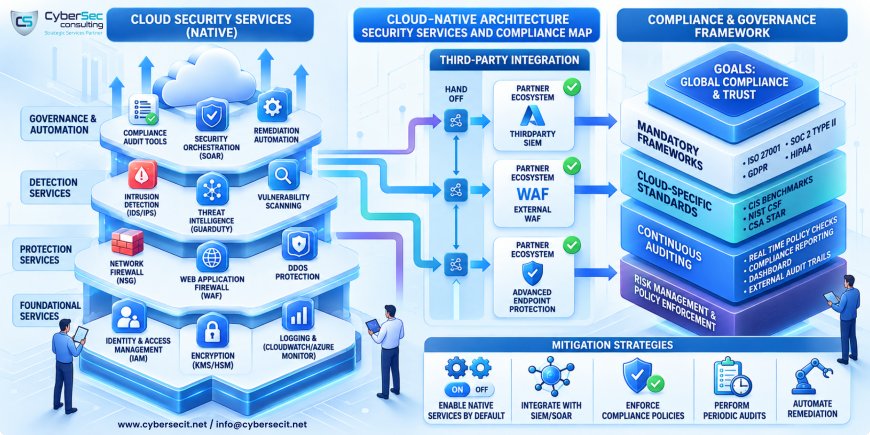
Strong cloud security posture management and compliance controls help organizations continuously identify risks, enforce security policies, and maintain regulatory readiness.
What to Review?
- CSPM Controls - Use Cloud Security Posture Management to identify misconfigurations, security gaps, and compliance risks across cloud environments.
- Security Posture Dashboards - Monitor centralized security dashboards to track cloud risks, critical findings, and remediation progress.
- Cloud Native Security Services - Review built-in cloud security tools for threat detection, workload protection, identity security, and data protection.
- Compliance Configurations - Map cloud configurations against security standards and compliance requirements to identify control gaps.
- Vulnerability Management - Continuously identify, prioritize, and remediate vulnerabilities across cloud workloads and applications.
- Security Baselines - Establish secure cloud configuration baselines aligned with organizational security policies and industry best practices.
- Policy Enforcement - Apply automated security policies to prevent unauthorized configurations and reduce cloud security risks.
- Regulatory requirements - Align cloud security controls with ISO 27001, UAE Information Assurance, SAMA Cybersecurity Framework, PCI DSS, and data protection requirements.
How CSPM Helps Identify Cloud Misconfigurations?

Cloud Security Posture Management (CSPM) continuously evaluates cloud environments to identify misconfigurations, security gaps, excessive permissions, and compliance risks. CSPM solutions improve cloud security posture management, cloud risk assessment, and compliance visibility across enterprise environments.
What CSPM Helps Security Teams Review?
- Automated Configuration Assessment - Automatically assess cloud resources against security policies, configuration standards, and approved security baselines.
- Continuous Monitoring - Continuously monitor cloud environments for configuration changes, security risks, and configuration drift.
- Risk Prioritization - Rank security findings based on severity, business impact, exposure, and potential attack paths.
- Compliance Monitoring - Map cloud configurations against frameworks such as ISO 27001, PCI DSS, UAE Information Assurance, and SAMA cybersecurity requirements.
- Misconfiguration Detection - Detect exposed storage, excessive IAM permissions, open ports, weak encryption, and other cloud security misconfigurations.
- Security Posture Visibility - Provide centralized visibility into cloud assets, security findings, compliance status, and overall security posture.
- Multi-Cloud Monitoring - Monitor AWS, Microsoft Azure, Google Cloud, and multi-cloud environments through centralized security controls.
- Remediation Tracking - Track identified security issues through remediation workflows and verify whether critical cloud risks have been resolved.
Conclusion
Cloud security requires continuous attention to how cloud resources are configured, accessed, monitored, and governed. Secure configuration helps organizations reduce cloud attack surfaces, protect sensitive data, and strengthen their overall cybersecurity posture.
Seven areas deserve regular security reviews:
- Storage - Protect cloud storage against public exposure and unauthorized access.
- IAM - Enforce least privilege, MFA, and strong cloud identity governance.
- Network - Secure firewalls, security groups, open ports, and network segmentation.
- Encryption - Protect sensitive data through encryption and secure key management.
- Logging - Maintain strong cloud monitoring, audit trails, and security visibility.
- Backup - Protect recovery data and strengthen cloud resilience against ransomware.
- Security and Compliance Controls - Maintain CSPM, security baselines, policy enforcement, and regulatory alignment.
CyberSec Consulting supports organizations through Cloud Security Assessment, CSPM, Cloud Infrastructure Security, IAM, Security Hardening, and Compliance Consulting. These services help identify cloud misconfigurations, strengthen security controls, improve compliance readiness, and build a more resilient cloud security posture.
Is Your Cloud Configuration Secure?
CyberSec Consulting can help organizations identify cloud misconfigurations, excessive permissions, exposed resources, and compliance gaps through structured Cloud Security Assessments and CSPM-led security posture reviews.
FAQs
What cloud configurations should security teams review regularly?
Security teams should review cloud storage, IAM permissions, network security, encryption, logging, backups, CSPM controls, and compliance configurations regularly. These controls help reduce cloud security risks and protect critical business data.
Why are cloud misconfigurations a major security risk?
Cloud misconfigurations can expose sensitive data, applications, credentials, and workloads to unauthorized users. Cloud security assessments can identify excessive permissions, public resources, open ports, and other security gaps.
How does CSPM help improve cloud security?
Cloud Security Posture Management continuously monitors cloud environments for misconfigurations, compliance gaps, exposed resources, and security risks. CSPM also helps prioritize findings and track remediation activities.
How can organizations secure IAM configurations in the cloud?
Organizations should enforce least privilege, MFA, strong access controls, privileged identity management, and regular access reviews. Secure IAM configurations help reduce unauthorized access and identity based attacks.
How often should cloud security configurations be reviewed?
Continuous monitoring should detect critical configuration changes and security risks. Regular cloud security audits and assessments should also validate IAM, network controls, encryption, backups, and compliance requirements.
How can cloud security assessments support compliance?
Cloud security assessments identify configuration gaps against security standards and regulatory requirements. Organizations can strengthen cloud compliance through ISO 27001, PCI DSS, UAE Information Assurance, SAMA cybersecurity requirements, and data protection controls.
What's Your Reaction?
 Like
0
 Dislike
0
 Love
0
 Funny
0
 Angry
0
 Sad
0
 Wow
0