

Ransomware activity against industrial organizations reached 3,300 incidents during 2025. Oil and natural gas organizations recorded 49 ransomware incidents during Q4 2025. Dragos also reported a major increase in industrial ransomware activity during 2024.
The impact of a cyberattack on oil and gas can extend far beyond an IT outage.
Why Oil and Gas Is a High Value Cyber Target
Oil and gas organizations operate some of the most complex industrial environments.
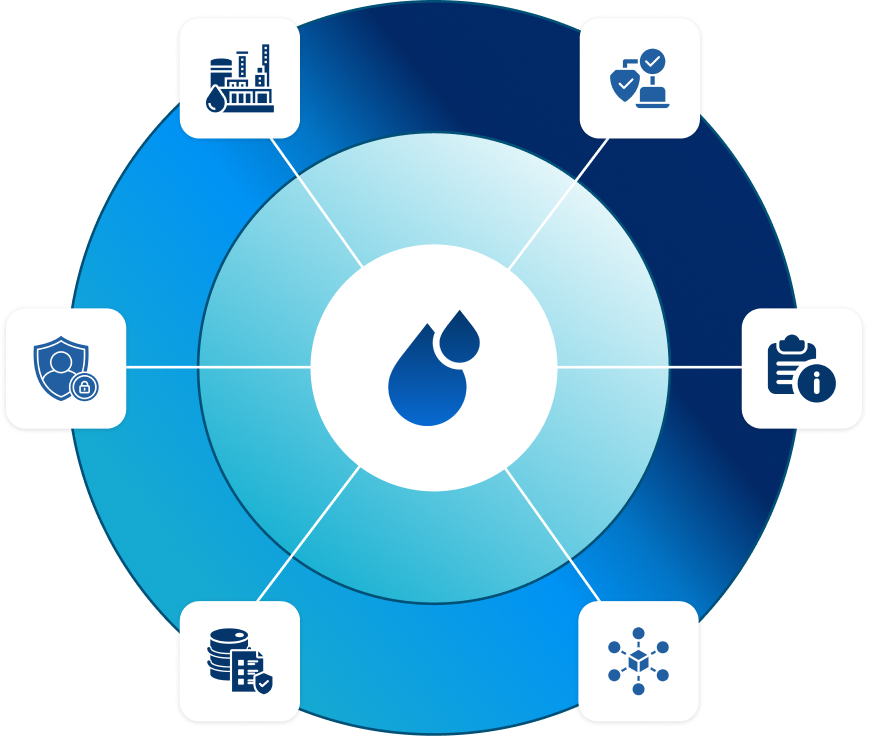
These environments increasingly depend on connected technologies.
What Happens When Oil and Gas Operations Are Attacked?

Production Can Stop
- Oil and gas production depends on continuous operations.
- A serious cyber incident can affect production planning.
- It can disrupt supporting systems.
- It can delay operational workflows.
- It can affect control environments.
- Production interruption can create significant financial consequences.
Refinery Operations Can Be Disrupted
- Refineries depend on complex digital systems.
- Operational disruption can affect processing activities.
- A prolonged incident can create production delays.
- Recovery can require coordination across multiple technical and operational teams.

Pipeline Operations Can Be Affected
- Pipelines depend on monitoring, communications and control systems.
- A cyber incident can affect visibility.
- It can disrupt supporting applications.
- It can create uncertainty around operational conditions.
- Pipeline operators therefore need strong visibility across connected environments.
Offshore Operations Face Additional Exposure
- Offshore facilities operate across geographically distributed environments.
- Remote connectivity supports maintenance and monitoring.
- Remote access can also create an attack path.
- Compromised credentials or exposed systems can increase cyber risk.
- Operational teams need confidence that remote access remains controlled and monitored.
IT And OT Security Challenge

Oil and gas cybersecurity cannot focus only on corporate IT.

Operational technology supports physical processes.

Industrial control systems support production activities.

Engineering workstations support configuration and maintenance.

Human machine interfaces provide operational visibility.

Remote access can connect vendors and employees to critical environments.

These systems can have different security requirements.

Security decisions therefore need to consider operational impact.
Cyberattack Can Move Toward the Physical World
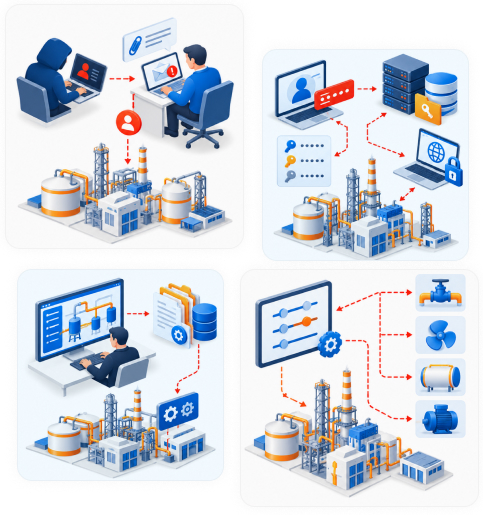
Most Serious Oil and Gas Cyber Risks
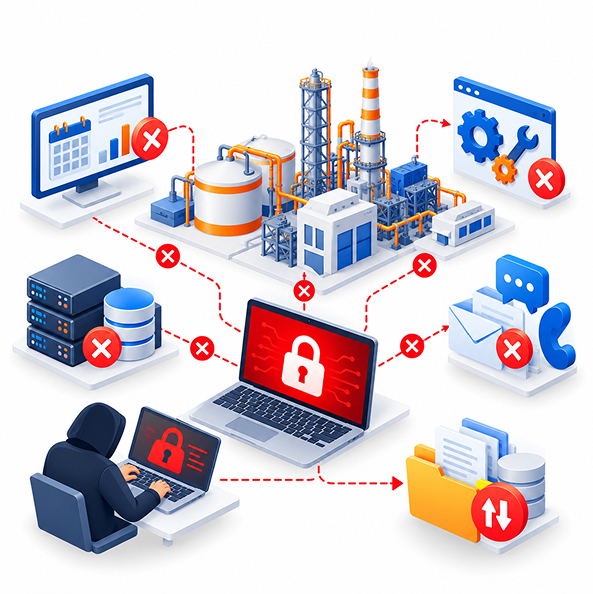
01. Ransomware
- Ransomware can affect corporate systems that support production.
- It can interrupt planning.
- It can disrupt maintenance workflows.
- It can affect communications.
- It can create recovery pressure.
- Attackers may also steal data before demanding payment.
02. OT Intrusion
- Operational technology environments can attract attackers seeking deeper access.
- A compromised OT environment can create significant operational risk.
- Attackers may seek process information.
- They may collect configurations.
- They may target engineering workstations.
- They may attempt to understand how industrial processes operate.
- Recent Dragos reporting documented threat activity involving oil and gas engineering workstations and operational information.
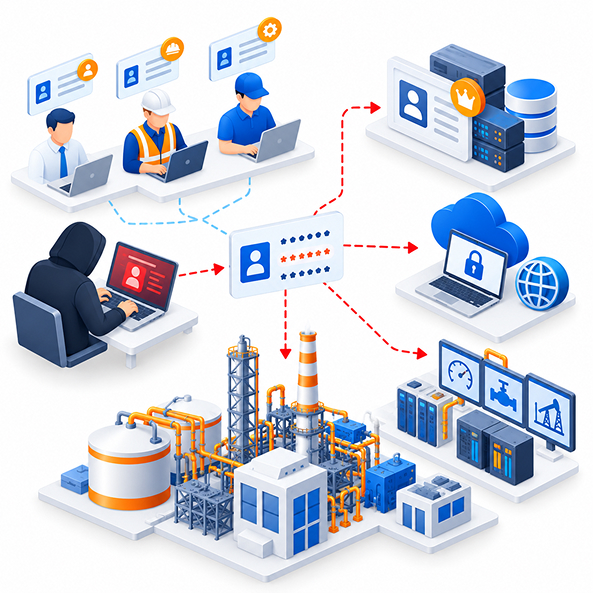
03. Credential Theft
- Employees, contractors and vendors may require access to oil and gas systems.
- Stolen credentials can provide legitimate looking access.
- Privileged accounts can create greater exposure.
- Remote access credentials require strong protection.
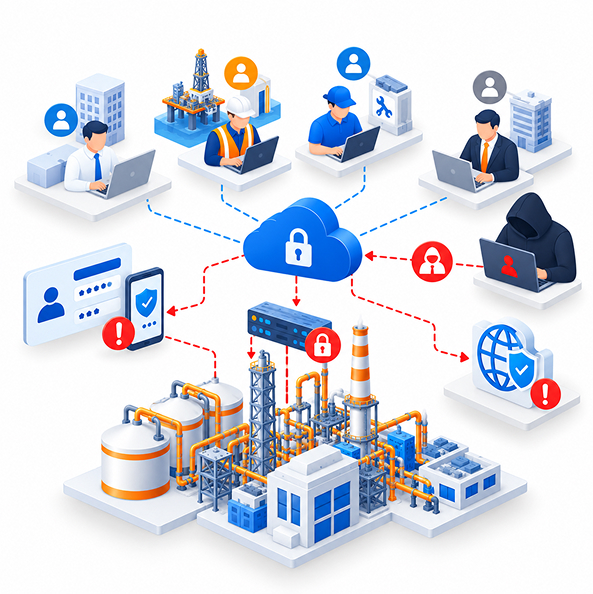
04. Remote Access Exposure
- Remote connectivity is important for geographically distributed oil and gas operations.
- Remote access can also become an entry point for attackers.
- Uncontrolled access can expose operational environments.
- Weak authentication can increase risk.
- Third party access can create additional dependencies.
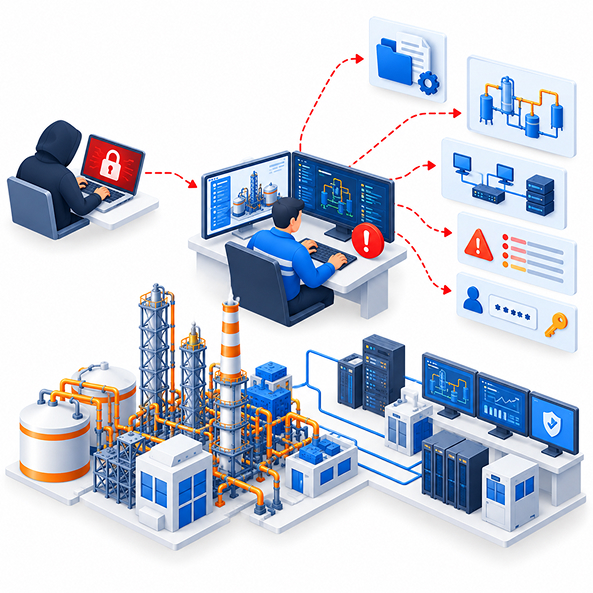
05. Engineering Workstation Compromise
Engineering workstations can contain valuable operational information.
- Configuration files.
- Process information.
- Network information.
- Alarm information.
- Administrative credentials
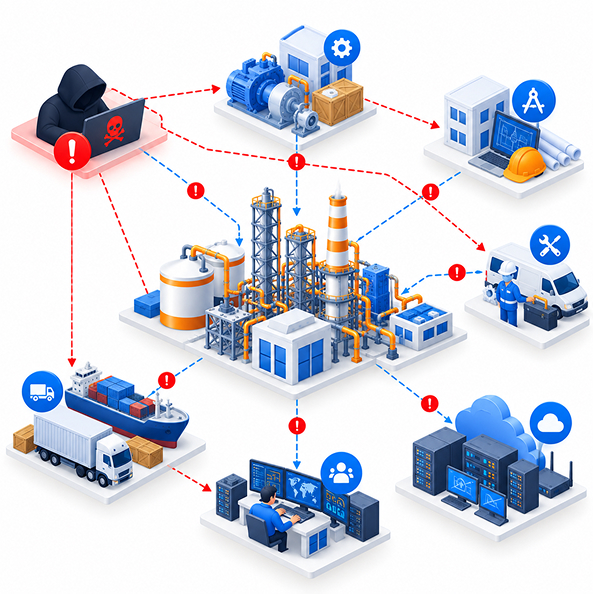
06. Supply Chain Attacks
Oil and gas organizations depend on many external organizations.
- Equipment suppliers.
- Engineering companies.
- Maintenance providers.
- Technology vendors.
- Managed service providers.
- Logistics providers.
Why OT Cybersecurity Requires Operational Context

Security teams need to understand what each system actually supports.
- A vulnerability on a corporate laptop may have one level of importance.
- A vulnerability connected to a production environment may have a very different consequence.
- A compromised engineering workstation may expose critical operational information.
- A vulnerable remote access system may create a path toward sensitive environments.
Risk assessment should therefore consider:
 Production impact
 Safety implications
 Operational dependency
 System criticality
 Network connectivity
 Remote access
 Privileged access
 Data sensitivity
 Recovery requirements
 Third party exposure
Cost of an Oil and Gas Cyberattack Goes Beyond IT
 It can affect delivery schedules.
 It can affect customer relationships.
 It can create financial pressure.
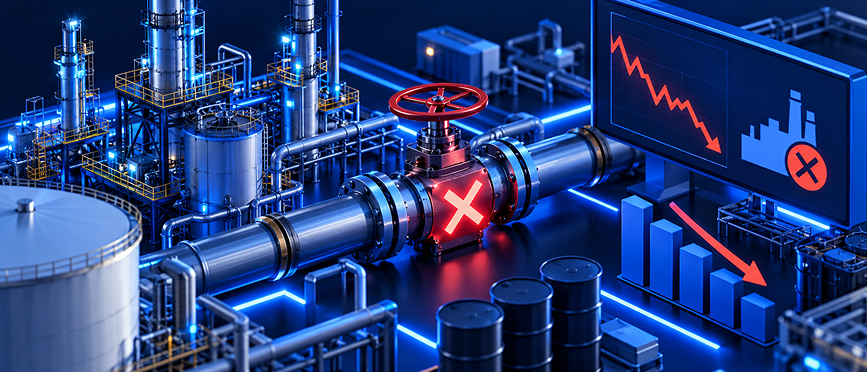
Lost Production
- Production downtime can create immediate financial pressure.
- Every hour of disruption can affect output.
- Longer incidents can create wider business consequences.

Supply Chain Disruption
- Oil and gas operations connect with transportation, logistics, manufacturing and other industries.
- A significant disruption can affect connected organizations.
- The impact can extend beyond the original victim.
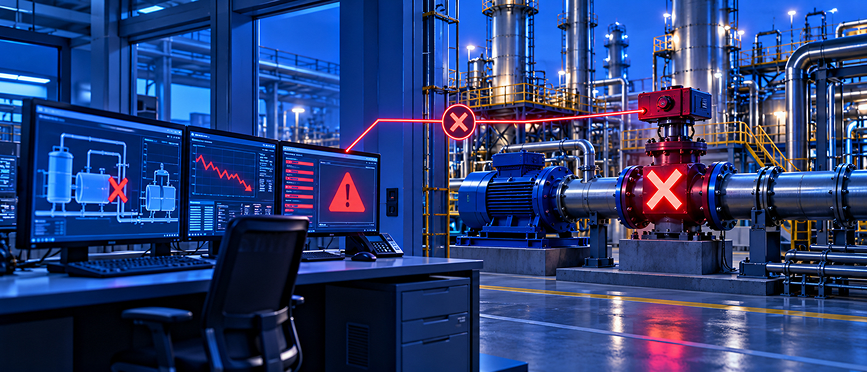
Safety Concerns
- Cybersecurity and operational safety can become connected when compromised systems influence industrial processes.
- Security teams need to understand where digital compromise could affect physical operations.
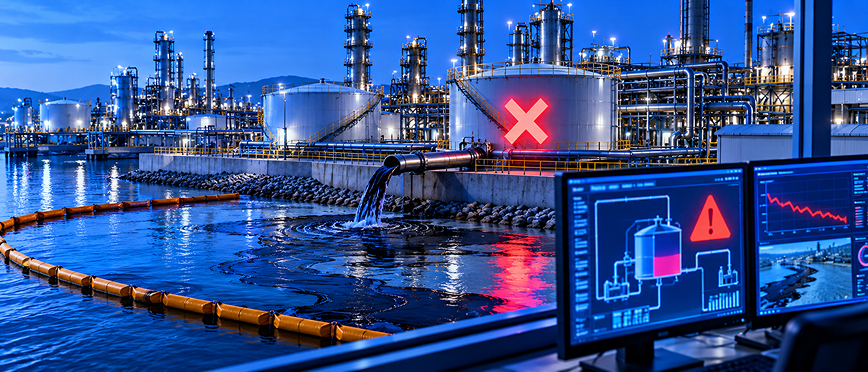
Environmental Risk
- Operational disruption can create additional concerns when industrial processes depend on continuous monitoring and control.
- Cyber resilience therefore supports wider operational responsibility.

Market Impact
- Oil and gas organizations operate within highly connected markets.
- A major operational disruption can affect supply commitments.
Oil and Gas Attack Surface
Modern oil and gas organizations can have a large digital footprint.

Upstream
- Exploration systems.
- Production platforms.
- Drilling environments.
- Remote field operations.
- Industrial sensors.
- Engineering systems.
Midstream
- Pipelines.
- Compression facilities.
- Storage facilities.
- Terminals.
- Monitoring systems.
- Remote operations.
Downstream
- Refineries.
- Petrochemical facilities.
- Distribution systems.
- Storage environments.
- Retail support systems.

Enterprise
- Corporate applications.
- Cloud environments.
- Identity systems.
- Employee endpoints.
- Email platforms.
- Third party connections.
Why Security Blind Spots Are Dangerous
Oil and gas organizations can have security tools across many environments.
Yet security teams may still lack complete visibility.
Questions Oil and Gas Security Leaders Should Ask
Cybersecurity for Oil and Gas Organizations
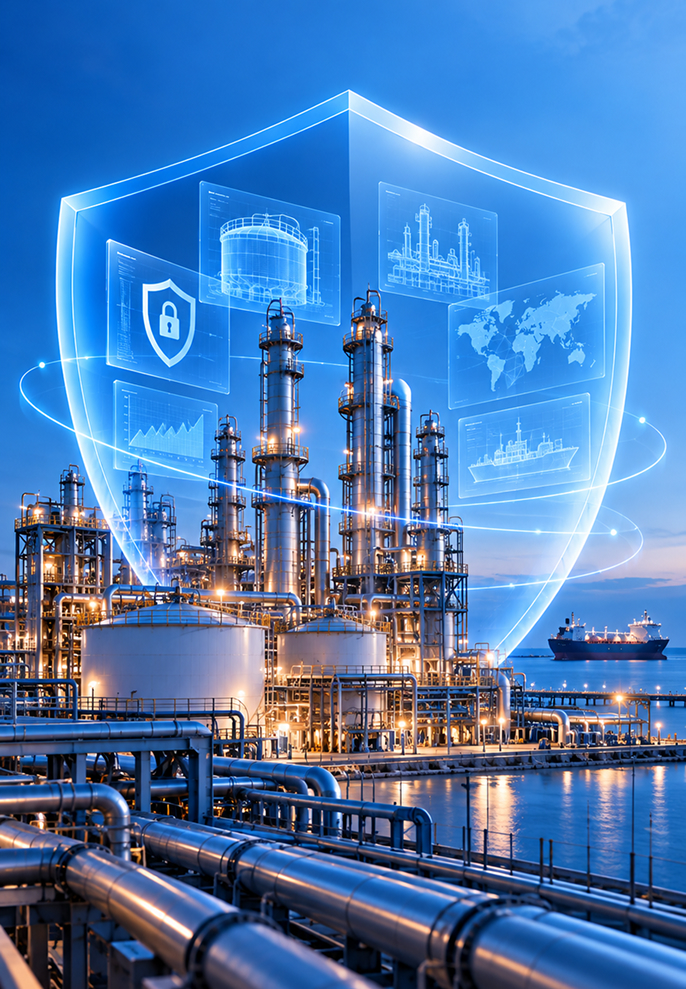
CyberSec Consulting helps oil and gas organizations understand cybersecurity risks across complex technology and operational environments.
Our focus is not simply on deploying more security tools. Our approach helps organizations understand where meaningful exposure exists.

Security Exposure
Identify assets, connections and weaknesses that can increase cyber risk.

Operational Risk
Understand how cybersecurity weaknesses can affect production and business continuity.

Access Risk
Identify risks associated with employees, administrators, vendors and remote users.
Security Validation
Determine whether existing security controls can withstand realistic attack scenarios.

Cyber Resilience
Prepare organizations to detect, contain and recover from serious cyber incidents.

Risk Prioritization
Help security teams focus attention on weaknesses that can create significant operational impact.
IT and OT Visibility
Improve understanding of connections between enterprise environments and operational environments.
Protecting Oil and Gas Across the Operational Lifecycle

Exploration
- Exploration environments can contain valuable geological, engineering & operational information.
- Cybersecurity helps protect sensitive information and connected systems.
Production
- Production environments require availability and operational stability.
- Security decisions must consider the potential impact on industrial processes.
Processing
- Refineries and processing facilities depend on connected operational systems.
- Cyber incidents can disrupt workflows and production activities.
Transportation
- Pipelines and logistics systems depend on connectivity and monitoring.
- Security weaknesses can affect operational visibility.

Storage
- Storage facilities depend on monitoring and control systems.
- Cybersecurity supports reliable and secure operations.
Distribution
- Distribution networks connect producers with customers and markets.
- A cyber incident can affect service continuity and commercial operations.
Why Oil and Gas Cyber Resilience Matters
Oil and gas organizations cannot assume that every cyber incident will remain inside the IT environment.
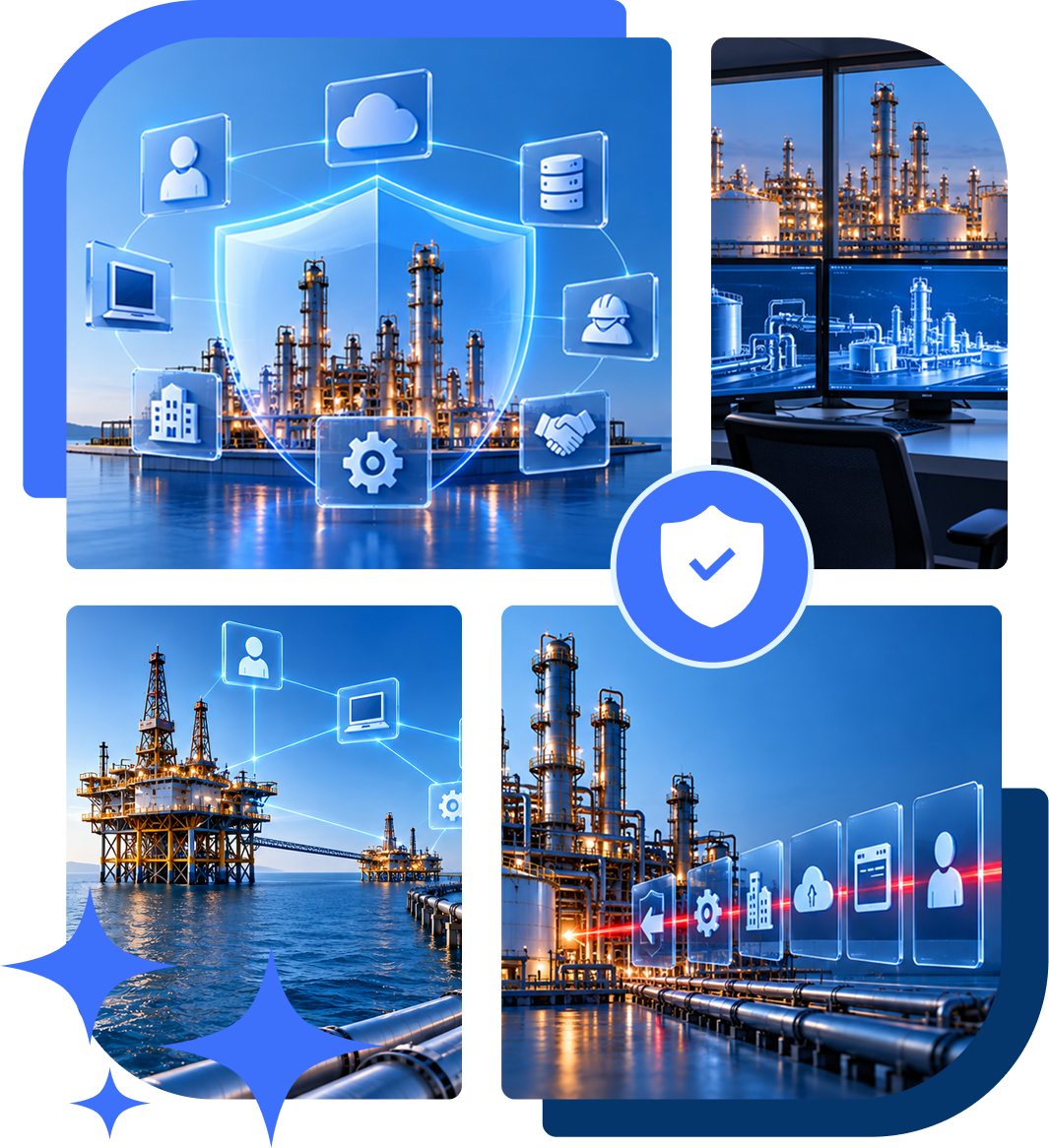
 Attackers can target identities.They can target applications.They can target remote access.They can target suppliers.They can target engineering systems.They can target operational environments.Security teams need to understand how these systems connect.Cyber resilience provides a framework for preparing for that possibility.
Build Cyber Resilience Across Oil and Gas Operations
- Cyber threats against the oil and gas industry continue to evolve.
- Ransomware groups continue targeting industrial organizations.
- Threat actors continue looking for exposed systems.
- Remote access remains an important security consideration.
- Industrial environments continue becoming more connected.
- Operational technology remains an attractive target.





Dragos reported 49 oil and natural gas ransomware incidents during Q4 2025 and identified continued targeting across upstream, midstream and downstream organizations. Oil and gas cybersecurity therefore needs continuous attention.
CyberSec Consulting helps organizations understand exposure, validate security readiness and strengthen cyber resilience across complex environments.
Protect production. Protect operational technology. Protect the systems that keep energy moving.
Strengthen Your Oil and Gas Cybersecurity
Talk to CyberSec Consulting about your oil and gas cybersecurity requirements.
Talk to CyberSec Consulting →FAQs
Oil and gas organizations in the UAE can face ransomware, credential theft, remote access compromise, DDoS attacks, application vulnerabilities and OT security threats. UAE oil and gas cybersecurity also needs to consider offshore facilities, refineries, pipelines and connected industrial environments.
Oil and gas cybersecurity in Saudi Arabia is important because energy operations depend on connected production, processing, transportation and distribution environments. A serious cyberattack can disrupt operations, expose sensitive information and create significant business consequences.
Oil and gas companies in Egypt can face ransomware, phishing, vulnerable remote access, third party exposure and attacks against connected operational environments. Egypt oil and gas cybersecurity should consider production facilities, pipelines, processing environments and supporting IT systems.
Oil and gas organizations in the UK can face ransomware, credential compromise, supply chain attacks, application vulnerabilities and threats against operational technology. UK oil and gas cybersecurity also needs to consider offshore operations and connected industrial infrastructure.
Qatar's energy sector depends heavily on connected industrial infrastructure. Qatar oil and gas cybersecurity should address risks involving operational technology, remote access, engineering systems, production environments and third party connections.
Oil and gas organizations across Africa can face ransomware, phishing, credential theft, remote access attacks and vulnerabilities across distributed operational environments. Africa oil and gas cybersecurity should account for geographically distributed assets and connectivity requirements.
OT cybersecurity helps protect systems that support physical industrial processes. A compromise can potentially affect production, monitoring, control and operational continuity.
Yes. Ransomware can affect IT systems that support production and can create operational disruption. Recovery can also affect maintenance, communications, planning and other production supporting activities.
Engineering workstations can contain configurations, operational information and access capabilities. A compromised workstation can provide attackers with valuable information about industrial environments.
Remote access allows employees, vendors and specialists to connect with distributed environments. Compromised credentials or poorly protected access pathways can create opportunities for unauthorized activity.
A cyberattack can affect systems supporting pipeline monitoring, communications and operations. The actual impact depends on the systems involved, the attack path and the organization's operational controls.
Organizations can map assets, examine IT and OT connectivity, review remote access, assess vulnerabilities, evaluate privileged accounts and validate security controls. These activities can reveal exposure that may not be visible through standard monitoring.
Oil and gas organizations depend on equipment providers, engineering firms, maintenance companies and technology vendors. External connections can introduce additional access paths and security dependencies.
Preparation should include asset visibility, identity protection, security monitoring, incident response planning, recovery preparation and regular security validation. Operational considerations should be included when developing ransomware response plans.
Organizations should understand how IT and OT environments connect. Security teams should identify critical assets, control remote access, monitor important activity, assess vulnerabilities and validate security controls while considering operational requirements.
Offshore facilities can depend on remote connectivity, engineering systems, communications and operational technology. Cybersecurity helps reduce risks that could affect availability, monitoring and operational continuity.
Organizations can identify vendor access, review permissions, monitor third party activity and regularly validate external connections. Vendor access should be limited to legitimate operational requirements.
CyberSec Consulting helps oil and gas organizations understand cyber exposure, identify meaningful weaknesses, validate security readiness and strengthen cyber resilience across complex IT and operational environments.
An oil and gas CISO should maintain visibility into external exposure, IT and OT connectivity, vulnerabilities, privileged access, remote access, third party activity, sensitive systems and incident readiness.
A cybersecurity weakness can have consequences beyond data loss. Operational disruption can affect production, transportation, processing, supply commitments and business continuity. Security decisions should therefore consider potential operational impact.
Copyright © 2026 CyberSec Consulting - All Rights Reserved