

When Trust Is Your Currency, Security Is Your Foundation
- That makes the BFSI sector a prime target for cybercriminals, ransomware groups, fraud networks and sophisticated threat actors.
- The latest Verizon 2026 Data Breach Investigations Report recorded 3,809 security incidents and 1,300 confirmed data breaches across the financial and insurance sector.
- The impact can move far beyond stolen data.
- System Intrusion, Social Engineering and Everything Else accounted for 81% of breaches. Vulnerability exploitation accounted for 22% of initial access, phishing accounted for 20%, and credential abuse accounted for 15%.
- A successful cyberattack can disrupt banking operations, block customer access, compromise payment systems, expose financial records, trigger fraud, damage trust and create major regulatory consequences.
- Cybersecurity for BFSI is no longer only about protecting systems. It is about protecting financial continuity, customer confidence and institutional trust.
When Financial Systems Go Down, The Impact Spreads Fast
A cyberattack against a bank, insurer, investment company, payment provider or financial institution can create a chain reaction.

Customer Accounts Can Be Exposed
- Attackers can target personal information, account details, credentials and transaction data.
- A single compromised identity can become the starting point for fraud, account takeover or further intrusion.

Banking Operations Can Stop
- Ransomware and system intrusion can affect applications, infrastructure and critical business processes.
- Even a temporary outage can create serious financial and operational pressure.
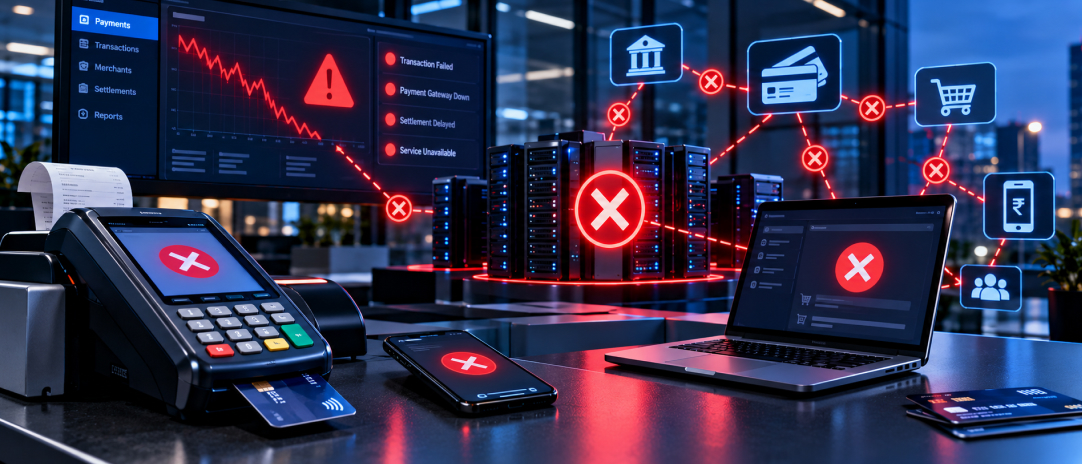
Payment Services Can Be Disrupted
- Payment platforms are attractive targets because every minute of disruption can affect customers, merchants and financial transactions.
- Disruption can delay payments and interrupt critical financial services.

Fraud Can Scale Quickly
- Compromised credentials and manipulated transactions can enable financial fraud at speed.
- Attackers can also combine stolen information with social engineering to target customers and employees.

Trust Can Collapse
- Customers expect financial institutions to protect their money and personal information.
- A major breach can create lasting reputational damage.
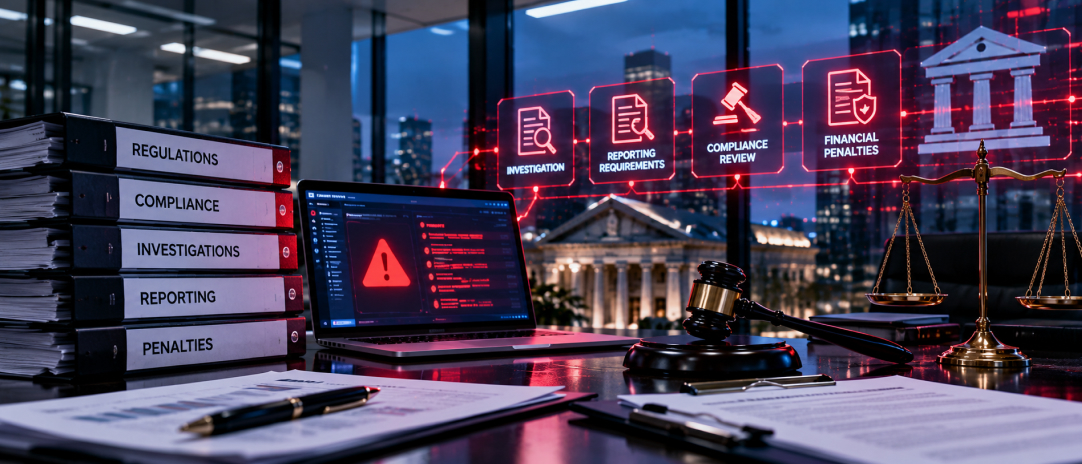
Regulatory Pressure Can Increase
- A cyber incident can trigger investigations, reporting requirements, compliance reviews and financial penalties.
- The consequences can continue long after systems are restored.
BFSI Cybersecurity Threats Are Becoming More Complex
Financial institutions now operate across banking applications, mobile platforms, APIs, cloud infrastructure, digital payment ecosystems, third party providers and remote access environments.
Each connection can create another opportunity for attackers.
Ransomware
- Ransomware can encrypt critical systems, disrupt operations and create pressure for rapid recovery.
- Financial institutions also face data theft before encryption.
- Attackers can use stolen information as additional leverage.
Advanced Fraud
- Cybercriminals increasingly combine stolen credentials, social engineering, automation and artificial intelligence to improve fraud campaigns.
- FS ISAC has also highlighted AI enabled fraud, supply chain attacks, ransomware and DDoS as major financial sector threats.

Third Party Cyber Risk
- Banks and financial institutions depend on technology providers, payment platforms, software vendors, cloud providers and other partners.
- A compromised supplier can become a path into a trusted financial environment.
Phishing and Social Engineering
- Employees, executives and customers remain attractive targets.
- Attackers can use convincing messages, fake login pages, impersonation and targeted social engineering to steal credentials.
Vulnerability Exploitation
- Unpatched applications and exposed systems can become entry points.
- The 2026 Verizon DBIR identifies vulnerability exploitation as a major initial access method across the financial and insurance sector.

Insider Risk
- Privileged users can accidentally or intentionally expose sensitive information.
- Access misuse can become particularly damaging when users control financial applications or customer records.

Credential Theft
- A stolen privileged account can provide access to sensitive financial systems.
- Compromised credentials can also allow attackers to move deeper into the environment.

API Attacks
- Modern banking depends heavily on APIs.
- Weak authentication, excessive permissions and insecure API logic can expose financial data and transaction workflows.

DDoS Attacks
- Distributed denial of service attacks can overwhelm public facing financial platforms.
- The result can be customer disruption, transaction delays and loss of digital service availability.
Why A BFSI Cyberattack Can Become A Business Crisis
A financial institution cannot treat cybersecurity as an
isolated IT problem.
The consequences can reach every part of the organization.


Financial Loss
Fraud, incident recovery, legal costs, operational disruption and regulatory action can create substantial financial losses.

Service Disruption
Customers may lose access to banking platforms, payments, insurance portals or financial services.

Data Exposure
Personal information, financial records, credentials and internal business data can be exposed.

Customer Attrition
Customers may move their business after a serious security incident. Trust can take years to rebuild.

Executive Pressure
Boards and senior executives can face difficult decisions during a major cyber incident. The speed of response can directly influence the scale of damage.

Regulatory Consequences
Financial organizations operate under strict cybersecurity, privacy, risk and operational resilience requirements. A cyber incident can create immediate compliance pressure.

Systemic Risk
A large financial institution does not operate alone. Banks, insurers, payment providers, fintech companies and third party technology providers form a connected ecosystem.
Cybersecurity For Banks, Financial Institutions and Insurance Companies
CyberSec Consulting supports organizations across the BFSI ecosystem.
Our industry focus covers:
 Banks
 Commercial banks
 Retail banks
 Investment banks
 Islamic financial
institutions
 Insurance companies
 Reinsurance companies
 Fintech companies
 Payment service
providers
 Digital banking
platforms
 Credit institutions
 Financial exchanges
 Wealth management firms
 Asset management
companies
 Financial technology
providers
 Investment firms
IT And OT Security Challenge
BFSI organizations need security controls that
support business continuity.
CyberSec Consulting helps organizations strengthen their
cybersecurity posture across critical financial environments.
Our approach focuses on:

Risk Visibility
Identify weaknesses that could expose financial systems, sensitive information and critical business processes.

Attack Readiness
Understand how attackers could enter, move through and compromise the environment.

Identity Protection
Reduce the risk created by excessive privileges, compromised accounts and unauthorized access.

Data Protection
Strengthen protection around sensitive financial and customer information.

Regulatory Readiness
Align security programs with applicable cybersecurity, privacy, financial and regulatory requirements.

Threat Detection
Improve visibility into suspicious activity before an incident becomes a major breach.

Incident Preparedness
Prepare people and processes to respond quickly when a cyber incident occurs.

Resilience
Help financial organizations maintain critical operations during disruptive cyber events.
BFSI Cybersecurity Services from CyberSec Consulting
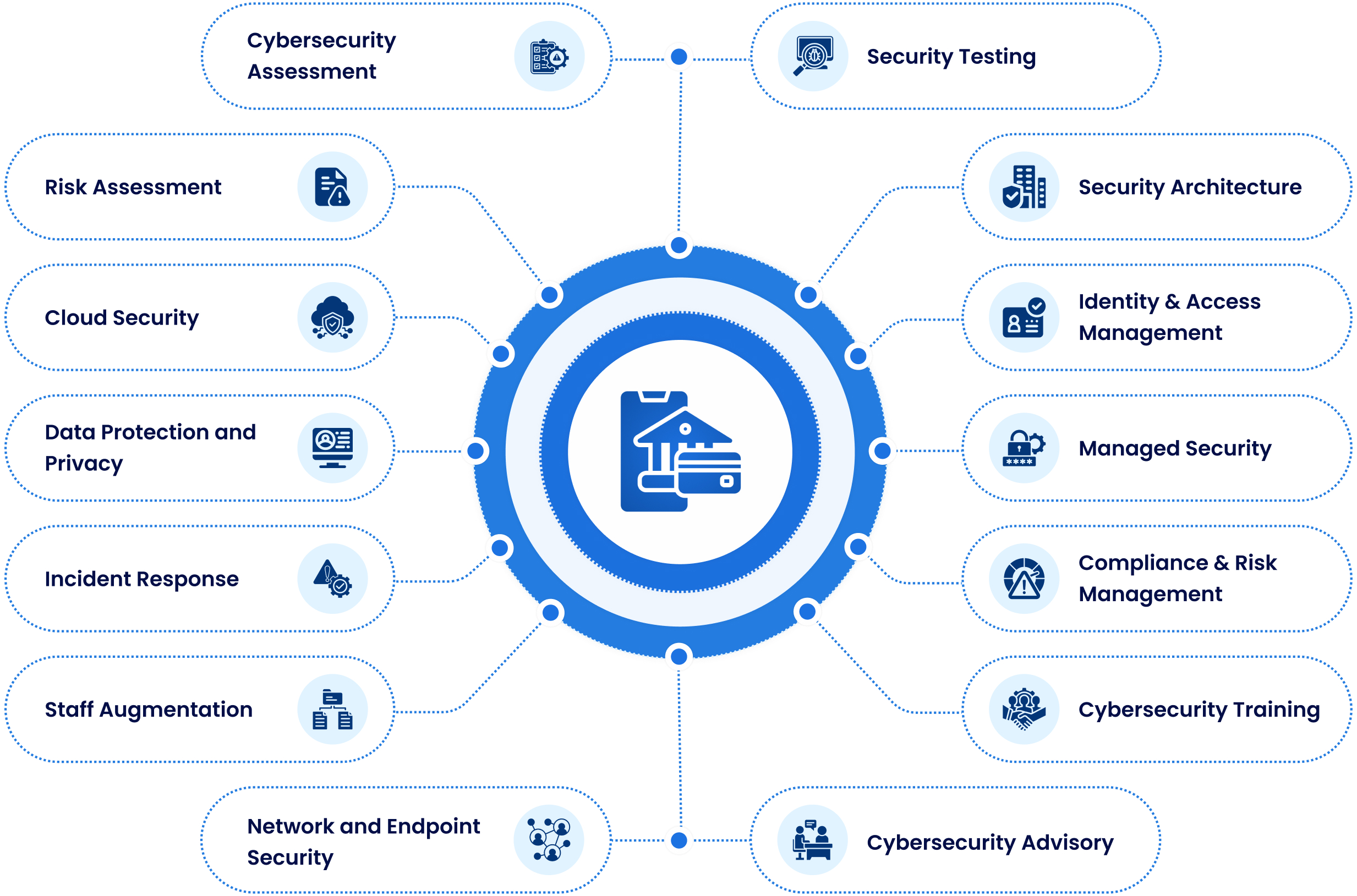
CyberSec Consulting provides dedicated cybersecurity capabilities that can support financial institutions across their security lifecycle.
Our existing cybersecurity services cover areas such as:
Compliance And Cyber Risk For BFSI
Financial organizations operate under strict regulatory expectations.
Cybersecurity programs may need to address requirements related to:
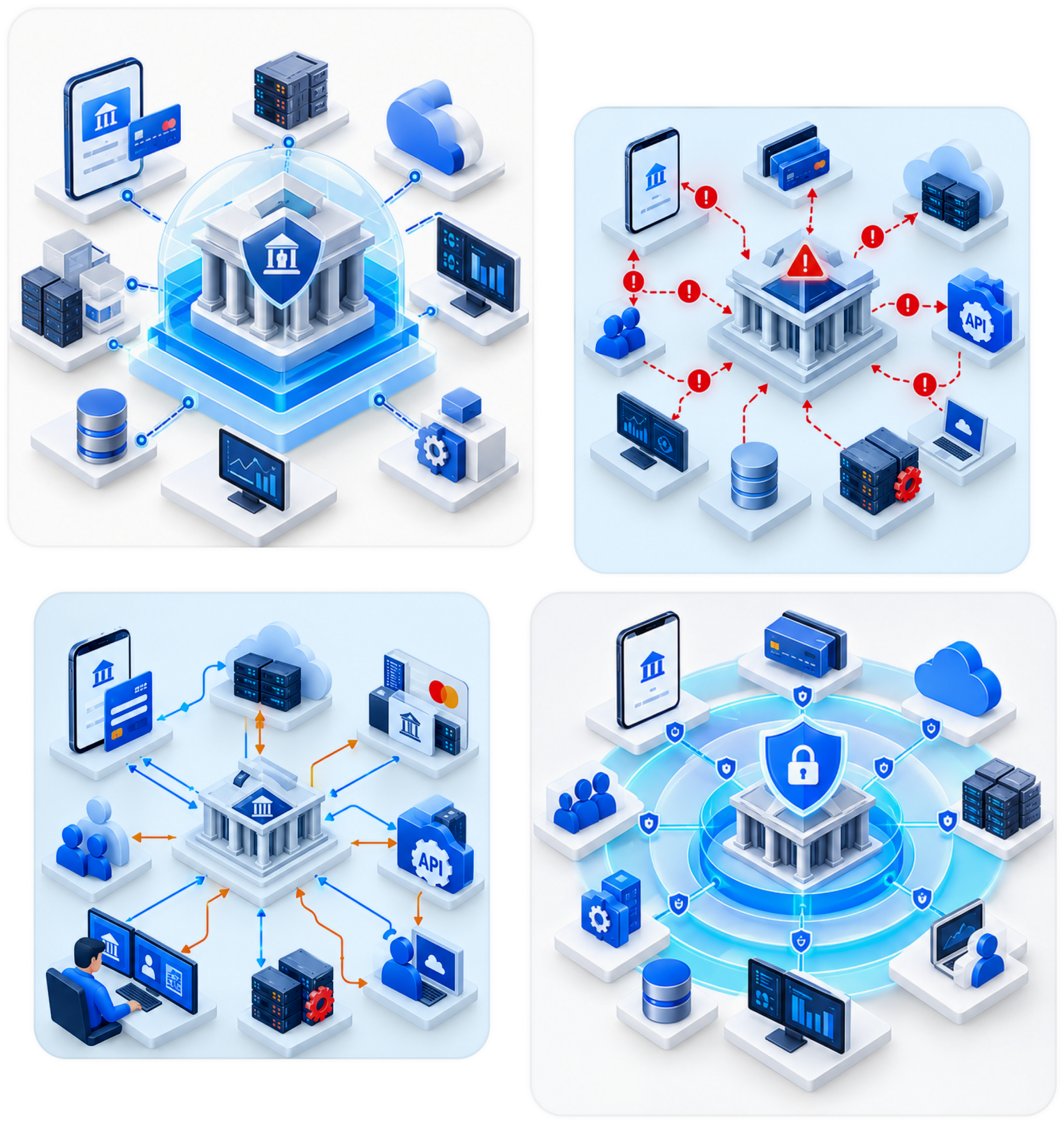
Protect Every Digital Layer of Your Financial Ecosystem
Modern BFSI environments connect many systems.
Why CyberSec Consulting For BFSI?
CyberSec Consulting brings cybersecurity, identity and digital
risk expertise together to support complex enterprise environments.
Our approach focuses on
business impact rather than security tools alone.
We help organizations understand:
Secure Financial Operations Before the Next Attack
A cyberattack against a BFSI organization can become a financial event, customer event, regulatory event and reputation event at the same time.
Waiting for an incident can increase the cost of recovery.
Proactive cybersecurity can help reduce exposure, improve readiness and protect critical financial operations.
CyberSec Consulting helps BFSI organizations stay vigilant, stay alert and stay ready.
Secure Your BFSI Environment
Talk to CyberSec Consulting about strengthening your financial sector cybersecurity posture.
Talk to CyberSec Consulting →FAQs
Major threats include ransomware, phishing, credential theft, vulnerability exploitation, social engineering, API attacks, DDoS attacks, insider risk and third party compromise. Financial institutions also face increasingly sophisticated fraud campaigns.
Banks manage money, customer identities, transactions and highly sensitive information. A successful cyberattack can disrupt banking services, enable fraud, expose customer data and create regulatory consequences.
A cyberattack can interrupt digital banking, payment processing, customer services and internal operations. Data theft can also create financial, legal and reputational consequences.
Fintech companies face risks across APIs, cloud infrastructure, mobile applications, identities, payment systems and third party integrations. Rapid digital expansion can also increase the attack surface.
Ransomware can disrupt critical applications, infrastructure and business operations. Attackers may also steal sensitive information before encryption and use the stolen data as additional pressure.
UAE banks need strong protection against identity attacks, ransomware, phishing, fraud, data exposure and third party risks. Cybersecurity programs must also consider applicable UAE financial sector and data protection requirements.
Saudi Arabia financial institutions can strengthen cyber resilience through continuous risk assessment, identity protection, security testing, threat monitoring, incident readiness and alignment with applicable Saudi cybersecurity and financial sector requirements.
Financial institutions across Africa face risks such as phishing, ransomware, financial fraud, credential theft, mobile banking attacks and third party compromise. Digital banking growth makes security visibility increasingly important.
Egypt banks can strengthen customer data protection through strong identity controls, secure applications, data protection measures, continuous monitoring, security testing and alignment with applicable cybersecurity and data protection requirements.
UK financial institutions need to manage cybersecurity, data protection, operational resilience, third party risk and incident response requirements. Security programs should also reflect applicable UK financial sector expectations.
Qatar financial institutions depend on technology providers, payment partners, cloud platforms and other external organizations. A compromised supplier can create an indirect route into sensitive financial environments.
Phishing can trick employees or customers into revealing credentials, approving fraudulent actions or visiting malicious websites. A compromised account can become an entry point into sensitive financial systems.
Privileged accounts can provide extensive access to financial applications, databases, infrastructure and security systems. A compromised privileged identity can therefore increase the potential impact of an attack.
Organizations can reduce ransomware exposure through vulnerability management, strong identity controls, segmentation, secure backups, employee awareness, continuous monitoring and tested incident response procedures.
Cyber resilience improves when organizations understand critical assets, identify attack paths, test security controls, prepare incident response procedures and regularly validate recovery capabilities.
Compliance provides a structured way to manage security, privacy, risk and operational requirements. Strong BFSI cybersecurity programs should connect compliance requirements to working security controls.
Yes. CyberSec Consulting supports BFSI organizations through cybersecurity assessment, advisory, risk management, security testing, identity security, data protection, managed security, compliance, incident readiness and other dedicated cybersecurity capabilities.
A BFSI organization can begin by identifying critical assets, sensitive data, privileged identities, internet facing systems, third party dependencies and potential attack paths. Security assessments can then prioritize the weaknesses that create the greatest business impact.
Copyright © 2026 CyberSec Consulting - All Rights Reserved