
As one of Africa's most digitally connected economies, South Africa has become a prime target for cybercriminals, making data breaches in South Africa a growing concern for businesses of all sizes. The rapid adoption of cloud computing, remote work, digital banking, fintech, e-commerce, and connected business applications has significantly expanded the attack surface for organizations.
At the same time, cyber threats such as ransomware attacks, phishing scams, credential theft, business email compromise (BEC), cloud security breaches, and identity-based attacks have increased in both frequency and sophistication. Understanding these evolving threats and learning from previous South African cyber incidents enables organizations to strengthen their cybersecurity posture before becoming the next headline.
Adding to the challenge is the increasing regulatory scrutiny under the Protection of Personal Information Act (POPIA), which requires organizations to implement appropriate security measures to protect personal information and report qualifying security incidents. Non-compliance can result in regulatory action, financial penalties, reputational damage, and loss of customer trust.
Meanwhile, the cost of data breaches in South Africa continues to rise as organizations face business disruption, incident response expenses, legal costs, operational downtime, and recovery efforts following increasingly sophisticated cyberattacks. Investing in proactive cybersecurity services, data protection, cloud security, threat detection, vulnerability assessments, and regulatory compliance has become essential for businesses looking to reduce cyber risk and build long-term resilience.
South Africa has one of the most active and rapidly evolving cyber threat landscapes in Africa, making it a prime target for cybercriminals seeking financial gain and sensitive data. As digital transformation accelerates across banking, healthcare, government, retail, and enterprise sectors, organizations face increasing risks from ransomware, phishing, cloud attacks, credential theft, and AI-powered cyber threats.
South African organizations are rapidly digitizing business operations, customer services, and enterprise applications to improve efficiency and competitiveness. While digital transformation creates new business opportunities, it also expands the attack surface for cybercriminals targeting web applications, APIs, and digital platforms. As more businesses embrace digital-first strategies, cybersecurity in South Africa has become a critical business priority.
Hybrid and remote work models continue to increase across South African enterprises, enabling employees to access corporate resources from multiple locations and devices. This shift has introduced greater risks from unsecured endpoints, compromised credentials, VPN attacks, and phishing campaigns. Organizations are investing in Zero Trust security, Multi-Factor Authentication (MFA), and Identity and Access Management (IAM) to secure distributed workforces.
Businesses across South Africa are accelerating cloud migration to improve scalability, business continuity, and operational efficiency. However, cloud misconfigurations, exposed storage buckets, excessive permissions, and insecure APIs remain among the leading causes of cloud data breaches. Strengthening cloud security and continuous configuration monitoring has become essential for protecting sensitive business data.
South Africa's banking and financial services sector continues to expand digital banking, mobile payments, fintech platforms, and online financial services. This transformation has attracted sophisticated cybercriminals using credential theft, phishing, business email compromise, and financial fraud to target institutions and customers. Financial organizations continue to strengthen fraud prevention and cyber resilience to combat evolving threats.
Healthcare providers are increasingly adopting electronic health records, telemedicine platforms, connected medical devices, and cloud-based healthcare systems. Medical records contain highly valuable personal information, making healthcare one of the most targeted sectors for ransomware and data theft. Strong data protection and regulatory compliance remain essential to safeguarding patient information.
Government agencies continue to expand digital citizen services, online portals, tax systems, and public-sector platforms to improve accessibility and efficiency. As critical infrastructure becomes increasingly digital, cyberattacks targeting government systems have also become more frequent and sophisticated. Securing citizen data and ensuring service availability remain top cybersecurity priorities.
Cybercriminals are increasingly leveraging artificial intelligence to automate phishing campaigns, generate convincing social engineering attacks, and accelerate malware development. AI-powered attacks enable threat actors to launch highly personalized and scalable cyber campaigns with greater success rates. Organizations must combine AI-driven security tools with human expertise to detect and respond to emerging threats.
Ransomware continues to be one of the fastest-growing cyber threats affecting South African businesses across finance, healthcare, manufacturing, and government sectors. Modern ransomware groups now combine data encryption with data theft and extortion, increasing financial and reputational damage. Proactive threat detection, endpoint protection, and regular backups are essential to reduce ransomware risks.
Organizations increasingly rely on third-party vendors, managed service providers, and cloud platforms to support daily operations. Cybercriminals exploit vulnerabilities in trusted suppliers to gain simultaneous unauthorized access to multiple organizations. Strengthening third-party risk management and vendor security assessments is becoming a critical cybersecurity requirement.
Not all cyber incidents originate from external attackers, as employees, contractors, and privileged users can unintentionally or deliberately expose sensitive business information. Insider threats often result from compromised accounts, excessive access privileges, human error, or malicious intent. Continuous monitoring, least-privilege access controls, and employee security awareness training significantly reduce insider risk.
South Africa has experienced several high-profile cyber incidents that exposed millions of personal records and highlighted the growing importance of cybersecurity, data protection, POPIA compliance, and third-party risk management. Examining these major data breaches in South Africa helps businesses understand common attack vectors and implement stronger security controls before becoming the next target.
| Year | Data Breach | Summary |
|---|---|---|
| 2020 | Experian South Africa Data Breach | Personal information relating to approximately 24 million South Africans and nearly 800,000 business entities was exposed after a third party obtained sensitive data through fraudulent means. The incident reinforced the need for stronger vendor security, identity verification, and data governance practices. |
In August 2020, Experian South Africa disclosed a significant data breach after a fraudster impersonated a legitimate client and obtained sensitive consumer and business information. The incident affected approximately 24 million individuals and 793,000 businesses, making it one of the largest data breaches in South African history.
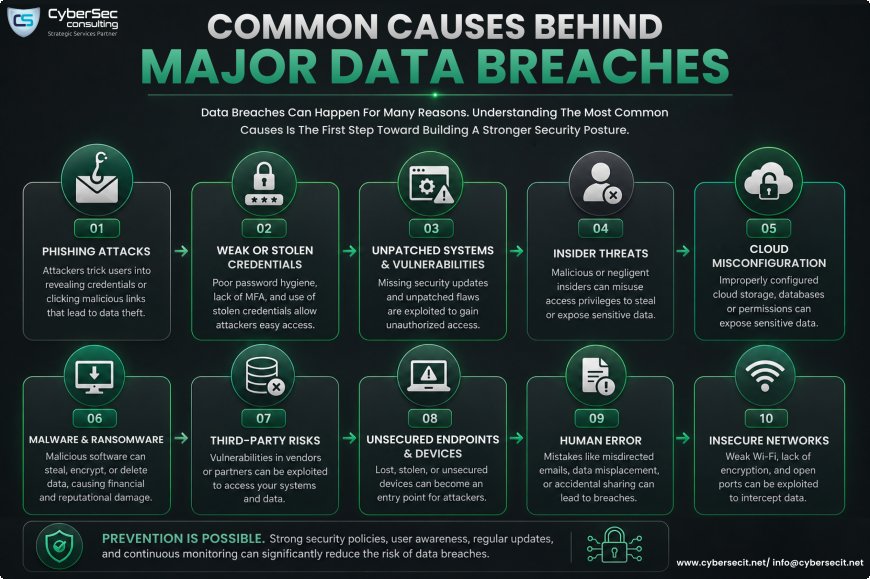
Most data breaches in South Africa originate from preventable security weaknesses rather than highly sophisticated attacks. Strengthening identity security, access controls, and cybersecurity best practices helps organizations reduce cyber risk, improve GRC, and protect sensitive business data.
Weak, reused, or easily guessed passwords remain one of the leading causes of unauthorized access and credential-based cyberattacks. Attackers frequently exploit compromised credentials through brute-force attacks, credential stuffing, and phishing campaigns.
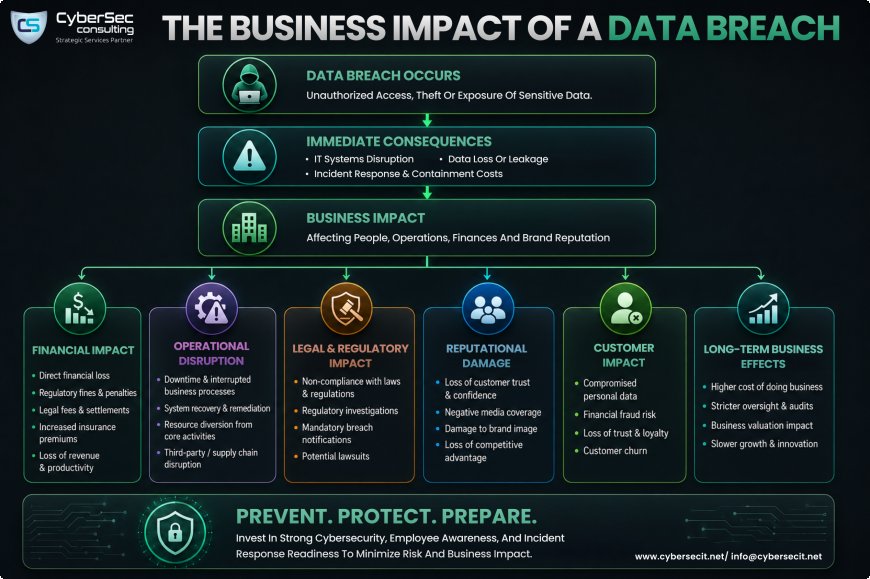
A data breach in South Africa can have severe financial, operational, legal, and reputational consequences, affecting organizations across every industry. Beyond immediate recovery costs, businesses must address GRC, customer trust, regulatory investigations, and long-term cybersecurity resilience.
Data breaches can result in significant financial losses due to incident response, system restoration, legal expenses, customer compensation, and revenue disruption. The overall cost often extends well beyond the initial cyberattack.

Organizations across South Africa, the UAE, Saudi Arabia, the UK, and Africa trust CyberSec Consulting to strengthen their cybersecurity posture, reduce cyber risks, and achieve regulatory compliance through proactive security solutions. Our end-to-end cybersecurity services help businesses prevent data breaches, ransomware attacks, phishing, insider threats, cloud security risks, and identity-based attacks while supporting GRCs and long-term cyber resilience.
Every major data breach in South Africa reveals a preventable security weakness - whether it is weak passwords, unpatched systems, poor identity and access controls, cloud misconfigurations, or inadequate security monitoring. As cyber threats continue to evolve, organizations cannot afford to rely on reactive security measures.
Investing in proactive CyberSec Consulting assessments, vulnerability management, penetration testing, identity security, continuous threat monitoring, employee security awareness training, and GRCs significantly reduces cyber risk while protecting sensitive business information and maintaining customer trust.
For organizations operating in South Africa, cybersecurity is no longer just an IT responsibility - it is a business necessity.
Companies that continuously assess their security posture, strengthen access controls, secure cloud environments, and implement modern cyber defense strategies are better positioned to prevent ransomware attacks, phishing campaigns, insider threats, and data breaches. Learning from previous cyber incidents today can help businesses avoid becoming tomorrow's headline.
Why are data breaches increasing in South Africa?
South Africa's rapid digital transformation, cloud adoption, and hybrid work environments have expanded the attack surface, making businesses more vulnerable to ransomware, phishing, and identity-based cyberattacks.
What is POPIA, and why is it important for South African businesses?
The Protection of Personal Information Act (POPIA) requires organizations in South Africa to protect personal data and implement appropriate cybersecurity controls to reduce the risk of data breaches and regulatory penalties.
What are the leading causes of data breaches in South Africa?
Weak passwords, phishing attacks, cloud misconfigurations, insider threats, third-party compromises, and unpatched systems remain the most common causes of cybersecurity incidents affecting South African organizations.
How can businesses in South Africa prevent data breaches?
Organizations should implement Penetration Testing (VAPT), Identity & Access Management (IAM), Multi-Factor Authentication (MFA), Cloud Security, continuous security monitoring, and employee cybersecurity awareness training to strengthen their cyber resilience.
Which industries in South Africa are most targeted by cybercriminals?
Banking, financial services, healthcare, government, retail, manufacturing, and telecommunications are among the most targeted industries due to the large volumes of sensitive customer and business data they process.
Why should businesses choose CyberSec Consulting for cybersecurity in South Africa?
CyberSec Consulting provides end-to-end cybersecurity services in South Africa, including VAPT, IAM, PAM, Cloud Security, GRC, POPIA Compliance, and Managed Security Services, helping organizations prevent data breaches and strengthen their overall cybersecurity posture.
Copyright © 2026 CyberSec Consulting - All Rights Reserved