

Cybersecurity attacks in Egypt are increasing at an alarming rate in 2026. Businesses across banking, healthcare, telecommunications, government, retail, manufacturing, and oil & gas sectors are experiencing a significant rise in ransomware attacks, phishing campaigns, credential theft, cloud security incidents, and advanced persistent threats.
Rapid digital transformation, cloud adoption, remote work environments, and increased online services have expanded the attack surface for organizations throughout Egypt. At the same time, cybercriminals are using more advanced tactics to exploit weak security controls, unmanaged assets, and human error.
Growing cyber threats in Egypt are now forcing enterprises and SMEs to invest heavily in cybersecurity consulting services, managed SOC solutions, endpoint detection and response (EDR), cloud security, vulnerability management, and identity security solutions.

The cybersecurity landscape in Egypt is evolving rapidly. Organizations are no longer facing only standard malware attacks. Modern cybercriminals are targeting businesses through ransomware-as-a-service (RaaS), phishing kits, AI-powered attacks, cloud vulnerabilities, and identity-based threats.


Ransomware remains one of the most damaging cybersecurity attacks in Egypt in 2026. Cybercriminal groups are targeting organizations by encrypting critical business data and demanding large ransom payments to restore operations. Reports indicate that ransomware attacks in Egypt increased dramatically over the past year, affecting businesses of all sizes. More than 1,200 ransomware incidents were reported across Egyptian organizations, causing severe operational disruptions and financial losses.
Several factors are contributing to ransomware growth in Egypt:
Phishing remains one of the most common cybersecurity attacks in Egypt. Attackers use fake emails, malicious links, cloned websites, and social engineering tactics to steal credentials and compromise business systems. Thousands of phishing and malware incidents have been reported in Egypt during 2026 alone. Many organizations continue to struggle with email-based attacks because employees remain one of the biggest cybersecurity vulnerabilities.
Common Types of Phishing Attacks:
The financial impact of cyber threats in Egypt is becoming more severe every year.
Businesses are experiencing losses due to:
Cloud adoption across Egypt is growing rapidly, especially among enterprises modernizing their IT infrastructure. However, many organizations are migrating to the cloud without implementing proper cloud security controls.
Common cloud security issues include:
Modern cyber threats require businesses to move beyond traditional antivirus and firewall solutions. Organizations must adopt proactive cybersecurity frameworks that focus on prevention, detection, response, and recovery.
Key cybersecurity solutions businesses should implement include:
Cybersecurity attacks are not only increasing in Egypt but across the Middle East, Africa, and the UK. Organizations throughout the UAE, Saudi Arabia, Africa, and the United Kingdom are facing rising ransomware attacks, cloud breaches, identity attacks, and phishing campaigns.
Regional businesses are increasingly investing in:
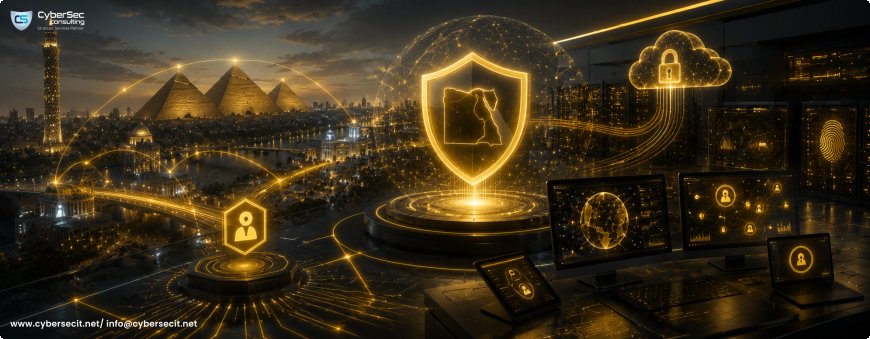
Organizations can significantly improve their cybersecurity posture by following best practices:

Cybersecurity attacks in Egypt are increasing rapidly in 2026, driven by ransomware growth, phishing campaigns, cloud vulnerabilities, and identity-based threats. Businesses across Egypt must strengthen their cybersecurity posture to protect sensitive data, maintain operational continuity, and reduce financial risks.
As cyber threats continue evolving across Egypt, the UAE, Saudi Arabia, Africa, and the UK, organizations need CyberSec Consulting's proactive cybersecurity strategies that combine advanced technology, continuous monitoring, employee awareness, and expert security consulting. Businesses that invest in modern cybersecurity solutions today will be better prepared to defend against tomorrow’s evolving cyber threats.
Copyright © 2026 CyberSec Consulting - All Rights Reserved