
Web applications and mobile applications form the backbone of online business operations, customer engagement, and data exchange. As reliance on these applications continues to grow, so does the attack surface for cyber threats. Research indicates that nearly 70% of web applications contain critical security vulnerabilities, failing to meet baseline security requirements.
This growing risk makes Web Application Security Assessments an essential component of every organization’s cybersecurity strategy. Implementing structured processes such as a web application security assessment checklist, application vulnerability assessment, and OWASP Top 10 testing is no longer optional. It is critical for preventing data breaches, protecting sensitive information, and ensuring business continuity.
Such practices like application security risk assessment, secure code review, and adherence to web and mobile application security verification standards (ASVS) play a vital role in strengthening application defenses. These assessments help organizations identify exploitable vulnerabilities, reduce security gaps, and maintain compliance with industry regulations.
By prioritizing application security testing, penetration testing, and continuous vulnerability management, businesses can safeguard user trust, enhance application reliability, and stay resilient against evolving cyber threats.
Application penetration testing is no longer optional. It is a critical requirement for modern businesses.
By implementing continuous web application security testing, application vulnerability assessments, and OWASP-aligned penetration testing, organizations can proactively identify risks, reduce exposure to breaches, and maintain a robust security posture across dynamic application environments.
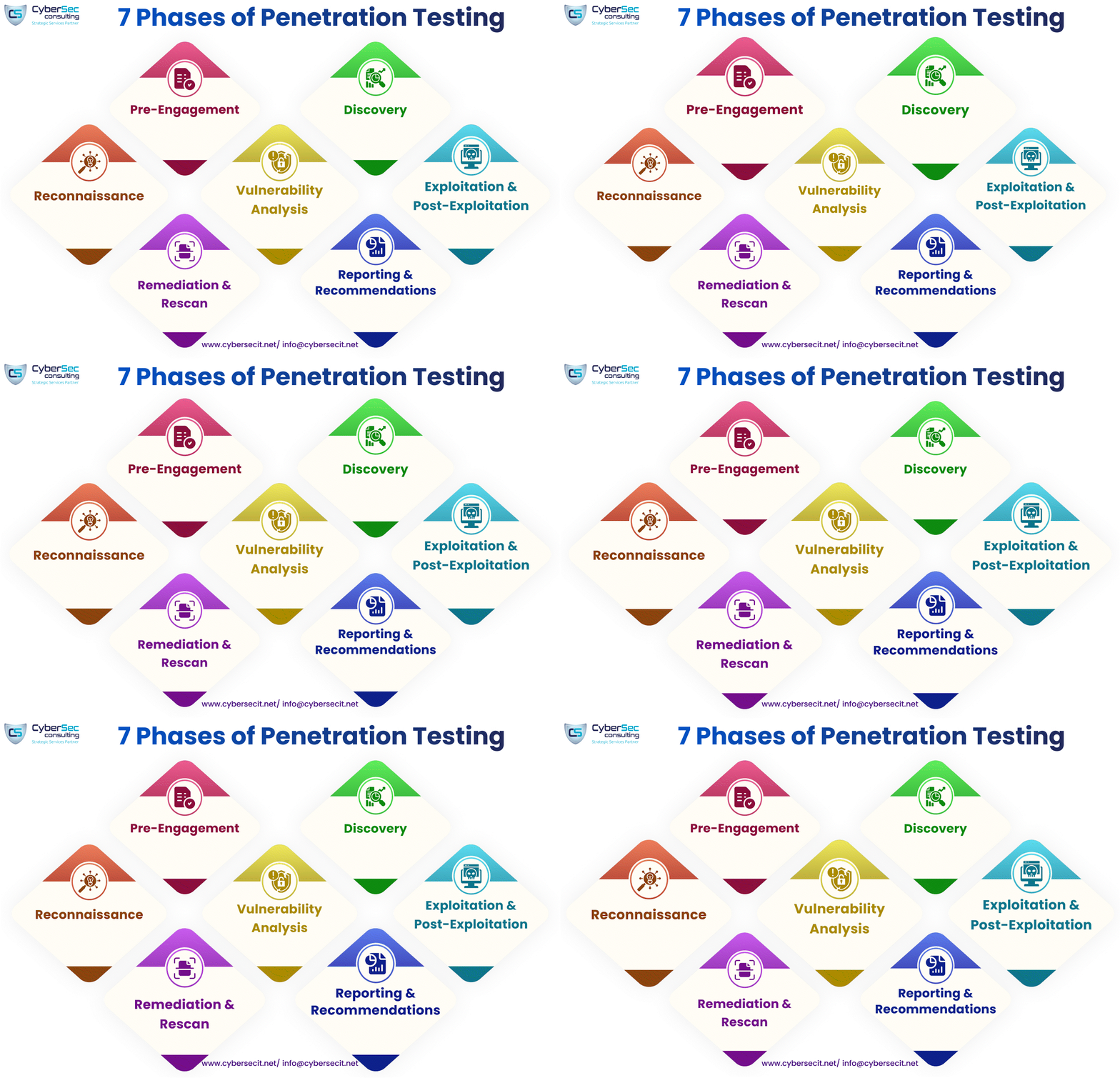
As part of a comprehensive web and mobile application security assessment service, penetration testing follows a structured and methodical approach. These seven phases of penetration testing ensure that vulnerabilities are identified, validated, and addressed in a way that mirrors real-world attack scenarios while minimizing business disruption.

Here’s why continuous web application penetration testing is no longer optional - it’s a business-critical requirement.
Implementing regular web application security assessments, vulnerability scanning, and penetration testing helps organizations reduce risk, ensure compliance, and protect digital assets.
Organizations that want to strengthen their cybersecurity posture and reduce real-world risk must go beyond basic security checks. Web and mobile application security assessments play a critical role in identifying vulnerabilities that directly impact business operations, customer trust, and regulatory compliance.

Web and mobile applications are at the core of business operations, customer engagement, and data-driven decision-making. From SaaS platforms and customer portals to APIs and mobile apps, organizations increasingly depend on applications to handle sensitive information and critical workflows. However, this growing reliance has also significantly expanded the attack surface, making applications one of the most targeted entry points for cybercriminals. This reality makes web and mobile application security assessments not just a best practice, but a strategic necessity for modern organizations.
The persistence of vulnerabilities listed in the OWASP Top 10. Such as injection attacks, broken authentication, insecure APIs, and security misconfigurations, clearly demonstrates that awareness alone is not enough. Without regular web application security testing, mobile app penetration testing, and application vulnerability assessments, these weaknesses can remain hidden until they are actively exploited. As cloud-native architectures, microservices, and CI/CD pipelines accelerate development cycles, security gaps can easily slip into production environments if continuous testing is not embedded into the development lifecycle.
CyberSec offers top-notch web and mobile application security assessment services designed to help organizations identify risks, close security gaps, and build robust, future-ready applications. Our expert-led services include web application security testing, mobile app penetration testing, API security assessments, OWASP Top 10 testing, secure code reviews, and continuous vulnerability management. Whether you are launching a new application or securing an existing environment, CyberSec helps you stay compliant, resilient, and ahead of emerging threats.
Secure your applications before attackers exploit them. Connect with CyberSec Consulting for comprehensive web and mobile application security assessments that protect your business, users, and digital assets.
For More Information, Click on - Assessment Services
For More Updates on CyberSecurity Insights & Trends: Visit CyberSec Consulting
Copyright © 2026 CyberSec Consulting - All Rights Reserved