How Does Broken Authorization Expose Customer Data in UAE Digital Platforms?

Hidden Risk Behind Digital APIs
The UAE’s digital economy relies on secure APIs to connect mobile banking applications, payment gateways, fintech platforms, customer portals, and enterprise systems. These connections help businesses deliver faster digital services. However, weak API security can expose sensitive customer information and create serious business risks.
API security assessment in the UAE helps organisations identify vulnerabilities before attackers exploit them. A poorly secured API may allow unauthorised users to access customer records, view financial transactions, or perform actions beyond their permissions. Broken authorisation, excessive data exposure, and weak access controls can increase the risk of financial fraud, data breaches, and service disruption.
Dubai and Abu Dhabi businesses investing in digital banking, online payments, and fintech innovation need strong API protection. API penetration testing and API vulnerability assessment help security teams detect weaknesses before a product goes live. Early testing also supports better data protection and risk management.
What Is Broken Object Level Authorization (BOLA)?
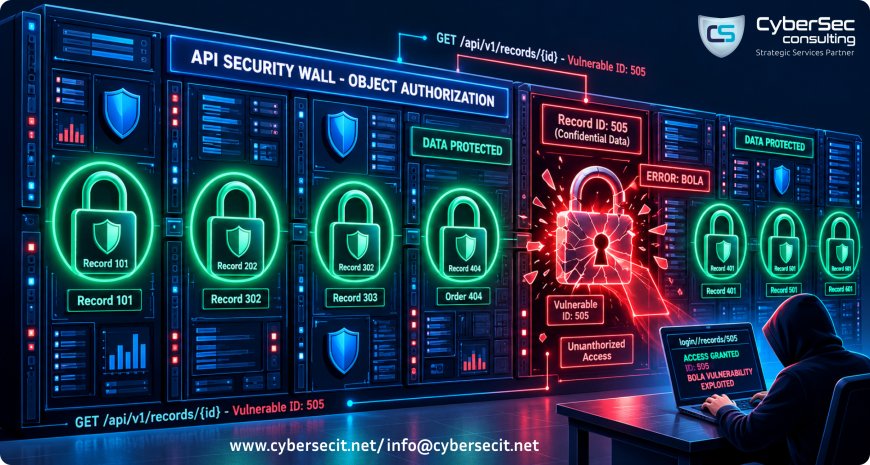
Broken Object Level Authorization (BOLA) is a common API security vulnerability that occurs when an application fails to verify whether a user has permission to access a specific record or resource. It can expose sensitive customer information, financial records, and business data.
Consider a digital banking application in the UAE. A customer views an invoice through the application. The API request contains an identifier linked to that invoice. If the customer changes the identifier and the server fails to verify ownership, the API may return another customer's invoice. This can expose personal details, payment histories, account information, or transaction references.
Such weaknesses can affect fintech platforms, digital payment providers, e-commerce businesses, and customer portals across Dubai, Abu Dhabi, and the wider UAE.
Authentication alone does not prevent BOLA. Authentication confirms who the user is. Authorisation determines what that user can access or do. Every sensitive API request must verify that the user has permission to access the requested resource.
An API security assessment in the UAE helps organisations identify broken authorisation, weak access controls, and potential customer data exposure. API penetration testing can also reveal whether these weaknesses could affect financial transactions or business operations.
Four API Vulnerabilities UAE Businesses Should Understand
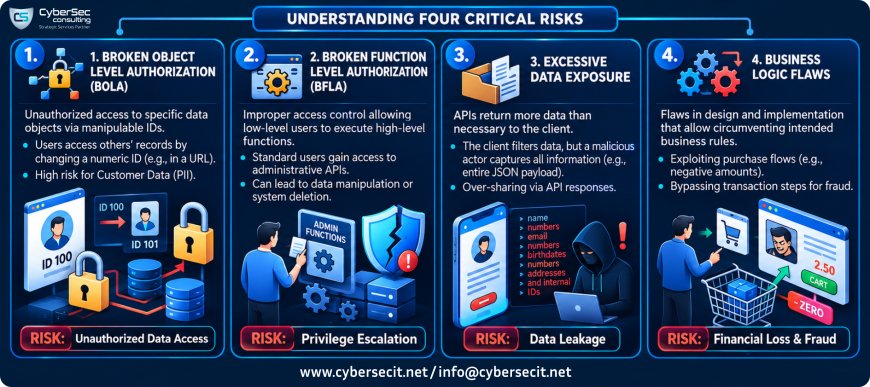
Digital banking, fintech platforms, payment gateways, and customer portals depend on secure APIs. However, weak access controls and coding errors can expose sensitive data or allow unauthorised activities. API security assessment in the UAE helps businesses identify these weaknesses and protect digital services across Dubai, Abu Dhabi, and the wider UAE market.
Broken Object Level Authorisation
Broken Object Level Authorisation (BOLA) occurs when an API fails to verify whether a user can access a specific record. Attackers may exploit this weakness to view another customer's invoices, account details, or payment history.
- Example - A user changes an invoice identifier in a request and accesses another customer's financial information.
- Recommended Control - Enforce server-side authorisation checks for every request. Verify resource ownership and user permissions before returning sensitive data.
Broken Function Level Authorisation
This vulnerability occurs when users access functions beyond their assigned permissions. Weak role-based access controls can expose administrative features, account management functions, or sensitive business operations.
- Example - A standard user accesses an administrative API endpoint and attempts to modify another user's account permissions.
- Recommended Control - Apply least privilege access, enforce role-based permissions on the server, and test access restrictions for every sensitive API function.
Excessive Data Exposure
Excessive data exposure happens when an API returns more information than an application needs. Unnecessary fields may include personal details, financial records, internal identifiers, or confidential business information.
- Example - A payment application displays a transaction amount, but its API response also reveals unnecessary customer details and internal account data.
- Recommended Control - Return only the required data fields. Apply response filtering, data minimisation, and security testing to identify exposed information.
Business Logic Flaws
Business logic flaws occur when APIs fail to enforce essential rules governing transactions, payments, or customer workflows. These weaknesses can enable unauthorised actions or financial abuse.
- Example - A payment API processes the same transaction request twice because it lacks effective duplicate transaction controls.
- Recommended Control - Validate transaction states, enforce business rules on the server, implement idempotency controls where appropriate, and test critical workflows.
Strengthen API Security Before Launch
UAE businesses can reduce these risks through API penetration testing, API vulnerability assessment, and API authorisation testing. CyberSec Consulting helps organisations identify security weaknesses, assess potential business impact, and prioritise remediation.
Why API Security Matters for UAE Fintech and Digital Businesses
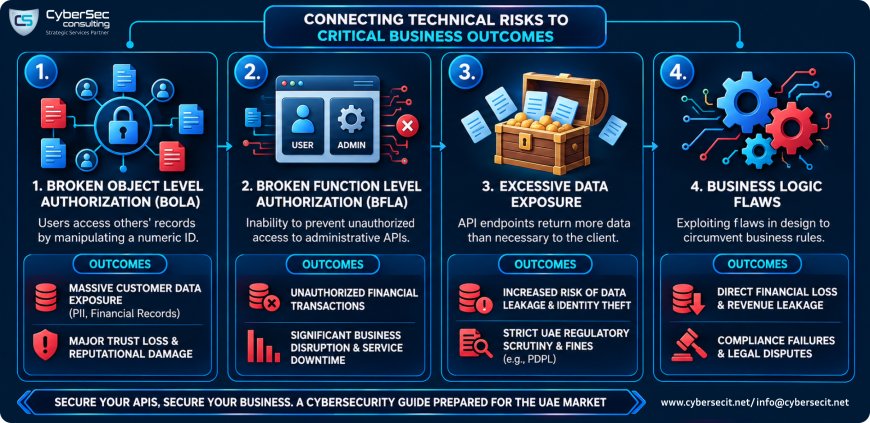
The UAE’s digital economy depends on secure APIs to support online banking, digital payments, fintech applications, lending platforms, e-commerce websites, and customer portals. Weak API security can expose sensitive information and disrupt essential business services. API security assessment in the UAE helps organisations identify vulnerabilities before they lead to financial and operational losses.
Customer data exposure is a major concern for digital businesses in Dubai, Abu Dhabi, and across the UAE. Broken authorisation and excessive data exposure can reveal personal details, account information, and payment histories. Attackers may also exploit API vulnerabilities to manipulate transactions, access restricted functions, or abuse financial workflows.
API penetration testing in the UAE helps businesses uncover these weaknesses and understand their potential impact. Security incidents can result in fraudulent transactions, service interruptions, reputational damage, and loss of customer trust. Recovery costs and regulatory scrutiny can add further pressure on affected organisations.
UAE businesses must also consider applicable legal and regulatory requirements. The UAE Personal Data Protection Law may apply to organisations processing personal data, subject to its scope and exceptions. Financial institutions may face additional requirements from their relevant regulators, including the Central Bank of the UAE or the Dubai Financial Services Authority, depending on their authorisation and activities.
When Should You Conduct API Penetration Testing
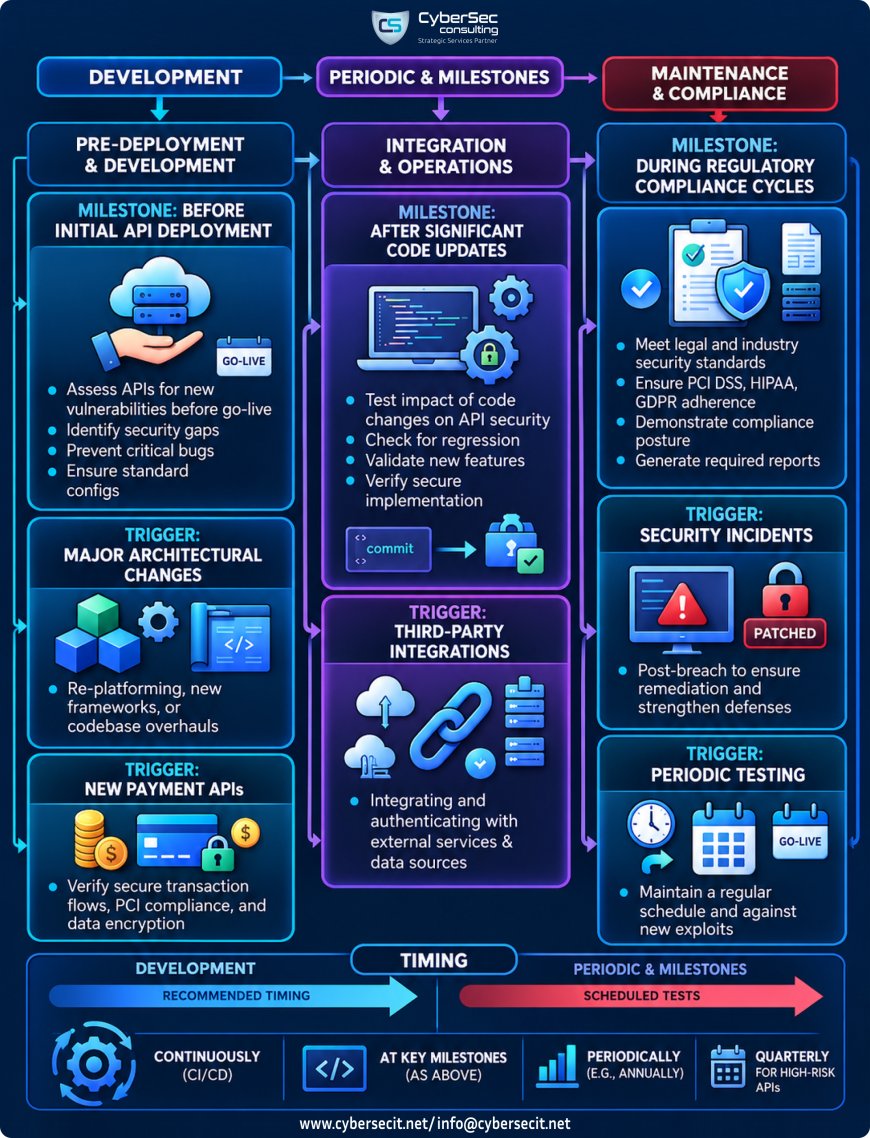
Digital businesses across Dubai, Abu Dhabi, and the wider UAE rely on APIs to deliver secure online services. However, new features and system changes can introduce security weaknesses. API penetration testing in the UAE helps organisations identify vulnerabilities before attackers can exploit them.
Here are six important times to conduct an API security assessment.
- Before Launching a Digital Product - Test APIs before launching a mobile application, fintech platform, customer portal, or e-commerce website. Early testing helps identify access control weaknesses and data exposure risks before customers use the service.
- Before Introducing Payment or Account APIs - New payment gateways and customer account APIs require careful security testing. API penetration testing can uncover weaknesses that may expose financial records or enable unauthorised transactions.
- After Major Security or Architecture Changes - Changes to authentication, authorisation, access permissions, or API architecture can create new vulnerabilities. Conduct API vulnerability assessment after significant updates to verify that security controls remain effective.
- When Integrating Third-Party Services - Payment providers, cloud platforms, and external business applications introduce additional connections. Test API permissions, data exchange, and authentication controls before enabling new integrations.
- After a Security Incident - Suspicious API activity, unexpected data access, or a suspected data breach should trigger a security review. API penetration testing can help identify exploitable weaknesses and guide remediation.
- During Periodic Security Reviews - Regular API security testing helps UAE fintech companies, digital banks, and online businesses manage changing risks. Testing frequency should reflect data sensitivity, system changes, and business requirements.
- Test APIs Before They Go Live - Begin testing in a staging environment that closely reflects production. Production API testing should occur only when authorised and supported by a controlled testing plan. This helps reduce disruption to customers and essential services.
What Does an API Security Assessment Include

A professional API security assessment helps businesses identify weaknesses that could expose customer data, compromise transactions, or disrupt digital services. Fintech companies, digital banks, payment providers, and e-commerce businesses across Dubai, Abu Dhabi, and the UAE can use API penetration testing to understand their security risks before attackers exploit them.
A comprehensive API vulnerability assessment typically includes the following steps:
- API Endpoint Discovery and Scope Definition - Identify API endpoints, connected applications, data flows, and critical business functions. Define the testing scope, objectives, and authorised access before assessment begins.
- Authentication and Session Testing - Evaluate login controls, token handling, session management, and authentication mechanisms. Identify weaknesses that could allow unauthorised users to access protected services.
- API Authorisation Testing - Test object-level and function-level permissions. Check whether users can access other customers’ records or perform actions beyond their assigned roles.
- Input Validation and Data Exposure Checks - Assess how APIs handle unexpected inputs and requests. Identify excessive data exposure, insecure responses, and validation weaknesses that could reveal sensitive customer or financial information.
- Business Logic and Transaction Testing - Examine payment workflows, account operations, and transaction validation. Look for weaknesses that could enable duplicate transactions, unauthorised actions, or abuse of business rules.
- Risk Prioritisation and Remediation Guidance - Document verified findings with supporting evidence, severity ratings, potential business impact, and practical remediation recommendations. This helps UAE organisations prioritise the most significant API security risks.
- Retesting and Verification - Retest identified vulnerabilities after remediation. Verify whether security fixes address the original issues and check for remaining exposure within the agreed scope.
How to Reduce API Security Risks Before Go Live
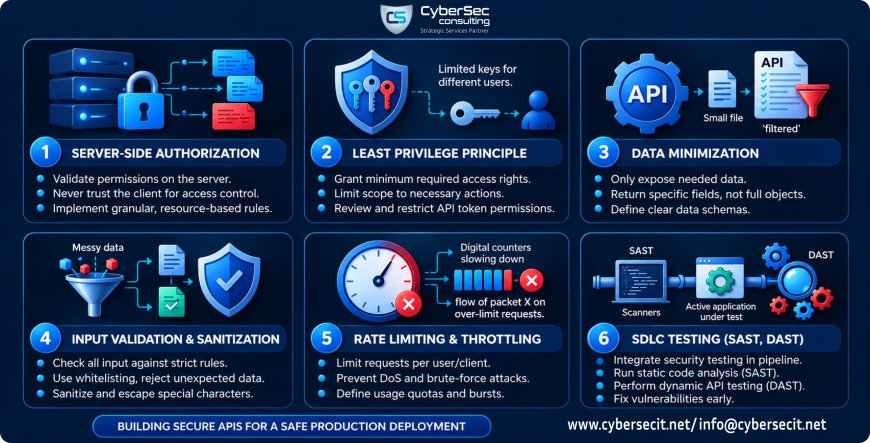
Launching a digital product without proper API security testing can expose customer data and business systems to cyber threats. UAE fintech companies, digital banks, payment providers, and e-commerce businesses should prioritise API security before releasing new applications. A proactive API security assessment in the UAE helps identify weaknesses before they affect customers.
Follow these practical steps to strengthen API security:
- Enforce Strong Authorisation Checks - Verify user permissions on the server for every sensitive record and action. Prevent broken object-level authorisation by checking resource ownership on every relevant request.
- Apply Least Privilege Access - Give users, applications, and service accounts only the permissions they need. Review access rights regularly to reduce unnecessary exposure.
- Minimise Sensitive Data Exposure - Return only the information required by each API response. Protect personal details, financial records, and confidential business data.
- Validate Inputs and Business Rules - Check incoming requests and enforce transaction limits. Validate payment workflows to prevent unauthorised actions and duplicate transactions.
- Monitor API Activity - Implement rate limiting, security logging, and continuous monitoring. Store credentials securely and rotate them when required.
- Test Throughout Development - Include API security testing in the software development lifecycle. Conduct an API vulnerability assessment and API penetration testing before launch.
- Retest After Fixes - Verify that remediation resolves identified vulnerabilities and does not introduce new weaknesses.
Why Choose CyberSec Consulting for API Security Assessment

UAE businesses need reliable API security to protect customer data, financial transactions, and digital services. CyberSec Consulting helps organisations identify cybersecurity weaknesses and understand the risks affecting their applications and business operations.
Our cybersecurity assessment services focus on identifying vulnerabilities, evaluating access controls, and highlighting potential security gaps. API security assessment in the UAE can help fintech companies, digital banks, payment providers, and e-commerce businesses strengthen their digital platforms.
A structured assessment helps organisations understand their exposure through risk-based findings and practical remediation recommendations. API penetration testing can also identify broken authorisation, excessive data exposure, and weaknesses in business logic. Retesting can help verify remediation where included in the agreed scope.
CyberSec Consulting supports businesses across Dubai, Abu Dhabi, and the wider UAE with cybersecurity assessment and consulting services.
Explore our Assessment Services to learn more about our cybersecurity capabilities. Contact CyberSec Consulting to discuss your requirements.
Conclusion

Secure APIs are essential for protecting customer data, financial transactions, and digital services across the UAE. Weak authorisation, excessive data exposure, and business logic flaws can create serious risks for fintech companies, digital banks, payment providers, and e-commerce businesses.
Proactive API security assessment in the UAE helps organisations identify vulnerabilities before they lead to data breaches, financial losses, or service disruption. Regular API penetration testing also helps validate access controls and strengthen application security as digital platforms evolve.
Businesses across Dubai, Abu Dhabi, and the wider UAE should make API security testing part of their software development and risk management processes. Early testing helps teams address security gaps before applications go live and customer usage increases.
CyberSec Consulting supports organisations through cybersecurity assessment and penetration testing services. Our approach helps businesses understand their exposure, prioritise remediation, and improve digital platform security.
Planning to launch a new digital product?
Request an API Security Assessment from CyberSec Consulting to identify vulnerabilities and help protect your business, customers, and digital assets.
Explore CyberSec Consulting Services.
FAQs
What is an API security assessment?
An API security assessment identifies vulnerabilities in application programming interfaces that connect digital platforms and business systems. It helps UAE businesses protect customer data, validate access controls, and strengthen digital platform security.
Why is API penetration testing important for UAE fintech companies?
API penetration testing helps fintech companies in Dubai and Abu Dhabi identify weaknesses that could expose financial data or enable unauthorised transactions. It strengthens payment security, customer data protection, and financial application security.
What is broken object level authorization in API security?
Broken Object Level Authorization (BOLA) occurs when an API lets users access data belonging to other users. API security testing helps UAE businesses detect these access control flaws before they lead to customer data exposure.
How can an insecure API expose customer data?
An insecure API may reveal personal information, account details, payment records, or confidential business data through weak authorisation or excessive data exposure. API vulnerability assessment helps identify these risks and improve data protection across UAE digital platforms.
What is the difference between API vulnerability assessment and API penetration testing?
An API vulnerability assessment identifies potential security weaknesses, often using automated tools and security checks. API penetration testing goes further by safely validating whether vulnerabilities can be exploited and what business impact they may cause.
When should a company test APIs before launching a digital product?
UAE businesses should conduct API security testing before launch, after major application updates, and when adding payment services or third-party integrations. Early API penetration testing helps identify security gaps before customers begin using the platform.
- Hidden Risk Behind Digital APIs
- What Is Broken Object Level Authorization (BOLA)?
- Four API Vulnerabilities UAE Businesses Should Understand
- Broken Object Level Authorisation
- Broken Function Level Authorisation
- Excessive Data Exposure
- Business Logic Flaws
- Strengthen API Security Before Launch
- Why API Security Matters for UAE Fintech and Digital Businesses
- When Should You Conduct API Penetration Testing
- What Does an API Security Assessment Include
- How to Reduce API Security Risks Before Go Live
- Why Choose CyberSec Consulting for API Security Assessment
- Conclusion
- FAQs