How IAM Misconfigurations Create Cloud Attack Paths

Introduction
What Is a Cloud Attack Path?
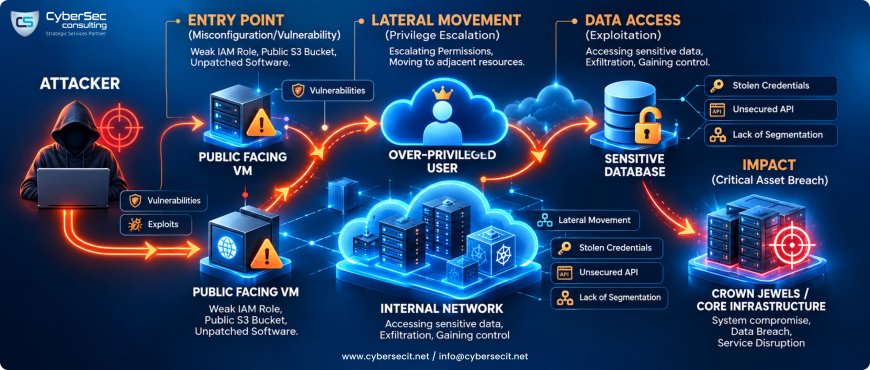
How Does a Cloud Attack Path Develop?

Initial Compromised Identity
- The attack can begin through a compromised employee account, administrator account, service account, or application identity.
- Stolen credentials, weak authentication, or exposed access keys can give attackers their first point of access. Strong authentication and effective identity controls remain essential parts of UK cloud security.
Available Permissions
- Attackers then examine what the compromised identity can access.
- Excessive permissions can provide access to cloud storage, applications, databases, APIs, or other identities. Least privilege helps reduce the potential impact of a compromised account.
Trust Relationships
- Cloud environments often contain relationships between users, applications, accounts, and services.
- Poorly configured trust relationships can create additional access routes. Cross-account access and third-party permissions can increase cloud IAM risk when they are not properly controlled.
Role Assumptions
- A compromised identity may have permission to assume another cloud role.
- That role could provide access to additional resources or higher privilege. One seemingly acceptable permission can therefore become part of a larger IAM attack path.
Privilege Escalation
- Attackers may combine existing permissions to gain greater control.
- Privilege escalation can turn limited access into administrative access. UK guidance highlights least privilege and time-limited privileged access as important measures for reducing this risk.
Lateral Movement
- Greater access can allow attackers to move between cloud services, accounts, and workloads. This can expose additional identities, applications, and infrastructure.
- Strong separation and controlled access can make cloud lateral movement harder.
Access to Sensitive Workloads
- The attack path becomes more serious when it reaches production systems, databases, cloud storage, business applications, security tools,s or critical workloads.
- Sensitive workloads should have tightly controlled access and strong identity protection.
Data Exposure
- The final impact can include unauthorised access to sensitive business data, customer information, credentials, intellectual property, or regulated information.
- This is why cloud IAM security should focus on the complete attack path rather than reviewing permissions individually.
- CyberSec Consulting helps organisations identify excessive permissions, risky identity relationships, and hidden IAM attack paths through cloud security assessment and identity security assessment.
What Is an IAM Misconfiguration?
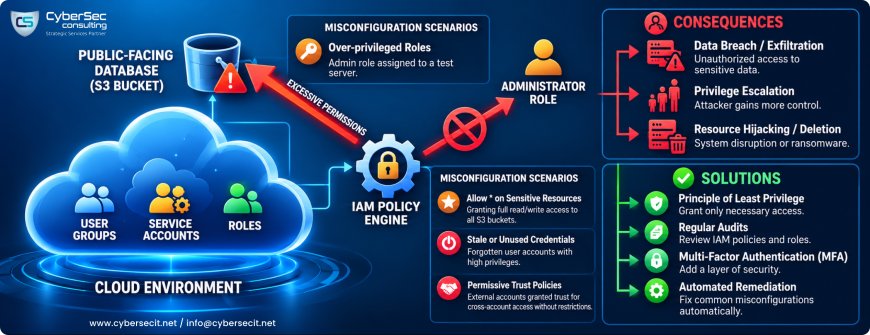
Common IAM Misconfigurations
- Excessive Permissions - Users may receive permissions beyond their actual job requirements. Excessive access increases the potential impact of a compromised identity and can support cloud privilege escalation.
- Unused Privileged Accounts - Old administrator accounts can remain active after responsibilities change. Every unnecessary privileged account creates another potential entry point for attackers.
- Weak Role Policies - Poorly designed roles can combine permissions that create unexpected access. Role policies should provide only the permissions required for a specific business function.
- Publicly Accessible Resources - Cloud storage, applications, and other resources may become publicly accessible due to incorrect access settings. Such exposure can lead to unauthorised access and cloud data security risks.
- Poor Service Account Controls - Service accounts often connect applications, automation tools, and cloud workloads. Excessive service account permissions can create significant identity security risks if those credentials are compromised. UK cloud guidance recommends separate service identities and granular access controls for workloads and automation.
- Excessive Trust Relationships - Unnecessary trust between cloud accounts, applications, or external identities can create additional routes through an environment. Attackers may exploit these relationships to reach resources beyond the original compromised account.
- Missing MFA - Missing multi-factor authentication increases the risk of account compromise after credential theft. UK NCSC guidance recommends MFA for cloud users and highlights stronger authentication for privileged access.
- Dormant Accounts - Accounts that are no longer actively used may still retain access to cloud resources. Dormant identities should be identified, reviewed, and removed when they are no longer required.
- Poor Separation of Duties - One identity may receive permissions that should be divided between multiple roles. Weak separation of duties can allow a compromised account to perform several high-risk actions without additional approval.
- Inadequate Privilege Reviews - Access can increase over time as employees change roles and responsibilities. Regular IAM security assessments can identify unnecessary privileges before they become part of a cloud attack path. UK guidance recommends removing unused and unnecessary permissions over time.
- Overly Broad Permissions - Wildcard permissions can provide access across multiple resources or actions. Such permissions can significantly increase the potential blast radius of a compromised identity.
Why IAM Misconfiguration Matters
How IAM Misconfigurations Build Cloud Attack Paths
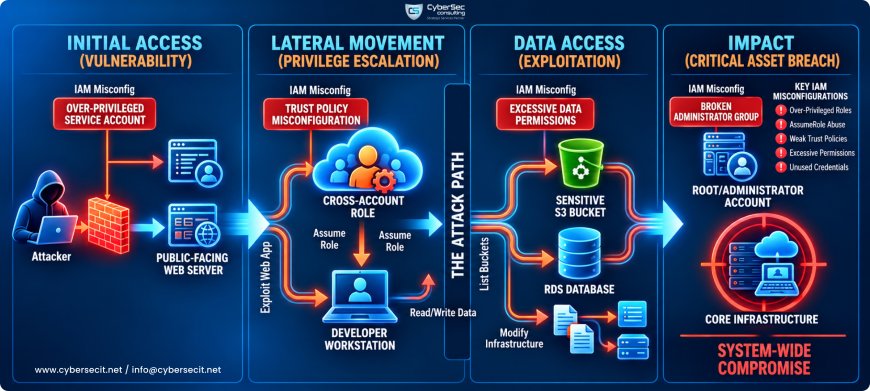
Initial Identity Compromise
- Phishing attacks
- Credential theft
- Token theft
- Compromised SaaS accounts
- Exposed API credentials
Excessive Permissions Expand the Blast Radius

- Read Access - Read permissions may appear low risk. Attackers can use read access to discover cloud resources, configurations, usernames, roles, and sensitive information. Reconnaissance can help identify the next step in a cloud attack path.
- Write Access - Write permissions can allow changes to cloud resources or application configurations. A compromised identity with write access may alter resources, introduce malicious content, or affect security controls.
- Delete Access - Delete permissions can create serious operational and security consequences. Attackers may use them to remove resources, disrupt workloads, or destroy information. Excessive delete access can increase the cloud security impact of an account compromise.
- AssumeRole - AssumeRole permissions can create another route through the cloud environment. A compromised identity may use role assumption to access a different security context. The new role may have greater privileges or access to sensitive workloads.
- CreateUser - The ability to create new users can introduce additional identities into the environment. Attackers may create unauthorised accounts when controls do not restrict identity creation. Persistent access can then become harder to detect and remove.
- CreateAccessKey - Access key creation can provide another credential for accessing cloud services. A compromised identity with this capability may create credentials that extend attacker access. Strong IAM governance and cloud security monitoring can help identify suspicious credential activity.
- ModifyPolicy - Policy modification can have a significant impact on cloud IAM security. An attacker who can alter permissions may expand access across users, roles, or resources. Policy changes can therefore become a direct route toward privilege escalation.
Real Risk Comes From Permission Combinations
Role Trust Relationships Create New Routes

Cross Account Access
- Cross-account access allows identities in one cloud account to access resources or roles in another account. Poorly restricted access can create opportunities for lateral movement. A compromised identity may reach a separate environment that contains more valuable resources.
- Regular IAM security assessments can help organisations identify unnecessary cross-account permissions.
Role Assumption
- Role assumption allows an identity to operate through another cloud role. A role may provide permissions that are not available to the original user. Weak trust policies can therefore turn role assumption into a route for privilege escalation.
- Security teams should review which identities can assume each role and whether that access is still required.
Third Party Access
- Cloud environments often connect with external vendors, SaaS platforms and technology partners. Excessive third-party access can increase cloud IAM risk. A compromised external identity may create an unexpected route into business resources.
- UK organisations should regularly review external identities and remove access that no longer serves a business requirement.
Service Roles
- Service roles allow cloud services and applications to perform specific actions. Poorly scoped service roles can hold excessive permissions. A compromised application or workload may then inherit those permissions.
- Strong least privilege cloud security controls can reduce this exposure.
Federated Identities
- Federated identities connect external identity providers to cloud environments.
- Weak federation controls can create access risks across multiple applications and cloud services. Poor session management, excessive permissions, ns or weak authentication can increase the impact of a compromised identity.
Why Trust Relationships Matter
- Trust should never be treated as automatic permission.
- Every relationship can create another route through the cloud environment. Cloud attack path analysis helps security teams understand how identities can move between accounts, roles and workloads.
- CyberSec Consulting helps organisations assess IAM misconfigurations, role trust relationships, privileged access and cloud identity risks. This approach helps UK businesses identify hidden attack paths before they become a serious security incident.
8 Common IAM Misconfigurations That Create Attack Paths
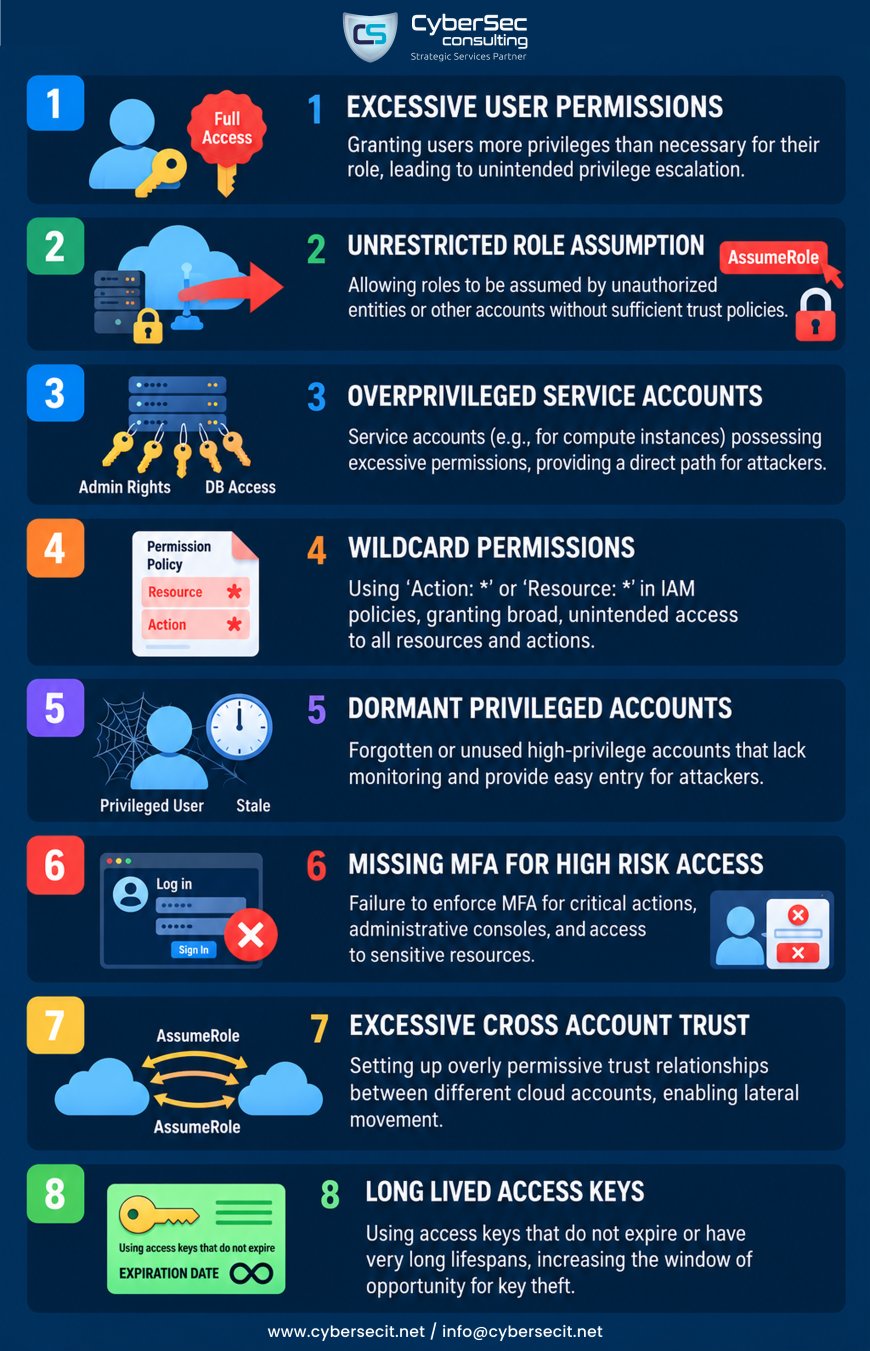
Excessive User Permissions
- Misconfiguration - Users receive more permissions than their business role requires.
- Attacker Opportunity - A compromised user account can access additional cloud services, resources, or sensitive information.
- Potential Impact - Excessive access can increase the blast radius of a cloud security incident and create opportunities for privilege escalation.
Unrestricted Role Assumption
- Misconfiguration - Cloud roles allow broad or unnecessary role assumption.
- Attacker Opportunity - A compromised identity can assume another role and gain additional permissions.
- Potential Impact - Role assumption can create a route toward privileged accounts, critical workloads, and sensitive data.
Overprivileged Service Accounts
- Misconfiguration - Service accounts receive permissions beyond their application requirements.
- Attacker Opportunity - A compromised application or credential can provide access through the service identity.
- Potential Impact - Attackers may reach cloud workloads, databases, applications, or other sensitive resources.
Wildcard Permissions
- Misconfiguration - IAM policies use broad permissions that allow access to many actions or resources.
- Attacker Opportunity - A compromised identity can perform actions well beyond its intended business function.
- Potential Impact - Broad permissions can accelerate privilege escalation and lateral movement across a cloud environment.
Dormant Privileged Accounts
- Misconfiguration - Unused accounts continue to hold privileged access.
- Attacker Opportunity - Attackers can target forgotten identities that receive limited security attention.
- Potential Impact - A compromised dormant account can provide persistent access to critical cloud resources.
Missing MFA for High-Risk Access
- Misconfiguration - Privileged or sensitive accounts operate without strong multi-factor authentication.
- Attacker Opportunity - Stolen credentials can provide a simpler route into cloud services.
- Potential Impact - Account compromise can expose privileged resources and increase the risk of a wider cloud security breach.
Excessive Cross-Account Trust
- Misconfiguration - Cloud accounts maintain unnecessary or overly broad trust relationships.
- Attacker Opportunity - A compromised identity can move between accounts through trusted roles.
- Potential Impact - Cross-account access can support lateral movement and expose separate environments.
Long-Lived Access Keys
- Misconfiguration - Access keys remain active for extended periods without regular review or rotation.
- Attacker Opportunity - A stolen key may provide continued access to cloud services.
- Potential Impact - Attackers can maintain access and potentially discover additional routes through the environment.
Why These IAM Misconfigurations Matter
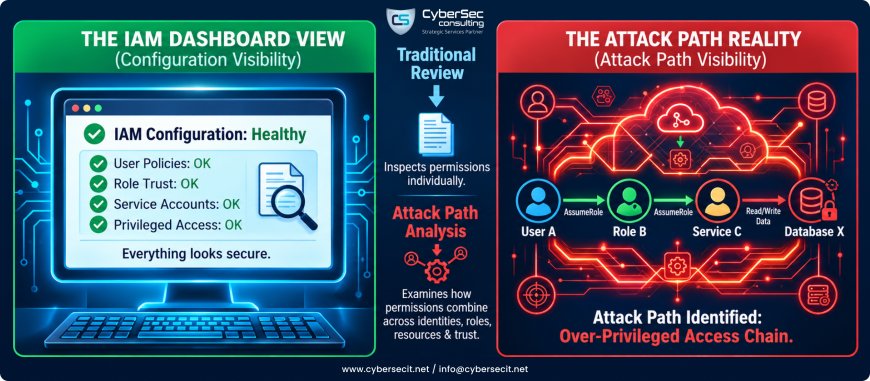
Why IAM Dashboards Can Miss Attack Paths
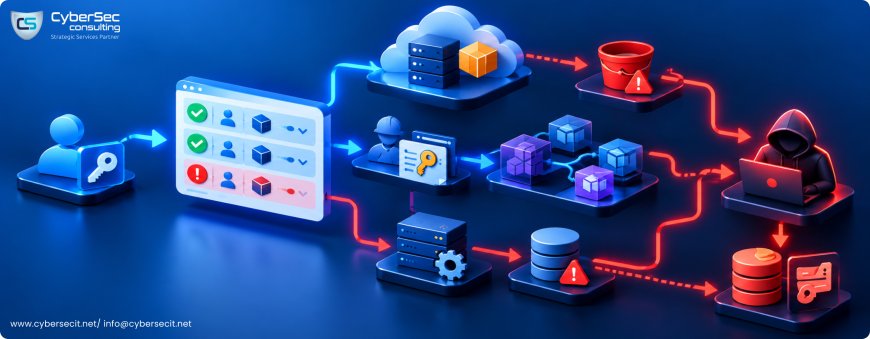
Configuration Visibility Is Not Attack Path Visibility
Why Individual Permission Reviews Can Miss Risk
What Attack Path Analysis Reveals
- Users
- Roles
- Service accounts
- Applications
- Cloud resources
- Trust relationships
- Privileged identities
- Sensitive workloads
Configuration Visibility vs Attack Path Visibility
| Configuration Visibility | Attack Path Visibility |
| Shows assigned permissions | Shows how permissions combine |
| Identifies individual weaknesses | Identifies connected weaknesses |
| Reviews users and roles | Maps identity relationships |
| Shows policy status | Shows potential attacker movement |
| Measures configuration health | Measures attack path exposure |
How to Detect IAM Attack Paths
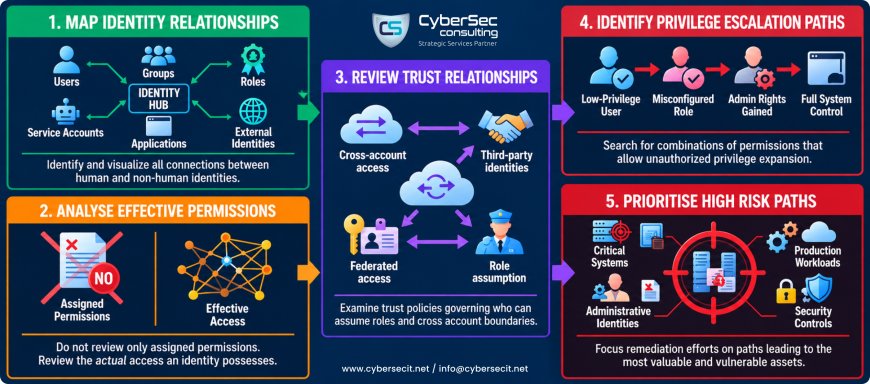
Map Identity Relationships
- Users
- Groups
- Roles
- Service accounts
- Applications
- External identities
Analyse Effective Permissions
- Excessive permissions
- Privileged access
- Unused permissions
- Inherited permissions
- Resource access
- Permission combinations
Review Trust Relationships
- Cross-account access
- Third-party identities
- Federated access
- Role assumption
Identify Privilege Escalation Paths
Prioritise High-Risk Paths
- Critical systems
- Sensitive data
- Production workloads
- Administrative identities
- Security controls
How to Prevent IAM Misconfigurations From Becoming Attack Paths
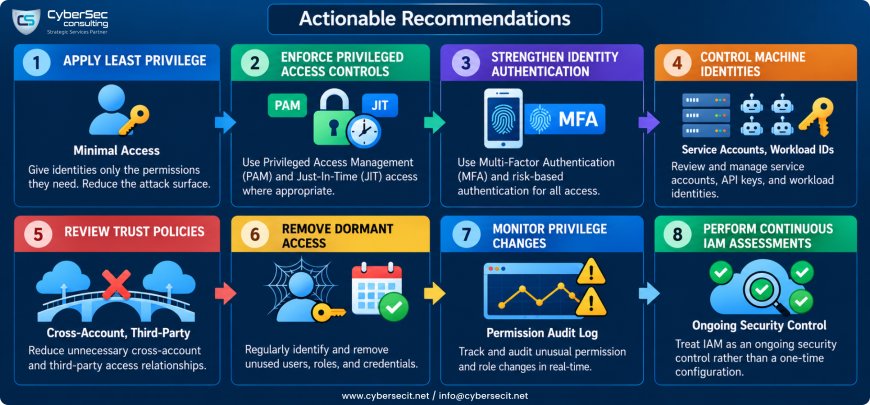
Apply Least Privilege
- Give every identity only the permissions required for its role.
- Review user permissions, group memberships, and cloud roles regularly. Remove access that no longer supports business requirements.
- Least privilege reduces excessive permissions and limits the impact of a compromised account. It also strengthens cloud access control across production systems, SaaS platforms, and sensitive workloads.
Enforce Privileged Access Controls
- Privileged accounts need stronger controls.
- Use Privileged Access Management to control administrative access. Apply Just-in-Time access where appropriate. Grant elevated permissions only when they are required.
- This approach reduces standing privilege. It also limits opportunities for cloud privilege escalation.
Strengthen Identity Authentication
- Strong authentication remains a core IAM security control.
- Enable Multi-Factor Authentication for privileged users and high-risk applications. Apply risk-based authentication when access behaviour changes.
- Security teams should also monitor unusual login locations, devices, sessions, and authentication patterns. Strong identity authentication can reduce the risk of compromised credentials becoming the first step of a cloud attack path.
Control Machine Identities
- Machine identities can create significant cloud security risks.
- Review service accounts, API keys, workload identities, and application credentials. Remove unnecessary credentials. Rotate active keys regularly. Restrict permissions assigned to applications and workloads.
- Machine identity security should receive the same attention as human identity security. Excessive service account permissions can create hidden routes toward sensitive cloud resources.
Review Trust Policies
- Trust relationships can create access paths across cloud environments.
- Review cross-account access, third-party identities, federated access, and role assumption policies. Remove relationships that no longer support a valid business requirement.
- Strong cloud access controls should clearly define who can assume a role and what that role can access.
Remove Dormant Access
- Unused identities can become attractive targets for attackers.
- Identify dormant users, inactive roles, unused service accounts, and old access keys. Disable or remove credentials that no longer have a business purpose.
- Regular access reviews help reduce identity exposure. They also support stronger privileged account security and IAM compliance.
Monitor Privilege Changes
- Permission changes can create new attack paths without triggering an obvious security alert.
- Monitor changes to roles, policies, group memberships, and privileged permissions. Investigate unusual privilege changes quickly.
- Security teams should ask a simple question after every significant IAM change: Does this change create a new route to a sensitive resource?
Perform Continuous IAM Assessments
- IAM should not be treated as a one-time configuration exercise.
- Run regular IAM security assessments across users, roles, service accounts, applications, and external identities. Review effective permissions rather than only assigned permissions.
- Cloud attack paths can change when identities, workloads, or trust relationships change. Continuous IAM assessment helps organisations identify excessive permissions, privilege escalation opportunities,s and hidden access routes.
How CyberSec Consulting Helps Identify IAM Attack Paths

Identify Hidden Identity Attack Paths
- Excessive permissions
- Privilege escalation routes
- Risky role assumptions
- Weak trust relationships
- Uncontrolled service accounts
- Excessive third-party access
- Dormant privileged accounts
- Unnecessary administrative access
Prioritise the Risks That Matter
- Critical business applications
- Sensitive customer data
- Financial systems
- Production workloads
- Privileged accounts
- Security management systems
- High-value cloud resources
Remediate Excessive Access
- Removing unnecessary permissions
- Reducing excessive role access
- Restricting role assumptions
- Strengthening trust policies
- Removing dormant credentials
- Improving service account controls
- Applying Privileged Access Management
- Introducing Just-in-Time privileged access
- Strengthening access governance
Monitoring Identity Threats Continuously
Turn IAM Findings Into Business Action
- Identify - Map identities, permissions, relationships, and attack paths.
- Prioritise - Rank risks based on privilege, exposure, and business impact.
- Remediate - Reduce excessive access through least privilege, PAM, and access governance.
- Monitor - Track identity changes and emerging attack paths through ongoing security monitoring.
Secure the Path, Not Just the Permission
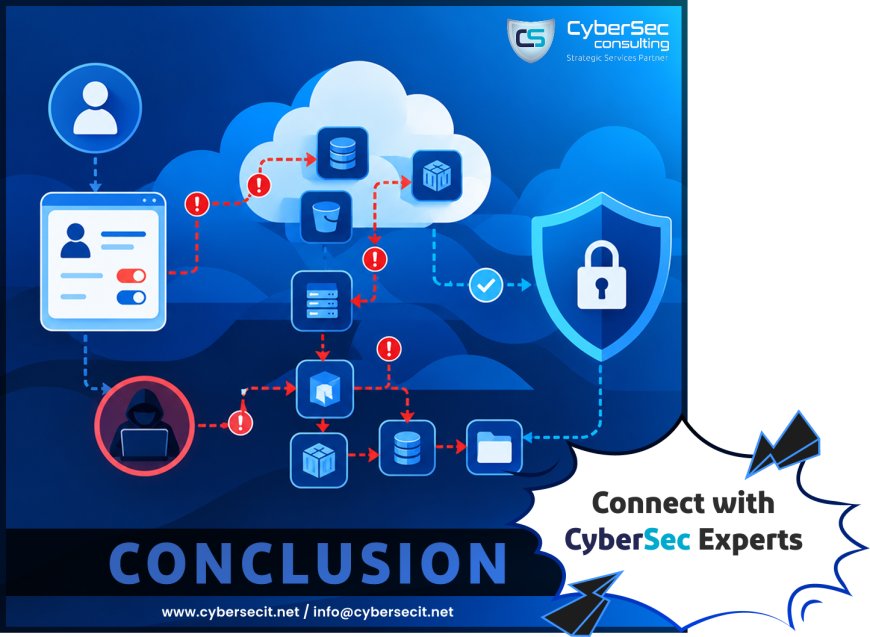
Conclusion
FAQs
What is an IAM attack path?
An IAM attack path is a sequence of permissions, identities, roles, and trust relationships that can help an attacker move from a compromised account toward sensitive cloud resources. Cloud attack path analysis helps identify these connected access routes.
How do IAM misconfigurations create cloud security risks?
IAM misconfigurations can create excessive permissions, weak role controls, risky trust relationships and unnecessary privileged access. Attackers can combine these weaknesses to achieve privilege escalation, lateral movement and unauthorised access to sensitive cloud workloads.
How can UK organisations prevent IAM attack paths?
UK organisations can reduce IAM attack paths through least privilege, Multi-Factor Authentication, Privileged Access Management, access governance and regular IAM security assessments. Continuous monitoring can also identify suspicious privilege changes and emerging identity risks.
What does an IAM security assessment identify?
An IAM security assessment can identify excessive permissions, dormant accounts, risky role assumptions, service account risks, weak trust policies, and privilege escalation opportunities. Effective access analysis can also reveal hidden routes toward critical cloud resources.
Why is least privilege important for cloud security?
Least privilege limits access to the permissions required for a specific business function. This reduces the potential impact of a compromised identity and can make privilege escalation and lateral movement more difficult.
How can CyberSec Consulting help improve IAM security?
CyberSec Consulting helps organisations assess IAM security, cloud security, and identity risks. Its capabilities include least privilege assessment, Privileged Access Management, access governance, attack path analysis, IAM implementation, identity threat detection, and Managed Identity Services.
- Introduction
- What Is a Cloud Attack Path?
- How Does a Cloud Attack Path Develop?
- Initial Compromised Identity
- Available Permissions
- Trust Relationships
- Role Assumptions
- Privilege Escalation
- Lateral Movement
- Access to Sensitive Workloads
- Data Exposure
- What Is an IAM Misconfiguration?
- Common IAM Misconfigurations
- Why IAM Misconfiguration Matters
- How IAM Misconfigurations Build Cloud Attack Paths
- Initial Identity Compromise
- Excessive Permissions Expand the Blast Radius
- Real Risk Comes From Permission Combinations
- Role Trust Relationships Create New Routes
- Cross Account Access
- Role Assumption
- Third Party Access
- Service Roles
- Federated Identities
- Why Trust Relationships Matter
- 8 Common IAM Misconfigurations That Create Attack Paths
- Excessive User Permissions
- Unrestricted Role Assumption
- Overprivileged Service Accounts
- Wildcard Permissions
- Dormant Privileged Accounts
- Missing MFA for High-Risk Access
- Excessive Cross-Account Trust
- Long-Lived Access Keys
- Why These IAM Misconfigurations Matter
- Why IAM Dashboards Can Miss Attack Paths
- Configuration Visibility Is Not Attack Path Visibility
- Why Individual Permission Reviews Can Miss Risk
- What Attack Path Analysis Reveals
- Configuration Visibility vs Attack Path Visibility
- How to Detect IAM Attack Paths
- Map Identity Relationships
- Analyse Effective Permissions
- Review Trust Relationships
- Identify Privilege Escalation Paths
- Prioritise High-Risk Paths
- How to Prevent IAM Misconfigurations From Becoming Attack Paths
- Apply Least Privilege
- Enforce Privileged Access Controls
- Strengthen Identity Authentication
- Control Machine Identities
- Review Trust Policies
- Remove Dormant Access
- Monitor Privilege Changes
- Perform Continuous IAM Assessments
- How CyberSec Consulting Helps Identify IAM Attack Paths
- Identify Hidden Identity Attack Paths
- Prioritise the Risks That Matter
- Remediate Excessive Access
- Monitoring Identity Threats Continuously
- Turn IAM Findings Into Business Action
- Secure the Path, Not Just the Permission
- Conclusion
- FAQs