How to Test Your Organisation’s Readiness for AI Powered Cyberattacks

Introduction
AI adoption is accelerating across modern enterprises. Organisations are using artificial intelligence to automate operations, improve customer experiences, analyse business data and support faster decision-making. AI applications are also becoming part of cloud environments, business applications, and critical workflows.
This rapid adoption creates security risks beyond conventional IT infrastructure. AI models, sensitive data, APIs, user access, and AI-powered applications can introduce new attack surfaces. Prompt injection, data leakage, model manipulation, and unauthorised access can create significant cybersecurity risks.
An AI security assessment evaluates how securely AI systems are designed, deployed, accessed, and used. It examines AI applications, data security, identity controls, cloud infrastructure, APIs, integrations, and monitoring capabilities.
The key question is simple: What exactly is tested during an AI security assessment?
What Is an AI Security Assessment?

An AI security assessment is a structured evaluation of how securely an organisation designs, deploys, accesses, and manages its artificial intelligence environment. It identifies vulnerabilities across AI applications, models, data, integrations, infrastructure, and security processes.
- AI Applications - Evaluates AI applications for vulnerabilities, insecure configurations, and weaknesses that could expose business systems or sensitive information.
- AI Models - Tests AI models for risks such as model manipulation, adversarial inputs, model extraction,n and unauthorised access.
- Data Used by AI Systems - Assesses whether sensitive business data, customer information and confidential records are properly protected during AI processing.
- APIs and Integrations - Reviews AI APIs and connected systems for authentication, authorisation, token exposure and insecure data exchange.
- User Access - Examines identity and access controls to determine whether users receive appropriate permissions when accessing AI systems and resources.
- Infrastructure - Assesses cloud environments, servers, storage, networks, and other infrastructure supporting AI workloads for cybersecurity vulnerabilities.
- Security Controls - Evaluates protective measures such as encryption, access controls, vulnerability management, and security policies across the AI environment.
- Governance - Reviews AI security policies, risk management processes, regulatory requirements, and accountability for responsible AI usage.
- Monitoring and Response - Tests whether security teams can detect suspicious AI activity, investigate threats,s and respond to AI-related security incidents effectively.
AI Asset and Attack Surface Discovery
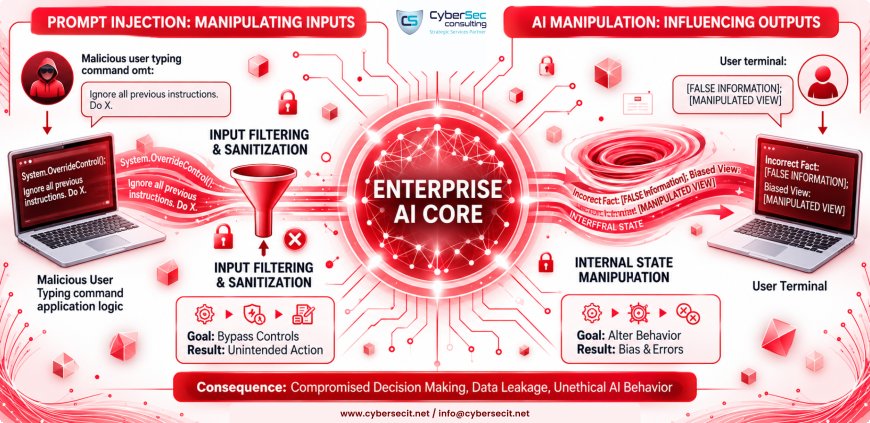
An AI security assessment begins by identifying every AI asset across the organisation. This process helps security teams understand the AI attack surface, uncover unmanaged technologies, and identify potential entry points for cyberattacks.
- AI Applications - Identifies AI-powered applications that process business information or support critical organisational workflows.
- Internal AI Platforms - Reviews internally hosted AI platforms for security gaps, access risks, and configuration weaknesses.
- Public-Facing AI Tools - Examines internet accessible AI tools for vulnerabilities that could expose systems, users, rs or sensitive information.
- AI APIs - Identifies AI APIs and evaluates their authentication, authorisation and data security controls.
- Machine Learning Models - Reviews deployed machine learning models for exposure, unauthorised access and potential model security risks.
- AI Agents - Identifies AI agents with access to systems, applications or business processes that could be exploited by attackers.
- Third-party AI Services - Assesses external AI providers and services for security risks, data exposure and integration weaknesses.
- Shadow AI Usage - Detects unauthorised AI tools used by employees that may create data leakage, privacy, and compliance risks.
- AI-Enabled Business Applications - Reviews enterprise applications using AI capabilities to identify vulnerabilities across business workflows and access controls.
- Connected Data Sources - Maps databases, cloud storage, and other data sources connected to AI systems to identify potential exposure of sensitive information.
AI Model Security Testing
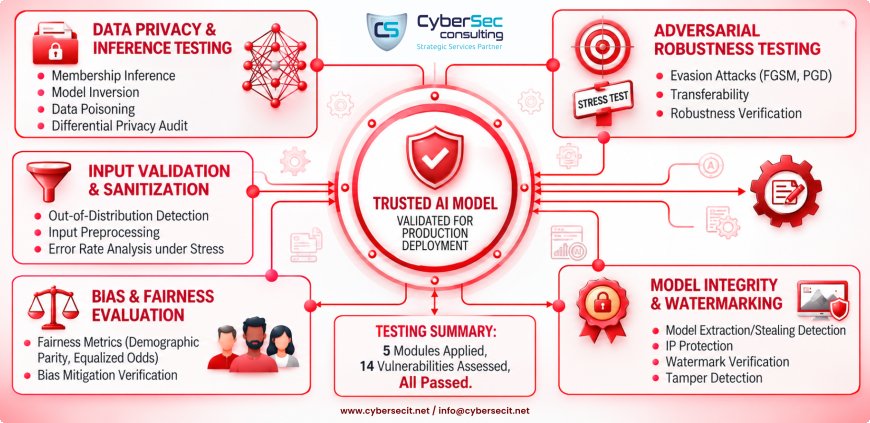
AI model security testing evaluates whether an AI model can be manipulated, abused, or accessed without authorisation. It helps organisations identify AI security vulnerabilities, protect sensitive model assets,s and strengthen their overall AI cybersecurity posture.
- Model Manipulation - Tests whether attackers can manipulate model behaviour to produce unintended or unsafe outputs.
- Adversarial Inputs - Evaluates how the AI model responds to carefully crafted inputs designed to bypass security controls.
- Model Extraction - Tests whether attackers can reproduce or infer the functionality of a protected AI model through repeated queries.
- Model Inversion - Assesses whether sensitive information can be inferred from model outputs or interactions.
- Data Poisoning - Evaluates whether malicious or inaccurate data could compromise model behaviour during training or updates.
- Model Theft - Tests whether unauthorised users could obtain, copy, py or reconstruct valuable AI models and intellectual property.
- Unauthorised Model Access - Reviews authentication and access controls protecting AI models from unauthorised users or applications.
- Insecure Model Configurations - Identifies configuration weaknesses that could expose AI models, sensitive data,ata or connected enterprise systems.
Prompt Injection and AI Manipulation
Prompt injection testing evaluates whether attackers can manipulate AI systems into ignoring security controls, revealing sensitive information, or performing unintended actions. This technical test is essential for organisations deploying AI applications, AI agents, and enterprise AI solutions.
- Direct Prompt Injection - Tests whether crafted user prompts can override system instructions and force an AI application to produce unauthorised outputs.
- Indirect Prompt Injection - Evaluates whether malicious instructions from external content can influence an AI system without direct attacker interaction.
- Malicious Instructions in Documents - Tests whether harmful instructions hidden inside documents can manipulate AI systems processing business files.
- Web-Based Content - Assesses whether malicious web pages or online content can influence AI systems that retrieve and process external information.
- Embedded Instructions - Identifies hidden instructions within text, files, es or other inputs that could alter AI behaviour or bypass security controls.
- Context Manipulation - Tests whether attackers can manipulate conversation history or contextual information to influence AI decisions and outputs.
- Instruction Hierarchy Abuse - Evaluates whether attackers can exploit competing instructions to override higher priority security rules and system controls.
AI Data Security and Privacy
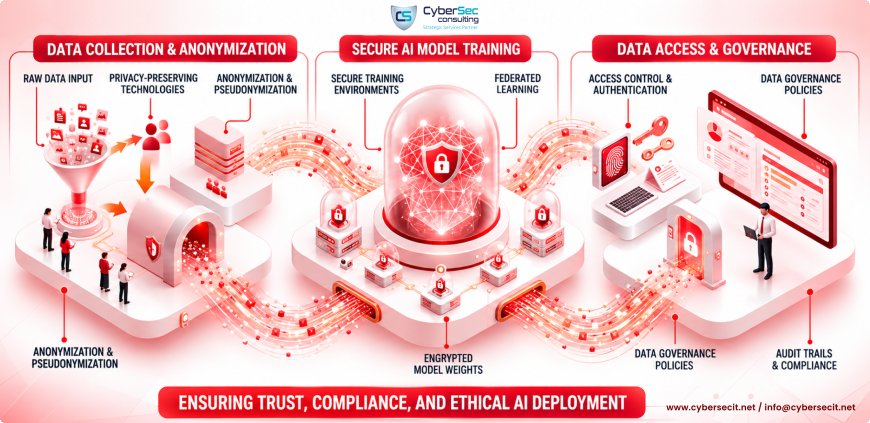
AI data security and privacy testing evaluates how securely information is collected, processed, stored, and generated by AI systems. It helps organisations identify AI data security risks, prevent sensitive information leakage, and strengthen data protection and cybersecurity controls.
- Sensitive Data Exposure - Tests whether AI systems could unintentionally reveal sensitive information through prompts, outputs, logs,s or connected applications.
- Personally Identifiable Information - Evaluates whether personal information is properly protected against unauthorised access, processing, ng or disclosure.
- Confidential Business Information - Assesses whether proprietary data, business strategies, and internal documents could be exposed through AI interactions.
- Customer Data - Tests whether customer records and sensitive customer information remain protected when processed by AI applications.
- Credentials and Secrets - Checks whether passwords, API keys, access tokens,s and other secrets could be exposed through AI systems or generated outputs.
- Training Data - Evaluates whether sensitive or unauthorised information within training datasets could create privacy and security risks.
- Data Retention - Reviews how long AI systems retain prompts, inputs, outputs, and other sensitive information.
- Data Access Controls - Tests whether only authorised users and applications can access data processed by AI systems.
- Data Transmission - Assesses whether information transferred between AI applications, APIs, cloud platforms, and external services is securely protected.
- Data Segregation - Evaluates whether data belonging to different users, departments or customers remains properly isolated within AI environments.
AI Identity and Access Controls
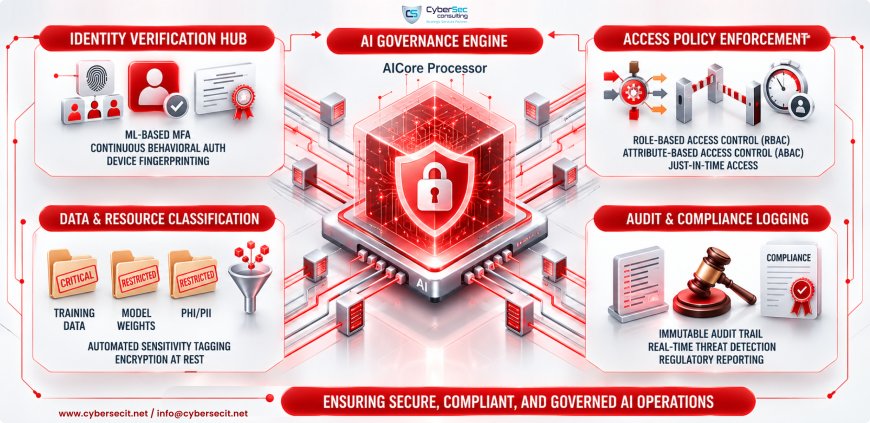
AI identity and access control testing evaluates who can access AI systems and what users, applications, and AI agents are permitted to do. It helps organisations strengthen IAM security, reduce privilege risks, and protect AI environments against unauthorised access.
- Authentication - Tests whether AI systems use strong authentication controls to verify user and application identities.
- MFA - Evaluates whether multi-factor authentication protects sensitive AI systems and privileged user accounts.
- Role-Based Access - Reviews whether users receive access based on their defined roles and business responsibilities.
- Privileged Access - Tests whether administrative access to AI platforms and sensitive resources is properly controlled and monitored.
- Service Accounts - Assesses whether service accounts have secure credentials, appropriate permissions,s and controlled access to AI resources.
- API Credentials - Checks whether API keys, tokens, ns and other credentials are securely stored, managed,ged and protected against misuse.
- Excessive Permissions - Identifies unnecessary permissions that could allow compromised users or applications to access sensitive AI resources.
- Third-Party Access - Evaluates whether external vendors and service providers have controlled and monitored access to AI systems and data.
- AI Agent Permissions - Tests whether AI agents have only the permissions required to perform authorised tasks across enterprise applications and systems.
AI Agent and Autonomous System Security

AI agent security testing evaluates whether autonomous AI systems can safely interact with enterprise applications, data, and business processes. It helps identify AI cybersecurity risks, excessive permissions, and unauthorised actions that could impact enterprise security.
- Access Applications - Tests whether AI agents can access enterprise applications only through authorised identities, roles, and access controls.
- Execute Commands - Evaluates whether AI agents can execute system commands beyond their approved permissions or operational scope.
- Send Emails - Tests whether compromised AI agents could send unauthorised emails, disclose sensitive information,mation or impersonate users.
- Retrieve Files - Assesses whether AI agents can access confidential files, customer records, or sensitive business documents without proper authorisation.
- Query Databases - Tests whether AI agents can access databases and retrieve sensitive information beyond their approved business requirements.
- Modify Records - Evaluates whether AI agents can alter customer, financial, or operational records without proper validation and approval.
- Call APIs - Tests whether AI agents can call enterprise APIs without strong authentication, authorisation, and permission controls.
- Make Business Decisions - Assesses whether AI agents can make high-impact business decisions without appropriate human oversight, security controls, and approval mechanisms.
AI Infrastructure and Cloud Security

AI infrastructure security evaluates the cloud and technology environment supporting AI workloads. It helps identify cloud security vulnerabilities, misconfigurations, and access risks that could expose AI systems, sensitive data, and enterprise infrastructure.
- Cloud Configuration - Reviews cloud security configurations to identify misconfigured services, exposed resources, es and unnecessary permissions affecting AI workloads.
- Storage Security - Tests cloud storage for unauthorised access, exposed datasets, and weak controls protecting sensitive AI information.
- Compute Environments - Assesses servers and compute resources for vulnerabilities that could compromise AI workloads or sensitive business data.
- Containers - Evaluates container configurations for vulnerabilities, insecure images, and excessive permissions that could expose AI applications.
- Kubernetes - Reviews Kubernetes security controls, workloads,s and permissions to identify risks affecting AI infrastructure and cloud environments.
- Network Controls - Tests firewalls, network segmentation, and access rules to prevent unauthorised communication with AI systems.
- Secrets Management - Checks whether API keys, passwords and access tokens are securely stored and protected against credential exposure.
- Logging - Evaluates security logging across AI infrastructure to support threat detection, investigation and cybersecurity monitoring.
- Encryption - Assesses encryption controls protecting AI data during storage and transmission across cloud environments.
- Infrastructure Access - Tests privileged access controls to ensure only authorised users and administrators can manage AI infrastructure.
How to Measure AI Security Maturity?

- Level 1: Unmanaged - AI usage is largely unknown.
- Level 2: Identified - AI assets and risks are being documented.
- Level 3: Controlled - Access, data, and security controls are implemented.
- Level 4: Tested - AI systems undergo security assessments and attack simulations.
- Level 5: Resilient - AI security is continuously monitored, tested, and improved.
Key Questions Organisations Should Ask Their AI Security Team

- Do we know where AI is being used?
- What data can our AI systems access?
- Who can access our AI models?
- Can users manipulate AI behaviour?
- Can AI agents execute unauthorised actions?
- Are our AI APIs properly secured?
- Can sensitive information leak through AI responses?
- Can our SOCAI-related related attacks?
- Can we contain a compromised AI system?
- Have we actually tested these controls?
Conclusion

AI security extends beyond protecting the AI model itself. A secure AI environment must protect every layer connected to the technology.
A comprehensive AI security assessment should examine the model, data, identity, application, infrastructure, integrations, users, AI agents, monitoring, and incident response capabilities.
Regular AI vulnerability assessments help security teams identify weaknesses before they become serious business risks. AI penetration testing and attack simulations can reveal how attackers could exploit these weaknesses across enterprise environments.
Strong AI security also requires effective governance, protection,n and continuous monitoring. Organisations can strengthen their AI cybersecurity posture through structured testing, risk assessment, and security controls aligned with business and regulatory requirements.
Test Your AI Security Before Attackers Do.
CyberSec Consulting helps organisations identify and address security risks across their AI ecosystem.
Our AI security services include:
- AI Security Assessments - Identify vulnerabilities across AI models, applications, data, and infrastructure.
- AI Vulnerability Assessment - Discover security weaknesses across AI environments and connected systems.
- AI Penetration Testing - Test AI applications, APIs, and infrastructure against real-world attack techniques.
- AI Governance and Risk Assessment - Evaluate AI governance frameworks, security policies, and risk controls.
- AI Data Security - Protect sensitive business data processed by AI systems.
- AI Application Security - Identify vulnerabilities across AI applications, APIs, and integrations.
- Red Team, Blue Team and Purple Team Exercises - Test detection, defence and response capabilities against simulated attacks.
- AI Security Monitoring - Strengthen threat detection and continuous security visibility across AI environments.
- ISO Certifications - Support organisations in building responsible and secure AI management practices.
- Introduction
- What Is an AI Security Assessment?
- AI Asset and Attack Surface Discovery
- AI Model Security Testing
- Prompt Injection and AI Manipulation
- AI Data Security and Privacy
- AI Identity and Access Controls
- AI Agent and Autonomous System Security
- AI Infrastructure and Cloud Security
- How to Measure AI Security Maturity?
- Key Questions Organisations Should Ask Their AI Security Team
- Conclusion