How CIAM (Customer IAM) Drives Frictionless Customer Journeys?

Introduction
Customer expectations are reshaping digital experiences across financial services, eCommerce, healthcare, telecommunications, and other rapidly growing sectors. Seamless access, secure authentication, and personalised interactions have become essential for businesses seeking stronger customer engagement and higher conversion rates. Customer Identity and Access Management, also known as CIAM, helps organisations create secure digital experiences while reducing login friction and protecting customer data.
Modern CIAM solutions combine identity verification, Single Sign On, Multi-Factor Authentication, adaptive authentication, consent management, and access governance to deliver secure and convenient customer journeys. Strong CIAM implementation also supports regulatory compliance, data privacy, and customer identity security across complex digital environments. Businesses serving customers across the Gulf and wider Middle East can use CIAM to strengthen digital trust, improve customer retention, and deliver frictionless experiences across websites, mobile applications, and digital services.
Modern Identity Imperative: Security vs. Friction
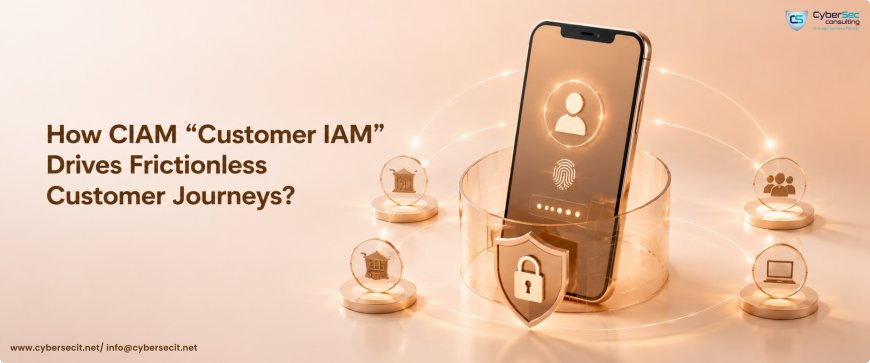
Customer Identity and Access Management has become critical to digital transformation as organisations balance strong customer identity security with seamless digital experiences. Customers expect secure access to online banking, eCommerce, healthcare, telecommunications, and digital services without unnecessary barriers. CIAM solutions help organisations strengthen identity security through multi-factor authentication, Single Sign On, adaptive authentication, and risk-based access while keeping customer journeys simple and convenient. Strong identity management can improve customer trust, support data privacy, and create secure digital experiences across the Gulf market.
- Friction Penalty - Complex registration processes, repeated authentication requests, and lengthy identity verification can create significant friction during the customer journey. High friction may cause users to abandon registration, leave shopping carts before completing purchases, or move to competing digital services. CIAM helps reduce these barriers through streamlined registration, Single Sign On, passwordless authentication, adaptive authentication, and automated identity verification. A smoother authentication experience can increase conversion rates, customer retention, and digital engagement while maintaining strong customer identity security.
- Identity as the Digital Front Door - Customer identity has become one of the first interactions between a customer and a digital business. Every login, registration, authentication request, and access decision shapes the overall customer experience. Modern CIAM platforms connect identity management with customer experience, enabling secure and personalised access across websites, mobile applications, cloud platforms, and digital services. Strong identity governance also helps organisations protect customer data, manage consent, support regulatory compliance, and establish trusted digital experiences across rapidly growing digital markets.
- Trust Paradox - Customers expect businesses to protect financial information, personal data, and digital accounts, yet excessive verification steps can create frustration and reduce engagement. This creates a clear challenge for organisations seeking to strengthen cybersecurity without compromising customer experience. CIAM addresses this trust paradox by applying intelligent authentication based on user behaviour, risk signals, device context, and access patterns. Multi-factor authentication, adaptive authentication, identity verification, and fraud prevention can provide strong protection while keeping legitimate customers moving through the digital journey with minimal disruption.
Enterprise IAM vs. Consumer IAM (CIAM): Understanding the Architecture
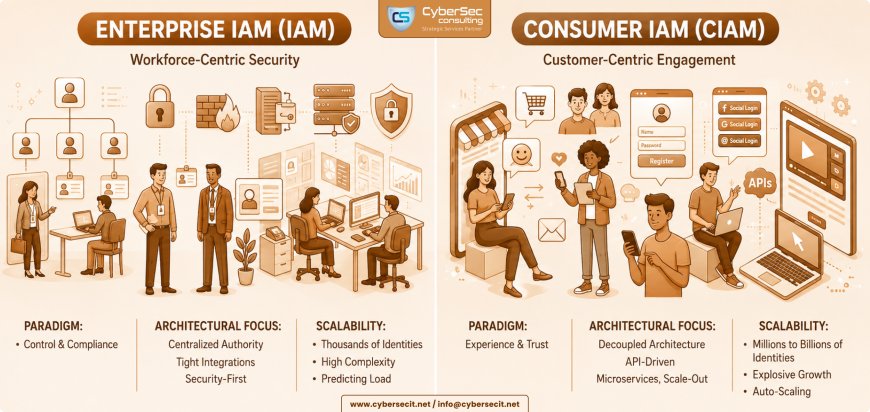
Enterprise Identity and Access Management and Customer Identity and Access Management serve different identity security requirements. Enterprise IAM focuses on securing employee access to internal applications, systems, networks, and corporate resources through Role-Based Access Control, Privileged Access Management, Single Sign-On, and Multi-Factor Authentication. CIAM focuses on millions of external customers who access websites, mobile applications, portals, and digital services. A strong CIAM architecture prioritises scalability, customer experience, identity security, consent management, data privacy, and seamless authentication.
- Scale & Volatility - Enterprise IAM typically manages a defined workforce with relatively predictable access patterns, while CIAM must support potentially millions of customers with constantly changing authentication activity. Seasonal campaigns, product launches, promotional events, and sudden increases in digital traffic can create significant spikes in registration and login requests. Scalable CIAM platforms use cloud architecture, automated provisioning, distributed authentication, and high availability to maintain reliable customer access during peak demand. This scalability is particularly important for organisations delivering high-volume digital services across the Gulf and wider Middle East markets.
- User Motivation - Employees generally need access to business applications to perform their responsibilities, making authentication a necessary part of their daily workflow. Consumers have greater freedom and can quickly abandon a website or application when registration is complicated, authentication fails, or login takes too long. CIAM therefore needs to combine strong customer identity security with a smooth digital experience. Features such as Single Sign On, passwordless authentication, social login, adaptive authentication, and streamlined registration can reduce friction while protecting customer accounts and sensitive information.
- Data & Privacy Scope - Enterprise IAM primarily focuses on controlling employee access to corporate resources through Role-Based Access Control, Privileged Access Management, access governance, and identity lifecycle management. CIAM has a broader customer data and privacy responsibility because it manages identities, personal information, authentication preferences, and consent across digital channels. Modern CIAM solutions support consent management, identity federation, data privacy, and secure customer data handling while helping organisations align with regulations such as GDPR, CCPA, and applicable regional privacy requirements. Strong privacy-focused identity management can build digital trust while supporting secure customer experiences.
Core Technical Pillars of Frictionless Authentication
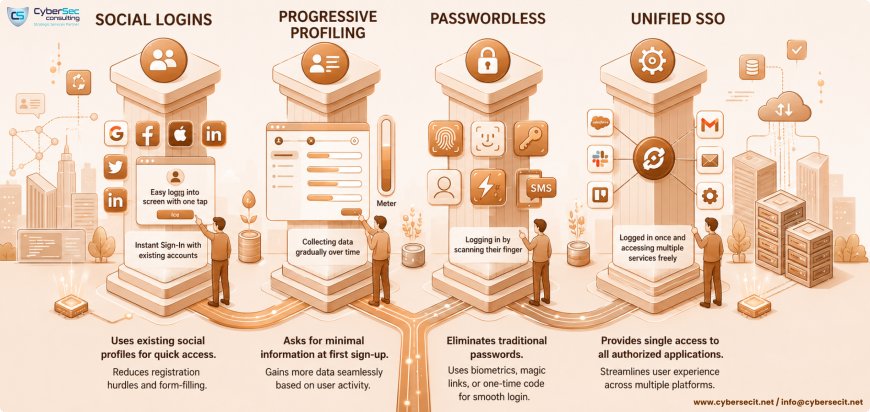
Frictionless authentication is a key component of modern Customer Identity and Access Management, helping organisations secure digital customer journeys without creating unnecessary barriers. Effective CIAM architecture combines strong identity security with convenient authentication across websites, mobile applications, and digital platforms. Technologies such as federated identity, progressive profiling, passwordless authentication, Passkeys, and Single Sign On help organisations reduce authentication friction while strengthening customer trust, data protection, and digital experience.
- Social Logins & Federated Identity - Social login and federated identity allow customers to access digital services using an existing identity with a trusted identity provider. Protocols such as OAuth 2.0 and OpenID Connect enable secure authentication while reducing the need for customers to create and remember additional credentials. Customers can register or authenticate using providers such as Google, Apple, or Microsoft, creating a faster onboarding experience. CIAM platforms can use identity federation to improve customer conversion, strengthen authentication security, and deliver seamless digital experiences across high-growth markets.
- Progressive Profiling - Progressive profiling reduces registration friction by collecting only essential customer information during the initial sign-up process. An organisation may request an email address first and gradually collect additional information as the customer uses more services. This approach creates a smoother onboarding experience while allowing businesses to build richer customer profiles over time. CIAM solutions can combine progressive profiling with consent management and data privacy controls, helping organisations collect relevant information responsibly while improving customer engagement and conversion rates.
- Passwordless Authentication - Passwordless authentication removes the need for customers to remember conventional passwords by using secure credentials stored on trusted devices. FIDO2 and Passkeys can support biometric authentication such as Touch ID or Face ID, depending on the customer's device. Strong cryptographic authentication helps protect accounts against credential theft, phishing, and password reuse while reducing password reset requests. Passwordless CIAM can therefore improve both customer experience and identity security across banking, eCommerce, healthcare, telecommunications, and other digital services.
- Unified Single Sign On: SSO - Unified Single Sign On enables customers to authenticate once and access multiple connected digital services without repeatedly entering credentials. A well-designed CIAM architecture can maintain a consistent identity experience across websites, mobile applications, customer portals, and approved partner platforms. SSO reduces authentication friction while improving customer convenience and supporting centralised identity security. Organisations can also combine SSO with Multi-Factor Authentication, adaptive authentication, and access policies to create secure and seamless customer journeys across digital ecosystems.
Intelligent Security Engine: Risk-Based Authentication & AI
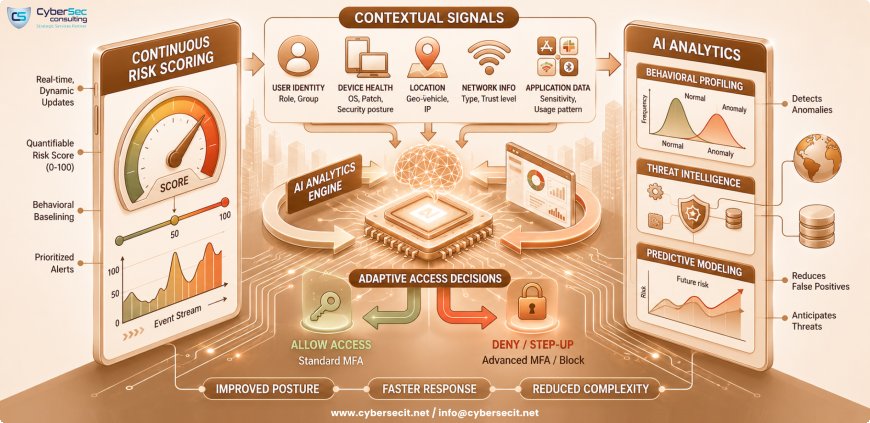
Risk-based authentication and Artificial Intelligence are transforming Customer Identity and Access Management by enabling organisations to assess customer risk dynamically during every digital interaction. Modern CIAM platforms can evaluate multiple risk indicators and adjust authentication requirements according to the level of detected risk. This approach helps protect customer accounts, financial data, and personal information while maintaining a smooth digital experience. Organisations across the Gulf and wider Middle East can use AI-powered identity security to strengthen fraud prevention, customer authentication, and digital trust without adding unnecessary verification steps.
- Contextual & Telemetry Signals - Contextual intelligence allows CIAM platforms to evaluate signals surrounding each authentication attempt before granting access. Device fingerprints, IP address activity, geographical anomalies, access frequency, and time of day can provide valuable indicators of potential account compromise or fraudulent behaviour. A login from a recognised device and familiar location may present lower risk, while an unusual combination of device, location, and access behaviour may trigger additional security controls. This continuous risk assessment strengthens customer identity security while keeping legitimate users moving through digital services with minimal friction.
- Behavioral AI & Biometrics - Behavioral Artificial Intelligence can analyse subtle patterns in how customers interact with digital platforms to identify suspicious activity. Typing dynamics, navigation behaviour, cursor movement, touch interactions, and session patterns can contribute to continuous identity verification. Machine learning models can establish behavioural patterns and identify significant deviations that may indicate account takeover or fraudulent access. CIAM platforms can use these insights to strengthen fraud detection and customer authentication without repeatedly interrupting legitimate users with additional verification requests.
- Dynamic Step Up Authentication - Dynamic step up authentication applies stronger verification when a customer interaction presents elevated risk. Routine activity can follow a low-friction authentication experience, while sensitive actions such as changing banking information, completing high-value transactions, or accessing an account through an unrecognised device can trigger Multi-Factor Authentication or additional identity verification. This risk-based approach helps organisations balance customer experience with strong cybersecurity controls. CIAM solutions can therefore protect sensitive customer accounts and transactions while reducing unnecessary authentication challenges for trusted interactions.
Customer Centric Governance, Self-Service & Privacy Compliance
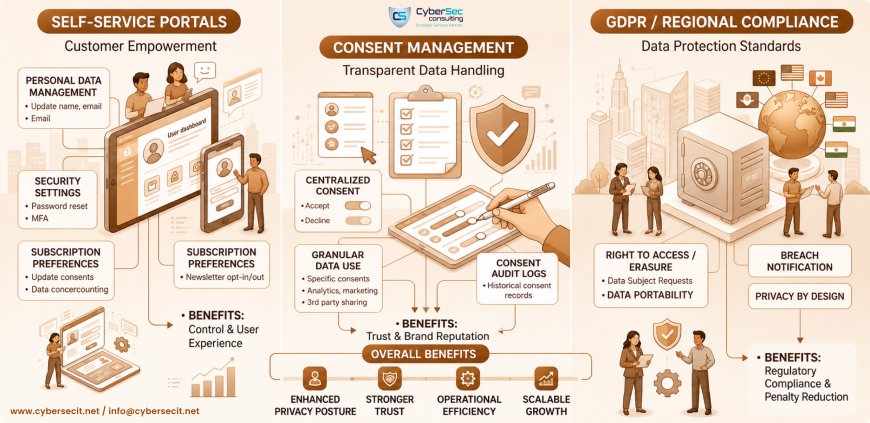
Customer-centric governance is an essential part of modern Customer Identity and Access Management, combining customer control, data privacy, and identity security across digital platforms. CIAM solutions enable organisations to give customers greater control over their accounts while maintaining strong authentication, consent management, and data protection policies. Effective governance supports secure digital transformation across financial services, eCommerce, healthcare, telecommunications, and other sectors where customer identity and privacy are critical. Strong CIAM governance also helps organisations meet regulatory expectations while building digital trust across the Gulf and wider Middle East markets.
- Empowering Self-Service - Self-service capabilities allow customers to manage common identity and security tasks without depending on support teams. Secure CIAM portals can enable users to reset passwords, manage Multi-Factor Authentication methods, review active sessions, and remove unrecognised devices through a simple interface. Such capabilities reduce support requests while giving customers greater control over their digital identities. Organisations can strengthen account security by combining self-service functionality with identity verification, adaptive authentication, and risk-based access controls.
- Automated Consent & Preference Management - Automated consent management allows organisations to capture and manage customer privacy preferences directly during registration and throughout the customer lifecycle. CIAM platforms can provide clear consent options for data collection, communication preferences, personalisation, and other approved uses of customer information. Consent records can be securely maintained and updated as customer preferences change. Integration with privacy controls helps organisations support frameworks such as GDPR and CCPA while strengthening customer trust, data privacy, and regulatory compliance across digital services.
- Data Minimization & Sovereignty - Data minimization ensures that organisations collect and retain only the identity information required for legitimate business and customer service needs. Data sovereignty adds another layer by ensuring customer identity information is stored, processed, and routed according to applicable regional data residency and privacy requirements. Modern CIAM architecture can support secure identity data management while maintaining high availability and reliable authentication across distributed environments. Such controls are particularly valuable for organisations handling sensitive customer information across regulated industries and rapidly expanding digital markets.
Mitigating Advanced Threats Without Disrupting Real Users

Advanced cyber threats increasingly target customer identities, authentication systems, and digital accounts. Modern Customer Identity and Access Management helps organisations detect and prevent threats while preserving a smooth customer experience. CIAM platforms can combine AI-powered fraud detection, bot protection, API security, adaptive authentication, and continuous risk assessment to identify suspicious activity without adding unnecessary verification for legitimate customers. Strong identity security is particularly important for financial services, eCommerce, telecommunications, healthcare, and other digital businesses operating across the Gulf and wider Middle East markets.
- Credential Stuffing & Bot Detection - Credential stuffing attacks use stolen usernames and passwords to gain unauthorised access to customer accounts through automated login attempts. Advanced bot detection can analyse traffic patterns, device signals, request behaviour, and authentication activity to identify malicious automation before it reaches the core identity platform. API security and edge-based bot protection can block high-volume automated attacks while allowing genuine customers to authenticate normally. CIAM integration with these controls strengthens account security, reduces automated fraud, and protects digital services from large-scale credential attacks.
- Account Takeover Prevention - Account Takeover prevention focuses on identifying signs that a legitimate customer's credentials or session may have been compromised. CIAM platforms can use threat intelligence, credential exposure monitoring, device reputation, behavioural analytics, and risk-based authentication to detect suspicious activity. Exposed credentials can trigger protective measures such as session invalidation, password resets, or targeted multi-factor authentication. Such controls help protect customer accounts and sensitive information while reducing unnecessary authentication challenges for trusted users.
- SIM Swapping & OTP Vulnerabilities - SIM swapping can allow attackers to gain control of a customer's mobile number and intercept SMS based One Time Passwords. Reducing dependence on SMS OTP can strengthen customer authentication by using secure push notifications, authenticator applications, device-bound credentials, and modern authentication technologies. Mobile authenticator SDKs can integrate secure verification directly into customer applications while supporting biometric authentication and risk-based controls. This approach helps organisations improve identity security, reduce OTP related fraud, and deliver a more reliable authentication experience across digital channels.
Conclusion
Customer Identity and Access Management has become a strategic foundation for secure and frictionless digital experiences. Organisations need to protect customer identities while making registration, authentication, and account access simple across websites, mobile applications, and digital platforms. Modern CIAM combines Single Sign On, Multi-Factor Authentication, passwordless authentication, Passkeys, adaptive authentication, AI-powered risk assessment, consent management, and fraud prevention to achieve this balance.
Strong CIAM architecture can reduce authentication friction, strengthen customer identity security, prevent account takeover, and support data privacy requirements. Scalable identity solutions also help organisations manage millions of customers, changing risk levels, seasonal traffic, and complex digital ecosystems without compromising customer experience.
Growing digital adoption across the Gulf and wider Middle East makes secure identity management increasingly important for financial services, eCommerce, healthcare, telecommunications, and other customer-focused industries. Organisations that treat identity as a core part of the digital customer journey can build stronger trust, improve customer retention, support regulatory compliance, and create secure digital experiences.
Strengthen Your Customer Identity Security with CyberSec Consulting

CyberSec Consulting helps organisations build and strengthen their Identity and Access Management strategy through expert IAM implementation and support services. Our IAM capabilities can help organisations design secure identity architectures, implement Single Sign On, Multi-Factor Authentication, Privileged Access Management, Identity Governance, adaptive authentication, and access controls aligned with business and security requirements.
CyberSec also provides ongoing IAM support to help organisations monitor identity environments, manage access challenges, improve security controls, and maintain reliable authentication across enterprise and customer-facing applications. Our identity security approach helps businesses reduce cyber risk while delivering seamless digital experiences.
Ready to identify and close the gaps in your IAM security?
Connect with CyberSec today for an IAM security consultation. Speak with our IAM specialists to assess your identity environment, strengthen access controls, improve authentication security, and build a scalable identity strategy that protects your organisation and customers.
FAQs
What is Customer Identity and Access Management (CIAM)?
Customer Identity and Access Management is a cybersecurity framework that manages customer identities, authentication, access, and privacy across websites, mobile applications, portals, and digital services. CIAM helps organisations deliver secure customer experiences through Single Sign On, Multi-Factor Authentication, passwordless authentication, identity verification, and consent management.
How does CIAM improve the customer experience?
CIAM reduces authentication friction by simplifying registration, login, identity verification, and account recovery. Features such as Single Sign On, Passkeys, social login, progressive profiling, and adaptive authentication help customers access digital services quickly while maintaining strong identity security and fraud protection.
How does CIAM protect organisations against account takeover and fraud?
Modern CIAM solutions use risk-based authentication, behavioural analytics, AI-powered threat detection, device intelligence, bot detection, and multi-factor authentication to identify suspicious activity. High-risk actions can trigger additional verification, helping protect customer accounts from credential stuffing, phishing, account takeover, and other identity-based cyber threats.
What is the difference between Enterprise IAM and CIAM?
Enterprise IAM primarily manages employee identities and access to corporate applications, networks, and resources. CIAM manages external customer identities and focuses heavily on scalability, customer experience, privacy, consent management, and secure digital authentication. Both approaches support identity security, but CIAM is specifically designed for high-volume customer-facing environments.
How does CIAM support data privacy and regulatory compliance?
CIAM can support data privacy through consent management, data minimization, identity governance, access controls, and secure customer data management. Organisations can use CIAM capabilities to support privacy obligations under frameworks such as GDPR and CCPA while strengthening customer trust and identity security across digital services.
How can CyberSec help with IAM implementation and support services?
CyberSec provides IAM implementation and support services to help organisations strengthen identity security, access governance, authentication, and customer identity management. Our IAM specialists can support Single Sign On, Multi-Factor Authentication, Privileged Access Management, Identity Governance, adaptive authentication, and secure access controls. Organisations can connect with CyberSec for an IAM security consultation to identify identity risks, improve access security, and build a scalable IAM strategy for modern digital environments across the Gulf and wider Middle East.
- Introduction
- Modern Identity Imperative: Security vs. Friction
- Enterprise IAM vs. Consumer IAM (CIAM): Understanding the Architecture
- Core Technical Pillars of Frictionless Authentication
- Intelligent Security Engine: Risk-Based Authentication & AI
- Customer Centric Governance, Self-Service & Privacy Compliance
- Mitigating Advanced Threats Without Disrupting Real Users
- Conclusion
- Strengthen Your Customer Identity Security with CyberSec Consulting
- FAQs