
Cloud computing has become the foundation of modern digital transformation, but it has also become one of the most attractive targets for cybercriminals. Cloud attacks are increasing in both volume and sophistication, targeting critical business applications, cloud workloads, identities, APIs, and sensitive data hosted across public, private, and hybrid cloud environments.
In the UAE, cyber threats have reached unprecedented levels. Government officials reported that the country is experiencing up to 800,000 cyberattack attempts every day, while organisations faced an average of 2,197 cyberattacks per week during the first half of 2026.
Attackers are increasingly exploiting cloud infrastructure, compromised identities, AI-powered attack techniques, and misconfigured cloud environments, making cloud security, cloud risk management, Zero Trust security, and Identity and Access Management (IAM) strategic priorities for enterprise leaders. Cloud adoption continues to accelerate across the region as organisations modernise business operations through Software as a Service (SaaS), Infrastructure as a Service (IaaS), and Platform as a Service (PaaS).
In Saudi Arabia, enterprises are expanding cloud-first strategies to support digital transformation, AI innovation, and business agility, while cyber threats targeting cloud environments continue to evolve alongside this growth.
Egypt is also experiencing rapid cloud adoption across public and private sectors as businesses migrate critical workloads to the cloud to improve scalability and operational efficiency.
This growing dependence on cloud services has elevated enterprise cloud security, cloud compliance, Cloud Security Posture Management (CSPM), cloud identity security, and AI-powered cloud security to board-level priorities. Today's CIOs are expected to ensure business continuity, regulatory compliance, cyber resilience, and secure cloud transformation while protecting critical business assets against increasingly sophisticated cloud-based cyberattacks.

Cloud security has evolved beyond a technical function because it directly influences business resilience, operational continuity, regulatory compliance, and enterprise growth. As organisations accelerate cloud adoption, digital transformation, and AI initiatives, protecting cloud infrastructure, workloads, identities, and sensitive data becomes a strategic business priority. Modern cloud security, cloud risk management, Zero Trust security, and cloud security consulting now play a critical role in enabling secure innovation and long-term business success.
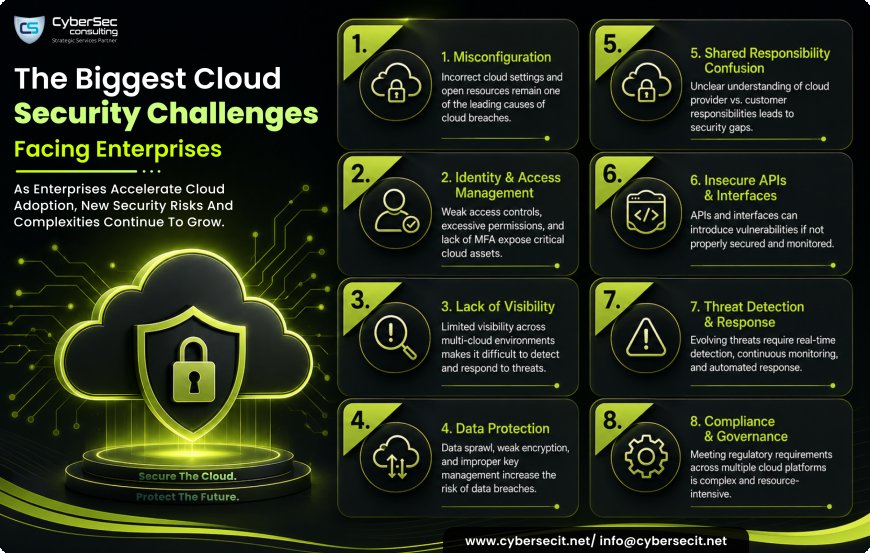
As organisations expand their cloud footprint, the complexity of securing cloud infrastructure, workloads, identities, applications, and sensitive data continues to grow. Modern cyber threats target vulnerabilities across public, private, hybrid, and multi-cloud environments, making enterprise cloud security, cloud risk management, cloud security consulting, and Zero Trust security essential for reducing cyber risk and ensuring business resilience. Addressing these cloud security challenges is critical for protecting digital assets, maintaining regulatory compliance, and supporting secure business growth.
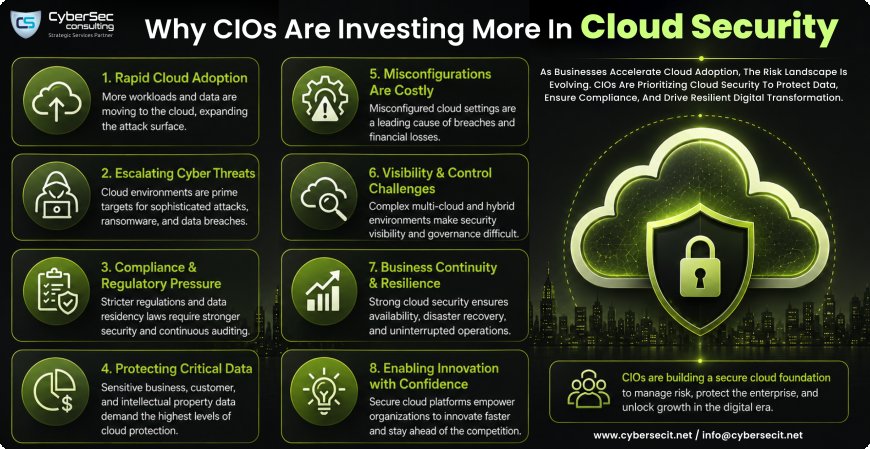
Cloud security has become a strategic investment because it directly supports business resilience, secure digital transformation, and long-term enterprise growth. Modern CIOs recognise that protecting cloud infrastructure, cloud workloads, identities, and business-critical applications is essential for reducing cyber risk and maintaining operational continuity. Investing in enterprise cloud security, cloud security consulting, cloud security services, and AI-powered cloud security enables organisations to strengthen governance, improve compliance, and secure cloud-first business operations.
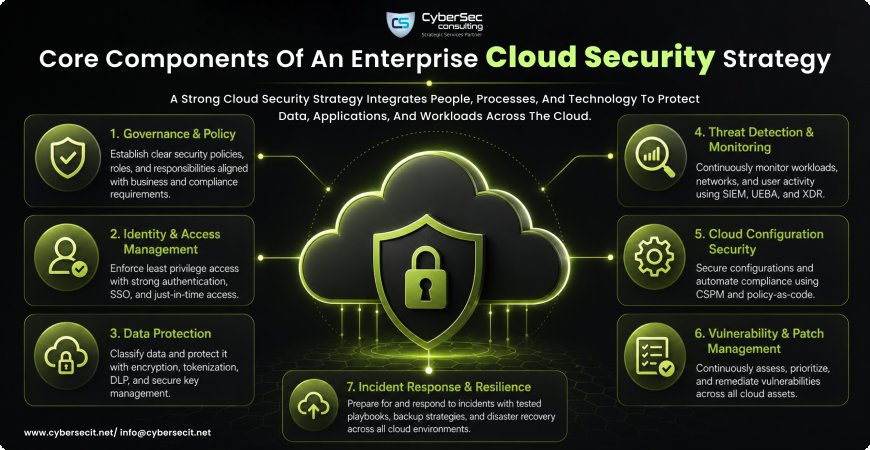
A strong enterprise cloud security strategy combines advanced security technologies, identity protection, continuous monitoring, and proactive risk management to defend cloud environments against evolving cyber threats. Integrating cloud security solutions, Zero Trust security, AI-powered cloud security, and cloud security services helps organisations protect cloud infrastructure, workloads, applications, and sensitive data. These core components enable secure cloud adoption, improve cyber resilience, strengthen governance, and support long-term regulatory compliance.

Artificial Intelligence is becoming a core pillar of modern cloud security and enterprise cybersecurity strategies. As organisations expand their use of cloud platforms, SaaS, IaaS, PaaS, hybrid cloud, and multi-cloud environments, cyber threats continue to grow in scale and complexity. AI helps security teams continuously analyse cloud environments, user behaviour, identities, workloads, network traffic, APIs, and application activities to detect anomalies before they become security incidents. This proactive approach strengthens AI-powered cloud security, improves threat visibility, and reduces cyber risk across enterprise cloud environments.
AI-powered cloud security also automates threat detection, identifies cloud misconfigurations, protects privileged accounts, and enhances Identity and Access Management (IAM) through intelligent risk analysis and adaptive access controls. It improves Security Operations Centre (SOC) efficiency by accelerating threat investigation and incident response while reducing manual security operations. When integrated with Zero Trust Architecture, Cloud Security Posture Management (CSPM), Identity Threat Detection and Response (ITDR), and Privileged Access Management (PAM), AI strengthens cloud resilience, supports continuous compliance, protects critical business assets, and enables secure digital transformation across public, private, hybrid, and multi-cloud environments.

Modern cyber threats require organisations to adopt a proactive cloud security strategy that protects cloud infrastructure, workloads, identities, applications, and sensitive business data. Implementing proven enterprise cloud security best practices helps reduce cyber risk, strengthen operational resilience, and support secure digital transformation. By combining cloud security services, Zero Trust security, AI-powered cloud security, and continuous monitoring, CIOs can build a secure, compliant, and future-ready cloud environment.
CyberSec Consulting provides end-to-end Cloud Security Consulting and Cloud Security Assessment services for organisations looking to strengthen their cloud security posture. Our experts design, implement, optimise, and manage secure cloud environments tailored to business requirements. We also deliver Cloud Risk Assessments, Cloud Migration Security, Identity and Access Management (IAM), Privileged Access Management (PAM), Cloud Security Posture Management (CSPM), Cloud Infrastructure Entitlement Management (CIEM), Cloud Workload Protection Platform (CWPP), Zero Trust Security, Managed Cloud Security Services, Security Operations Centre (SOC), and Cloud Compliance Consulting.
Our cloud security solutions align with leading security and compliance frameworks, including ISO 27001, UAE PDPL, SAMA Cybersecurity Framework, NCA Essential Cybersecurity Controls (ECC), PCI DSS, and the NIST Cybersecurity Framework. Whether you are migrating to the cloud, modernising your cloud security architecture, implementing Zero Trust, strengthening identity security, or improving compliance, CyberSec Consulting delivers tailored solutions that protect cloud infrastructure, workloads, applications, and digital identities. Partner with CyberSec Consulting to reduce cyber risk, improve cloud resilience, accelerate secure digital transformation, and build a future-ready enterprise cloud security strategy.
Cloud security has evolved from an IT function into a strategic business priority that directly influences operational resilience, regulatory compliance, business continuity, and long-term growth. As organisations accelerate cloud adoption through SaaS, IaaS, PaaS, hybrid cloud, and multi-cloud environments, securing cloud infrastructure, workloads, identities, and sensitive business data has become essential. Modern cloud security, AI-powered cloud security, Zero Trust Architecture, Identity and Access Management (IAM), Privileged Access Management (PAM), Cloud Security Posture Management (CSPM), and continuous threat monitoring help organisations proactively reduce cyber risks, prevent data breaches, strengthen governance, and protect critical business assets against increasingly sophisticated cyber threats.
Organisations that invest in a comprehensive enterprise cloud security strategy are better positioned to support secure digital transformation, improve customer trust, simplify regulatory compliance, and strengthen cyber resilience. By combining AI-driven threat detection, identity security, continuous compliance, cloud security assessments, and proactive risk management, businesses can build a secure, scalable, and future-ready cloud environment. As cyber threats continue to evolve, cloud security will remain a key driver of business success, enabling organisations across the Middle East and North Africa to innovate with confidence while maintaining a strong and resilient cybersecurity posture.
Why has cloud security become a top priority for CIOs?
Cloud security has become a strategic priority because organisations rely heavily on cloud platforms to run critical business operations. As cloud adoption increases, cyber threats targeting cloud infrastructure, identities, workloads, and applications continue to rise. Investing in enterprise cloud security, AI-powered cloud security, Zero Trust Security, and cloud security consulting helps CIOs reduce cyber risks, improve business continuity, strengthen regulatory compliance, and protect sensitive business data.
How does AI improve enterprise cloud security?
Artificial Intelligence enhances cloud security by continuously monitoring cloud environments, analysing user behaviour, detecting cloud misconfigurations, identifying identity-based threats, and automating incident response. AI-powered cloud security also strengthens Identity and Access Management (IAM), Privileged Access Management (PAM), Cloud Security Posture Management (CSPM), and Security Operations Centres (SOC), enabling organisations to improve cyber resilience and secure cloud workloads across public, private, hybrid, and multi-cloud environments.
What are the biggest cloud security risks organisations should address?
The most common cloud security risks include cloud misconfigurations, compromised identities, privileged access abuse, ransomware attacks, API security vulnerabilities, insider threats, shadow IT, data breaches, and multi-cloud complexity. Implementing cloud security assessments, cloud risk management, Zero Trust Architecture, IAM, PAM, and continuous cloud monitoring helps organisations reduce these risks and strengthen enterprise cloud security.
How does cloud security help organisations meet regulatory compliance?
A comprehensive cloud security strategy helps organisations comply with global cybersecurity and data protection regulations by protecting sensitive data, enforcing access controls, automating compliance monitoring, and maintaining continuous security visibility. Modern cloud security supports compliance with ISO 27001, UAE PDPL, SAMA Cybersecurity Framework, NCA Essential Cybersecurity Controls (ECC), UK GDPR, POPIA, PCI DSS, and the NIST Cybersecurity Framework, reducing audit complexity and improving governance.
What technologies are essential for a modern cloud security strategy?
A modern enterprise cloud security strategy should include Identity and Access Management (IAM), Privileged Access Management (PAM), Multi-Factor Authentication (MFA), Zero Trust Security, Cloud Security Posture Management (CSPM), Cloud Infrastructure Entitlement Management (CIEM), Cloud Workload Protection Platform (CWPP), Security Information and Event Management (SIEM), AI-powered threat detection, cloud security assessments, and continuous compliance monitoring to protect cloud environments against evolving cyber threats.
How can CyberSec Consulting help organisations strengthen cloud security?
CyberSec Consulting delivers end-to-end Cloud Security Consulting, Cloud Security Assessments, Cloud Risk Assessments, Cloud Security Implementation, Cloud Migration Security, Managed Cloud Security Services, IAM, PAM, Zero Trust Security, CSPM, CIEM, CWPP, and SOC services. Our experts help organisations build secure, compliant, and resilient cloud environments that support digital transformation and align with leading security frameworks. We help businesses reduce cyber risks, protect cloud infrastructure, improve compliance, and strengthen cloud security across organisations operating in the UAE, Saudi Arabia, Egypt, the UK, and South Africa.
Copyright © 2026 CyberSec Consulting - All Rights Reserved